Chef Knife Tang: Full vs Partial Tang Explained
Quick Answer The chef knife tang is the part of the blade’s steel that extends into the handle. It connects…
Quick Answer The chef knife tang is the part of the blade’s steel that extends into the handle. It connects…
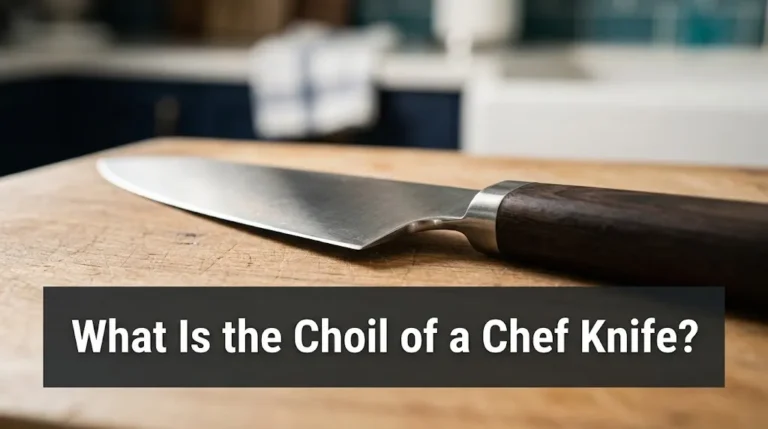
Quick Answer A chef knife choil is the small unsharpened recess or curved transition at the back of the blade,…
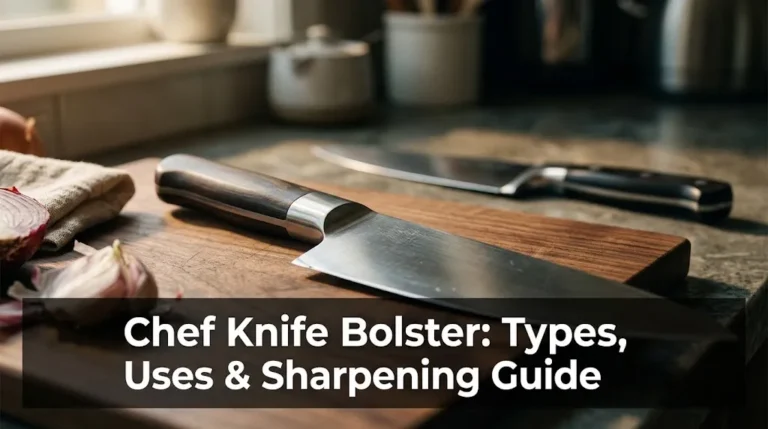
Quick Answer A chef knife bolster is the thickened metal area where the blade meets the handle. It can add…
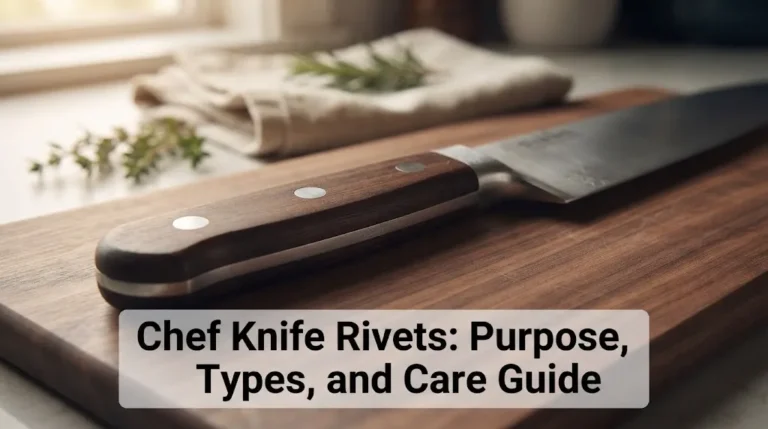
Quick Answer Chef knife rivets are metal fasteners that help attach the handle to the knife’s tang, the portion of…
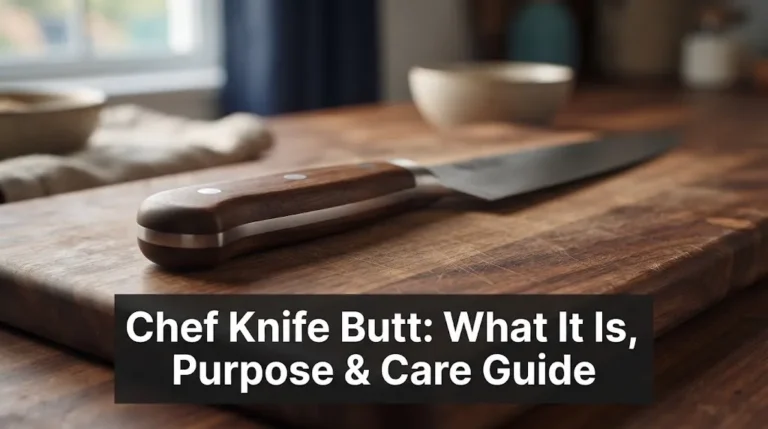
Quick Answer The chef knife butt is the very back end of the handle, farthest from the blade tip. It…
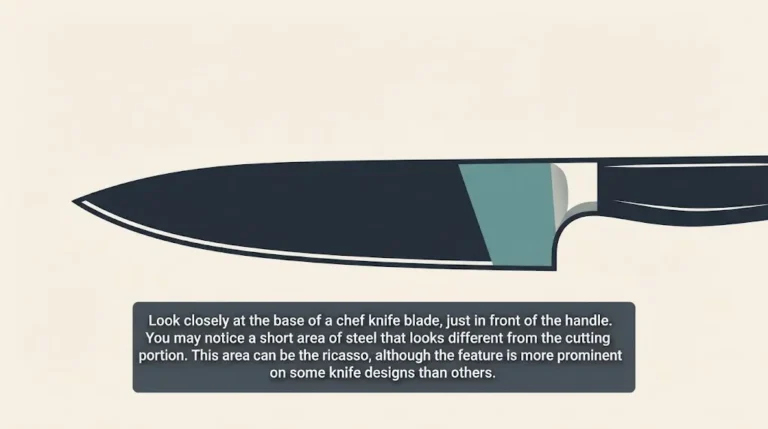
Quick Answer A chef knife ricasso is the flat, unsharpened section of blade near the handle, between the main blade…
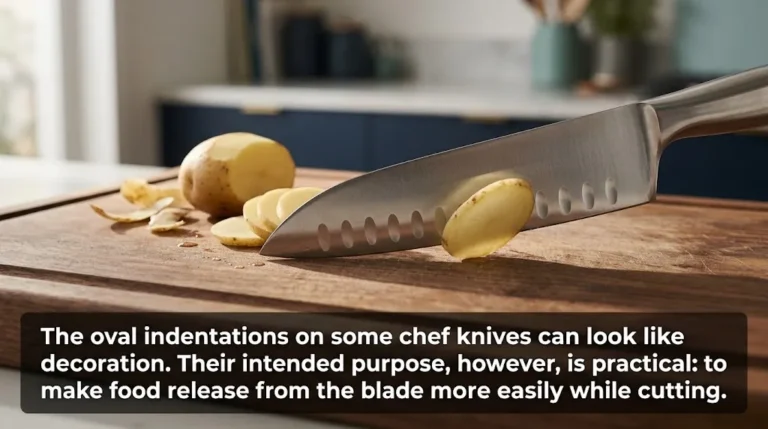
Quick Answer A Granton edge chef knife has shallow oval scallops along the sides of its blade, close to the…
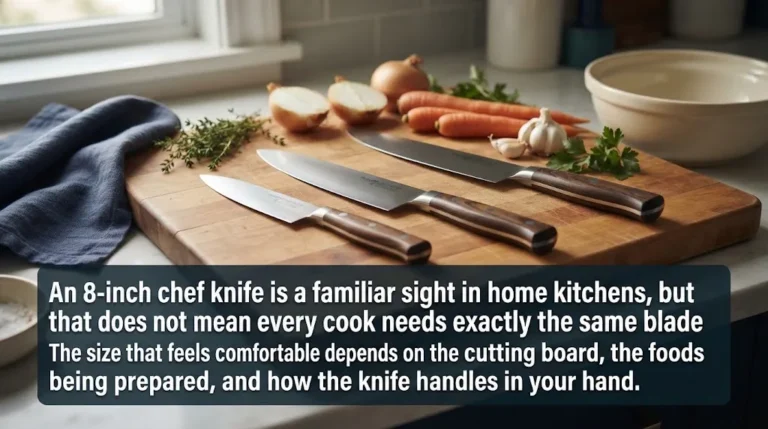
Quick Answer The standard chef knife size is 8 inches (about 20 cm), measured along the blade rather than the…
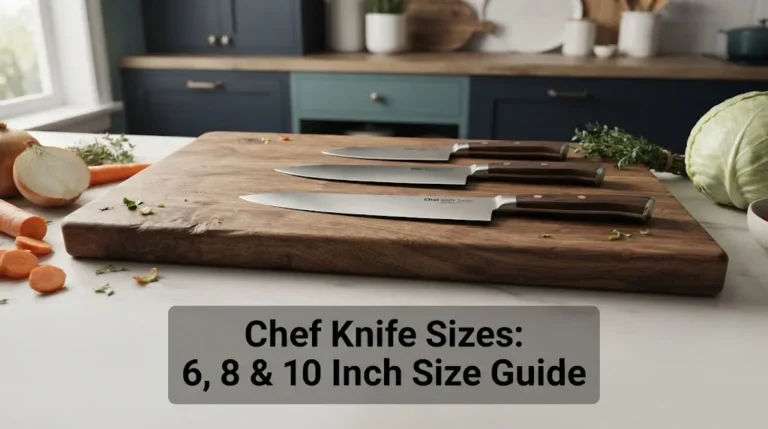
Quick Answer Chef knife sizes usually describe blade length, not the entire knife. Common choices are 6, 8, and 10…
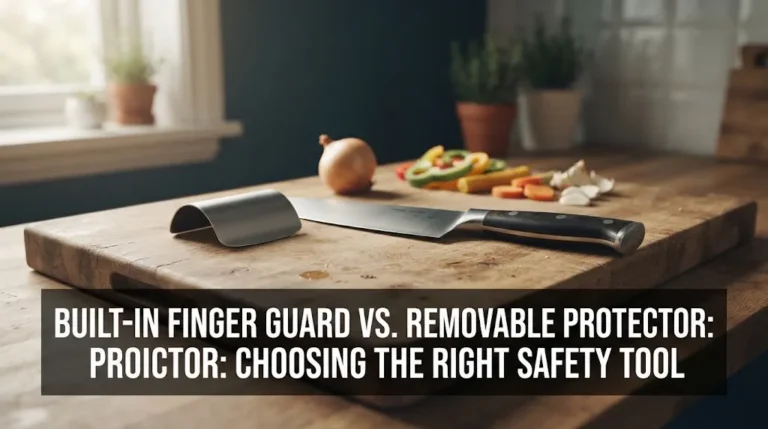
Quick Answer A chef knife finger guard is either a built-in feature near the handle that helps prevent the gripping…
Quick Answer A chef knife is built from several functional parts: the point and tip for precise work, the cutting…
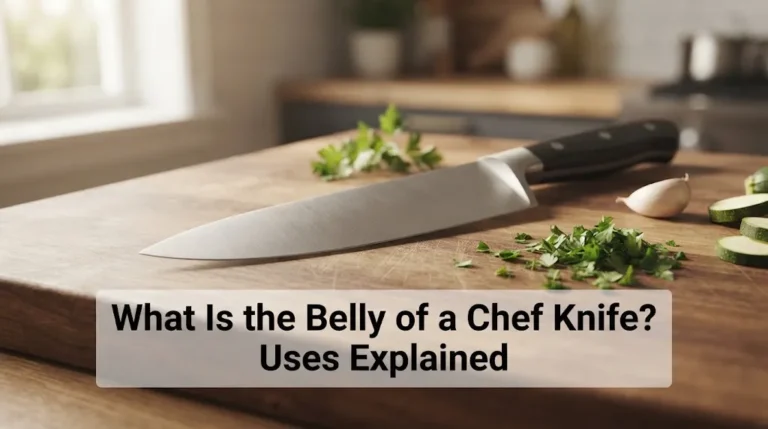
Quick Answer The belly of a chef knife is the curved portion of its sharpened cutting edge, usually most noticeable…

Quick Answer The tip of a chef knife is mainly used for precision cutting, making small controlled incisions, and guiding…
Quick Answer A chef knife has several working parts, each designed for a different job. The point and tip handle…
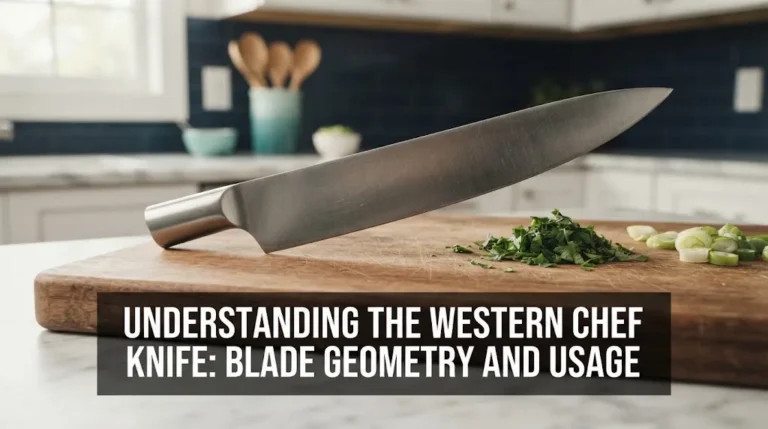
Quick Answer The belly of a chef knife is the curved portion of its sharpened cutting edge, usually most noticeable…
