Chef Knife Blade Discoloration: Causes and How to Fix It
Quick Answer
Chef knife blade discoloration usually comes from moisture, acidic foods, mineral deposits, or a chemical reaction with the steel. Blue, gray, or rainbow-colored marks may be harmless oxidation or heat tint, while orange-brown spots can indicate rust. Identify the type of mark first, then clean and dry the blade using a method suited to its material.
Common signs and likely causes
- Orange-brown spots: Usually surface rust caused by moisture and oxygen.
- Blue or gray patches: Often oxidation, patina, or heat-related discoloration.
- Rainbow sheen: Can result from thin surface films, heat tint, or residue.
- White cloudy marks: May come from mineral deposits or dried cleaning residue.
- Dark marks after cutting food: Carbon steel may develop a natural patina from acidic ingredients.
How to check the blade safely
- Wash with mild dish soap, rinse thoroughly, and dry immediately.
- Inspect the mark under good lighting to check for orange rust, pitting, or surface residue.
- For care guidance, consult the knife-care guidance and testing resources available from America’s Test Kitchen.
Noticing a strange color on your chef knife can make you wonder whether the blade is damaged or unsafe to use. The good news is that many discoloration marks are cosmetic and can be managed with simple care.
I’ll explain the common causes of chef knife blade discoloration, how to distinguish harmless patina from rust, and which cleaning methods are appropriate for different blades. You’ll also learn how to prevent the same marks from returning.
What Is Chef Knife Blade Discoloration?
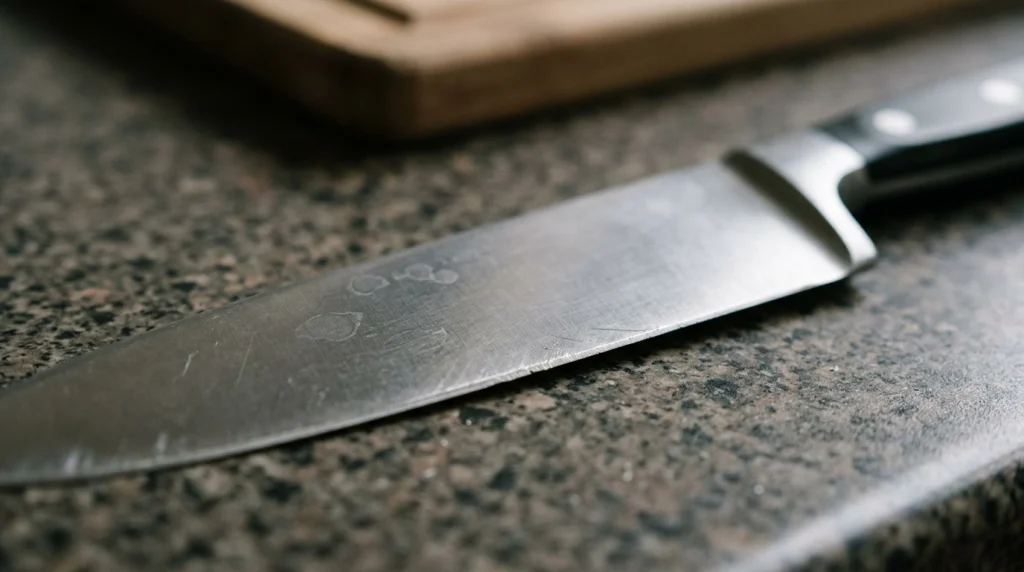
Chef knife blade discoloration is a visible change in the blade’s original color caused by oxidation, food acids, mineral deposits, heat, or surface residue. It may appear as gray patches, blue or rainbow hues, orange spots, or a dark film.
The color alone doesn’t tell you whether a knife is damaged. You should also consider the blade material, the location of the mark, and whether the surface feels smooth or pitted.
What Causes Chef Knife Blade Discoloration?
 Save
Most discoloration develops when the blade reacts with moisture, food, heat, or substances left on its surface. Understanding the likely cause helps you avoid unnecessary scrubbing or damage to the finish.
1. Moisture and Surface Rust
Moisture left on a blade can react with iron in the steel and create rust. This is particularly common with carbon steel knives and can also affect stainless steel when protective conditions break down.
Early rust often appears as orange or reddish-brown specks. If the marks become rough, spread, or develop small pits, the corrosion may be more advanced.
2. Acidic Foods and Natural Patina
Foods such as lemons, tomatoes, onions, and vinegar can react with certain blade steels. Carbon steel is especially prone to developing a dark gray or blue-gray patina during ordinary food preparation.
A stable patina is generally a normal surface change rather than a sign of serious damage. It can also provide some protection against further corrosion, although it doesn’t make the blade rustproof.
3. Mineral Deposits and Cleaning Residue
Hard water can leave mineral deposits on a knife after washing. Soap residue, food films, and dried starch can also create cloudy patches or an uneven sheen.
These marks may disappear after washing with mild dish soap and drying with a clean, soft cloth. If the discoloration remains, examine the blade carefully before using a more abrasive cleaning method.
4. Heat and Rainbow Discoloration
Blue, purple, gold, or rainbow hues can develop when a blade experiences heat or forms a thin surface film. Similar colors can sometimes result from residue or reflected light, so appearance alone cannot confirm heat damage.
Ordinary hand washing is a sensible first step. Avoid heating the blade intentionally or using aggressive polishing methods until you understand the cause.
5. Dishwasher Detergent and Harsh Chemicals
Dishwasher detergents, prolonged exposure to water, and contact with certain chemicals can damage a knife’s finish or encourage corrosion. Dishwashers also expose blades to heat, strong cleaning agents, and contact with other utensils.
Hand washing is the safer routine for most quality chef knives. It helps protect the cutting edge, handle, and blade surface.
Important distinction
A smooth gray or blue film may be harmless patina, but orange rust and pitting need closer attention. Don’t assume every dark mark is rust or every rainbow mark is heat damage.
How Can You Tell Patina, Rust, and Stains Apart?
You can often narrow down the cause by checking the color, texture, and location of the discoloration. However, these signs are clues rather than a guaranteed diagnosis.
| Blade appearance | Likely cause | Recommended action |
|---|---|---|
| Smooth gray or blue-gray film | Natural patina | Keep clean and dry; removal is usually unnecessary. |
| Orange or reddish-brown spots | Surface rust | Clean promptly with a suitable rust-removal method. |
| Rainbow or oily-looking sheen | Heat tint, residue, or surface film | Wash gently and inspect the result. |
| White or chalky patches | Mineral deposits | Try mild soap and water first. |
| Small holes or rough depressions | Pitting or deeper corrosion | Seek professional assessment if the damage is significant. |
One important difference is texture. A stable patina generally feels smooth, whereas active rust may feel rough or powdery and can spread if you leave it untreated.
How Do You Remove Discoloration From a Chef Knife?
The safest starting point is a gentle hand wash. Strong abrasives can scratch polished blades, remove decorative finishes, or change the appearance of a natural patina.
Step 1: Wash the Blade With Mild Soap
Rinse the blade with warm water and apply a small amount of mild dish soap using a soft sponge or cloth. Wipe carefully along the blade, keeping your fingers away from the cutting edge.
Don’t soak the knife in the sink. Prolonged exposure to moisture can encourage corrosion, especially on carbon steel.
Step 2: Rinse and Dry Immediately
Rinse away all soap and food residue, then dry the blade thoroughly with a clean, soft towel. Pay attention to the area near the handle, where water can remain trapped.
Inspect the blade under good lighting once it is dry. If the mark disappears, it was likely residue or a removable surface deposit.
Step 3: Treat Rust According to the Blade Finish
If orange rust remains, use a rust eraser or knife-care product that the manufacturer approves for your blade. Apply gentle pressure and follow the product instructions rather than scrubbing aggressively.
- Polished stainless steel: Start with a non-abrasive cleaner approved for stainless steel.
- Carbon steel: Use a compatible rust-removal method while avoiding unnecessary removal of the surrounding patina.
- Damascus or patterned steel: Check the manufacturer’s instructions before polishing because abrasives can alter the visible pattern.
- Coated blades: Avoid abrasive pads and metal polish unless the manufacturer specifically permits them.
For example, the care instructions for Shun knives and their care products distinguish natural patina from unwanted rust and explain why the blade finish matters when removing marks.
Step 4: Check for Pitting or Persistent Marks
If the surface has small holes, deep grooves, flaking corrosion, or discoloration that doesn’t respond to gentle cleaning, stop increasing the abrasiveness of your cleaning method. A professional sharpener or the knife manufacturer can assess whether repair is appropriate.
Cleaning can remove surface rust, but it cannot always restore metal lost to corrosion. Avoid trying to grind away deep pits yourself.
Practical care tip
Use the least aggressive cleaning method that works. If mild soap removes the mark, there’s no reason to reach for abrasive powder, steel wool, or metal polish.
Does Stainless Steel Develop Discoloration?
Yes. Stainless steel resists corrosion better than ordinary carbon steel, but it isn’t completely stainproof. Moisture, salt, harsh chemicals, heat, and deposits can still cause visible marks.
Some stainless blades also contain exposed areas of more reactive steel or have finishes that require special care. Always consider the knife’s construction instead of relying on the word “stainless” alone.
| Feature | Carbon steel | Stainless steel |
|---|---|---|
| Rust resistance | Generally lower | Generally higher |
| Natural patina | Common | Less common, depending on composition |
| Moisture sensitivity | High | Lower, but not zero |
| Daily care | Wash, dry promptly, and oil for storage when appropriate | Wash and dry promptly |
These are general differences, not guarantees for every knife. Steel composition, heat treatment, blade finish, and exposure to corrosive substances can affect the results.
How Can You Prevent Chef Knife Blade Discoloration?
 Save
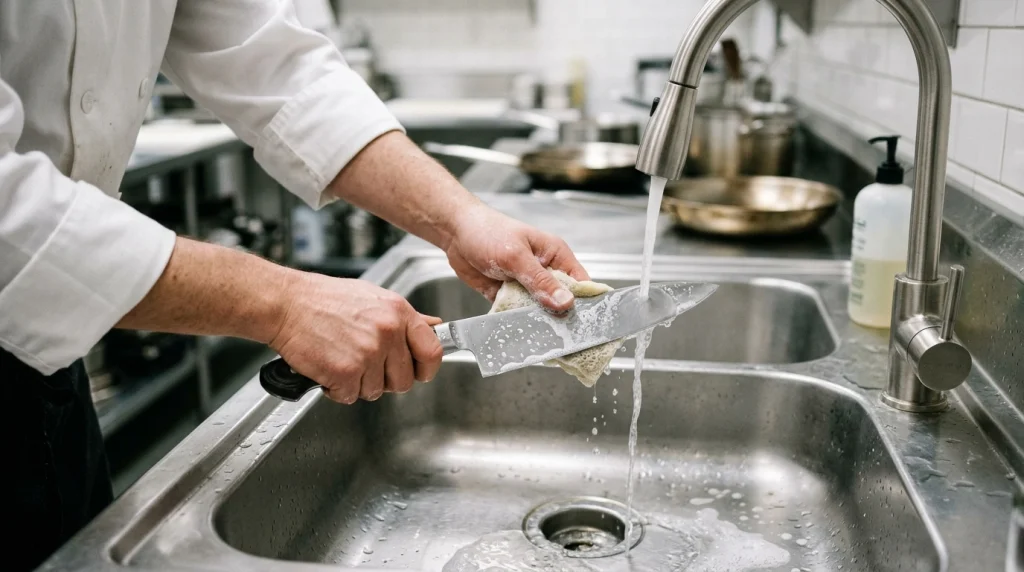
Preventing discoloration mostly comes down to limiting moisture, removing food residue promptly, and storing the blade properly. These habits matter even when you own a corrosion-resistant stainless steel knife.
- Wash after use: Remove food residue instead of letting it dry on the blade.
- Wipe after acidic foods: Clean the blade promptly after cutting tomatoes, lemons, onions, or other reactive ingredients.
- Dry completely: Use a clean towel rather than leaving the knife to air-dry.
- Avoid the dishwasher: High heat, strong detergents, and prolonged wet conditions can damage blades and handles.
- Store in a dry place: Use a knife block, magnetic strip, or suitable blade guard, following the manufacturer’s storage advice.
- Oil carbon steel when appropriate: A thin layer of food-safe mineral oil can help protect a clean, dry blade during storage.
For more detailed instructions, follow this guide to cleaning a chef knife safely. It covers hand washing, drying, and everyday blade maintenance.
Does Humidity Make Discoloration Worse?
Yes. High humidity slows drying and makes it easier for moisture to remain on a blade or inside a storage area. Carbon steel is particularly vulnerable, but stainless steel can also develop rust under unfavorable conditions.
If your kitchen is humid, dry the blade carefully before storing it and avoid enclosed storage while it is damp. Inspect carbon steel knives regularly for early rust spots.
Which Products Help With Knife Blade Discoloration?
You usually don’t need to replace a knife because of a few discoloration marks. However, the right cleaning and storage accessories can help you remove surface rust safely and reduce future staining.
These options are worth considering if ordinary washing doesn’t solve the problem. Choose products that are compatible with your knife’s material and finish.
BEST FOR TARGETED CLEANING
Shun Knife Care Kit
A knife-specific maintenance kit can help with suitable surface stains and rust. Check that its polishing materials are appropriate for your blade’s finish before use.
BEST FOR CARBON STEEL STORAGE
Food-Grade Mineral Oil
A thin coating of food-grade mineral oil can help protect a clean, dry carbon steel blade during storage. Use a product intended for food-contact equipment and wipe away excess oil before use.
BEST FOR DRY STORAGE
Knife Blade Guard
A correctly sized blade guard protects the edge during storage and helps prevent contact with other utensils. Make sure the knife is completely clean and dry before covering it.
These are practical accessory options, not products I’ve independently tested for this article. Compare current product details and manufacturer instructions before buying.
Frequently Asked Questions
Is a Discolored Chef Knife Safe to Use?
A knife with a smooth, stable patina or harmless surface staining can generally remain usable after normal cleaning. Remove active rust before food preparation, and inspect the blade for pitting, flaking, or damage that could make it difficult to clean properly.
Why Did My Stainless Steel Chef Knife Turn Rainbow-Colored?
Rainbow discoloration can result from heat tint, mineral deposits, detergent residue, or a thin film left by food. Wash the blade with mild dish soap, rinse thoroughly, and dry it completely. If the color remains, use only a cleaner approved for that blade’s finish.
Should I Remove the Dark Patina From My Carbon Steel Knife?
Usually, no. A smooth gray, blue-gray, or dark patina is a normal result of carbon steel reacting with food and air, and it can help reduce further corrosion. Focus on removing active orange rust and food residue rather than stripping away the entire patina.
Can Vinegar Remove Chef Knife Discoloration?
Vinegar can affect some mineral deposits and rust, but prolonged acid exposure can stain or corrode knife steel. It may also damage certain finishes. Start with mild soap and water, and use a manufacturer-approved rust treatment when necessary rather than soaking the blade in vinegar.
When Should I Replace a Discolored Chef Knife?
Color alone is rarely a reason to replace a knife. Consider professional repair or replacement if the blade has extensive pitting, deep corrosion, cracks, a damaged cutting edge, or other structural problems that affect safe use. Minor surface staining usually requires maintenance rather than replacement.
Final Takeaway: Keep Your Chef Knife Clean, Dry, and Protected
Chef knife blade discoloration can come from natural patina, surface rust, mineral deposits, heat, or chemical residue. Identifying the likely cause is the first step toward choosing a safe and effective cleaning method.
For most knives, the best routine is simple: wash by hand, rinse thoroughly, dry immediately, and store in a dry place. With carbon steel, pay particular attention to moisture and consider food-safe mineral oil for appropriate storage.
Remember that not every color change is damage. Leave a healthy patina alone, remove active rust promptly, and seek professional help when the blade develops deep pits or structural damage.

