Stainless vs Carbon Steel Chef Knife: Differences & Guide
Quick Answer
Stainless steel chef knives offer rust resistance, low maintenance, and durability, making them ideal for everyday convenience and wet environments. Carbon steel chef knives deliver superior edge retention, effortless sharpening, and a sharper initial cutting edge, making them the preferred choice for professional chefs who value maximum cutting performance and patina development.
Understanding the Core Difference: Stainless vs. Carbon Steel
Choosing a kitchen knife ultimately comes down to the metallurgy of the blade. The primary distinction between stainless and carbon steel chef knives lies in their chemical composition—specifically, the amount of chromium and carbon present in the alloy.
Stainless steel requires a minimum of 10.5% chromium content. This chromium forms a passive layer on the surface of the blade that prevents oxidation, meaning the knife resists rust, staining, and corrosion when exposed to acids, water, and food juices. Carbon steel, on the other hand, contains very little or no chromium. Instead, it features a higher concentration of carbon, which allows the steel to achieve a much harder crystalline structure during heat treatment.
This structural difference dictates how each knife performs in daily use, how frequently it requires maintenance, and how long it holds a sharp edge. Understanding these trade-offs helps home cooks and culinary professionals select a tool that matches their cooking style, kitchen environment, and maintenance habits.
Edge Retention and Cutting Performance
 Save
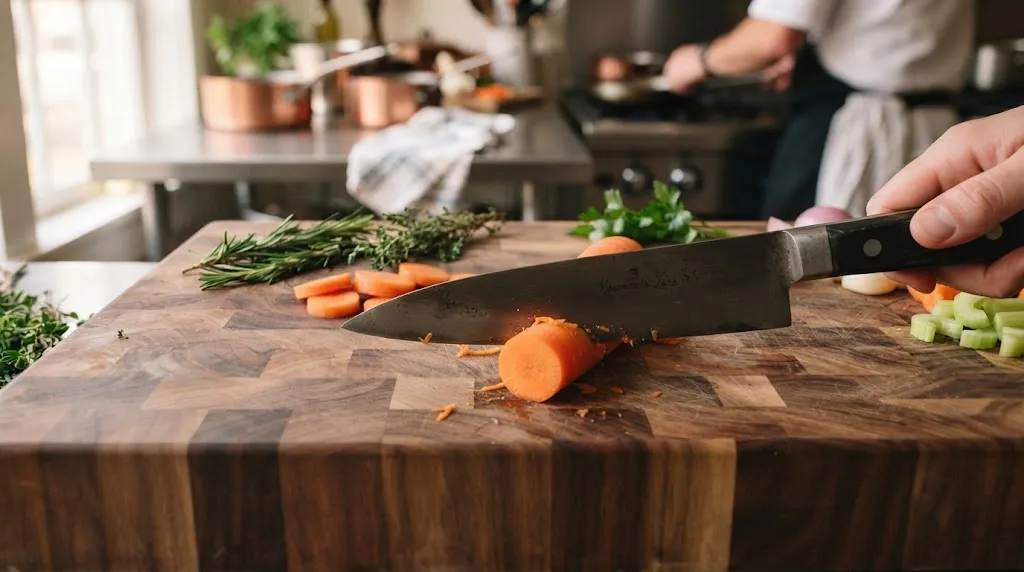
Cutting performance is often the deciding factor for knife enthusiasts. Carbon steel knives generally hold an exceptionally sharp edge longer than traditional stainless steel knives. Because high-carbon steel achieves greater hardness on the Rockwell scale, the microscopic apex of the edge resists rolling or dulling when slicing through dense ingredients like root vegetables, tough meats, or fibrous herbs.
Furthermore, carbon steel blades can be ground to a more acute bevel angle without compromising structural integrity. This results in a thinner, sharper edge that glides through ingredients with minimal friction. Slicing raw proteins or delicate produce feels noticeably smoother with a high-carbon blade.
However, modern metallurgy has closed this gap significantly. High-end stainless steels—such as powder-metallurgy alloys (e.g., SG2/R2, ZDP-189, or CPM-S35VN)—offer edge retention that rivals or even exceeds traditional carbon steels while retaining corrosion resistance. Standard German stainless steels (like X50CrMoV15), while easier to maintain, lose their edge faster and require more frequent honing.
Sharpening and Maintenance Requirements
The same hardness that gives carbon steel its superior edge retention also affects how easy it is to sharpen. While carbon steel is harder, its grain structure is often more cooperative on sharpening stones, allowing users to raise a burr and polish a razor-sharp edge relatively quickly using traditional whetstones.
Standard stainless steel knives are softer, meaning they dull faster, but they are also very forgiving to sharpen. High-alloy stainless steels, however, contain hard carbide particles that can make them stubborn and time-consuming to sharpen on standard whetstones.
Tip
If you choose a carbon steel knife, always wipe the blade dry immediately after cutting acidic foods like citrus, tomatoes, or onions to prevent instant discoloration and pitting.
Corrosion Resistance and the Patina Effect
The most prominent functional difference between the two materials is how they react to moisture and chemical elements in food.
Stainless steel is virtually inert in normal kitchen conditions. It can be washed, left in a dish rack for a short period, or used to cut highly acidic ingredients without showing surface damage. This makes stainless steel knives ideal for busy household kitchens where multiple family members might cook and clean up.
Carbon steel reacts actively with moisture and acids. When exposed to oxygen and food compounds, the metal oxidizes. Rather than forming flaky, destructive red rust immediately, clean carbon steel develops a stable, dark grey, blue, or brown surface layer known as a patina. This patina is actually a desired protective oxidation layer that seals the reactive iron underneath, slowing down further corrosion and giving the blade a distinct, personalized character over years of use. Unattended moisture, however, will cause destructive red rust that pits the blade and weakens the edge.
Comparison: Stainless Steel vs. Carbon Steel Chef Knives
| Feature | Stainless Steel Chef Knife | Carbon Steel Chef Knife |
|---|---|---|
| Rust & Corrosion Resistance | High; resists rust and staining under normal use. | Low; prone to rust and active oxidation if not dried. |
| Edge Retention | Varies from moderate (standard) to exceptional (powder steel). | Consistently high; holds a fine edge for long periods. |
| Sharpening Difficulty | Easy to moderate for standard alloys; difficult for high-alloy stainless. | Moderate; takes a keen edge quickly on stones. |
| Maintenance Required | Low; standard washing and occasional honing. | High; requires immediate drying, oiling, and care. |
| Visual Evolution | Retains its original polished finish over time. | Develops a dark, protective patina with use. |
Reviewing these core attributes helps clarify which material aligns better with your culinary habits and willingness to perform routine upkeep.
Which Knife Type Should You Choose?
 Save
Selecting the right knife depends entirely on your cooking environment, patience for maintenance, and appreciation for traditional craftsmanship.
A stainless steel chef knife is the best choice if you prefer a zero-fuss tool that can handle damp environments, multi-task quickly during busy meal preparation, and sit in a dish drainer without sustaining immediate damage. It is the practical standard for most home kitchens, busy family environments, and cooks who prefer not to worry about specialized cleaning routines.
A carbon steel chef knife is the ideal choice if you view food preparation as a craft, enjoy the ritual of maintaining your tools, and demand absolute peak cutting performance. Professional line cooks, culinary enthusiasts, and those who enjoy sharpening often gravitate toward carbon steel for its tactile feedback on whetstones and its effortless cutting feel.
Related Product
Kitchen Knife Whetstone Sharpening Set
A dual-grit sharpening stone helps maintain a razor-sharp edge on both stainless and carbon steel chef knives.
As an Amazon Associate, we earn from qualifying purchases.
Frequently Asked Questions
Do carbon steel chef knives rust easily?
Yes, carbon steel lacks the chromium content required to block oxidation. If left wet or exposed to acidic juices, it will develop red rust. However, keeping the blade clean, dry, and lightly oiled prevents this issue.
Can stainless steel knives get as sharp as carbon steel?
Modern high-end powder metallurgy stainless steels can achieve an edge sharpness and retention that matches or exceeds traditional carbon steel. However, entry-level and mid-range stainless steels generally cannot match the fine, acute edge geometry of high-carbon alternatives.
What is a patina on a carbon steel knife?
A patina is a stable, dark oxidation layer that forms naturally on carbon steel when it interacts with acids and proteins in food. Unlike destructive red rust, a patina protects the underlying metal and does not contaminate food.
Are carbon steel knives more brittle than stainless steel?
Generally, carbon steel is harder, which can make it slightly more brittle and susceptible to chipping if twisted against hard bones or frozen foods. Stainless steels vary widely, but softer stainless alloys tend to bend rather than chip.
Do carbon steel knives leave a metallic taste in food?
New carbon steel knives can sometimes impart a slight metallic taste when cutting highly acidic foods like citrus or tomatoes before a stable patina forms. Once the patina develops, this effect disappears entirely.
Which knife is better for everyday home cooking?
For most home cooks, a high-quality stainless steel chef knife is the most practical option because it eliminates the risk of rust and requires minimal post-use maintenance.
Conclusion
The choice between a stainless steel and a carbon steel chef knife ultimately depends on how you balance cutting performance against maintenance convenience. Stainless steel offers effortless upkeep, rust resistance, and dependable daily utility for busy kitchens. Carbon steel rewards the user with exceptional edge retention, effortless sharpening, and a blade that evolves over time through natural patina development. By understanding your own cooking habits and willingness to care for your tools, you can select the knife material that best supports your culinary workflow.

