High Carbon Stainless Steel Chef Knife: What It Is & Why It Matters
Quick Answer
A high carbon stainless steel chef knife combines the edge-holding ability of carbon steel with the rust resistance of stainless steel. The result is a blade that stays sharp longer than standard stainless, resists corrosion far better than plain carbon steel, and suits most home kitchens without demanding obsessive maintenance. The trade-off is that it still needs hand washing and prompt drying—no high carbon stainless blade is truly dishwasher-proof.
What “High Carbon Stainless Steel” Actually Means
 Save
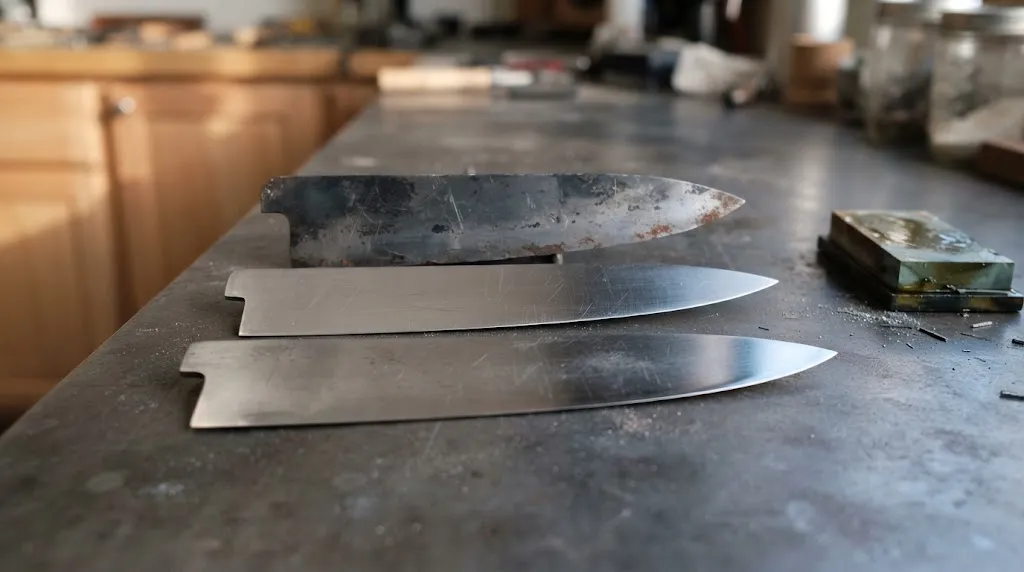
The name sounds contradictory because it is a compromise. Carbon steel holds a keen edge but rusts easily. Standard stainless steel resists rust but often feels soft on the cutting board. High carbon stainless steel sits between them.
Carbon content gives steel its hardness and edge retention. Stainless steel earns its name from chromium—typically at least 10.5%—which forms an invisible oxide layer that resists rust and staining. High carbon stainless steel raises the carbon level while keeping enough chromium for meaningful corrosion protection. Many formulations also add molybdenum and vanadium for uniform hardness and toughness.
For a chef knife, that balance matters more than any single number on a spec sheet. A blade that chips easily or dulls after a few meals creates more work than it saves.
Why This Steel Suits a Chef Knife Better Than the Alternatives
A chef knife is a general-purpose tool. It rocks through herbs, slices protein, and pushes through dense vegetables. The steel needs to handle all of that without turning into a maintenance project.
Compared with plain carbon steel, high carbon stainless is dramatically more forgiving. Carbon steel blades can rust if left wet for even a short time, and they react to acidic foods like tomatoes and citrus, causing discoloration. A high carbon stainless blade still benefits from prompt cleaning, but it will not punish a brief lapse as severely.
Compared with ordinary stainless steel, the higher carbon content delivers better edge retention. A standard stainless chef knife may need frequent honing or sharpening to stay useful. A high carbon stainless blade holds its edge longer, which means less time maintaining the tool and more time cutting.
There is a practical caveat. “High carbon stainless” is a broad category, not a single formula. A budget knife and a premium knife can both use the label while performing very differently. Hardness ratings, heat treatment, and blade geometry matter as much as the steel family. A reputable manufacturer will usually state the steel type—such as German 1.4116 or a Japanese equivalent—rather than relying on the vague phrase alone.
What You Gain—and What You Still Have to Do
 Save
The clearest gain is edge retention. A well-made high carbon stainless chef knife stays sharp through extended prep work, which makes cutting safer and more controlled. A dull knife requires more force and slips more easily.
The second gain is corrosion resistance. You can cut acidic ingredients, rinse the blade, and dry it without watching a patina form or rust spots appear. That does not mean the knife is indestructible. High carbon stainless steel can still pit or discolor under the wrong conditions.
The maintenance requirements are straightforward but non-negotiable:
- Wash by hand, immediately after use. Food acids and salts can pit the blade if left sitting.
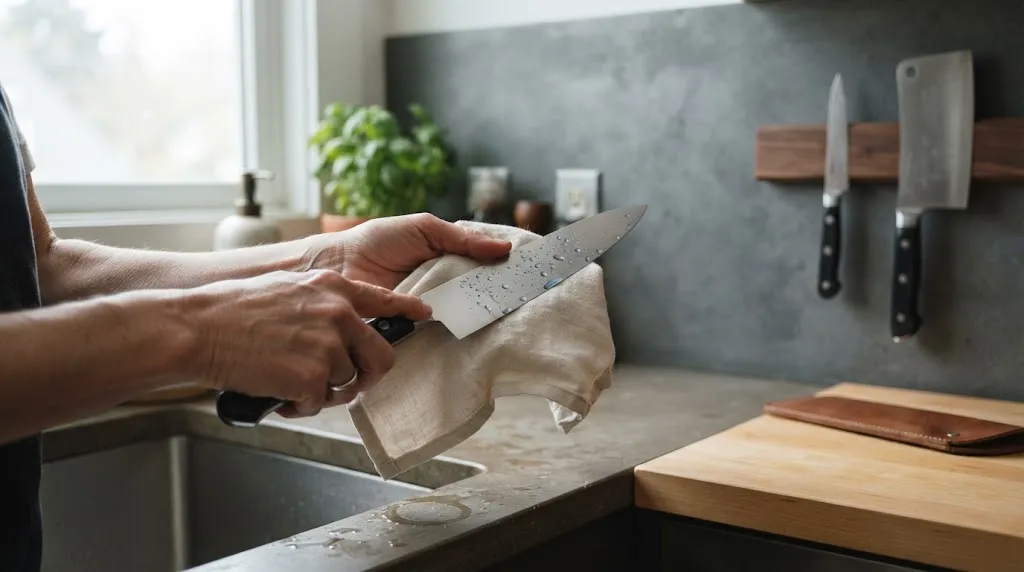
- Dry it promptly with a towel. Air drying invites water spots and, over time, surface damage.
- Keep it out of the dishwasher. The combination of heat, prolonged moisture, and harsh detergents is especially hard on high carbon stainless blades. Manufacturers consistently warn against it even when a knife is labeled dishwasher-safe.
- Store it dry and protected. A magnetic strip, knife block, or blade guard prevents edge contact with other metal.
A common mistake is assuming “stainless” means “stain-proof.” It does not. High carbon stainless resists staining better than carbon steel, but no formulation is immune to pitting or tarnishing when exposed to chlorides, acidic foods, or prolonged moisture.
How to Judge a High Carbon Stainless Chef Knife Before Buying
The steel label alone does not tell you whether a knife is worth using. Focus on these practical indicators.
Hardness and Heat Treatment
Rockwell hardness in the mid-50s to low-60s HRC is typical for chef knives in this category. A harder blade holds an edge longer but can be more brittle. A slightly softer blade is more forgiving for cooks who are rough on their tools. Either can work; the heat treatment must match the intended use.
Blade Geometry
A chef knife should feel balanced and slice without wedging. The grind—how the blade tapers from spine to edge—affects performance more than a marginal difference in steel composition. A thin, well-ground blade in a modest high carbon stainless will often outperform a thick, poorly ground blade in a premium steel.
Handle Construction and Comfort
A full tang (the steel extending through the handle) adds strength and balance. The handle material should feel secure in a dry or damp hand. Rivets should sit flush. None of this is about luxury; it is about control and safety.
Reputation for Consistency
Knife manufacturing involves many steps that a spec sheet cannot capture: forging or stamping, grinding, sharpening angle, and quality control. A manufacturer with a track record of consistent geometry and heat treatment is a safer bet than an unknown brand advertising an impressive steel name.
The Honest Limitations
High carbon stainless steel is not the right choice for every cook. If you routinely leave dishes in the sink or rely on a dishwasher for everything, a high carbon stainless chef knife will suffer. A basic stainless blade may tolerate more neglect, though it will dull faster and cut less precisely.
If you want the absolute sharpest edge and are willing to wipe and oil the blade after every use, plain carbon steel still has devoted followers. The patina and reactivity are features to some cooks, not flaws. But for most home cooks who want a sharp, durable, low-drama chef knife, high carbon stainless is the more practical default.
One more limitation deserves mention: the phrase itself is not regulated. A knife marketed as “high carbon stainless” may contain relatively modest carbon or a less corrosion-resistant alloy. When performance matters, look for a named steel specification or a manufacturer that explains its material choices rather than hiding behind the generic label.
Frequently Asked Questions
Is high carbon stainless steel better than regular stainless steel for a chef knife?
For most cooks, yes. The higher carbon content generally improves edge retention, so the knife stays sharp longer between honing or sharpening. Regular stainless is more corrosion-resistant in extreme neglect, but it often feels softer and dulls faster in normal kitchen use.
Can a high carbon stainless steel chef knife go in the dishwasher?
No. Even manufacturers that label a knife dishwasher-safe generally recommend hand washing. The heat, moisture, and detergents in a dishwasher can pit or discolor high carbon stainless blades over time, and the knife can knock against other items and damage its edge.
Will a high carbon stainless steel knife rust?
It resists rust far better than carbon steel, but it is not rust-proof. Leaving the blade wet, soaking it, or exposing it to chlorides and acidic foods for extended periods can cause staining or pitting. Hand wash and dry it promptly after each use.
Does high carbon stainless steel hold a sharper edge than carbon steel?
Not necessarily sharper at the outset, but it holds a useful edge longer in most kitchen conditions because of its hardness and alloy composition. Plain carbon steel can take an extremely fine edge, but it requires more careful maintenance to preserve it without rust or reactivity.
How often should I sharpen a high carbon stainless chef knife?
Sharpen when the blade no longer bites into a tomato skin or slips on herbs, not on a fixed calendar. Regular honing between sharpenings helps maintain the edge. For home use, sharpening every few months to twice a year is a reasonable starting point, depending on how often you cook and what you cut.
Is high carbon stainless steel a good choice for a first chef knife?
Yes, provided you are willing to hand wash and dry it. It offers a practical balance of sharpness, durability, and corrosion resistance without the maintenance demands of plain carbon steel. A first chef knife should be easy to control and forgiving enough to learn on—high carbon stainless fits that role well.
Conclusion
A high carbon stainless steel chef knife is not a marketing gimmick. It is a genuine compromise between two older materials, and for most home cooks it is the most sensible compromise available. The blade stays sharp through real prep work, resists rust under normal use, and does not require the ritual care of carbon steel.
The one condition is that you treat it like a tool, not a dishwasher item. Wash it by hand, dry it immediately, store it safely, and hone it regularly. Do that, and a well-made high carbon stainless chef knife will remain useful for years. Neglect it, and even the best steel will pit, dull, and disappoint.

