Chef Knife Bolster: Types, Uses & Sharpening Guide
Quick Answer
A chef knife bolster is the thickened metal area where the blade meets the handle. It can add weight and stability near your grip and, depending on its shape, help keep your fingers away from the cutting edge. A full bolster reaches down toward the heel; a half bolster leaves more of the edge accessible for sharpening. Many excellent chef knives have no bolster at all.
Those small differences affect comfort, weight distribution, and long-term maintenance. You do not need a bolster to own a good knife, but you should understand what its shape allows you to do.
Where Is the Bolster on a Chef Knife?
Look at the junction between the handle and the back of the blade. If there is a noticeably thicker section of metal at that junction, you are looking at the bolster. On many Western-style chef knives, it resembles a metal collar or shoulder.
The bolster is not the heel, which is the rear part of the cutting edge, nor the tang, which extends into the handle. It also differs from the choil, the small unsharpened transition or notch near the rear of the edge on certain knives. Our chef knife anatomy guide shows how these pieces relate to the rest of the blade.
What Does a Chef Knife Bolster Actually Do?
It changes weight and balance
Additional metal near the handle changes where the knife’s mass is concentrated. A substantial bolster can make a knife feel less blade-heavy, although blade length, handle material, tang construction, and overall design also influence its balance.
It can provide a finger stop
A full bolster creates a physical barrier at the rear of the cutting edge. That barrier may reduce the chance of fingers moving forward from the handle toward the heel, but it cannot prevent all cuts.
A half or curved bolster may support comfortable finger placement without creating the same tall guard. Your secure grip, cutting technique, dry hands, and stable board still matter far more than treating the bolster as a safety device.
It shapes the blade-to-handle transition
On many forged knives, the bolster is part of the metal structure around this junction. It can create a smooth, sturdy-feeling transition and change how the index finger rests close to the blade. The exact reinforcement depends on the knife’s construction; a conspicuous bolster is not proof of higher quality.
For example, a thin, well-made chef knife with no bolster can still be durable and precise. A heavy bolster does not automatically make the knife sharper, stronger in every situation, or better at cutting food.
Full Bolster vs. Half Bolster vs. No Bolster
 Save
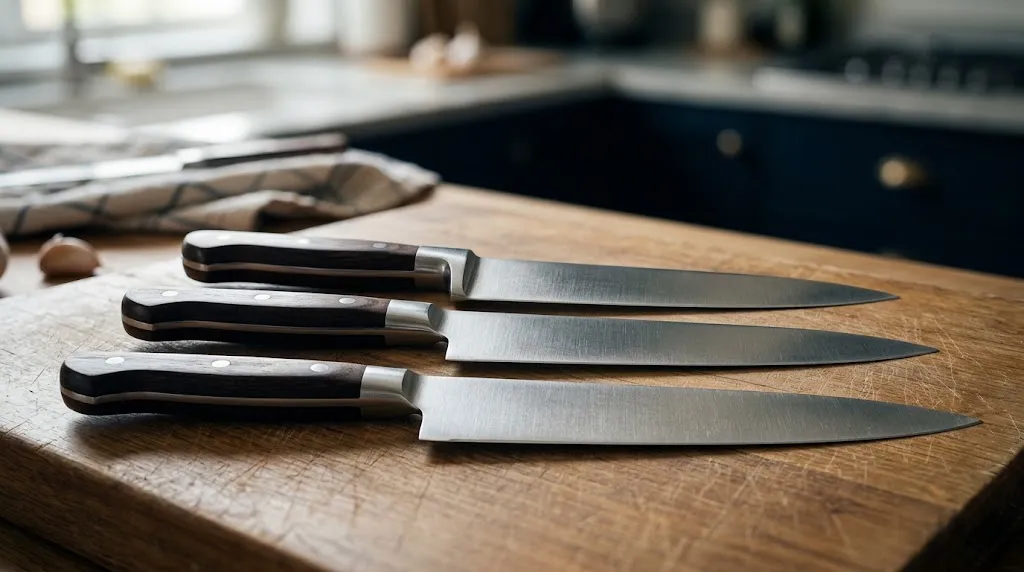
SaveThe most useful comparison is how much of the heel remains exposed and how the knife feels near your grip.
| Design | What you see | Practical tradeoff |
|---|---|---|
| Full bolster | Metal extends down beside the heel | Pronounced guard; heel can become harder to sharpen |
| Half or demi bolster | Shorter collar, heel left open | Good access to the full edge; less pronounced guard |
| Curved bolster | Shaped transition around the grip | May support a pinch grip; assess heel clearance by model |
| No bolster | Blade transitions directly toward handle | Less metal at junction; easy heel access |
These categories describe shape, not quality grades. The edge geometry and handle design still decide much of how each knife performs. As a real manufacturer example, WÜSTHOF explains that its half-bolster chef knife reduces weight and allows easier sharpening of the entire blade.
Why a Full Bolster Can Make Sharpening Difficult
Sharpening gradually removes a small amount of steel from the cutting edge. On a full-bolster knife, the thick metal beside the heel may not wear down at the same rate. Eventually, it can extend lower than the newly sharpened edge.
That creates a practical problem: the back of the blade may no longer contact a flat sharpening stone or cutting board correctly. You may notice an unsharpened section just ahead of the guard or a slight gap beneath the heel when the knife rests flat.
With a half bolster, the edge is generally accessible closer to the heel. That makes ordinary sharpening more straightforward. The distinction is also described in the Cleveland Clinic’s chef knife skills resource, which illustrates the parts of a chef knife and discusses bolster-related sharpening limitations.
Warning
Do not try to fix an oversized full bolster by forcing the knife through a pull-through sharpener or grinding the guard without the right skill and equipment. A qualified knife-sharpening service can assess whether the bolster needs to be reduced.
How Does the Bolster Affect Your Grip?
Many cooks use a pinch grip: the thumb and index finger rest on opposite sides of the blade just ahead of the handle, while the remaining fingers wrap around the handle. This can provide direct control over the blade during routine chopping and slicing.
The shape of the bolster influences how much room your fingers have and whether the junction feels smooth. A bulky collar may be reassuring in a handle-only grip but uncomfortable for someone who prefers to pinch higher on the blade.
Curved bolster designs are intended to make this transition more natural. For instance, ZWILLING describes the curved bolster on its Pro knives as supporting a professional pinch grip.
How to Tell Which Bolster Design Fits Your Cooking
If you already own a knife, start by asking what bothers you about it, if anything. A design feature matters only if it changes your real cutting or maintenance experience.
- If easy sharpening matters most: a half-bolster or bolsterless design usually provides clearer access to the heel.
- If you prefer a substantial finger stop: inspect a full bolster, while remembering that safe grip technique is still essential.
- If a pinch grip feels cramped: look for a slimmer or smoothly curved junction.
- If the knife feels too heavy: assess the entire knife rather than blaming its bolster alone.
- If you mainly perform fine chopping: prioritize blade control, a comfortable handle, and an edge suited to the task.
The rear edge works alongside the bolster. To understand what that section actually does while cutting, see our guide to the heel of a chef knife. It explains the heel’s use for firm, controlled cuts without confusing it with the bolster itself.
Common Bolster Problems and What to Check
 Save
SaveThe heel no longer sits flat on the board
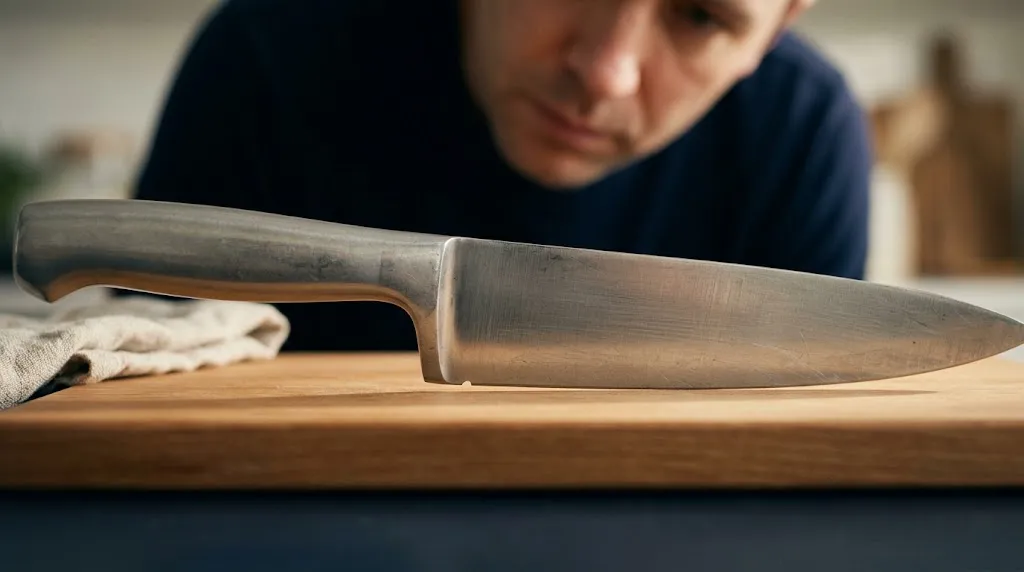
With the knife clean and stationary, view the blade’s edge against a flat cutting board from the side. If the edge makes contact in front but shows a gap close to a full bolster, prior sharpening may have altered its profile.
Do not keep sharpening only the exposed middle section to make the problem disappear. Have a sharpening specialist assess the edge profile and bolster together.
Food residue builds up near the handle
Inspect the joint after food preparation, especially around any narrow seams. Wash the knife by hand according to its manufacturer’s instructions, clean the transition carefully without rubbing the edge, and dry it completely before storage.
A smooth transition can make routine cleaning easier, but no bolster design eliminates the need to keep the knife clean. If a joint is visibly separating or trapping residue that cannot be removed, stop using the knife until it can be evaluated.
The metal junction presses into your finger
This is often a grip-fit issue rather than damage. Check whether you are pressing directly against a sharp corner or squeezing too tightly. If the bolster remains uncomfortable in your normal grip, a different handle or bolster shape may suit you better.
Tip
If your knife has a full bolster, tell the sharpening service before work begins. Ask them to check the heel profile as well as edge sharpness so the repaired blade contacts the board as intended.
Does a Bolster Mean a Chef Knife Is Better Made?
No. A bolster is a design choice, not a standalone measure of craftsmanship. Some forged Western-style knives feature large integral bolsters, while other high-quality forged or stamped knives have little or no visible collar.
The more useful questions concern how accurately the edge is ground, how comfortably the knife fits your hand, whether the blade and handle are securely joined, and how readily you can maintain its cutting profile.
Do not confuse a full bolster with a full tang. A full tang refers to steel extending through the handle; a full bolster describes how far the thick metal guard reaches at the blade junction. A knife can have one without the other. For a broader overview of these structural terms, see our article on the parts of a chef knife.
There is no universal winner. A full bolster can be comfortable for one cook, while a half bolster gives another cook a better balance of grip and maintenance. The right design is the one that stays comfortable, controlled, and serviceable in your routine.
Related Product
Kitchen Knife Sharpening Stones
A suitable whetstone can help maintain an accessible cutting edge; for full-bolster knives, check that the heel profile does not require professional attention first.
As an Amazon Associate, we earn from qualifying purchases.
Frequently Asked Questions
Can a chef knife have a bolster on only one side?
Bolster shapes vary, but a conventional chef knife bolster normally forms a transition around the blade-to-handle junction rather than a one-sided finger attachment. If the shape appears uneven, compare it with the manufacturer’s design before assuming damage.
Is a bolster the same as a finger guard?
Not exactly. Some full bolsters act as finger guards, but shorter bolsters do not provide the same barrier. A guard describes a safety-related function; a bolster describes the thickened junction.
Do Japanese chef knives always lack bolsters?
No. Many Japanese-style knives use a lighter, bolsterless construction or a separate handle ferrule, but designs vary. The knife’s actual junction matters more than its country or style label.
Can I sharpen a full-bolster chef knife at home?
Often, yes, if the bolster does not obstruct the intended sharpening path and you use a suitable method. If the guard protrudes below the edge or prevents proper heel contact, seek professional help rather than grinding it casually.
Will removing a bolster make my chef knife lighter?
Removing metal would change its weight and balance, but altering an intact bolster is not a routine adjustment. Grinding can affect the knife’s geometry and finish; consult a specialist rather than modifying it for weight alone.
Does a bolster prevent a knife from slipping in my hand?
It may provide a physical stop on certain designs, but it does not guarantee a secure grip. Dry hands, an appropriate handle, a stable cutting surface, and controlled technique remain necessary.
Conclusion
A chef knife bolster affects the feel of the blade-to-handle junction, the location of weight, and how easily the heel can be sharpened. Full bolsters offer a pronounced stop but can complicate long-term edge maintenance. Half and curved bolsters provide other grip options, while bolsterless knives remain entirely valid. Choose based on comfortable control and practical sharpening access, not the assumption that more metal means a better knife.

