Are Acacia Wood Cutting Boards Safe and Good? Pros, Cons & Care
Quick Answer
Yes, acacia wood cutting boards are generally safe and good for everyday food preparation when properly manufactured, cleaned, and maintained. Acacia is a durable hardwood with attractive grain patterns and good resistance to everyday wear. However, safe use depends on food-safe finishes, thorough drying, and preventing cross-contamination, as emphasized by USDA food safety guidance.
What makes acacia cutting boards a good choice?
- Durable hardwood: Acacia resists everyday cutting wear when the board is properly maintained.
- Food preparation: Smooth, food-contact-safe boards work well for vegetables, fruits, bread, and other ingredients.
- Moisture resistance: Acacia’s dense structure provides useful durability, although it isn’t waterproof.
- Knife compatibility: Wood offers a more forgiving cutting surface than glass or stone.
- Attractive appearance: Natural color variation makes acacia suitable for chopping and serving.
- Simple maintenance: Handwashing, drying, and occasional conditioning help preserve the wood.
Before using an acacia board
- Check the finish: Confirm that the manufacturer identifies the board as suitable for direct food contact.
- Inspect the surface: Avoid boards with cracks, loose joints, or deep grooves.
- Wash and dry: Clean before first use and after every food preparation session.
Acacia cutting boards catch my attention because they combine rich wood grain with practical kitchen durability. Still, a beautiful board isn’t automatically the safest choice.
The important questions involve food-contact finishes, bacteria, knife wear, and maintenance. I’ll explain where acacia performs well, where it falls short, and how to choose a board that fits your cooking habits.
What Is an Acacia Wood Cutting Board?
An acacia wood cutting board is a food preparation surface made from hardwood belonging to the acacia group of trees. Manufacturers use acacia for its distinctive grain, strength, and attractive natural coloring.
Acacia isn’t a single, uniform wood species. Different species and manufacturing methods can produce noticeable differences in hardness, weight, grain, and durability.
- Material: Natural hardwood from acacia species.
- Appearance: Golden-brown to darker brown tones with contrasting grain patterns.
- Construction: Edge-grain, end-grain, or other laminated wood arrangements.
- Common uses: Chopping vegetables, slicing fruit, preparing bread, and serving food.
- Maintenance: Gentle handwashing, complete drying, and periodic conditioning.
Acacia boards come in several thicknesses and shapes. Some include juice grooves, inset handles, or reversible cutting surfaces.
Are Acacia Wood Cutting Boards Safe for Food?
Yes, a well-made acacia cutting board can be safe for food preparation when its finish and adhesives are suitable for food contact. The board must also remain clean, intact, and properly dried.
Wood alone doesn’t guarantee food safety. Surface damage, trapped food residue, and poor cleaning can create risks with almost any cutting board.
Is Acacia Wood Naturally Food-Safe?
 Save
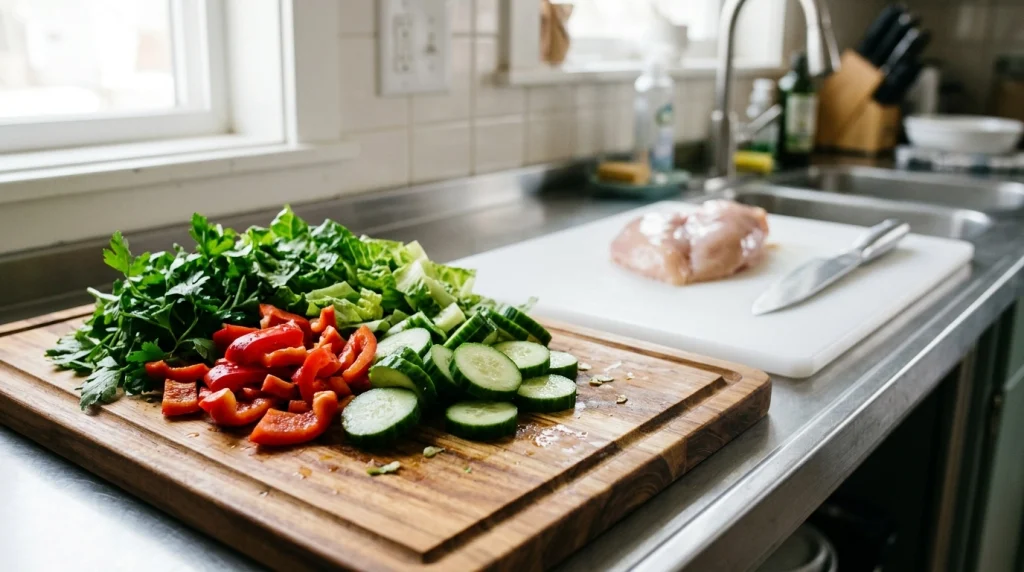
Acacia is commonly used to manufacture cutting boards and serving accessories. However, the wood’s identity alone doesn’t establish that a finished product meets food-contact safety requirements.
I recommend checking the manufacturer’s intended use instead of trusting vague claims like “natural” or “chemical-free.” A decorative acacia tray isn’t necessarily suitable for direct knife contact.
- Choose products explicitly sold for cutting or food preparation.
- Look for clear information about food-contact-safe coatings.
- Avoid unknown stains, industrial finishes, or untreated decorative pieces with uncertain origins.
- Inspect laminated boards for separating joints or exposed adhesive.
- Stop using any board that develops peeling coatings or loose fragments.
Can Acacia Cutting Boards Harbor Bacteria?
Yes, acacia cutting boards can harbor bacteria when contaminated or improperly cleaned. Wood is porous, and damaged surfaces can trap moisture or food residue.
The University of Minnesota Extension emphasizes smooth cutting surfaces, proper sanitation, and replacing boards with deep grooves. These precautions apply to wood and other materials.
Some manufacturers advertise natural antibacterial properties in acacia. I wouldn’t treat that claim as a substitute for washing and sanitizing.
Is Acacia Safe for Cutting Raw Meat?
Acacia can be used for raw meat preparation if the board is suitable for food contact and cleaned and sanitized correctly. However, a separate board for raw meat is the more practical food safety routine.
Raw poultry, seafood, and meat juices can transfer harmful microorganisms to ready-to-eat food. This transfer is called cross-contamination.
- Reserve one board for vegetables, fruits, bread, and ready-to-eat foods.
- Use another dedicated board for raw meat, poultry, and seafood.
- Wash utensils and countertops after handling raw animal products.
- Clean and sanitize contaminated boards before reuse.
- Replace cutting surfaces that cannot be cleaned effectively.
These precautions follow the USDA’s cross-contamination recommendations. I prefer a dishwasher-safe plastic board for raw poultry because cleanup is easier.
What Are the Benefits of Acacia Wood Cutting Boards?
Acacia provides a useful balance of durability, appearance, and everyday functionality. It suits cooks who want a wood board that also looks attractive on a countertop.
1. Strong and Durable Construction
Acacia is generally a hard, dense wood. This helps well-made boards withstand everyday chopping and slicing.
However, its durability varies by species, grain arrangement, construction, and finish. Dense wood can still crack if exposed to repeated soaking or extreme temperatures.
2. Attractive Natural Wood Grain
One of acacia’s strongest advantages is its appearance. Its contrasting colors give each board a distinctive character.
I especially like acacia for kitchens where the cutting board remains visible. It can serve as a useful preparation surface and an attractive serving piece.
3. Useful Moisture Resistance
Acacia’s dense structure can offer useful resistance to everyday moisture exposure. However, moisture resistance isn’t the same as being waterproof.
Prolonged soaking can cause swelling, warping, or glue-joint failure. Dry the board thoroughly after washing.
4. More Knife-Friendly Than Glass or Stone
Acacia is a better cutting surface for most kitchen knives than hard glass or stone. Its wood surface gives slightly under the blade during cutting.
Still, some dense acacia boards feel harder on delicate knife edges than softer hardwood alternatives. Board construction also affects the cutting experience.
5. Versatile Kitchen Use
An acacia cutting board can perform several kitchen tasks without requiring a special design. Its warm finish also makes it appealing for food presentation.
- Chopping onions, carrots, peppers, and herbs.
- Slicing bread, cheese, and fruit.
- Preparing sandwiches and simple meals.
- Serving appetizers and charcuterie.
- Carving cooked foods when properly cleaned and suitable for the task.
What Are the Disadvantages of Acacia Wood Cutting Boards?
Acacia boards have drawbacks worth considering before buying. Most involve maintenance, knife wear, and variations in manufacturing quality.
- Not dishwasher-friendly: Many manufacturers require handwashing to prevent cracking and warping.
- Needs conditioning: Food-safe mineral oil helps reduce excessive drying.
- Variable hardness: Some acacia boards may be harder on knife edges than softer hardwoods.
- Can develop cracks: Repeated water exposure and temperature changes may damage the wood.
- Quality differences: Poor adhesive joints and unsuitable finishes can undermine an otherwise attractive board.
- Can be heavy: Large, thick boards may be inconvenient to lift and wash.
These disadvantages don’t necessarily make acacia a poor choice. They simply mean that proper care matters.
Acacia vs. Bamboo vs. Maple: Which Cutting Board Is Better?
 Save
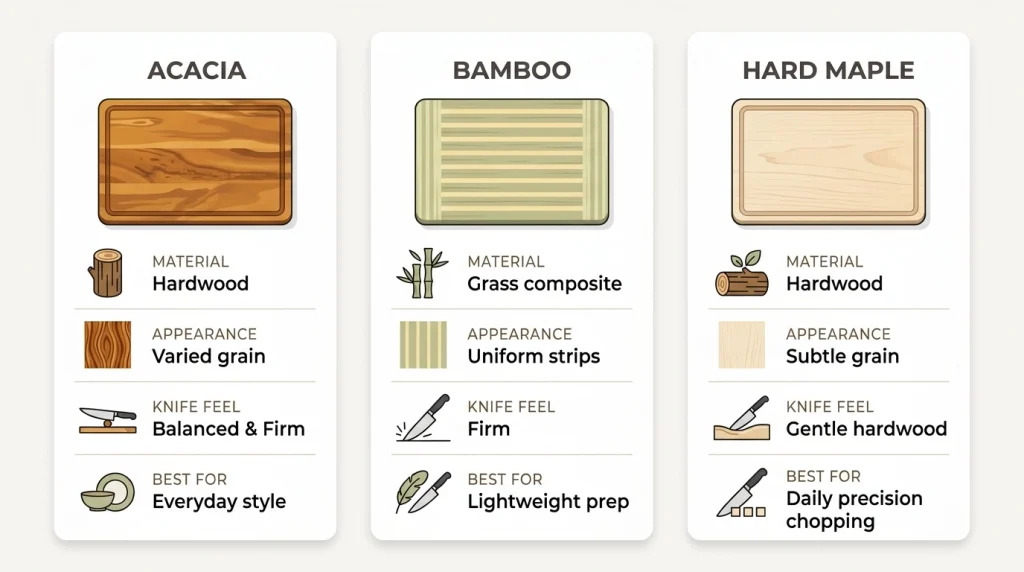
Acacia, bamboo, and maple can all work as cutting board materials. The best option depends on your knives, maintenance preferences, budget, and cooking routine.
| Feature | Acacia | Bamboo | Hard Maple |
|---|---|---|---|
| Material | Hardwood | Grass-based composite | Hardwood |
| Appearance | Varied, rich grain | Light, uniform strips | Light, subtle grain |
| Knife experience | Varies with density and grain | Often relatively firm | Balanced hardwood feel |
| Cleaning | Usually handwash | Usually handwash | Usually handwash |
| Maintenance | Periodic conditioning | Follow manufacturer guidance | Periodic conditioning |
| Best suited for | Style and daily prep | Lightweight options | Frequent knife work |
My preference would be maple for frequent precision chopping and acacia for a versatile, attractive everyday board. Bamboo remains a reasonable alternative when lightweight construction matters.
The exact product matters more than the material name alone. A smooth, well-constructed board is more useful than a poorly finished premium hardwood board.
Do Acacia Cutting Boards Dull Knives?
Yes, acacia cutting boards can contribute to normal knife-edge wear. However, they are generally more suitable for knife work than glass, ceramic, or stone boards.
Blade wear depends on the wood’s hardness, cutting technique, grain orientation, and knife steel. There isn’t one universal acacia hardness rating that accurately describes every board.
Does End-Grain Acacia Protect Knife Edges?
End-grain construction can provide a more forgiving cutting experience because the knife meets the ends of the wood fibers. It often feels different from long-grain construction.
That doesn’t mean every end-grain acacia board outperforms every maple board. Wood species, surface finish, and individual cutting habits still matter.
- Use a sharp knife rather than applying excessive force.
- Avoid scraping the board with the sharp cutting edge.
- Use the knife’s spine or a bench scraper to move chopped ingredients.
- Keep the cutting surface smooth and free of hard debris.
How Do You Clean an Acacia Wood Cutting Board?
Clean an acacia cutting board using mild dish soap, water, and a nonabrasive sponge. Rinse it thoroughly and dry it immediately.
For most acacia boards, handwashing is the safest routine. Always follow the manufacturer’s instructions.
- Remove food scraps: Scrape loose debris from the board without gouging the wood.
- Wash: Scrub all cutting surfaces with warm, soapy water.
- Rinse: Remove soap residue with clean water.
- Sanitize when needed: Use an appropriate food-contact sanitizer, particularly after raw meat contact.
- Dry: Pat the surface with a clean towel.
- Air-dry: Stand the board upright where air can circulate around both sides.
How Should You Sanitize Acacia Wood?
After cleaning, follow a food-contact sanitizer’s label instructions. For household bleach sanitation, USDA guidance describes a solution containing one tablespoon of unscented liquid chlorine bleach per gallon of water.
Apply the solution, let it stand for several minutes, rinse with clean water, and air-dry. Never mix bleach with vinegar, ammonia, or other cleaning products.
The University of Maine Cooperative Extension also provides practical wooden cutting board care advice, including conditioning and safe drying.
Can You Put an Acacia Cutting Board in the Dishwasher?
Most acacia cutting boards should not go into the dishwasher. Heat, prolonged moisture, and detergent exposure can damage the wood or adhesive joints.
Some solid-wood products may have different care instructions. Unless your specific manufacturer explicitly approves dishwasher cleaning, handwash instead.
How Do You Oil and Maintain Acacia Cutting Boards?
 Save
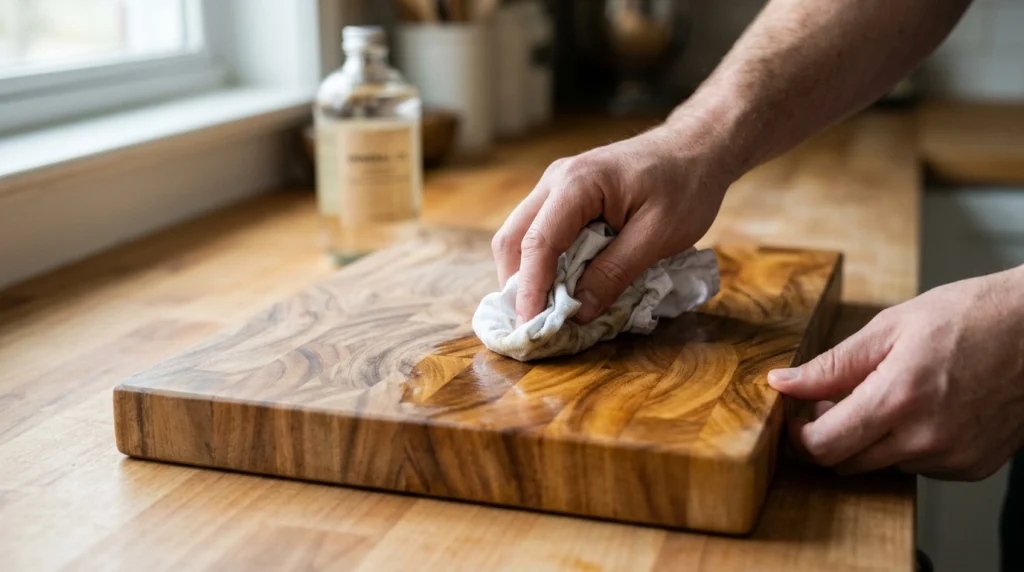
Use food-grade mineral oil or a cutting board conditioner approved for food contact. Conditioning helps reduce excessive drying and keeps the surface looking attractive.
I recommend checking the board’s appearance and feel rather than following a rigid schedule. A dry-looking surface may need attention sooner than a frequently conditioned one.
- Wash the board and allow it to dry completely.
- Inspect the surface for cracks, loose fragments, or damaged joints.
- Apply a thin, even layer of food-grade mineral oil with a clean cloth.
- Allow the oil to absorb according to the conditioner instructions.
- Wipe away remaining oil before using the board.
- Store the board in a clean, dry location.
What Oil Should You Avoid?
Avoid using ordinary cooking oils as your default cutting board conditioner. Oils such as olive and vegetable oil can become sticky or develop unpleasant odors over time.
Food-grade mineral oil is a straightforward alternative. Beeswax-based board conditioners may also help protect the surface.
How Long Do Acacia Wood Cutting Boards Last?
A quality acacia cutting board can provide years of service when maintained correctly. Its usable lifespan depends on construction quality, washing habits, cutting frequency, and storage.
There’s no reliable fixed replacement interval for every acacia board. Its condition matters more than its age.
When Should You Replace an Acacia Cutting Board?
- Deep knife grooves remain difficult to clean.
- Cracks collect food residue or moisture.
- Glue joints begin separating.
- The board develops persistent mold contamination.
- Large splinters or loose wood fibers appear.
- Peeling or deteriorating finishes make food contact questionable.
A slightly worn surface may sometimes be refinished if the board is structurally sound. However, serious cracks or separating joints make replacement the safer option.
How Do You Choose a Good Acacia Cutting Board?
Look for a smooth, stable cutting surface with clear manufacturer care instructions. I would prioritize construction and food-contact suitability over decorative appearance.
What Features Matter Most?
- Food-contact suitability: Confirm the board is intended for cutting food.
- Surface quality: Check for smooth sanding without splinters.
- Board dimensions: A surface around 15 by 10 inches works for many everyday tasks.
- Thickness: Thicker boards can feel stable but may be harder to clean and lift.
- Juice groove: Useful for juicy fruit or carving cooked meat.
- Handles: Inset grips make heavy boards easier to move.
- Construction: Inspect laminated joints and overall flatness.
For smaller kitchens, I favor a moderate-size board that fits comfortably inside the sink. An oversized board becomes inconvenient if cleaning it is difficult.
Recommended Acacia Wood Cutting Boards
If you’re ready to choose a board, these are three specific models worth comparing. The selections reflect different cooking needs, not laboratory testing or verified customer-review scores.
🏆 Everyday Preparation
Lipper International Acacia Cutting Board with Juice Groove, Large (1237C)
Editorial suitability: 4.5/5
This acacia board measures 15 × 10 × 0.75 inches and includes a juice groove. I’d shortlist it for everyday vegetables, fruit, and straightforward kitchen prep because its dimensions balance usable space with manageable storage.
🔪 End-Grain Option
Ironwood Gourmet Charleston End Grain Prep Station (28217)
Editorial suitability: 4.5/5
This substantial acacia end-grain preparation board measures 20 × 14 × 1.25 inches. I’d consider it for cooks who want a large dedicated chopping surface and have enough counter and storage space.
🧀 Cutting and Serving
Lipper International Acacia Paddle Board (1028)
Editorial suitability: 4/5
This narrow paddle board measures 21.5 × 8.75 × 0.75 inches overall, with a 17 × 8-inch usable surface. I’d choose it for slicing bread, preparing snacks, and serving appetizers rather than extensive chopping.
Affiliate disclosure: As an Amazon Associate, we may earn from qualifying purchases. Product availability and prices can change. Suitability scores are editorial assessments, not verified customer ratings or hands-on test results.
Frequently Asked Questions
Are acacia cutting boards non-toxic?
Acacia cutting boards can be suitable for food contact when manufactured with appropriate finishes and adhesives. However, the wood name alone doesn’t prove that every finished product is non-toxic. Purchase from a reputable manufacturer and confirm the board is intended for food preparation.
Is acacia better than bamboo for cutting boards?
Acacia is a good choice for people who prefer natural hardwood and distinctive grain patterns. Bamboo boards may appeal to those wanting lighter options. Neither material automatically guarantees better food safety. Construction quality, surface condition, cleaning, and maintenance are more important.
Can acacia cutting boards get moldy?
Yes. Acacia cutting boards can develop mold when stored wet or exposed to prolonged moisture. Wash and dry the board thoroughly, then store it where air circulates. Replace boards with mold contamination inside deep cracks or areas that cannot be effectively cleaned.
How often should you oil an acacia cutting board?
Many wooden boards benefit from conditioning approximately once a month, although the right frequency depends on usage and manufacturer instructions. Apply food-grade mineral oil when the wood looks dry, allow it to absorb, and wipe away the excess before preparing food.
Are acacia cutting boards worth buying?
Yes, acacia boards are worth considering when you want a durable, attractive cutting surface and don’t mind handwashing and occasional oiling. They are less convenient for someone who needs dishwasher cleaning. Choose a food-contact-safe board with sound construction and manageable dimensions.
Final Verdict: Is Acacia Wood Good for Cutting Boards?
Acacia is a solid cutting board material for many home kitchens. It combines attractive natural grain, useful durability, and a practical surface for everyday preparation.
Its biggest limitation isn’t usually the wood itself. It’s the extra attention required to clean, dry, and condition the board correctly.
If you appreciate wooden kitchen tools and maintain them carefully, acacia deserves consideration. Choose a well-made board, keep raw food preparation separate, and replace damaged surfaces promptly.
My recommendation: Start with a medium-size acacia board from a manufacturer that clearly specifies food-safe construction and care instructions. A board that’s comfortable to use and easy to clean is usually the better long-term choice.

