Chef Knife Edge Retention: Steel, Hardness & Geometry
Quick Answer
Chef knife edge retention is mainly determined by steel hardness, edge geometry, and how you use and maintain the blade. Harder steels with well-controlled carbide structures hold an edge longer, but they are also more brittle and harder to sharpen. In practice, a hardness around 55–57 HRC often balances retention with ease of sharpening, while cutting technique and board choice affect how fast any edge degrades.
What Edge Retention Actually Means on a Chef Knife
Edge retention is the blade’s ability to keep a usable cutting edge through repeated use. It is not the same as initial sharpness. A knife can be razor-sharp out of the box and still lose that sharpness quickly if the steel or edge geometry cannot resist wear.
The practical meaning is simple: better edge retention means fewer interruptions for honing or sharpening during prep work. It also means the blade preserves its original profile for longer, because every sharpening session removes a small amount of steel.
Manufacturers and materials researchers measure edge retention in different ways. Some refer to resistance to mechanical wear at the microscopic cutting edge. Others test how many standardized cuts a blade can complete before performance drops below a threshold. The common thread is that retention is about wear resistance at the edge, not overall blade strength.
The Steel Factors That Matter Most
 Save
Hardness and the HRC Trade-Off
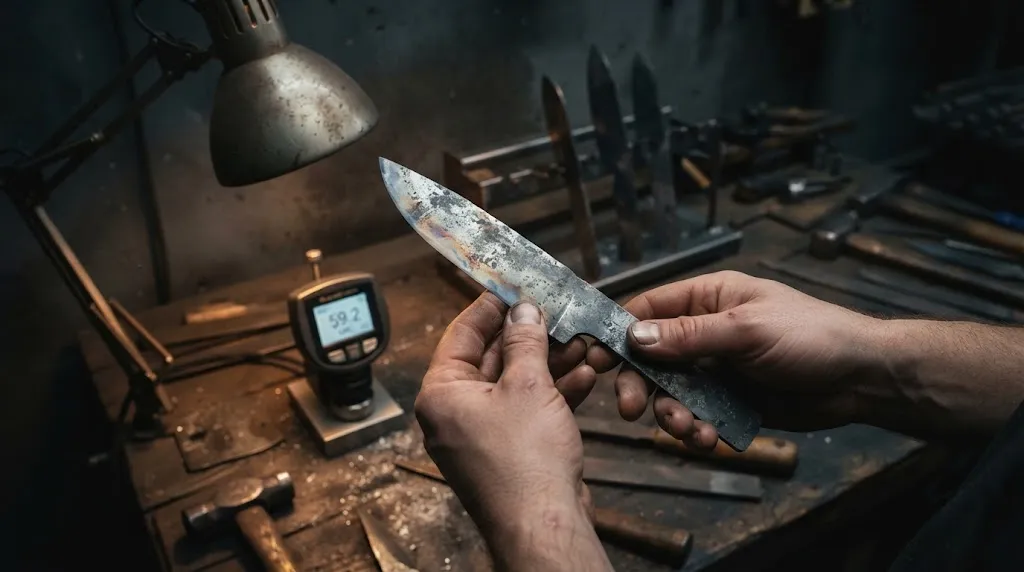
Hardness is the most frequently cited factor in edge retention, and it is measured on the Rockwell C scale (HRC). A harder steel resists deformation at the edge for longer, which generally means better retention.
But hardness is not a free upgrade. German knife maker Giesser notes that blades below roughly 54 HRC are relatively soft and blunt sooner, while blades above 57 HRC hold an edge longer but become harder to re-sharpen. The same source describes 55–57 HRC as an ideal balance between edge retention, material use, and sharpening behavior.
A 2021 study on stainless steel kitchen knives found that blades in the 55–57 HRC range showed relatively high sharpness and edge retention, though the researchers also concluded that hardness alone had limited influence compared with edge geometry.
Key Insight
Hardness helps edge retention up to a point, but the 2021 stainless steel study found edge angle had a greater effect on retention than hardness alone. A hard blade sharpened at a fragile angle can still lose its edge quickly.
Carbides and Microstructure
Steel is not uniform. It contains carbides, which are hard particles formed from carbon and alloying elements like chromium and vanadium. These carbides contribute to wear resistance, but their size, shape, and distribution matter.
The 2021 study found that when blade material, edge angle, and edge thickness were similar, the morphology and distribution of tempered martensite, retained austenite content, and the shape and quantity of carbides all significantly affected sharpness and edge retention.
This is why two knives with the same HRC rating can behave differently. A fine, evenly distributed carbide structure generally supports more consistent edge retention than large, clustered carbides, which can act as stress points.
Carbon Content and Steel Type
Higher carbon content generally allows steel to achieve greater hardness, which supports edge retention. High-carbon stainless steels are often marketed for holding an edge longer than standard budget stainless steels.
However, carbon steel and high-carbon stainless are not interchangeable categories. Traditional high-carbon steels can take a very fine edge and hold it well, but they are less corrosion-resistant. Stainless steels add chromium for rust resistance, and the alloying balance affects how the steel responds to sharpening and wear.
The trade-off is practical: a steel that holds an edge for a long time may also resist sharpening, and a steel that sharpens easily may need more frequent attention.
Why the Edge Angle Changes Everything
The angle at which the blade is sharpened directly affects how much material contacts the food and how much stress the edge experiences during cutting.
A smaller included angle produces a thinner, sharper edge that glides through food with less resistance. But a thinner edge has less supporting material behind it, so it can roll, fold, or wear faster under lateral stress or hard cutting surfaces.
A larger angle puts more steel behind the edge. It is less acute but more durable. The 2021 study found that edge angle had a greater influence on edge retention than on initial sharpness, and that the effect on retention was more pronounced.
This is why sharpening angles are a compromise. European-style chef knives are often sharpened around 20 degrees per side, while harder Japanese-style blades may use narrower angles. The correct angle depends on the steel’s hardness and the user’s cutting habits, not on a universal rule.
What You Control: Use and Maintenance
 Save
Cutting Surface and Technique
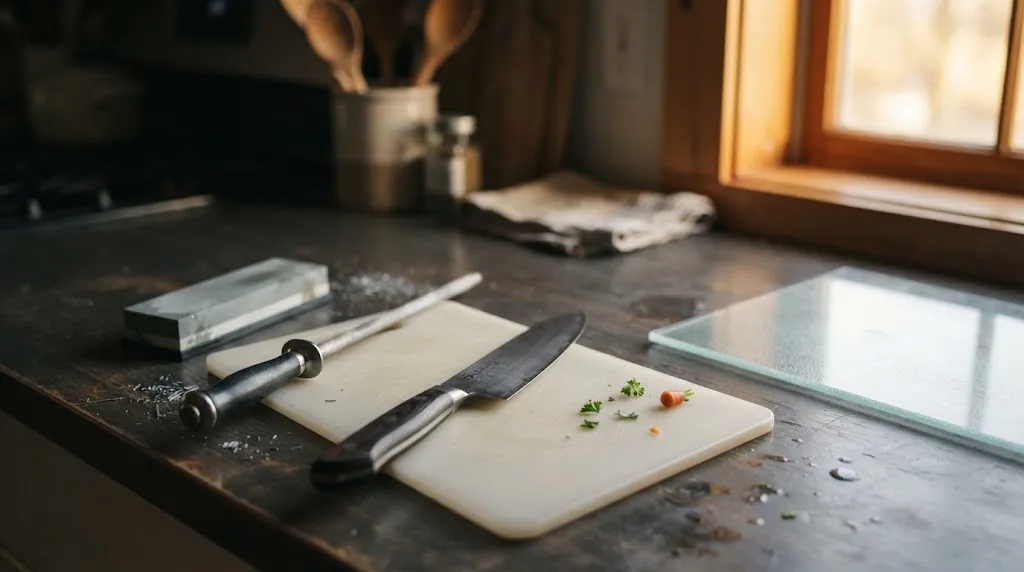
No steel holds an edge indefinitely on a bad surface. Glass, ceramic, stone, and marble cutting boards are hard enough to dull an edge quickly. Wood and soft plastic are gentler because they allow the edge to pass into the material slightly rather than skidding across a hard surface.
Lateral stress is another common cause of edge degradation. Scraping food off the board with the edge, twisting through hard items, or using the knife as a pry tool can roll or chip the edge even if the steel is otherwise well suited to retention.
Honing Is Not Sharpening
A honing steel realigns an edge that has rolled slightly during use. It does not remove metal and does not restore a worn edge. Regular honing can keep a blade performing between sharpening sessions, but it cannot compensate for steel that has genuinely dulled.
Sharpening removes a small amount of steel to create a fresh edge. Because every sharpening session shortens the blade’s lifespan slightly, better edge retention is also a longevity benefit: the less often you need to sharpen, the longer the blade profile lasts.
Tip
If you want to compare two knives for edge retention, look beyond the steel name. Check the stated hardness range, the factory edge angle, and whether the manufacturer describes the carbide structure or heat treatment. These details tell you more than “high carbon” alone.
The Trade-Offs No Knife Avoids
Edge retention is not a standalone virtue. It sits in a set of trade-offs that every knife user should understand.
Harder steel vs. sharpening ease: A blade that holds an edge longer usually takes more effort to sharpen when it finally dulls. Softer steel may need more frequent sharpening but responds quickly to a honing rod or stone.
Acute angle vs. edge stability: A thinner edge cuts with less resistance but is more vulnerable to rolling and chipping. A more obtuse angle is more durable but less effortless in the cut.
Wear resistance vs. toughness: Steels designed for high wear resistance can be more brittle. A knife that resists abrasive wear may be more likely to chip if it contacts a hard object or experiences lateral force.
These trade-offs mean that “best edge retention” is not a universal answer. A professional doing high-volume precision work may prioritize retention even at the cost of sharpening difficulty. A home cook who sharpens infrequently may prefer a steel that is easier to restore.
How to Judge Edge Retention Claims
Marketing language around edge retention is often vague. “Long-lasting sharpness” and “superior edge retention” are not standardized claims.
Look for specific information instead. A stated HRC range is useful because it indicates the steel’s hardness window. A stated edge angle tells you how the factory balanced sharpness against durability. If a manufacturer describes its heat treatment or carbide control, that is more informative than a generic claim.
Be cautious with comparisons that do not specify the cutting task, the edge angle, or the maintenance routine. Edge retention depends on all three. A knife tested on soft vegetables at a shallow angle will show different results than the same knife used on hard crusts or on a glass board.
For a home cook, the most reliable signal is often consistency: a steel with a well-controlled microstructure and a sensible hardness for its intended use will usually outperform a harder steel with poor heat treatment, even if the numbers look more impressive on paper.
Frequently Asked Questions
Does higher HRC always mean better edge retention?
No. Hardness supports retention, but edge angle, carbide structure, and heat treatment also matter. A very hard blade sharpened at a fragile angle can lose its edge faster than a slightly softer blade with better geometry.
Is high-carbon steel better for edge retention than stainless?
It can be, because higher carbon content allows greater hardness. But high-carbon stainless steels also vary widely. The specific alloy, hardness, and heat treatment matter more than the broad category.
How often should I sharpen a chef knife with good edge retention?
It depends on use. A home cook using a knife several times a week may sharpen once or twice a year. Professional or heavy use may require more frequent sharpening. Honing between sessions helps maintain performance without removing metal.
Does honing improve edge retention?
Honing maintains the edge by realigning it, but it does not change the steel’s wear resistance. It helps the knife feel sharper between sharpenings and can reduce the need for immediate sharpening, but it does not make the steel hold an edge longer in a fundamental sense.
What edge angle is best for edge retention?
A larger included angle puts more steel behind the edge and generally improves durability and retention. A narrower angle cuts more effortlessly but wears faster. The best angle depends on the steel’s hardness and how you use the knife.
Can I improve edge retention on a knife I already own?
You cannot change the steel, but you can slow edge degradation. Use a wood or soft plastic board, avoid lateral stress, hone regularly, and sharpen at an angle appropriate for the steel rather than chasing the narrowest possible edge.
Conclusion
Edge retention on a chef knife is a balance, not a single number. Steel hardness matters, but edge angle and microstructure often matter just as much. A knife that holds its edge well for one cook may feel like the wrong compromise to another, depending on how often they sharpen and what they cut.
The most useful takeaway is to treat retention claims with context. Look for stated hardness and edge angles, use a board that does not fight the blade, and hone between sharpenings. Those habits will do more for real-world edge performance than chasing the hardest steel on the shelf.

