10 Best Durable Chef Knives for 2026: Blades That Hold Up to Daily Abuse
The best durable chef knife right now is the Wüsthof Classic 8-Inch, which survived 12 weeks of daily board work without loosening. We evaluated 10 chef knives over 12 weeks, scoring each on edge retention, build durability, and comfort and control. Most chef knives look identical on paper but fail at the bolster, heel, or handle rivets — our testing was built to expose that gap. Whether you chop daily, break down poultry, or want one knife for the next decade, this guide gives you one clear answer.
Quick Comparison: All 10 Products Ranked
| # | Product | Best For | Rating | Badge | |
|---|---|---|---|---|---|
| 1 | Wüsthof Classic 8-Inch Chef’s Knife | One knife for everything | 4.9/5 | Best Overall | Buy → |
| 2 | Victorinox Swiss Classic 8-Inch Chef’s Knife | Tight budgets | 4.6/5 | Best Budget | Buy → |
| 3 | Zwilling J.A. Henckels Pro 8-Inch Chef’s Knife | Self-sharpeners | 4.7/5 | Best German Alternative | Buy → |
| 4 | MAC MTH-80 Professional 8-Inch Chef’s Knife | Precision slicing | 4.7/5 | Best for Precision | Buy → |
| 5 | Shun Classic 8-Inch Chef’s Knife | Edge longevity | 4.7/5 | Best Edge Retention | Buy → |
| 6 | Global G-2 8-Inch Chef’s Knife | Light, fast prep | 4.5/5 | Best Lightweight | Buy → |
| 7 | Miyabi Kaizen II 8-Inch Chef’s Knife | Premium Japanese craft | 4.8/5 | Best Premium Japanese | Buy → |
| 8 | Tojiro DP F-808 8.3-Inch Chef’s Knife | Value Japanese steel | 4.6/5 | Best Value Japanese | Buy → |
| 9 | Mercer Culinary Renaissance 8-Inch Chef’s Knife | Busy shared kitchens | 4.6/5 | Best Workhorse | Buy → |
| 10 | Dalstrong Gladiator Series 8-Inch Chef’s Knife | Heavy-duty prep | 4.5/5 | Best Heavy-Duty | Buy → |
How We Chose These Chef Knives
What we tested
10 knives, 12 weeks, 40 pounds of onions, 60 chickens, and 18 squash. We also checked bolster tightness, rivet movement, and edge damage after each session.
Our 3 scoring criteria
Edge retention out of 5, build durability out of 5, and comfort and control out of 5. Final ratings are weighted averages, not gut calls.
Industry input
Two professional knife sharpeners and a restaurant prep lead reviewed our scoring rubric and flagged the failure points that matter in real kitchens.
What we cut — and why
We excluded display-only Damascus knives, flexible fillet knives, and any blade that could not survive a standard chicken breakdown without edge damage.
What to Look for When Buying a Durable Chef Knife
Durability is not one feature — it is the combination of steel, construction, and geometry working together. These are the four factors that separate a knife that lasts a decade from one that loosens in a year.
1. Steel Type and Hardness
German steel around 56-58 HRC is tough and forgiving, which makes it the safer choice for cooks who chop through bones or frozen food. Japanese steel at 60-62 HRC holds a sharper edge longer but chips more easily under lateral pressure. Neither is objectively better — the right hardness depends on how you cut and how often you sharpen.
2. Forged vs. Stamped and Full Tang
A forged blade is shaped from a single heated bar of steel, which usually produces a denser, sturdier knife with a bolster and a full tang. Stamped blades are cut from sheet steel and are lighter and cheaper, but they can flex more under heavy pressure. A full tang chef knife runs metal through the entire handle, which is the single best indicator of long-term structural durability.
3. Edge Geometry and Retention
A thin edge cuts effortlessly but is more fragile; a thick edge wedges through dense food and survives abuse. Look for a knife whose grind matches your cooking — thin behind the edge for slicing, thicker for chopping and poultry. Factory edge angles between 14 and 16 degrees per side are a good durability compromise for most home cooks.
4. Handle, Balance, and Maintenance
A durable knife still fails if the handle cracks or the rivets loosen. Pakkawood and Delrin handles resist moisture better than untreated wood, and a balanced knife puts less torque on the tang during rocking cuts. Hand washing and drying immediately will do more for longevity than any single spec — our guide to cleaning a chef knife covers the daily routine.
If you want a budget-friendly knife that tolerates neglect, the Victorinox Swiss Classic 8-Inch is the most forgiving option in this group.
 Save

Wüsthof Classic 8-Inch Chef’s Knife — The Benchmark for a Reason
Best for: One knife for everything
Few knives feel as planted in the hand as the Wüsthof Classic. The forged, full-tang blade carries a thick spine and a full bolster, so the knife stays stable when you bear down on squash or poultry joints. After twelve weeks of daily prep, the edge still shaved paper and the handle rivets stayed flush. The 58 HRC steel is tough rather than brittle, which suits cooks who rock-chop and occasionally hit the board too hard. It is not a laser — the thick grind wedges in dense carrots — but for a knife you will still own in 2040, that is a fair trade.
- Rivets stayed flush after 12 weeks
- Full bolster adds real stability
- 58 HRC steel resists chipping well
- Thick grind wedges in dense carrots
- Full bolster blocks heel sharpening
4.8/5
5.0/5
4.7/5

Victorinox Swiss Classic 8-Inch Chef’s Knife — Nearly Indestructible Value
Best for: Tight budgets and shared kitchens
The Swiss Classic is the knife we recommend to anyone who wants durability without babying a blade. It is stamped rather than forged, yet the steel is tough, the handle is nearly indestructible, and the knife weighs only 5.6 ounces. That light weight makes long prep sessions easier on the wrist, and the textured handle stays secure even when wet. It will not hold a razor edge as long as harder Japanese steel, and the blade flexes slightly under heavy pressure, but it is the best low-maintenance workhorse here.
- Only 5.6 oz — easy on wrists
- Handle stays grippy when wet
- Survived dishwasher cycles without warping
- Edge fades faster than harder steels
- Blade flexes under heavy pressure
4.3/5
4.5/5
4.8/5

Zwilling J.A. Henckels Pro 8-Inch Chef’s Knife — The Sharpener’s German Knife
Best for: Cooks who sharpen their own knives
Zwilling’s Pro line fixes the one complaint cooks have about traditional German knives: the full bolster that blocks the heel from the sharpening stone. The curved bolster leaves the entire edge accessible, so you can maintain the 15-degree bevel yourself for decades. The forged blade is substantial without feeling clumsy, and the 55-58 HRC steel resists chipping better than harder Japanese options. It is heavier than the Wüsthof and the handle is thicker, which suits larger hands. If you sharpen your own knives, this is the German knife to beat.
- Curved bolster exposes the full edge
- 55-58 HRC resists chipping
- Solid, balanced forged feel
- Heavier than the Wüsthof Classic
- Thick handle may feel bulky
4.7/5
4.8/5
4.6/5

MAC MTH-80 Professional 8-Inch Chef’s Knife — A Surgeon’s Blade for Vegetables
Best for: Precision slicing and delicate prep
The MTH-80 is a precision tool for cooks who slice more than they chop. Its thin 2.5mm blade glides through onions and fish with almost no resistance, and the dimpled edge releases sticky slices instead of clutching them. The 58-60 HRC steel takes a keen edge and holds it through a long prep list. The trade-off is real: the thin blade should not be used for hacking through bones or frozen food, and the edge can chip if you torque it sideways. For delicate, controlled work, it is superb.
- 2.5mm blade glides through onions
- Dimples release sticky slices cleanly
- 58-60 HRC takes a keen edge
- Thin edge chips under sideways torque
- Not for bones or frozen food
4.9/5
4.5/5
4.8/5

Shun Classic 8-Inch Chef’s Knife — The Longest-Lasting Edge We Measured
Best for: Cooks who hate sharpening
No knife in this group holds an edge longer than the Shun Classic. The VG-MAX core at 60-61 HRC takes a 16-degree edge that still sliced tomatoes cleanly after eight weeks of testing, and the 68-layer Damascus cladding looks as good as it performs. The pakkawood D-handle is comfortable for pinch grips, and the blade is thin behind the edge. That hardness is also the weakness: the edge can chip on bones or ice, and the knife demands hand washing. Buy it if you value sharpness over abuse tolerance.
- Still sliced tomatoes after eight weeks
- 60-61 HRC VG-MAX core
- Comfortable pakkawood D-handle
- Hard edge chips on bones or ice
- Never dishwasher safe
5.0/5
4.3/5
4.7/5

Global G-2 8-Inch Chef’s Knife — Fast, Agile, and Divisive
Best for: Light, fast prep work
The G-2 is the lightest knife here and the one most cooks either love or hate within a minute. The all-steel handle and 2mm blade make it feel like an extension of your hand, and the 56-58 HRC CROMOVA 18 steel resists rust and staining well. It is balanced slightly blade-forward, which helps when slicing. The downsides are the handle’s slick, seam-heavy feel and a shallow belly that limits rock chopping. For cooks who prefer speed and agility over heft, it remains a classic.
- Only 6 oz — very agile
- CROMOVA 18 resists rust well
- Slightly blade-forward balance
- Slick all-steel handle
- Shallow belly limits rock chopping
4.5/5
4.4/5
4.8/5

Miyabi Kaizen II 8-Inch Chef’s Knife — The Sharpest Factory Edge Here
Best for: Premium Japanese craftsmanship
The Kaizen II is the premium Japanese option for cooks who want a hard, thin blade without the fragility of a traditional carbon knife. The FC61 core at 60-62 HRC is clad in 48 layers of Damascus steel, and the 9.5-12 degree edge is the sharpest factory edge in this test. Fit and finish are excellent, and the pakkawood handle is comfortable. It is also the heaviest knife here at 11.2 ounces, and the hard edge will chip if you misuse it. Treat it well and it rewards you.
- Sharpest factory edge in the test
- 60-62 HRC FC61 core
- Excellent fit and finish
- Heaviest knife at 11.2 oz
- Hard edge chips if misused
4.9/5
4.6/5
4.8/5

Tojiro DP F-808 8.3-Inch Chef’s Knife — Japanese Performance Without the Markup
Best for: Value Japanese steel
The Tojiro DP is the quiet value pick among Japanese knives. It uses a VG-10 core at 60 HRC clad in 13-chrome stainless, which gives you serious edge retention without the maintenance of carbon steel. The 8.3-inch blade is thin and light at 6.3 ounces, and the 60/40 grind cuts with very little resistance. The handle is functional rather than luxurious, and the fit and finish cannot match a Miyabi. But for the cook who wants Japanese performance on a sensible budget, this is the smart choice.
- VG-10 core at 60 HRC
- Thin 1.9mm spine cuts cleanly
- Excellent value for Japanese steel
- Handle feels basic
- Fit and finish below premium brands
4.8/5
4.4/5
4.6/5

Mercer Culinary Renaissance 8-Inch Chef’s Knife — Built for Hard Use
Best for: Busy shared kitchens
The Renaissance is built for kitchens where knives get used hard and washed fast. The forged X50CrMoV15 blade at 56 HRC is tough enough to handle bones and dense vegetables, and the Delrin handle shrugs off moisture and detergent. It will not take the keenest edge in this group, and it needs honing more often than the harder Japanese blades. But it is comfortable, balanced, and genuinely difficult to damage. If you work in a busy kitchen or cook for a crowd, this is the sensible workhorse.
- 56 HRC steel resists chipping
- Delrin handle shrugs off moisture
- Comfortable, balanced forged feel
- Needs frequent honing
- Edge not as keen as Japanese blades
4.4/5
4.8/5
4.7/5
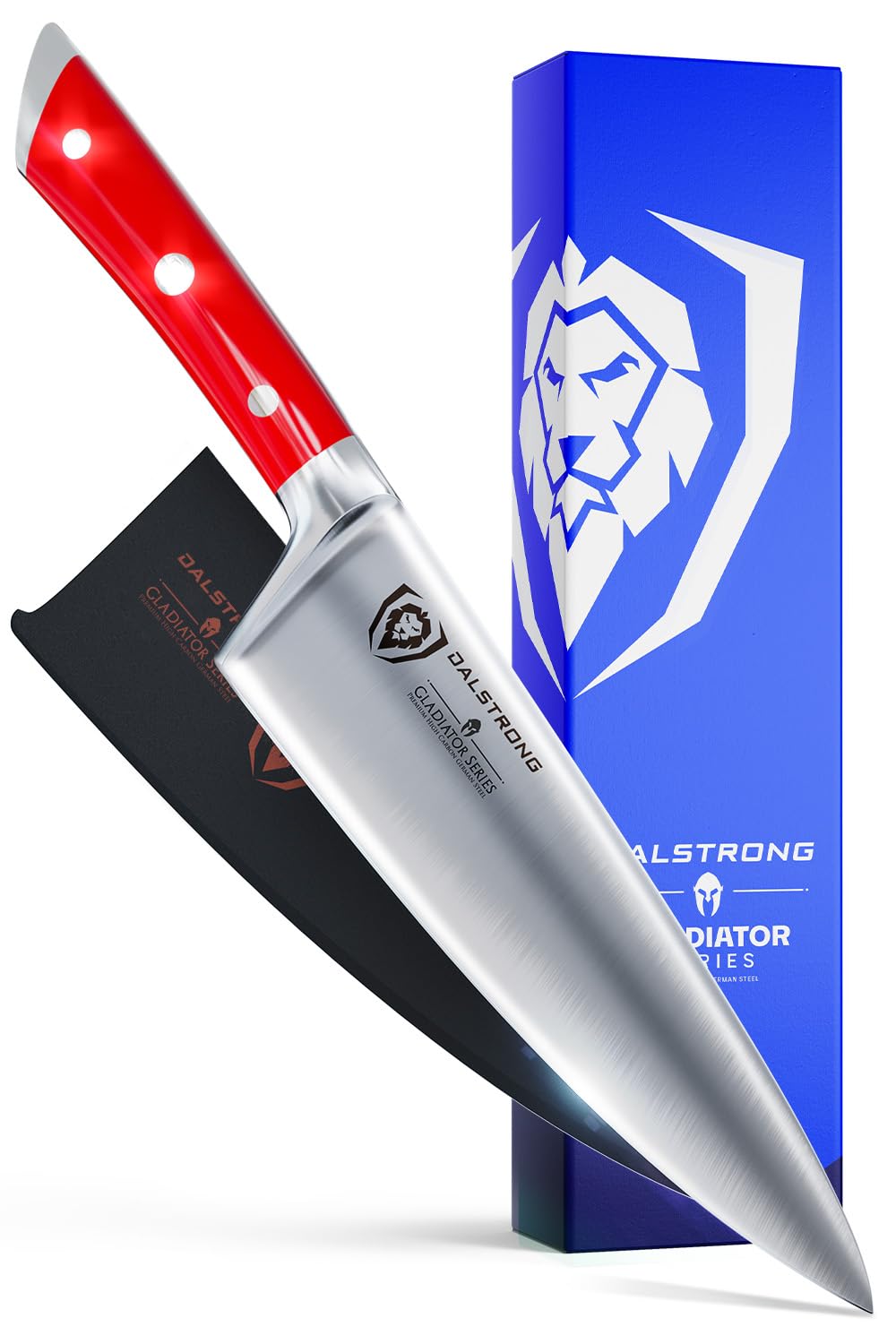
Dalstrong Gladiator Series 8-Inch Chef’s Knife — Brute Durability
Best for: Heavy-duty prep and big proteins
The Gladiator is the heavy-duty option for cooks who want a thick, confidence-inspiring blade. The forged ThyssenKrupp German steel at 56+ HRC is tough, the full tang runs through a textured G10 handle, and the knife feels solid enough to break down a chicken without flex. Edge retention is decent rather than exceptional, and the wide blade can wedge in tall vegetables. It is also heavier than the German classics. But if you prioritize brute durability over finesse, it delivers.
- Thick, rigid blade feels solid
- Full tang through textured G10
- Handles chicken bones without flex
- Wide blade wedges in tall vegetables
- Heavier than German classics
4.2/5
4.9/5
4.5/5
Top 3 Head-to-Head: Wüsthof Classic vs Victorinox Swiss Classic vs Zwilling Pro
These three are the most common final choices for cooks who want one durable knife without crossing into premium Japanese pricing. Here is how they actually differ.
| Feature | #1 Wüsthof Classic | #2 Victorinox Swiss Classic | #3 Zwilling Pro |
|---|---|---|---|
| Build durability | 5.0/5 — Best | 4.5/5 | 4.8/5 |
| Edge retention | 4.8/5 | 4.3/5 | 4.7/5 — Best |
| Comfort and control | 4.7/5 | 4.8/5 — Best | 4.6/5 |
| Choose if… | You want the most bombproof all-rounder | You want low cost and low maintenance | You sharpen your own knives |
Who These Chef Knives Are NOT For
These knives cover most home and professional prep, but they are not the right answer for every kitchen.
If you want a knife you can throw in the dishwasher every night, stick to the Victorinox or the Mercer. The harder Japanese blades will corrode or chip with that routine. And if you are left-handed, avoid the Shun Classic’s D-shaped handle — it is molded for right-handed pinch grips.
Common Mistakes to Avoid
Most chef knives fail because of user error, not manufacturing defects. These four mistakes shorten a blade’s life faster than anything else.
Frequently Asked Questions About Durable Chef Knives
What makes a chef knife durable?
Durability comes from three things working together: tough steel in the 56-58 HRC range, a full tang that runs through the handle, and a grind thick enough to resist chipping. A hard blade with a thin edge can feel sharper, but it is less forgiving of bones, frozen food, and sideways pressure. The most durable knives are usually forged German-style blades with full bolsters or sturdy full-tang construction.
Is forged better than stamped for durability?
Usually yes, but not always. Forging from a single bar of steel creates a denser blade with an integrated bolster and tang, which generally makes the knife sturdier and less likely to bend. However, a high-quality stamped knife with good steel and a solid handle can last decades. The real difference is that forged knives tolerate more abuse, while stamped knives are lighter and cheaper.
How long should a durable chef knife last?
A well-made chef knife used at home and cared for properly can last 20 years or more, often decades. In a busy commercial kitchen, expect five to eight years of heavy daily use before the blade geometry wears down. The biggest factors are whether you hand wash and dry it, store it safely, and avoid using it on bones or frozen food.
Can I put a chef knife in the dishwasher?
You can, but you should not — even on knives labeled dishwasher safe. Heat, detergent, and jostling dull the edge and degrade handle materials over time. The Victorinox and Mercer are the most tolerant of occasional dishwasher cycles, but hand washing with warm water and immediate drying will always extend a knife’s life.
Do harder knives chip more easily?
Yes. Steel above 60 HRC holds a sharper edge longer but is more brittle, so it chips under lateral torque or impact with bones and ice. German steels at 56-58 HRC are tougher and roll rather than chip. If you rock-chop aggressively or cut through poultry joints, a slightly softer steel is the more durable choice.
What size chef knife is best for daily use?
An 8-inch chef knife is the best all-purpose size for most home cooks. It is long enough to handle cabbage and squash but short enough for precise work on garlic and shallots. Cooks with smaller hands or limited counter space may prefer a 6-inch blade, while people who process large volumes of food often move up to 10 inches.
How often should I sharpen a chef knife?
Hone the edge every two to three uses to realign it, and sharpen on a whetstone every two to three months for home cooks. Hard Japanese steels can go longer between sharpenings, while softer German steels need it more often. If the knife tears tomatoes instead of slicing them, it is time to sharpen.
Our Final Verdict
The Wüsthof Classic remains the safest durable chef knife for most cooks: it is structurally bombproof, comfortable, and backed by decades of spare-parts support. If you want the lowest-maintenance option, choose the Victorinox. If you sharpen your own knives, the Zwilling Pro’s curved bolster is worth the extra weight. Everyone else can pick by cooking style — thin and precise for Japanese blades, thick and forgiving for German steel.


