How to Clean a Chef Knife: Step-by-Step Care & Safety Guide
Quick Answer
To clean a chef knife safely and effectively, hand wash it immediately after use with warm water, mild dish soap, and a non-abrasive sponge, then dry it completely with a clean towel before storing. Never put a chef knife in the dishwasher, as harsh detergents, high heat, and rattling against other utensils can dull the edge and ruin the handle.
Why Proper Chef Knife Cleaning Matters
 Save
A chef knife is often the most used and versatile tool in any kitchen. Proper cleaning extends far beyond basic hygiene; it directly preserves the blade’s cutting performance, protects the structural integrity of the handle, and prevents premature corrosion or pitting.
Leaving food residue, especially acidic ingredients like citrus, tomatoes, or onions, on a carbon steel or high-carbon stainless steel blade can cause discoloration and rust within hours. Regular, gentle maintenance ensures that the steel stays sharp and safe for food preparation over years of daily use.
What You Need Before You Start
Cleaning a quality chef knife requires minimal equipment. Keeping the right supplies on hand makes the process fast and minimizes the risk of accidental slips.
- Warm running water (avoid excessively hot water that can warp wooden handles)
- Mild liquid dish soap
- A soft sponge or a non-abrasive dishcloth
- A clean, dry microfiber or cotton kitchen towel
- A stable, well-lit countertop or sink workspace
Warning
Never soak a chef knife in a sink filled with soapy water. Sinks are crowded environments where the sharp edge can scratch other items, and hidden blades underwater create a severe laceration hazard for anyone reaching into the basin.
Step-by-Step Guide to Cleaning a Chef Knife
Following a deliberate sequence protects your fingers and ensures every part of the knife is thoroughly rinsed and dried.
- Rinse immediately after use: Wash the knife right away after cutting sticky, acidic, or protein-rich foods to prevent residue from drying onto the metal surface.
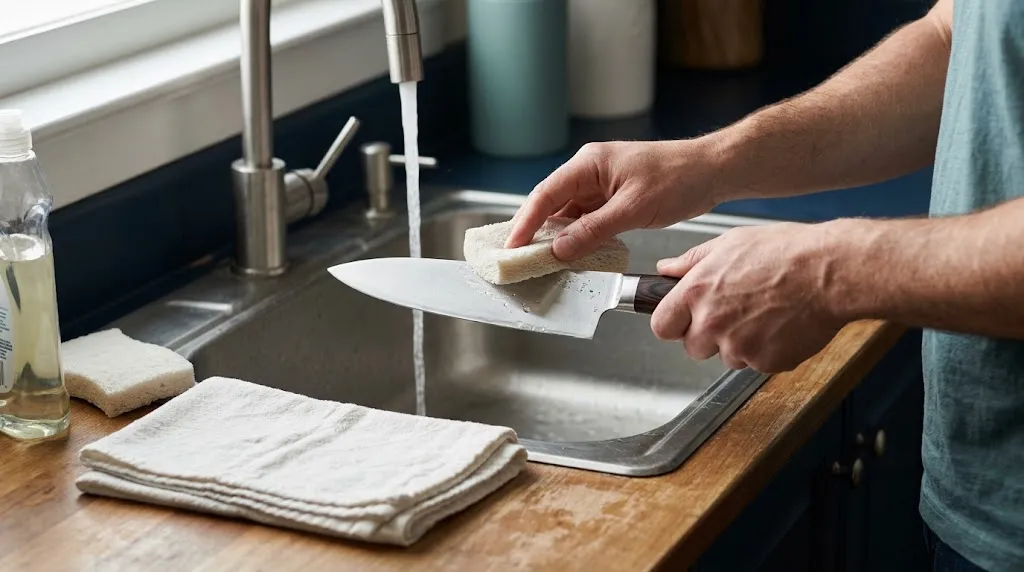
- Apply mild dish soap: Place a small drop of mild dish soap onto a soft sponge or cloth. Avoid harsh scouring pads, steel wool, or abrasive cleansers that permanently scratch the blade polish.
- Wipe safely from spine to edge: Hold the knife with the sharp edge pointing away from your body. Carefully wipe the spine and flat sides of the blade, then gently wipe along the cutting edge using a cloth or sponge layer so your skin never makes direct sliding contact with the sharp bevel.
- Clean the handle and bolster: Scrub the handle and the bolster area where food particles frequently accumulate. Pay special attention to rivets and scale gaps if the handle is made of wood.
- Rinse thoroughly: Hold the knife under clean, running warm water to wash away all soap residue and loosened food particles.
- Dry completely: Immediately dry every square inch of the blade, spine, bolster, and handle using a clean dish towel. Never let a chef knife air-dry, as water droplets left on carbon-rich steel can lead to water spots and oxidation.
How to Handle Stubborn Residue and Stains
Even with careful cleaning, stubborn starch layers, dried proteins, or discoloration can occasionally bond to the blade surface.
If food is baked on or heavily dried, let a wet, soapy cloth rest over the blade for a few minutes to soften the material before wiping—never submerge the knife. For mild surface discoloration or stubborn sap, make a paste of baking soda and a few drops of water, gently rub it along the flat of the blade with a soft cloth, and rinse thoroughly.
Tip
If you use a carbon steel chef knife that develops a natural dark grey patina over time, this thin oxidation layer is normal and actually protects the underlying metal from harmful red rust.
Proper Storage to Maintain Cleanliness and Safety
 Save
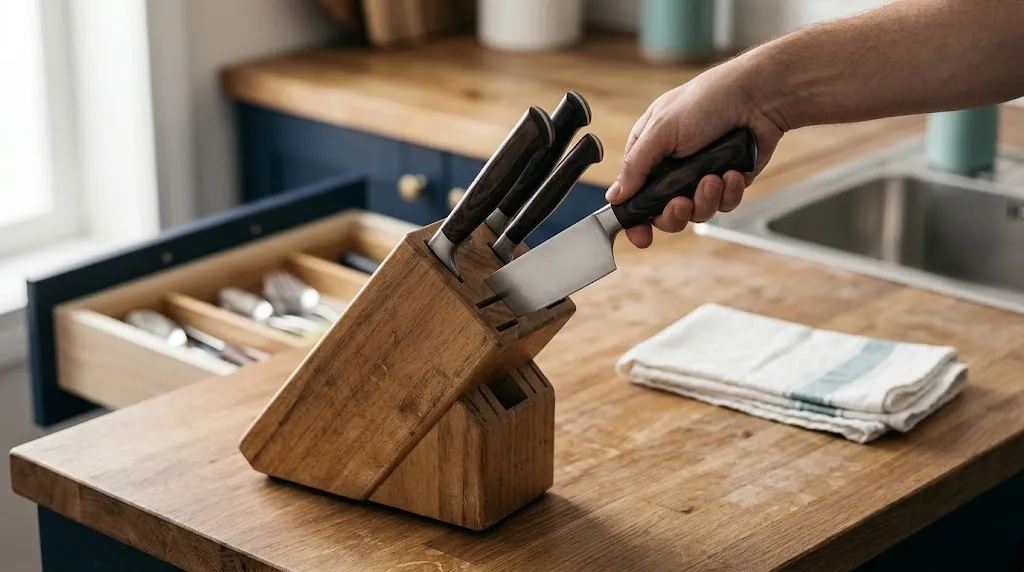
Cleaning a knife properly loses its value if the blade is tossed unprotected into a cluttered drawer where edges bang against other utensils, dulling the edge and creating safety risks.
| Storage Method | Pros | Cons |
|---|---|---|
| Magnetic Strip | Keeps blades visible, completely dry, and away from friction. | Requires secure wall mounting space. |
| Wooden Knife Block | Protects edges and keeps knives accessible on the counter. | Slots can trap dust and moisture if knives are put away damp. |
| Blade Guard / Sheath | Allows safe storage inside standard kitchen drawers. | Must ensure knife is 100% dry before sliding into the sheath. |
Store your chef knife in one of these dedicated systems to keep the newly cleaned edge safe from damage.
Related Product
Kitchen Knife Sharpening Stones and Honing Steels
Keep your clean chef knife performing at its best with a quality honing steel or sharpening stone kit designed to maintain razor-sharp edge alignment.
As an Amazon Associate, we earn from qualifying purchases.
Frequently Asked Questions
Can I put my chef knife in the dishwasher?
No, you should never put a chef knife in the dishwasher. Dishwasher detergents are highly abrasive, the intense heat can warp handles, and the wash cycle causes the blade to rattle against other utensils, which instantly dulls the edge and risks chipping the steel.
What is the safest way to dry a chef knife?
The safest method is to lay the knife flat on a stable surface or hold it firmly with the spine facing away from you. Take a clean dish towel, place it flat against the spine, and wipe downward toward the tip, moving away from the sharp edge.
Why does my stainless steel chef knife get rust spots?
Stainless steel is stain-resistant, not stain-proof. Prolonged exposure to moisture, harsh salts, acidic foods, or aggressive dishwasher detergents can break down the protective chromium oxide layer, allowing surface rust or pitting to form.
How often should a chef knife be washed?
A chef knife should be washed immediately after every single use, especially when transitioning between different food types like raw meat and vegetables, to prevent cross-contamination and residue buildup.
Is it okay to use bleach to sanitize a chef knife?
Avoid using bleach on kitchen knives. Chlorine bleach reacts aggressively with stainless and carbon steel, pitting the metal and causing rapid, severe corrosion. Mild dish soap and warm water provide more than enough cleaning power for daily hygiene.
How do I remove sticky residue from cutting sticky foods like squash?
Wipe the blade immediately with a warm, soapy cloth. If the residue is hardened, dampen a cloth with warm water and a few drops of white vinegar or baking soda to dissolve the sticky film without harming the blade finish.
Conclusion
Properly cleaning a chef knife is a simple habit that preserves both the longevity of your cutlery and the quality of your cooking. By ditching the dishwasher, hand washing gently from spine to edge, and drying the blade thoroughly after every use, you protect the steel from corrosion and maintain a sharp, reliable edge. Consistent, mindful maintenance ensures your primary kitchen tool remains safe, sanitary, and ready for every culinary task.

