Carbon Steel Chef Knife: Performance, Patina & Care
Quick Answer
A carbon steel chef knife is a high-performance kitchen tool valued for its ability to take an exceptionally fine edge and hold it well. The tradeoff is maintenance: carbon steel lacks the chromium that makes stainless steel corrosion-resistant, so the blade must be washed by hand, dried immediately after use, and protected from acidic residue. With proper care, it develops a stable patina that offers some protection and gives the knife a unique character.
A carbon steel chef knife is not a better or worse version of a stainless knife. It is a different tool with a distinct set of behaviors. Understanding those behaviors before you buy, or before you use one you already own, is the difference between a knife that performs beautifully for years and one that develops rust spots within a week.
The steel itself is simpler than stainless. It is primarily iron and carbon, without the chromium content that gives stainless steel its corrosion resistance. That absence is not a defect. It is the reason carbon steel can be hardened to a finer grain structure, sharpened to a more acute angle, and restored to a working edge with relative ease.
This guide explains how carbon steel behaves in a home kitchen, what patina actually is, how to tell patina from rust, and what daily care looks like in practice.
Why Carbon Steel Behaves Differently from Stainless
 Save
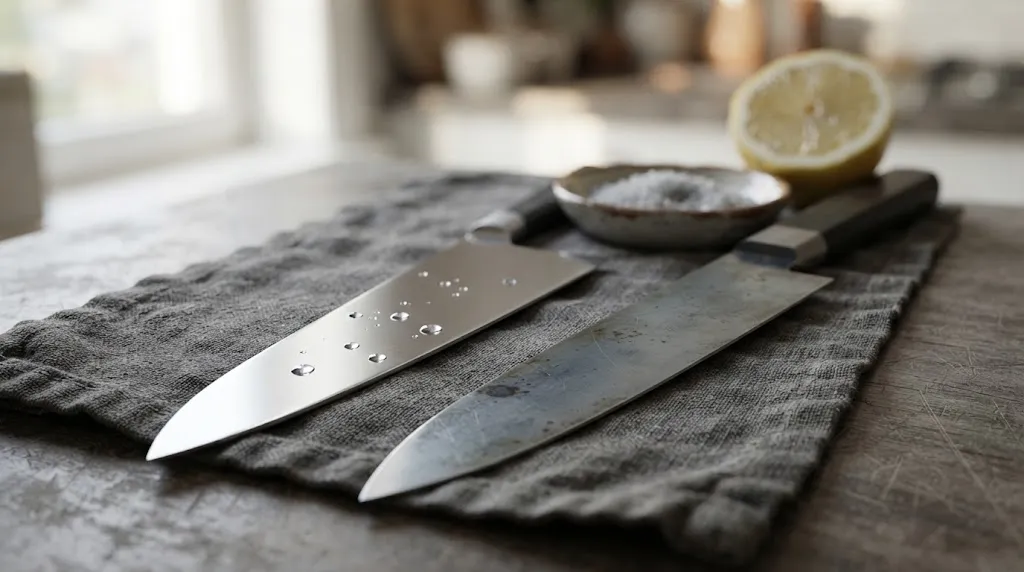
The core difference comes down to one element: chromium. Stainless steel contains at least 10.5% chromium, which forms an invisible, self-repairing oxide film on the surface. That film is what prevents rust and staining under normal kitchen conditions.
Carbon steel has little to no chromium. When the blade contacts moisture, acidic foods, or salty ingredients, the iron in the steel reacts. That reaction is visible. A new carbon blade may darken, spot, or develop a grey-blue film within the first few uses.
This reactivity is often described as a drawback. In practice, it is a manageable characteristic. The key is understanding what the reaction means and what it does not mean.
What Patina Is and Why It Matters
Patina is the stable, smooth discoloration that forms on carbon steel through normal use. It commonly appears as grey, blue, brown, or dark charcoal tones. Patina is not rust. It is a controlled surface oxidation that actually slows further corrosion by creating a barrier between the steel and the environment.
Many carbon steel users deliberately cultivate patina because a well-developed layer makes the blade less reactive over time. A knife with an even, established patina is less likely to transfer a metallic taste to acidic foods than a freshly polished blade.
Patina should be left alone. Scrubbing it off with abrasives removes the protective layer and resets the steel to its more reactive state.
Key Insight
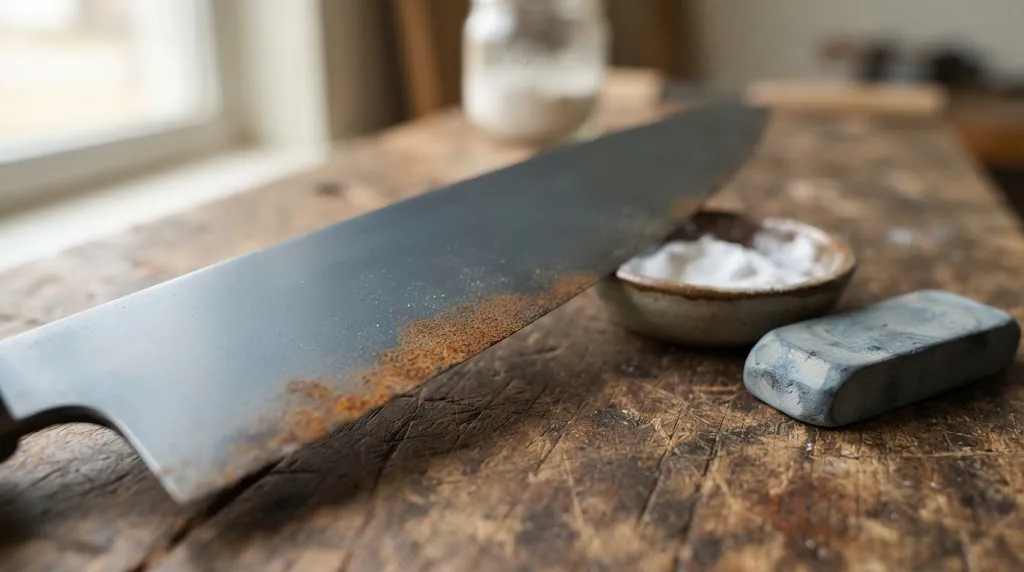
Patina is smooth, stable, and desirable. Rust is rough, orange, and powdery. If the discoloration on your blade has texture and comes off on a towel, it is rust. If it is a smooth color change that stays put, it is patina.
How to Tell Patina from Active Rust
 Save
The distinction matters because the response is different.
Patina is smooth to the touch. It develops gradually over weeks of use. The color is typically grey, blue, purple, or dark brown, and it does not flake or powder.
Active rust is orange or reddish-brown, rough, and often powdery or raised. It forms when moisture sits on the blade without being dried, especially in humid conditions or when a knife is stored wet. Rust pits the surface if left unchecked, which creates places for food residue to collect and damages the fine edge.
Light surface rust can be removed with a rust eraser, a paste of baking soda and water, or a mild abrasive product intended for kitchen knives. Work gently and dry the blade thoroughly afterward. If rust has pitted the steel deeply, professional sharpening may be needed to restore a clean surface.
The Daily Care Routine That Prevents Most Problems
Carbon steel care is not complicated. It is a short, consistent routine that becomes automatic after a few days.
Wash by hand, immediately after use. Use warm water, mild dish soap, and a soft sponge. Do not leave the knife soaking in the sink or run it through a dishwasher. The heat, detergent, and prolonged moisture exposure in a dishwasher are damaging to both the blade and the handle.
Dry the blade completely. This includes the blade faces, the spine, the heel, and the area where the blade meets the handle. Moisture trapped near the handle is a common source of corrosion that goes unnoticed until it has progressed. A clean towel is sufficient; air drying is not.
Wipe during prep when working with acidic foods. Citrus, tomatoes, onions, vinegar, and salted ingredients accelerate the reaction on carbon steel. You do not need to stop and wash the knife mid-task, but wiping the blade on a clean towel between acidic ingredients limits how much residue sits on the steel.
Store dry and protected. A magnetic strip, a dry knife block, or a blade guard all work. The requirement is that the blade is completely dry before storage and that moisture cannot become trapped against the steel.
Tip
You do not need to oil a carbon steel knife after every use. If the knife is used regularly, washed, dried completely, and stored in normal indoor conditions, oil is unnecessary. A thin coat of food-safe mineral oil or camellia oil is useful for longer storage or in humid climates.
Does Carbon Steel Make Food Taste Metallic?
A brand-new carbon steel blade, before patina has developed, can leave a faint metallic note on highly acidic foods like lemons, tomatoes, or raw onions. The effect comes from a small amount of iron reacting at the cut surface. It is harmless, but it is noticeable to some people.
As patina develops, the reactivity decreases. Most users find that within a few weeks of regular use, the effect disappears entirely. Wiping the blade between acidic ingredients also minimizes it on a new knife.
If you are sensitive to the taste and want to avoid the adjustment period, you can force a patina before first use by applying an acidic substance like mustard or vinegar to the clean blade, letting it sit briefly, and then washing and drying thoroughly. This is optional. A natural patina will develop on its own with use.
Carbon Steel vs. Stainless: What Actually Changes in Use
The practical difference between the two steels is not sharpness. A well-made stainless knife can be extremely sharp. The difference is in how the edge behaves over time and what the owner must do to maintain it.
Carbon steel typically takes a finer edge more easily and responds well to honing and sharpening. Many cooks find that a carbon blade restored on a whetstone reaches a working sharpness faster than a highly alloyed stainless steel. Carbon steel is also more forgiving of a thin, acute edge geometry, which is why it is common in Japanese-style kitchen knives.
Stainless steel wins on convenience. It tolerates being left wet, does not require immediate drying, and does not react with acidic foods. For a cook who wants a knife that can be used, set down, and cleaned later without a second thought, stainless is the lower-risk choice.
Carbon steel suits a cook who is willing to build the habit of prompt washing and drying in exchange for the edge quality and sharpening response that carbon steel offers.
When to Choose Carbon Steel and When to Avoid It
Carbon steel makes sense if you enjoy maintaining your tools, if you sharpen your own knives, and if you want the particular edge feel that a simple high-carbon steel provides. It is a good fit for someone who cooks regularly and does not mind a thirty-second drying routine after each use.
It is a poor fit for a shared kitchen where knives are left in the sink, for a household where the knife will be used by people who will not follow the care routine, or for a cook who wants a low-attention tool. Carbon steel is not fragile, but it does not tolerate neglect.
A middle option exists: stainless-clad carbon steel, where a reactive carbon core is sandwiched between layers of stainless steel. Only the exposed edge needs the extra attention, which makes the knife easier to live with while retaining much of the carbon edge character. If the maintenance routine described here feels like too much, that construction is worth considering.
What to Check Before Buying a Carbon Steel Chef Knife
Look at the blade material description carefully. “High carbon stainless steel” is a stainless steel with added carbon for hardness; it is not the same as plain carbon steel and does not require the same reactive care. A knife labeled simply “carbon steel” or “high carbon steel” without “stainless” is the reactive type described in this guide.
Check the hardness rating if it is listed. Carbon steel chef knives commonly fall in the 58–63 HRC range, with some specialized blades reaching higher. Higher hardness generally means better edge retention but a more brittle blade that should not be used for twisting or prying.
Consider the blade length. An 8-inch (20 cm) chef knife is the most common all-purpose size for home cooks. A 6-inch blade suits smaller hands or limited counter space; a 10-inch blade is useful for high-volume prep but can feel unwieldy in a small kitchen.
Finally, accept the care requirement before you buy. A carbon steel knife is a tool that rewards attention. If the routine described above sounds reasonable to you, it will perform well. If it sounds like a burden, a stainless or stainless-clad knife will serve you better.
Frequently Asked Questions
Is a carbon steel chef knife safe to use with food?
Yes. Carbon steel is food-safe. The patina that forms on the blade is a stable iron oxide layer that does not contaminate food. Trace amounts of iron that may transfer to acidic foods are harmless. The material was the standard for kitchen knives for centuries before stainless steel existed.
Can I put a carbon steel knife in the dishwasher?
No. Dishwasher heat, detergent, and prolonged moisture exposure damage both the blade and the handle. Carbon steel should be washed by hand with mild soap, rinsed, and dried immediately with a towel.
How often should I oil a carbon steel knife?
Not after every use. A regularly used knife that is washed and dried completely does not need oil. Apply a thin coat of food-safe mineral oil or camellia oil only for long-term storage or if you live in a humid environment.
What should I do if rust appears on the blade?
Remove light surface rust promptly with a rust eraser, a baking soda paste, or a mild abrasive intended for knives. Work gently, then wash and dry the blade thoroughly. If rust has pitted the steel, professional sharpening may be needed to restore a clean surface.
Does a carbon steel knife get sharper than a stainless one?
Not automatically. Sharpness depends on the edge geometry, heat treatment, and how the knife is sharpened. Carbon steel is often appreciated for its sharpening response and ability to take a fine edge, but a well-made stainless knife can also be extremely sharp.
Will the patina on my carbon steel knife ever stop changing?
Patina stabilizes over time but may continue to shift slightly with different foods and use patterns. A well-developed patina becomes more even and less reactive, but it is a living surface. That is part of the character of carbon steel, not a sign of a problem.
Conclusion
A carbon steel chef knife asks something of its owner: a few seconds of attention after each use. In return, it offers a kind of edge that many cooks find worth the habit. The patina that develops is not damage. It is evidence of use and a layer of protection that makes the knife easier to live with over time. If you are willing to wash and dry promptly, avoid the dishwasher, and accept that the blade will change color as it works, carbon steel will serve you well. If that routine sounds like friction you do not want in your kitchen, a stainless or stainless-clad knife is the more sensible choice.

