Chef Knife Steel Types Explained: Stainless vs Carbon
Quick Answer
Chef knife steels are broadly categorized into stainless steels (corrosion-resistant, low maintenance), high-carbon steels (exceptional edge retention and sharpness, but prone to rusting), and powder metallurgical (PM) steels (high-end alloys offering an elite balance of edge retention, toughness, and wear resistance).
Understanding Chef Knife Steel Types
Choosing a chef knife often comes down to the steel used for the blade. The chemical composition of the steel dictates how long a knife stays sharp, how easy it is to sharpen, how well it resists corrosion, and how durable it is under heavy kitchen tasks.
Understanding these categories helps you select a blade that matches your cooking style, maintenance habits, and environment.
Stainless Steels: Low Maintenance and Everyday Reliability
 Save
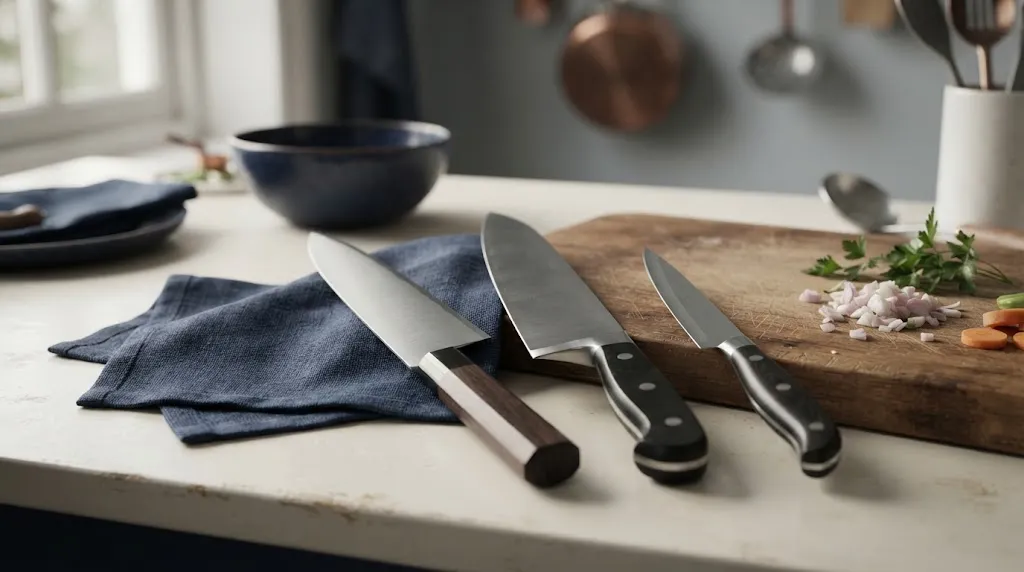
SaveStainless steels contain a minimum of 10.5% chromium, which forms a passive layer on the surface to protect against rust and corrosion. They are the most common choice for home cooks and busy professional kitchens.
Common Stainless Steel Alloys
Several standard stainless alloys dominate the mid-to-high-end knife market:
- VG-10: A popular Japanese stainless steel alloyed with cobalt, vanadium, and carbon. It achieves a high hardness (around 60 HRC), allowing for a very sharp, long-lasting edge, though it can be slightly brittle.
- X50CrMoV15: A German stainless steel formula used in most classic Western chef knives. It features lower carbon and hardness (around 55–58 HRC), making it very tough, easy to hone, and highly stain-resistant.
- 14C28N: A Swedish stainless steel prized for its fine grain structure, making it capable of taking a razor-sharp edge while maintaining good corrosion resistance and toughness.
High-Carbon Steels: Maximum Sharpness and Performance
High-carbon steels omit high levels of chromium, prioritizing edge geometry, ease of sharpening, and aggressive cutting performance over stain resistance.
Characteristics of Traditional Carbon Steels
Blades made from steels like White Paper (Shirogami) or Blue Paper (Aogami) steel are favored by traditional Japanese blacksmiths and professional chefs.
- Edge Retention: They can be sharpened to a finer angle than most stainless steels, resulting in exceptional cutting efficiency.
- Patina Development: Over time, exposure to acids, moisture, and food reactive elements causes the blade to develop a dark, stable oxide layer called a patina. This patina helps protect against active red rust.
- Maintenance Requirement: They must be washed, dried, and lightly oiled immediately after use to prevent corrosion.
Warning
Leaving high-carbon steel knives wet or unwashed on a kitchen counter will cause rapid oxidation, pitting, and destructive red rust that can permanently pit the edge.
Powder Metallurgical (PM) Steels: The Modern High-End Standard
Powder metallurgy allows manufacturers to mix powdered alloys at a microscopic level, creating steels with extreme wear resistance, high hardness, and fine carbide distribution without the brittleness traditionally associated with high-alloy steels.
Notable PM Steels
High-performance culinary knives frequently utilize advanced powder steels:
- SG2 / R2: A micro-carbide stainless powder steel that offers exceptional edge retention, high hardness (approx. 62–63 HRC), and stain resistance.
- CPM-S35VN / CPM-20CV: Initially developed for industrial and outdoor knives, these ultra-tough, wear-resistant steels are increasingly found in premium modern kitchen cutlery.
Comparing Knife Steel Properties
To choose the right steel, evaluate how different attributes trade off against each other in real-world kitchen applications.
| Steel Category | Hardness (HRC) | Edge Retention | Corrosion Resistance | Ease of Sharpening |
|---|---|---|---|---|
| German Stainless (e.g., X50CrMoV15) | 55–58 | Moderate | High | Very Easy |
| High-Carbon (e.g., White/Blue Paper) | 60–64 | High to Very High | Low (Requires Care) | Easy |
| Alloy Stainless (e.g., VG-10) | 59–61 | High | High | Moderate |
| Powder Metallurgy (e.g., SG2 / R2) | 62–64 | Exceptional | High | Harder (Requires Diamond/Ceramic Stones) |
This comparison shows that harder steels hold an edge significantly longer but often require more specialized sharpening equipment, whereas softer stainless steels tolerate rougher handling and quick touch-ups on a steel rod.
How to Choose the Right Steel for Your Cooking Habits
 Save
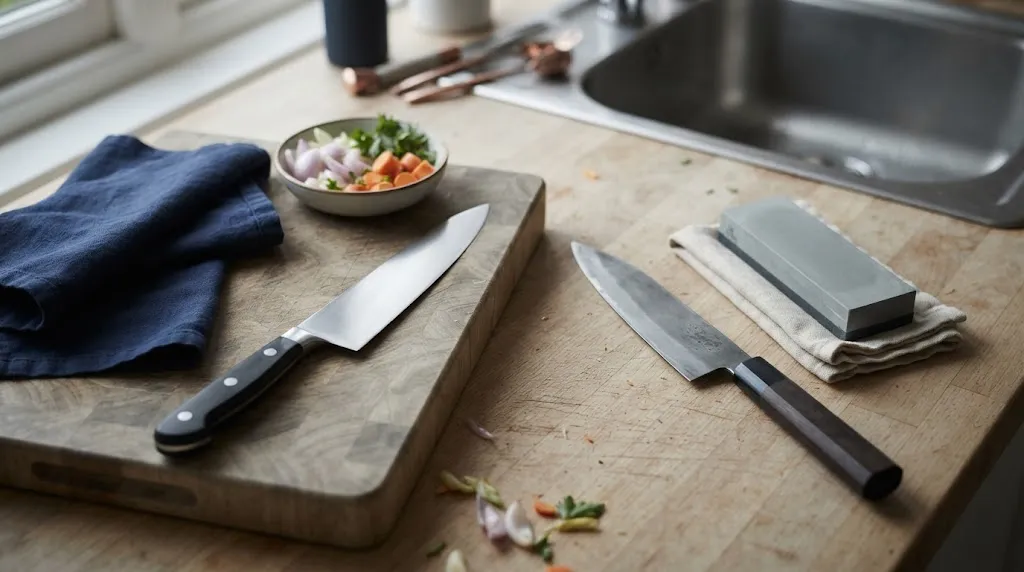
SaveYour ideal chef knife steel depends directly on your willingness to maintain the blade and your intended use cases.
If you prefer a zero-fuss knife that can be washed and put away without immediate drying, a quality German or Swedish stainless steel is ideal. If you enjoy the meditative process of sharpening, demand razor-like thinness, and do not mind wiping your blade between prep tasks, high-carbon steel delivers unmatched performance.
Tip
Match your sharpening stones to your steel hardness: softer stainless steels respond well to standard ceramic rods and water stones, while high-hardness powder steels usually require high-grade synthetic or diamond stones.
Related Product
Whetstone Knife Sharpening Set
A dual-grit whetstone allows you to properly maintain and sharpen both soft stainless and hard carbon kitchen knife steels.
As an Amazon Associate, we earn from qualifying purchases.
Frequently Asked Questions
Is higher hardness always better in a chef knife steel?
Not necessarily. While higher hardness (above 60 HRC) provides superior edge retention and allows for sharper cutting angles, it also increases brittleness. Harder knives can chip if twisted on a cutting board or used to cut through dense, frozen, or bone-in items.
Why do traditional Japanese chefs prefer carbon steel?
Traditional carbon steels can be sharpened to an extremely fine, aggressive edge that glides through ingredients with minimal cellular damage. They also sharpen much faster on whetstones compared to wear-resistant alloyed stainless steels.
Can stainless steel knives rust?
Yes. Stainless steel is stain-resistant, not stain-proof. If left wet, exposed to prolonged salt or acid, or run through a high-temperature dishwasher, even high-quality stainless steel can develop corrosion and pitting.
What is the easiest knife steel to maintain at home?
Lower-to-mid-range stainless steels like X50CrMoV15 or 14C28N are the easiest to maintain. They resist corrosion well and can be quickly realigned using a smooth steel honing rod between sharpening sessions.
Do powder metallurgical steels chip easily?
Modern powder metallurgical steels like SG2 achieve a high hardness while maintaining a fine grain structure, which helps prevent catastrophic chipping. However, because they are thin and hard, they still require proper cutting technique away from bones and frozen foods.
How often does a high-carbon chef knife need oiling?
High-carbon blades should be wiped completely dry after every use. If you live in a humid climate or store the knife for more than a few days without use, applying a thin layer of food-safe mineral oil prevents airborne moisture from creating surface rust.
Conclusion
Selecting the right chef knife steel comes down to balancing your preferred maintenance routine with your performance expectations. Whether you choose the forgiving, stain-resistant nature of German stainless steel, the aggressive sharpness of traditional high-carbon options, or the elite edge retention of modern powder metallurgy, matching the steel to your kitchen habits ensures a more rewarding cooking experience.

