How to Fix a Warped Cutting Board: A Step-by-Step Guide
Quick Answer
To fix a warped wooden cutting board, first allow it to dry evenly. For a mild cup that remains, lightly dampen the concave (hollow) side, apply gentle, evenly distributed pressure, and let the board dry completely. Finish by conditioning all surfaces with food-grade mineral oil. This method can improve minor warping, although it cannot repair every board. Follow proper wooden cutting board care to help prevent the problem from returning.
Quick Repair Steps
- Inspect the board: Check for cupping, twisting, cracks, and loose glue joints.
- Try natural drying: Expose both faces to air and allow moisture to balance.
- Dampen the hollow side: Use a clean, slightly damp cloth if natural drying fails.
- Apply gentle pressure: Use flat surfaces and evenly distributed weight.
- Dry and reassess: Allow 24–72 hours as a practical starting window.
- Condition the wood: Oil the top, bottom, and edges after complete drying.
Safety tip: Never cut food on a board that rocks unpredictably. Replace boards with serious cracks, separated joints, or damage that prevents thorough cleaning.
A warped cutting board can turn a simple cooking task into a frustrating experience. One corner lifts, vegetables slide, and the board no longer sits securely on the countertop.
I’m Michael, and in this guide, I’ll explain practical repair methods, their limitations, and the mistakes worth avoiding. You’ll also learn when replacing a cutting board makes more sense than repairing it.
What Is a Warped Cutting Board?
A warped cutting board is a board that has changed shape and no longer rests evenly on a flat surface. The distortion may appear as a curve, raised corner, lengthwise bend, or twisted surface.
Wood naturally expands as it absorbs moisture and contracts as it dries. When these changes occur unevenly, internal stresses can pull the board out of shape.
Warping generally appears in three forms:
- Cupping: The board curves across its width, producing a hollow or raised middle.
- Bowing: The board bends along its length.
- Twisting: Opposite corners move in different directions, creating an uneven surface.
Cupping often responds better to controlled moisture adjustment than twisting. Severely distorted boards may require professional woodworking or replacement.
Why Do Cutting Boards Warp?
Cutting boards typically warp because moisture and temperature affect different areas unevenly. Understanding the cause helps you choose a safer repair method.
1. Uneven Moisture Exposure
One surface may absorb water while the opposite surface remains relatively dry. The wetter wood expands, creating stress across the board.
This often happens when a freshly washed board rests flat against a countertop.
2. Improper Drying
Leaving a wet cutting board flat restricts airflow underneath it. The exposed surface dries faster than the surface touching the counter.
Over time, repeated uneven drying can contribute to visible distortion.
3. Dishwasher Heat and Water
Dishwashers expose boards to prolonged moisture, detergent, and temperature changes. These conditions can damage wooden boards, particularly glued constructions.
Many wooden cutting board manufacturers recommend hand washing instead.
4. Inadequate Conditioning
Wooden cutting boards benefit from periodic treatment with a food-safe conditioning product. Conditioning helps limit moisture absorption and excessive drying.
However, mineral oil cannot guarantee that a board will remain flat.
5. Wood Construction and Grain
Wood species, grain orientation, thickness, and construction influence dimensional movement. Thin boards and poorly balanced constructions may distort more noticeably.
Even a carefully maintained wooden board can experience seasonal movement.
How Can You Tell Whether a Cutting Board Is Warped?
 Save
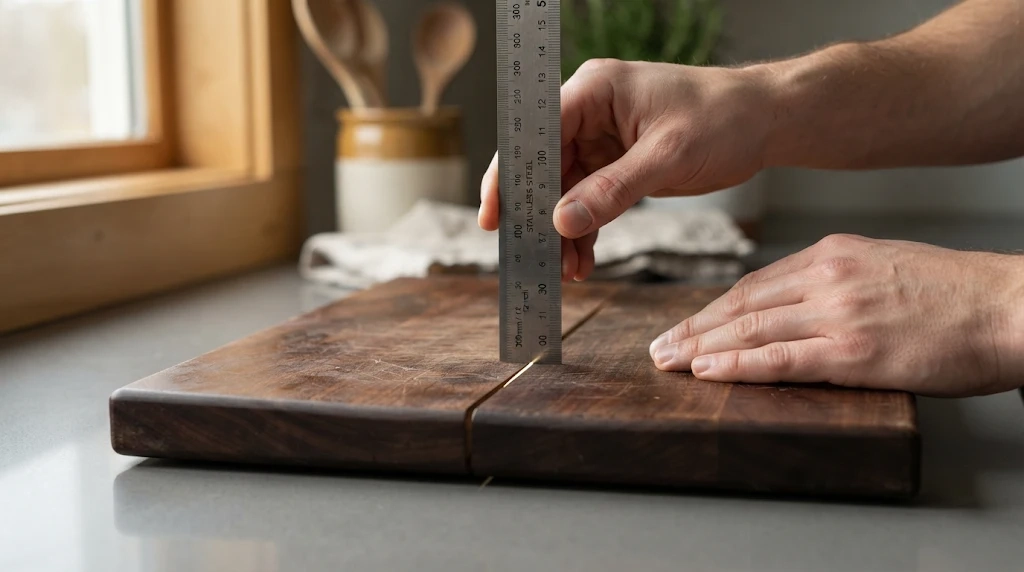
Place the clean, dry cutting board on a known flat countertop. Look for gaps underneath and gently press its corners to check for movement.
Use these checks before attempting repairs:
- Corner test: Press opposite corners and watch for rocking.
- Straightedge test: Place a ruler across the board to reveal gaps.
- Surface inspection: Look for cupping, twisting, or raised sections.
- Joint inspection: Check glued seams for separation.
- Damage inspection: Identify cracks, splinters, or deep grooves.
A small gap does not always mean the board is beyond repair. Structural damage, however, changes the decision.
What Tools Do You Need to Fix a Warped Cutting Board?
Most minor repairs require ordinary household supplies. Specialized woodworking equipment is unnecessary for the gentle moisture-balancing method.
- Clean microfiber or cotton cloth
- Small amount of clean water
- Flat countertop or work surface
- Flat baking sheet or rigid board
- Light, evenly distributed weights
- Straightedge or ruler
- Food-grade mineral oil
- Optional cutting board conditioner
Choose weights that distribute pressure rather than concentrating it at one point. Excessive force can split wood or weaken glued joints.
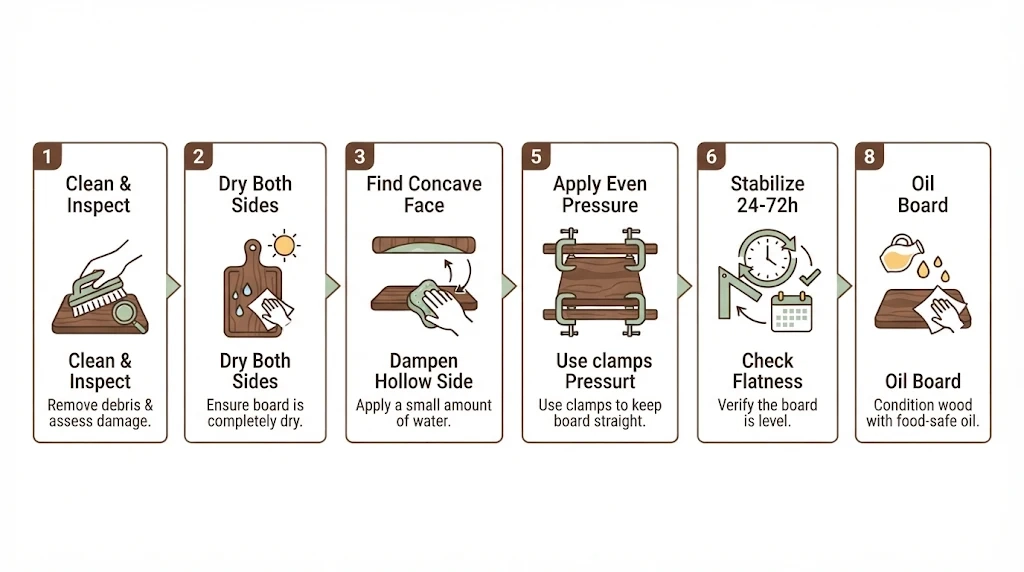
How to Fix a Warped Wooden Cutting Board Step by Step
 Save
For minor cupping, begin with natural moisture balancing before trying anything more aggressive. This approach reduces the chance of causing new damage.
Step 1: Clean and Inspect the Board
Wash the board with dish soap and water, following its manufacturer’s instructions. Rinse promptly and remove surface moisture with a clean towel.
Inspect the board for cracks, separated joints, mold, or severe distortion. Do not attempt to force a structurally damaged board flat.
Step 2: Allow Both Sides to Dry Evenly
Stand the cutting board securely on its edge where air can reach both faces. Keep it away from direct sunlight, heating vents, and other strong heat sources.
Give the board a day or two to stabilize, then check its shape again. Some mild warping improves without applying any additional moisture.
Step 3: Identify the Concave Side
The concave side curves inward and forms a hollow. The opposite, convex side curves outward.
Place a straightedge against each face to identify the curvature. Mark the hollow side mentally before proceeding.
Step 4: Lightly Dampen the Concave Side
If the board remains cupped, gently wipe the concave side with a clean, damp cloth. Apply just enough moisture to dampen the surface evenly.
Do not soak the cutting board or place it in standing water. Excess water can worsen swelling and damage glued seams.
Step 5: Apply Gentle, Even Pressure
Place the board on a flat, protected surface and position a rigid, flat panel above it. Add modest weight evenly across the panel.
The goal is to encourage gradual flattening as moisture redistributes. Stop if you notice cracking, joint movement, or unusual resistance.
Step 6: Let the Board Stabilize
Allow approximately 24–72 hours for the board to dry and adjust. This range is a practical observation period, not a guaranteed repair time.
Check occasionally for trapped moisture or new damage. Never leave a wet towel against the board for days.
Step 7: Check Whether the Board Is Flat
Remove the weights and place the board on a flat counter. Press each corner gently and check for rocking.
If the warp remains significant, avoid repeated forceful bending. A professional woodworker can assess whether resurfacing is appropriate.
Step 8: Apply Food-Grade Mineral Oil
Once completely dry, apply food-grade mineral oil to the board’s faces and edges. Follow the oil manufacturer’s instructions for absorption time and excess removal.
Conditioning helps maintain the board but does not physically straighten a severe warp. Recheck its stability before returning it to kitchen use.
Which Cutting Board Repair Method Works Best?
The best repair depends on the board material, type of distortion, and extent of damage. A gentle method is usually the sensible first choice.
| Method | Suitable Condition | Approximate Time | Main Limitation |
|---|---|---|---|
| Natural air drying | Recently developed mild warping | 1–3 days or longer | May not correct an established curve |
| Light moisture and weight | Minor cupping in solid wood | 24–72 hours or longer | Results vary; warping may return |
| Professional resurfacing | Suitable thick, structurally sound wood | Depends on workshop | Removes material and reduces thickness |
| Replacement | Cracked, separated, unsafe boards | Immediate after purchase | Requires buying another board |
The time ranges above are estimates rather than tested performance guarantees. Thickness, humidity, and wood construction can change the outcome.
Can You Fix a Warped Cutting Board Without Water?
Yes, minor warping may improve when the board’s moisture content becomes balanced naturally. This is often the safest method to try first.
Stand the board upright in a ventilated room, away from heat and moisture. Allow both faces to exchange moisture with the surrounding air.
Check its shape over several days. If the board remains severely distorted, natural drying alone may not be sufficient.
Can You Fix a Warped Cutting Board With an Iron?
Using a hot iron is not a recommended first-line repair method. Concentrated heat and steam can damage the surface, alter moisture unevenly, or weaken glued construction.
Although heat-based techniques appear in some woodworking demonstrations, cutting boards have food-contact and structural requirements. Controlled drying and professional assessment are safer alternatives.
Important: Never place a cutting board in an oven to force it flat. High heat can introduce additional damage.
How Do You Fix a Warped Bamboo Cutting Board?
A bamboo cutting board may develop cupping when moisture affects its laminated structure unevenly. However, bamboo boards often contain bonded strips, making joint integrity especially important.
Start by washing and drying the board according to the manufacturer’s instructions. Allow both faces to dry evenly and inspect every glue line.
For slight distortion, natural moisture balancing may help. Avoid soaking, steaming, aggressive clamping, or heating bamboo boards.
If the laminated strips begin separating, replace the board rather than attempting a home repair. An open joint may collect food residue and moisture.
Can You Straighten a Warped Plastic Cutting Board?
 Save
Plastic cutting boards behave differently from wood. Their distortion often results from heat exposure or physical stress rather than wood-fiber moisture movement.
Do not apply the wooden board repair method to plastic. Water conditioning and mineral oil will not restore the plastic’s original structure.
Trying to reshape plastic with boiling water or oven heat can create new distortion or damage. Replacement is usually the more dependable choice when a plastic board cannot sit securely.
How Do You Prevent a Cutting Board From Warping Again?
Preventing moisture imbalance is easier than repeatedly repairing a board. A consistent cleaning and drying routine makes a meaningful difference.
Wash the Board Properly
- Use dish soap and water after food preparation.
- Clean both faces rather than only the cutting surface.
- Rinse promptly instead of leaving the board submerged.
- Follow the manufacturer’s specific cleaning guidance.
According to the CDC’s food safety guidance, cutting boards should be cleaned between food preparation tasks. Separate surfaces for raw meat and ready-to-eat foods also help prevent cross-contamination.
Dry Both Sides Completely
After washing, remove excess moisture from the top, bottom, and edges. Stand the board securely upright so airflow reaches both broad surfaces.
Avoid storing the board against a damp wall or countertop.
Condition the Wood Regularly
Use food-grade mineral oil or a conditioner approved for cutting boards. Apply it to all sides rather than treating only the upper surface.
Condition the board when it looks dry or according to the maker’s instructions. More frequent washing may require more frequent maintenance.
Choose a Suitable Storage Location
- Keep boards away from sinks and persistent moisture.
- Avoid direct exposure to heaters and strong sunlight.
- Store boards only after they are fully dry.
- Support larger boards so they cannot bend under their own weight.
- Allow appropriate airflow around wooden surfaces.
When Should You Replace a Warped Cutting Board?
Replace a warped cutting board when its condition compromises stability, cleanliness, or structural integrity. Not every board is worth repairing.
Watch for these warning signs:
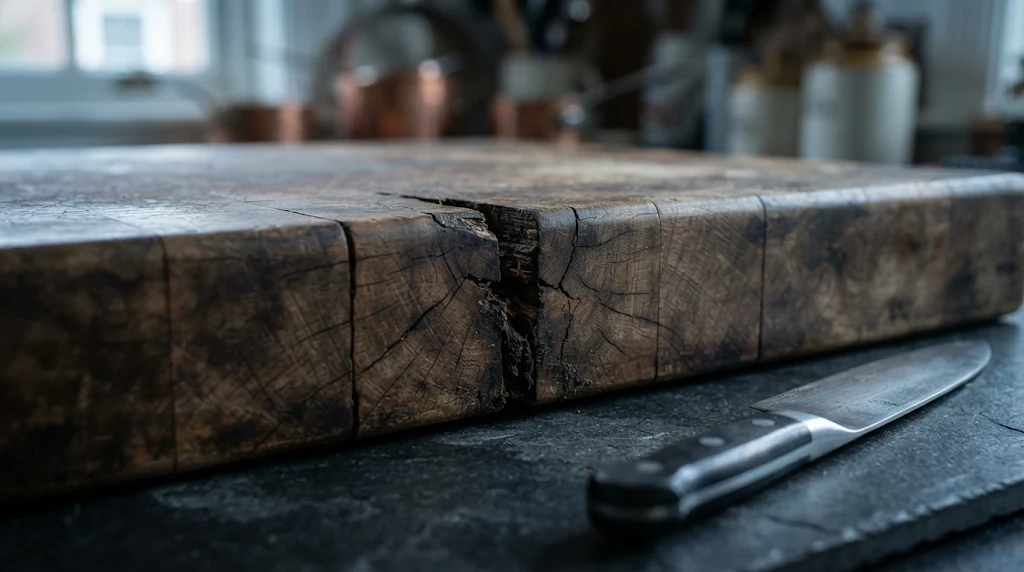
- Deep cracks: Open splits can trap food particles and moisture.
- Separated glue joints: The board may continue breaking apart.
- Uncontrolled rocking: Movement can interfere with safe knife handling.
- Deep, hard-to-clean grooves: Cleaning becomes less reliable.
- Severe twisting: Simple moisture balancing may not restore a stable surface.
- Recurring distortion: The board repeatedly becomes unstable after treatment.
The USDA’s cutting board guidance recommends discarding boards with excessive wear or hard-to-clean grooves.
For an expensive, thick hardwood board, professional resurfacing may be worthwhile. A thin, inexpensive board with extensive damage is usually better replaced.
Common Mistakes to Avoid When Repairing a Warped Cutting Board
Some popular repair shortcuts introduce more risk than benefit. Avoid methods that rely on extreme temperature or uncontrolled moisture.
- Soaking overnight: Excess water can cause swelling and joint failure.
- Using an oven: High temperatures can create cracks and new distortion.
- Applying excessive pressure: Force can split wood or separate glued pieces.
- Oiling wet wood: Conditioning before complete drying can interfere with moisture balancing.
- Using cooking oil: Some edible oils may become rancid and are unsuitable for routine conditioning.
- Ignoring cracks: A flatter shape does not make a damaged board hygienic.
- Expecting guaranteed results: Wood movement can persist after temporary correction.
My practical rule is to begin with the least aggressive option. A slightly cupped board usually doesn’t justify heat, heavy clamps, or unnecessary sanding.
What Products Help Maintain a Wooden Cutting Board?
Cutting board maintenance products can help protect wood after cleaning or repair. They are not guaranteed solutions for flattening severe warps.
Here are three established products worth comparing. The selections are based on their intended uses, not personal testing or independently verified customer ratings.
🏆 Best for routine oiling
John Boos Mystery Oil
Rating: Not independently verified
This food-grade cutting board oil is designed for wood maintenance and conditioning. I would shortlist it for owners who want a dedicated oil supported by manufacturer care instructions.
🛡️ Best for surface conditioning
John Boos Board Cream
Rating: Not independently verified
This beeswax-containing board cream provides an additional protective surface treatment after oiling. I would consider it for routine maintenance on a dry wooden board.
🔧 Best for basic maintenance
Food-Grade Mineral Oil
Rating: Not applicable
Plain food-grade mineral oil is a straightforward alternative to branded conditioners. I would consider it for simple, regular oiling when the label confirms suitability for food-contact wooden surfaces.
Choose conditioning products that explicitly identify their suitability for food-contact surfaces. Always read the manufacturer’s application and maintenance instructions.
Frequently Asked Questions
Can a warped wooden cutting board become completely flat again?
Some mildly warped wooden cutting boards can become nearly flat after moisture balancing and controlled drying. Results depend on the wood, construction, and severity of the distortion. Severe twists, cracks, and long-standing deformation may not respond reliably to home treatment.
How long does it take to flatten a warped cutting board?
A minor warp may improve within one to three days, although some boards take longer. Drying time depends on thickness, room humidity, airflow, and the amount of moisture involved. There is no guaranteed repair schedule, so check stability before reusing the board.
Can you use mineral oil to fix a warped cutting board?
Food-grade mineral oil helps condition wooden cutting boards and limit moisture absorption. It may support maintenance after moisture balancing, but oil alone cannot reliably straighten severe warping. Always apply it according to the manufacturer’s instructions once the board has dried completely.
Will a warped cutting board flatten naturally?
A slightly warped wooden board may improve as moisture becomes evenly distributed. Allow both sides to dry in a well-ventilated area away from direct heat. More serious deformation may remain even after several days and require further assessment.
Is it safe to use a slightly warped cutting board?
A minor cosmetic curve may not prevent use if the board remains stable, intact, and easy to clean. However, a board that rocks or slides unpredictably creates an avoidable cutting hazard. Replace or professionally repair unstable boards before using sharp knives.
Final Thoughts: The Best Way to Fix a Warped Cutting Board
Learning how to fix a warped cutting board starts with understanding how wood responds to moisture. Gentle, even drying is the safest starting point for many minor problems.
If mild cupping remains, carefully balancing moisture and applying modest pressure may improve the shape. Severe twisting, cracks, and separated joints deserve a more cautious approach.
Regular washing, complete drying, and suitable conditioning can help reduce future warping. The best cutting board is one that stays stable, clean, and safe during everyday food preparation.
Next step: Check your board on a flat countertop today. If it has only minor cupping and no structural damage, begin with natural drying before trying a more involved repair.

