Which Cutting Boards Are Dishwasher Safe? A Complete Guide
Quick Answer
Plastic, acrylic, tempered glass, and some paper-composite cutting boards are dishwasher safe when their manufacturers approve machine washing. Solid hardwood boards may tolerate dishwashers, but hand washing is generally better for preserving them. Bamboo and laminated wooden boards should usually stay out of the dishwasher. For reliable cleaning guidance, consult the USDA Food Safety and Inspection Service.
Cutting Board Dishwasher Safety at a Glance
- Plastic boards: Usually dishwasher safe when specifically labeled for machine washing.
- Acrylic boards: Many can handle dishwasher cleaning, subject to manufacturer instructions.
- Tempered glass: Many are dishwasher safe but can quickly dull kitchen knives.
- Paper composite: Some models are dishwasher safe, although specifications vary.
- Wood and bamboo: Hand washing is generally the safer choice for long-term durability.
Before Using Your Dishwasher
- Check the label: Look for explicit dishwasher-safe instructions.
- Inspect the surface: Replace boards with deep grooves, cracks, or persistent damage.
- Check the fit: Position the board so it cannot obstruct spray arms or heating components.
Not every cutting board belongs in the dishwasher. A board that looks sturdy on your counter can still warp, crack, or separate under repeated heat and moisture.
I prefer choosing cutting boards based on both their cutting performance and their cleaning requirements. This guide explains which materials handle dishwasher cleaning, which need hand washing, and how to avoid expensive mistakes.
What Makes a Cutting Board Dishwasher Safe?
A dishwasher-safe cutting board is designed to withstand the water, detergent, mechanical spraying, and heat of an approved dishwasher cycle without unacceptable damage.
Its material, construction, thickness, and manufacturer’s care instructions all matter. Two boards made from similar materials may have different cleaning requirements.
Heat Resistance
Dishwashers expose kitchenware to warm or hot water during washing and rinsing. Some machines also use heated drying cycles.
Heat can cause certain plastics to bend or distort. Wood can absorb moisture, expand, and eventually crack as it dries.
Moisture Resistance
Nonporous surfaces generally absorb less water than traditional wooden boards. That makes many plastic and glass cutting boards easier to clean.
However, low water absorption does not automatically mean a product can tolerate every dishwasher cycle.
Construction and Adhesives
Some cutting boards contain multiple pieces joined with adhesives. Others have glued feet, decorative components, or layered structures.
Repeated washing can weaken vulnerable joints and finishes. Always check whether the entire board, including its accessories, is dishwasher safe.
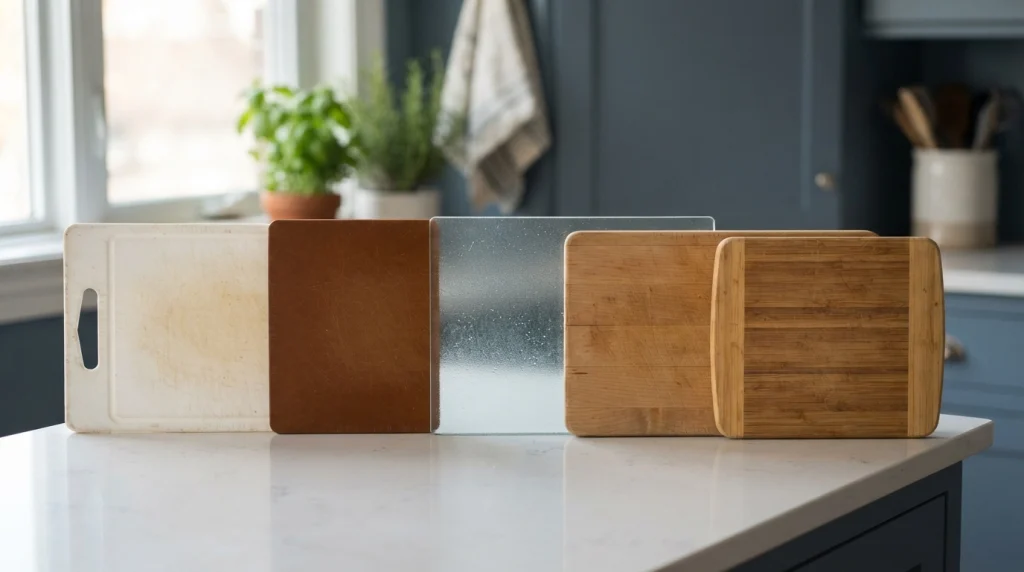
Which Cutting Board Materials Are Dishwasher Safe?
 Save
Plastic, acrylic, and tempered glass are commonly suitable for dishwasher cleaning. Certain composite boards are also designed for this purpose.
Wood and bamboo require more caution. The following comparison explains the practical differences.
| Material | Dishwasher Safety | Main Concern | Recommended Cleaning |
|---|---|---|---|
| Plastic | Usually, if labeled safe | Heat warping | Approved dishwasher cycle |
| Acrylic | Often, model-dependent | Heat sensitivity | Follow product instructions |
| Tempered glass | Often | Knife dulling and breakage | Dishwasher if approved |
| Paper composite | Some models | Construction differences | Follow manufacturer guidance |
| Solid hardwood | Technically possible for some | Cracking and drying | Hand wash preferred |
| Laminated wood | Not recommended | Splitting and adhesive failure | Hand wash |
| Bamboo | Usually not recommended | Cracking and warping | Hand wash |
Are Plastic Cutting Boards Dishwasher Safe?
Yes, many plastic cutting boards are dishwasher safe. However, the manufacturer’s instructions should determine whether a particular board can go inside your machine.
Plastic is popular because it is lightweight, nonporous, and relatively easy to maintain. It also provides a more forgiving cutting surface than glass or stone.
Which Plastics Work Best?
Food-contact polypropylene and polyethylene are common cutting board materials. Their dishwasher suitability depends on their formulation, thickness, and product design.
- Polypropylene: Frequently used in dishwasher-safe kitchen boards.
- Polyethylene: Common in cutting boards, but not every model is dishwasher approved.
- Flexible plastic mats: Convenient for food preparation, although some can deform under high heat.
I would choose a clearly labeled dishwasher-safe plastic board rather than assume all plastic models behave alike.
Thin boards deserve particular attention. Their flexibility can make heat-related distortion more noticeable.
Can Plastic Cutting Boards Warp?
Yes. Plastic boards can warp when exposed to temperatures beyond their intended limits.
A warped board may rock on the countertop, making chopping less stable. Replace one that no longer rests securely on a flat surface.
Can Wooden Cutting Boards Go in the Dishwasher?
Some solid hardwood cutting boards can technically withstand dishwasher cleaning, according to USDA guidance. However, repeated machine washing may shorten their lifespan.
Hot water can enter wood fibers and cause swelling. Drying then removes moisture, creating movement that can eventually lead to cracking.
Why Hand Washing Is Usually Better
Hand washing limits prolonged exposure to water and high-temperature drying. It also gives you more control over cleaning and drying.
For a wooden board, I recommend a simple routine:
- Remove food scraps immediately after preparing ingredients.
- Wash the surface with dish soap and warm water.
- Scrub gently, paying attention to knife marks.
- Rinse thoroughly without soaking the board.
- Dry with a clean towel and allow complete air circulation.
- Apply food-grade mineral oil when recommended by the manufacturer.
Never assume that an expensive hardwood board is dishwasher safe. Premium materials still require proper care.
What About End-Grain and Edge-Grain Boards?
Many end-grain and edge-grain cutting boards contain glued wooden pieces. Dishwashing can place extra stress on these joints.
End-grain designs are particularly valuable for their knife-friendly cutting surfaces. Protecting the board through careful hand washing is usually worthwhile.
Are Bamboo Cutting Boards Dishwasher Safe?
Most bamboo cutting boards should not go in the dishwasher unless their manufacturer explicitly approves it.
Bamboo boards often contain bonded strips. Repeated hot-water exposure can stress the material and its adhesive joints.
What Happens if You Put Bamboo in a Dishwasher?
- Warping: Uneven moisture changes may affect the board’s shape.
- Surface cracking: Repeated wetting and drying can weaken the surface.
- Joint separation: Moisture and heat can stress glued sections.
- Rough texture: The cutting surface may become less comfortable to use.
If you accidentally wash a bamboo board in the dishwasher once, inspect it carefully. A single cycle does not guarantee permanent damage.
Let it dry completely and check for cracks, separation, or instability before using it again.
Are Glass and Composite Cutting Boards Dishwasher Safe?
Many tempered glass and selected paper-composite cutting boards are dishwasher safe. Nevertheless, their cleaning convenience is only one factor worth considering.
Tempered Glass Cutting Boards
Glass provides a nonporous surface that resists absorbing food liquids. It is also relatively easy to wipe clean.
However, glass is much harder than a typical knife edge. Repeated chopping on glass can dull knives faster than cutting on suitable plastic or wood.
I would use glass primarily for serving or light food preparation rather than routine knife work.
Paper-Composite Cutting Boards
Paper-composite boards combine layered materials with resins to form a durable cutting surface. Some are engineered specifically for dishwasher cleaning.
Check the exact manufacturer’s care instructions. A dishwasher-safe designation for one composite product does not apply automatically to every similar board.
What About Rubber and Silicone Boards?
Rubber and silicone cutting surfaces vary considerably in construction. Some tolerate dishwasher cleaning, while others require hand washing.
Never rely on material names alone. Check the product’s temperature limits and cleaning label.
How Do You Tell if a Cutting Board Is Dishwasher Safe?
The most reliable method is checking the manufacturer’s instructions. Look for an explicit dishwasher-safe statement rather than making assumptions about the material.
Follow these checks before washing a new cutting board:
- Read the packaging: Find dishwasher-safe wording or cleaning instructions.
- Check the manufacturer’s website: Look up the exact product model.
- Inspect its construction: Identify glued layers, rubber attachments, and unusual finishes.
- Review temperature restrictions: Some products prohibit heated drying.
- Check rack recommendations: Use the specified rack when provided.
If the manufacturer’s instructions are unavailable, hand washing is the cautious choice.
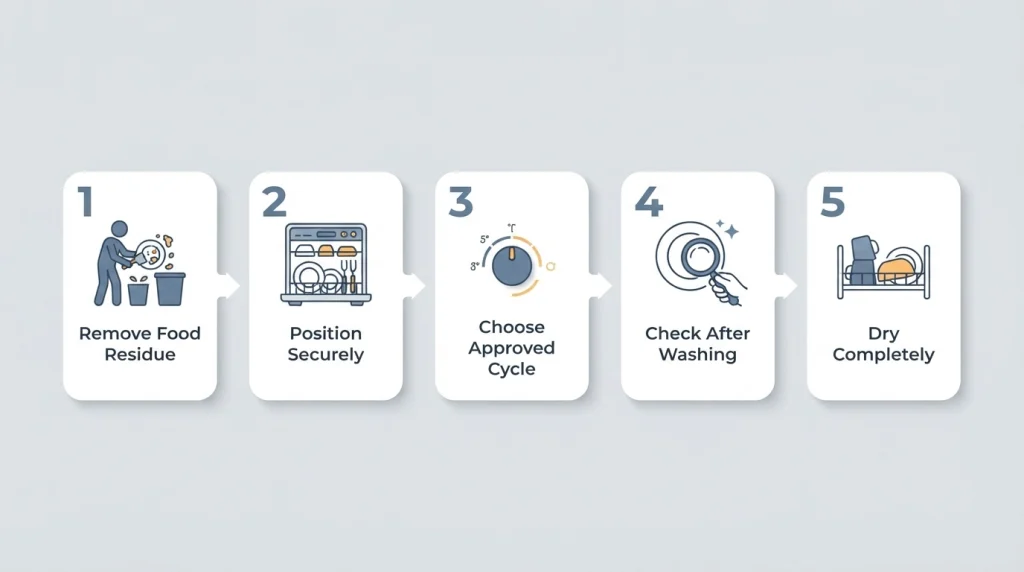
How Should You Wash Cutting Boards in a Dishwasher?
 Save
Dishwasher-safe boards still need proper positioning and cleaning. Careless loading can reduce cleaning effectiveness or damage a board.
Step 1: Remove Food Residue
Scrape off visible scraps before loading. This helps prevent food particles from sticking to the surface during washing.
Step 2: Position the Board Securely
Place the board in the manufacturer-approved rack or location. Make sure it cannot fall against moving spray arms.
A large cutting board should not block the detergent dispenser or water circulation.
Step 3: Choose an Approved Cycle
Follow the product’s recommended washing temperature and cycle. Avoid heated drying if the board’s instructions prohibit it.
Do not assume that every dishwasher’s normal cycle produces identical temperatures.
Step 4: Check the Board After Washing
Inspect the board for distortion, cracks, or loose components. Confirm that no food debris remains in knife grooves.
Step 5: Dry Completely Before Storage
Let the board dry fully before stacking it with other kitchenware. Trapped moisture can create undesirable storage conditions.
Practical tip: A dishwasher-safe label does not mean a board is damage-proof. If you notice warping or separation after washing, discontinue machine cleaning and assess whether the board needs replacement.
Does Dishwashing Remove Bacteria From Cutting Boards?
Dishwashing can help clean suitable cutting boards, but cleaning and sanitizing are not exactly the same process.
Cleaning removes food debris and much of the contamination on a surface. Sanitizing uses an appropriate process to reduce microorganisms further.
How to Prevent Cross-Contamination
Cross-contamination occurs when harmful microorganisms move between foods or food-contact surfaces. Raw poultry juices contacting ready-to-eat vegetables are a common example.
Use separate cutting boards for different tasks when practical:
- Raw meat and poultry: Use a dedicated, easy-to-clean board.
- Vegetables and fruit: Keep a separate board for produce served without cooking.
- Bread and prepared foods: Use a clean surface that has not contacted raw animal products.
The Academy of Nutrition and Dietetics emphasizes cleaning and maintaining cutting boards to reduce food safety risks.
When Should You Sanitize a Cutting Board?
Sanitizing is particularly important after handling raw meat, poultry, or seafood. First remove food debris and wash the board thoroughly.
For appropriate boards, USDA guidance describes a sanitizing solution containing one tablespoon of unscented liquid chlorine bleach per gallon of water. Apply according to food-safety guidance, rinse with clean water, and dry completely.
Never mix bleach with vinegar, ammonia, or other cleaning chemicals.
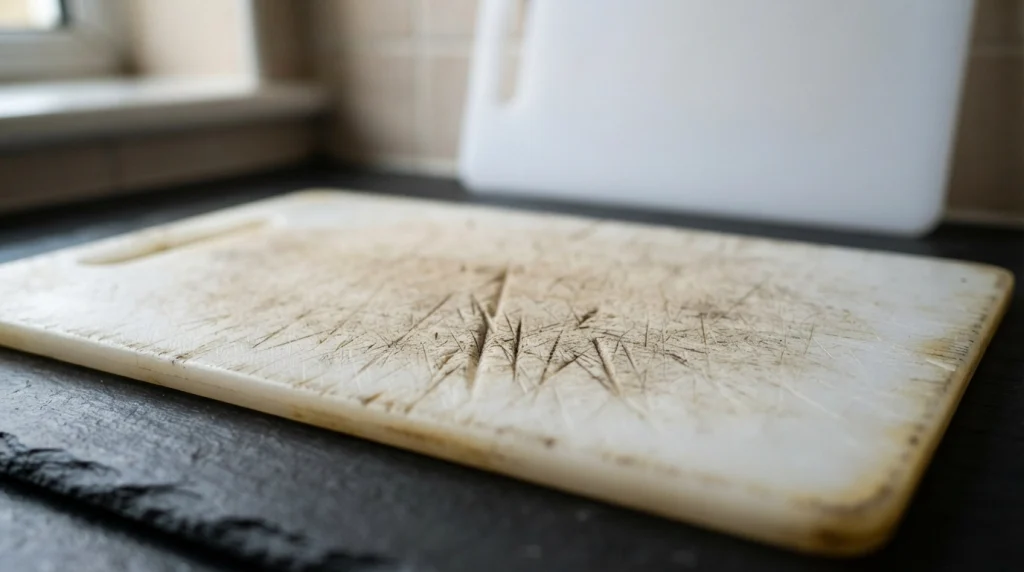
When Should You Replace a Cutting Board?
 Save
Replace cutting boards that develop excessive wear or deep grooves that cannot be cleaned effectively. The material does not eliminate the need for regular inspection.
Look for these warning signs:
- Deep knife grooves: Food particles become difficult to remove.
- Cracks or splits: Damaged areas are challenging to clean thoroughly.
- Serious warping: The board rocks or moves while cutting.
- Separating layers: Structural damage creates gaps and instability.
- Persistent contamination: The board remains unclean after appropriate washing.
According to the University of Maine Cooperative Extension, cutting boards need appropriate cleaning and replacement when surface wear becomes excessive.
Which Dishwasher-Safe Cutting Board Should You Choose?
For daily cooking, I would prioritize a nonporous cutting surface, a stable design, and explicit dishwasher-safe labeling.
A good board should also accommodate your usual ingredients and fit comfortably inside your dishwasher.
Consider Your Cooking Routine
- Everyday vegetables: Choose a medium-size, dishwasher-safe plastic board.
- Raw meat preparation: Look for an easy-to-clean board with a juice groove.
- Large meals: Consider a roomy carving board that fits your dishwasher.
- Small kitchens: A compact board may be easier to store and clean.
Check Stability and Knife Comfort
Non-slip feet and a stable cutting surface can make preparation more comfortable. Some boards also have built-in handles or grooved edges.
For routine knife work, I generally favor suitable plastic over glass. Plastic offers a more forgiving cutting surface.
Dishwasher-Safe Cutting Boards Worth Considering
If easy cleanup is your priority, these two OXO cutting boards are practical options to compare. Their manufacturer identifies both models as dishwasher safe.
🏆 Best for Everyday Prep
OXO Good Grips Utility Cutting Board
Editorial suitability: 4.5/5
This dishwasher-safe utility board features a nonporous, double-sided surface, non-slip feet, and a juice-catching groove. I favor its practical design for ordinary chopping tasks because it balances usable space with straightforward cleanup.
🍗 Best for Large Food Prep
OXO Good Grips Carving & Cutting Board
Editorial suitability: 4.5/5
This polypropylene board measures approximately 21.1 by 14.5 inches and includes a grooved side for collecting juices. I would consider it for larger ingredients and carving jobs, provided it fits the dishwasher comfortably.
Editorial suitability scores reflect the features and intended uses discussed here, not hands-on testing or customer-review averages. Product availability and prices may change.
Frequently Asked Questions
Can all plastic cutting boards go in the dishwasher?
No. Although many plastic cutting boards are dishwasher safe, their heat resistance and construction vary. Thin boards may warp, and certain models require hand washing. Always check the manufacturer’s instructions for the exact product before using a dishwasher.
Is it safe to put a wooden cutting board in the dishwasher?
Some solid hardwood boards can technically be dishwasher washed, but repeated exposure to heat and moisture can cause damage. Laminated wooden boards are especially vulnerable to splitting. Hand washing and thorough drying are generally better choices for maintaining wooden cutting boards.
Can you wash bamboo cutting boards in a dishwasher?
Most bamboo cutting boards should be washed by hand. Dishwasher heat, water, and drying cycles may encourage warping, cracking, or separation between bonded sections. Wash with dish soap and water, rinse thoroughly, and allow the board to dry completely.
What is the best cutting board material for dishwasher cleaning?
Manufacturer-approved plastic is a strong choice for everyday dishwasher cleaning. It is generally lightweight, nonporous, and more forgiving on kitchen knives than glass. Tempered glass and certain paper-composite boards can also be dishwasher safe, depending on their construction.
Does a dishwasher sanitize cutting boards?
Some dishwasher cycles are designed to sanitize suitable kitchenware, but not every cycle provides a verified sanitizing process. Cleaning performance depends on the machine, cycle, detergent, and proper loading. Follow your dishwasher manual and food-safety guidance, especially after preparing raw meat.
Final Thoughts: Which Cutting Boards Are Dishwasher Safe?
Dishwasher-safe plastic cutting boards are among the most convenient options for busy home kitchens. Many acrylic, glass, and specially designed composite boards can also tolerate machine washing.
Wood and bamboo usually deserve gentler care. Even when a solid hardwood board can technically survive a dishwasher cycle, hand washing is often better for its longevity.
My recommendation is simple: choose a cutting board with clear cleaning instructions, protect your knife edges, and replace damaged surfaces before they become difficult to clean.
Before buying your next board, check its material, dishwasher-safe label, and dimensions. Those three details can make everyday food preparation much easier.

