
Does Ebony Wood Make a Good Cutting Board?
Quick Answer
Ebony wood can make a durable and attractive cutting board, but it is not an ideal choice for everyday chopping. Its exceptional hardness, high cost, potential food-contact concerns, and tendency to wear knife edges make maple, walnut, and cherry more practical alternatives. According to The Wood Database, Gaboon ebony has a Janka hardness rating of 3,080 lbf.
What to know about ebony cutting boards:
- Exceptional hardness: Ebony resists dents and surface scratches but can increase knife-edge wear.
- Dense grain: Its fine texture allows manufacturers to produce smooth, polished surfaces.
- Food-contact concerns: Suitability depends on the exact wood species, construction, and finish.
- High cost: Genuine ebony is expensive compared with common cutting board hardwoods.
- Cracking risk: Improper drying and moisture changes can cause splits or surface damage.
- Better alternatives: Maple, walnut, and cherry offer a more practical balance of durability and knife protection.
My recommendation:
- Choose maple or walnut for daily food preparation. Reserve properly finished, food-contact-suitable ebony boards for occasional serving or presentation.
Ebony wood looks stunning in a kitchen, especially if you enjoy dark, luxurious wooden accessories. However, an attractive appearance doesn’t necessarily make a wood species suitable for chopping vegetables, slicing meat, or protecting expensive chef’s knives.
When evaluating a cutting board, I prioritize knife protection, food-contact suitability, moisture resistance, and maintenance over appearance alone. In this guide, I’ll explain where ebony performs well, where it falls short, and which alternatives deserve your attention.
What Is Ebony Wood?
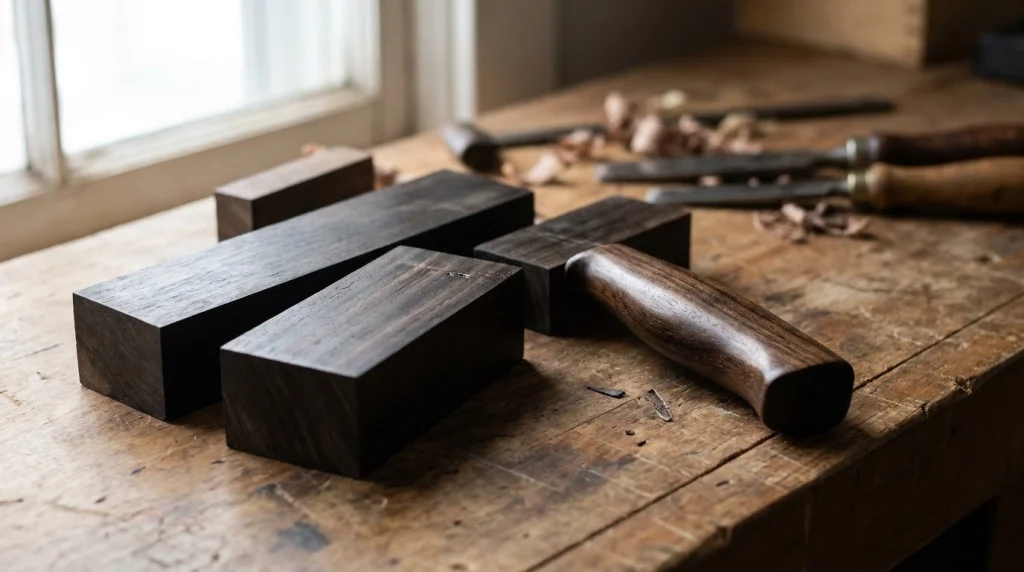
Ebony is a group of exceptionally dense hardwoods obtained from trees belonging primarily to the Diospyros genus. These woods are prized for their dark coloration, smooth texture, hardness, and decorative appearance.
Genuine ebony often appears in luxury furniture, musical instruments, knife handles, and small decorative objects. Its distinctive appearance makes it appealing to manufacturers of premium kitchen accessories.
Common Types of Ebony Wood
- Gaboon ebony: An African hardwood known for its predominantly black heartwood and exceptional density.
- Macassar ebony: A Southeast Asian hardwood featuring alternating dark brown and black grain patterns.
- Ceylon ebony: A South Asian ebony species traditionally valued for its dark heartwood.
- Black and white ebony: A decorative wood with contrasting light and dark grain patterns.
These species differ in hardness, density, availability, and natural extractives. A product labeled simply as ebony doesn’t necessarily provide enough information to establish its suitability for kitchen use.
Is Ebony Wood Good for Cutting Boards?
Ebony offers excellent resistance to indentation, but its extreme hardness makes it less suitable for routine cutting tasks. A good cutting board must withstand repeated use without placing unnecessary stress on knife edges.
Ebony performs better as a decorative material than as a general-purpose chopping surface. Its advantages become less convincing when compared with established cutting board hardwoods.
| Property | Ebony Performance | Practical Verdict |
|---|---|---|
| Hardness | Extremely high | Excessive for daily chopping |
| Knife protection | Limited compared with softer hardwoods | Not ideal |
| Appearance | Dark and luxurious | Excellent |
| Moisture tolerance | Depends on species and construction | Requires careful maintenance |
| Food-contact suitability | Requires verification | Conditional |
| Cost | High | Poor everyday value |
Advantages of Ebony Wood Cutting Boards
Despite its limitations, ebony possesses several desirable characteristics. These qualities explain why some manufacturers incorporate it into premium kitchen accessories.
1. Excellent Resistance to Dents
Ebony’s dense structure helps it resist indentation from everyday contact. It generally develops surface dents less readily than softer wood species.
This can help preserve its appearance when used for gentle kitchen tasks. However, resistance to indentation doesn’t guarantee resistance to cracking or splitting.
2. Attractive Natural Appearance
The deep black and dark brown tones of ebony create a distinctive appearance without necessarily requiring artificial stains. Its fine grain complements modern, traditional, and luxury kitchen designs.
A properly finished ebony board can provide an attractive backdrop for cheese, fruit, and other food presentations.
3. Smooth Surface Texture
Ebony can achieve a remarkably smooth surface when correctly machined and polished. This makes it attractive for decorative serving accessories.
A smooth finish may also make routine surface cleaning easier. However, smoothness alone doesn’t establish food safety or eliminate the need for washing.
4. Substantial Weight
Ebony’s high density gives even relatively small boards considerable weight. A heavier board may feel more stable on a suitable countertop.
Stability still depends on the board’s shape, feet, and contact surface. A heavy cutting board can slide if it lacks adequate grip.
Disadvantages of Ebony Wood Cutting Boards
Ebony’s disadvantages are particularly important for home cooks who prepare meals frequently. Several characteristics that make ebony desirable for decorative woodworking become drawbacks in the kitchen.
1. Ebony Can Increase Knife Wear
Ebony is substantially harder than conventional cutting board woods. Repeated contact with an extremely hard surface can contribute to faster knife-edge wear.
You’ll potentially notice this during repetitive preparation tasks, particularly when chopping with thin-edged kitchen knives.
- Kitchen knives may require more frequent maintenance.
- Thin cutting edges may experience increased stress.
- Repeated chopping can accelerate edge degradation.
- Hard cutting surfaces may feel less forgiving during preparation.
Knife steel, cutting technique, grain orientation, and board construction also influence edge wear. Wood hardness is important, but it isn’t the only factor.
2. Genuine Ebony Is Expensive
Ebony is a premium hardwood that often costs considerably more than domestic maple, walnut, or cherry. Large, defect-free pieces can be particularly difficult to obtain.
For everyday food preparation, the additional cost rarely delivers a corresponding improvement in performance. A well-made maple board generally offers better practical value.
3. Potential Cracking and Splitting
Ebony can develop cracks when manufacturers dry it improperly or expose it to significant moisture changes. Dense wood doesn’t automatically provide better dimensional stability.
Cracks create additional maintenance problems because food particles can collect inside damaged areas.
- Avoid prolonged water exposure.
- Keep the board away from intense heat.
- Dry both surfaces evenly after cleaning.
- Inspect the edges and glue joints regularly.
4. Limited Food-Contact Information
Some ebony species contain natural compounds that can cause irritation or sensitization, particularly during woodworking. These concerns do not automatically establish that a finished board is unsafe.
However, they reinforce the importance of identifying the species and confirming that the finished product is appropriate for direct food contact.
5. Sustainability Concerns
Several ebony species face conservation pressures associated with habitat loss and timber harvesting. Restrictions and conservation classifications vary according to the species and its origin.
Before purchasing genuine ebony, check whether the manufacturer provides reliable sourcing information. The Convention on International Trade in Endangered Species provides information about international wildlife and timber trade controls.
Is Ebony Wood Too Hard for Kitchen Knives?
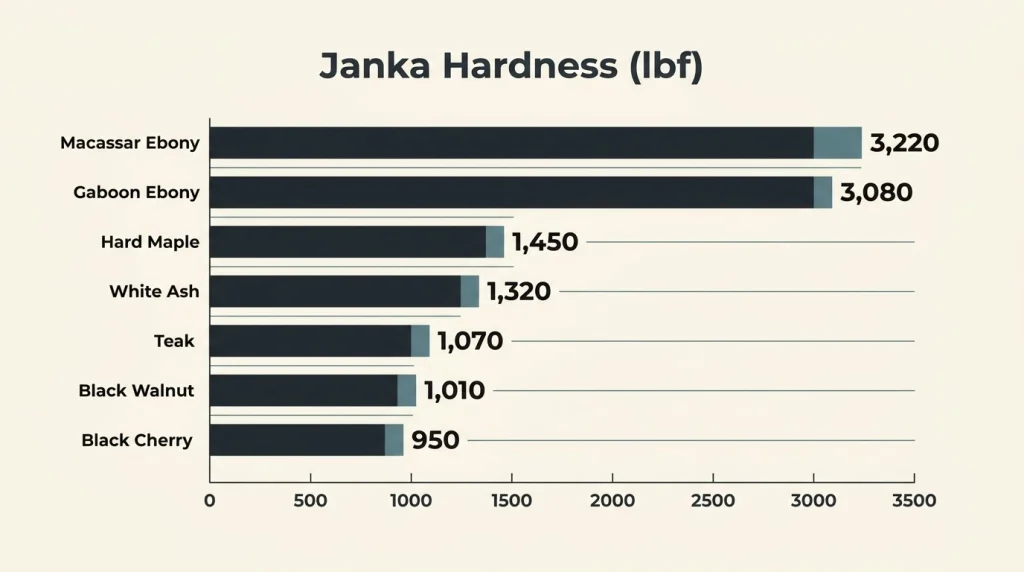
Ebony is generally harder than necessary for a kitchen cutting board. Its high resistance to indentation can make it less forgiving than maple, walnut, and cherry during repetitive chopping.
The Janka hardness scale measures the force required to press a standardized steel ball into a wood sample. It provides a useful starting point when comparing wood species.
Ebony Wood Janka Hardness Compared With Other Woods
| Wood Species | Janka Hardness (lbf) | Everyday Use |
|---|---|---|
| Macassar Ebony | 3,220 | Generally unsuitable |
| Gaboon Ebony | 3,080 | Generally unsuitable |
| Hard Maple | 1,450 | Excellent |
| White Ash | 1,320 | Conditional due to open grain |
| Teak | 1,070 | Good with proper care |
| Black Walnut | 1,010 | Excellent |
| Black Cherry | 950 | Very good |
Values represent typical Janka hardness measurements for the listed species. Everyday-use assessments are qualitative recommendations, not laboratory performance scores.
Gaboon ebony requires more than twice the indentation force of hard maple under the Janka test. Macassar ebony is harder still.
These measurements don’t directly predict how quickly a knife becomes dull. Nevertheless, they illustrate why ebony offers more hardness than most home kitchens need.
Is Ebony Wood Food Safe?
Ebony should not automatically be considered food safe simply because it is a natural hardwood. Food-contact suitability depends on its botanical species, natural compounds, processing methods, adhesives, and applied finish.
The FDA Food Code identifies hard maple and comparable dense, fine-grained woods as acceptable materials for certain food preparation surfaces. This provision doesn’t establish blanket approval for every exotic hardwood.
What Determines Whether Ebony Is Suitable for Food Contact?
- Species identification: The manufacturer should clearly identify the wood used.
- Natural extractives: Compounds occurring naturally within the wood require consideration.
- Surface finish: Oils, waxes, or coatings must be appropriate for their intended food-contact application.
- Adhesives: Laminated boards require suitable adhesives and properly cured glue joints.
- Surface condition: Cracks, loose fragments, and damaged coatings can make a board unsuitable for continued use.
- Intended application: A decorative wooden accessory may not qualify as a food preparation surface.
Important: Applying food-grade mineral oil to an unidentified exotic hardwood does not automatically make the wood suitable for food contact. Purchase boards specifically manufactured and documented for their intended kitchen use.
Does Ebony Wood Absorb Water?
Ebony can absorb moisture despite its density and fine texture. Water movement through wood depends on its internal structure, grain orientation, finish, and environmental conditions.
Repeated wetting and drying may eventually contribute to dimensional changes. Even dense hardwoods require protection from prolonged soaking.
Factors That Affect Moisture Absorption
- Whether the board uses end-grain or face-grain construction.
- The moisture content of the lumber during manufacturing.
- The condition and type of protective finish.
- How frequently the board encounters water.
- Temperature and humidity changes within the kitchen.
- The presence of cracks or damaged glue joints.
Regular maintenance can reduce excessive moisture exposure, but no ordinary oil treatment makes wood completely waterproof.
Ebony Wood vs. Maple Cutting Boards
Maple is the better option for most everyday cutting tasks because it combines sufficient hardness with a fine-grained structure. Ebony offers greater resistance to indentation but provides fewer practical advantages for routine meal preparation.
| Feature | Ebony | Hard Maple |
|---|---|---|
| Hardness | 3,080 lbf (Gaboon) | 1,450 lbf |
| Appearance | Dark black or brown | Light cream |
| Knife friendliness | Less forgiving | More forgiving |
| Availability | Limited | Widely available |
| Relative cost | High | Moderate |
| Best application | Decorative accessories | Daily food preparation |
I would choose hard maple for a household that regularly prepares vegetables, sandwiches, and other everyday meals. Ebony’s appearance doesn’t outweigh maple’s practical advantages.
Ebony Wood vs. Walnut Cutting Boards
Walnut is an excellent alternative for anyone who wants a dark wooden cutting board without ebony’s extreme hardness. Black walnut offers rich brown coloration and a comparatively forgiving cutting surface.
- Knife protection: Walnut generally offers a gentler cutting experience.
- Appearance: Both woods provide attractive dark tones.
- Availability: Walnut cutting boards are easier to find.
- Cost: Walnut usually offers better value than genuine ebony.
- Maintenance: Both require appropriate washing, drying, and conditioning.
If the primary reason you’re considering ebony is its dark color, walnut deserves serious consideration. It provides a similar premium aesthetic while remaining better suited to regular kitchen tasks.
Are End-Grain Ebony Cutting Boards Better?
End-grain construction may offer a more forgiving cutting surface than face-grain construction using the same wood. The exposed fiber orientation allows knife edges to interact differently with the board.
However, end-grain construction does not eliminate ebony’s extreme hardness, sourcing concerns, or potential food-contact limitations.
- End grain may reduce some cutting resistance compared with face grain.
- Additional glue joints can complicate manufacturing.
- Dense exotic hardwoods require careful adhesive selection.
- Moisture management remains important.
- Manufacturing costs may increase substantially.
For most households, an end-grain maple or walnut board represents a more sensible investment than an end-grain ebony board.
What Are Ebony Boards Best Used For?
Ebony is better suited to applications where appearance matters more than repetitive knife contact. Food-related uses still require confirmation that the finished product is appropriate for direct food contact.
- Cheese presentation boards.
- Charcuterie serving platters.
- Bread presentation trays.
- Decorative kitchen accessories.
- Occasional light food preparation.
- Decorative accents in mixed-wood boards designed for food contact.
I wouldn’t use ebony as my primary surface for heavy chopping, breaking down poultry, or preparing large quantities of vegetables.
How to Clean and Maintain an Ebony Cutting Board
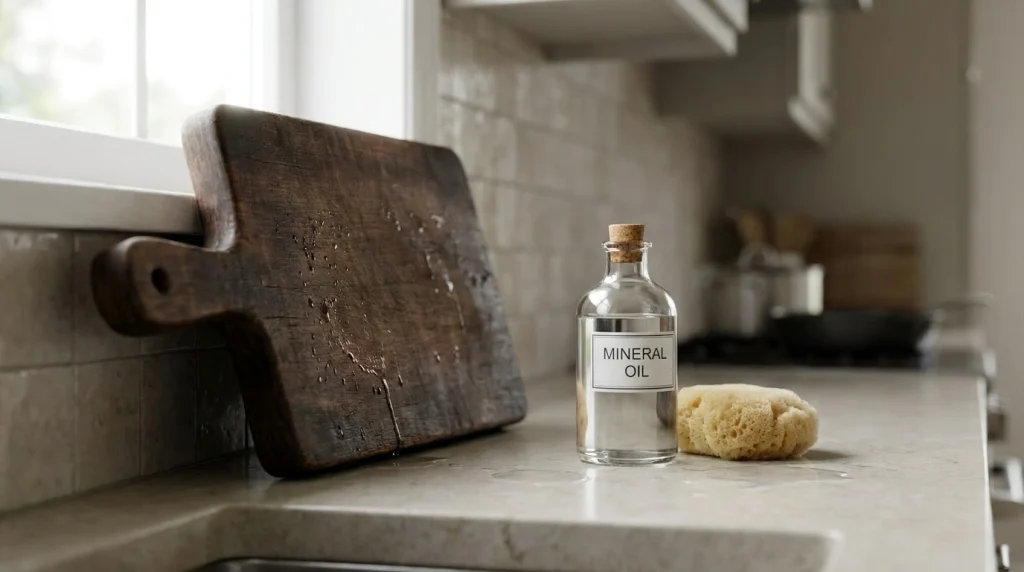
A food-contact-suitable ebony cutting board requires careful washing and drying to preserve its condition. Follow the manufacturer’s instructions whenever they specify particular cleaning or conditioning requirements.
Step 1: Remove Food Residue
Remove loose food particles immediately after use. Avoid leaving wet or acidic food on the surface for extended periods.
Step 2: Wash With Warm Soapy Water
Clean the board with warm water, mild dish soap, and a soft sponge. Wash both surfaces and the edges without soaking the board.
Step 3: Sanitize When Necessary
Use a food-contact-surface sanitizer suitable for the board and follow its label instructions. The USDA Food Safety and Inspection Service provides guidance on cutting board hygiene and preventing cross-contamination.
Step 4: Dry the Board Completely
Remove excess water using a clean towel. Stand the board upright in a ventilated location so air can reach both sides.
Step 5: Apply a Suitable Board Conditioner
Use food-grade mineral oil or another conditioner recommended by the manufacturer if the board has an oil-compatible finish. Apply a thin layer and remove excess oil according to the product instructions.
Step 6: Inspect for Damage
Check regularly for deep cracks, loose fibers, damaged finishes, and separating glue joints. Retire boards that develop damage you cannot adequately clean or safely repair.
Common Mistakes to Avoid With Ebony Cutting Boards
- Putting the board in a dishwasher without explicit manufacturer approval.
- Leaving the board submerged in water.
- Assuming natural hardwood is automatically food safe.
- Applying decorative finishes intended for furniture.
- Using the board for aggressive chopping and bone cutting.
- Drying the board beside a hot oven or heating appliance.
- Continuing to use a board with deep, difficult-to-clean cracks.
- Purchasing unidentified exotic wood without sourcing information.
Proper care can preserve a board’s appearance and condition. It cannot remove the inherent limitations of an unsuitable wood species or poorly constructed product.
Best Alternatives to Ebony Wood Cutting Boards
In 2026, established cutting board hardwoods remain practical choices for home kitchens. Maple, walnut, cherry, and teak each offer distinct benefits without requiring ebony’s premium price.
If you’re looking for a reliable replacement, I would prioritize these materials:
- Hard maple: Best all-around balance of durability, maintenance, and knife protection.
- Black walnut: Best for a darker appearance and a comparatively gentle cutting surface.
- Black cherry: Suitable for cooks who prefer attractive reddish wood and moderate hardness.
- Teak: A practical option for moisture-conscious kitchens, although its natural silica can contribute to knife wear.
A well-manufactured board made from an established cutting board material is usually a better purchase than an exotic board chosen primarily for its appearance.
Recommended Cutting Boards and Maintenance Products
If you’re considering ebony but want a more practical everyday option, these products are worth comparing. The editorial assessments below reflect intended use and material characteristics rather than hands-on testing or customer review averages.
As an Amazon Associate I earn from qualifying purchases.
🏆 Best Overall Alternative
John Boos Chop-N-Slice Maple Cutting Board
★★★★★ Editorial material suitability: 5/5
This hard maple cutting board provides a traditional wooden preparation surface suitable for everyday kitchen tasks. I’d prioritize it over ebony when durability and knife protection matter most.
🌳 Best Dark Wood Alternative
Virginia Boys Kitchens Walnut Cutting Board
★★★★☆ Editorial material suitability: 4/5
Walnut construction provides rich natural coloration and a softer cutting surface than genuine ebony. I’d consider this option for combining an attractive presentation surface with everyday food preparation.
🛡️ Best for Maintenance
Howard Cutting Board Oil
★★★★☆ Editorial application suitability: 4/5
This food-grade mineral oil helps condition compatible wooden cutting boards and reduce excessive moisture absorption. I’d recommend using it on an appropriate oil-finished board according to the manufacturer’s directions.
Frequently Asked Questions
Does Ebony Wood Dull Knives?
Ebony can contribute to faster knife-edge wear because it is exceptionally hard compared with traditional cutting board hardwoods. Grain orientation, knife steel, and cutting technique also affect the rate of wear, but maple and walnut are generally more forgiving options.
Can You Use Ebony Wood for a Charcuterie Board?
Ebony can be suitable for charcuterie presentation when the specific wood species, adhesives, and finish are appropriate for direct food contact. Its dark coloration creates an attractive presentation, while limited knife contact reduces concerns associated with its extreme hardness.
Is Ebony Better Than Walnut for Cutting Boards?
No, walnut is generally better for everyday cutting boards because it offers sufficient durability without ebony’s extreme hardness. Walnut also provides attractive dark coloration, wider availability, and typically better value for home cooks who want a premium wooden preparation surface.
Can You Oil an Ebony Cutting Board With Mineral Oil?
You can apply food-grade mineral oil to an ebony cutting board if the manufacturer recommends an oil-compatible finish. Mineral oil helps condition wood and limit excessive moisture absorption, but it cannot make an inherently unsuitable wood or coating safe for food contact.
How Long Does an Ebony Cutting Board Last?
There is no reliable universal lifespan for ebony cutting boards. Their longevity depends on the species, manufacturing quality, moisture exposure, construction, and maintenance. A board should be retired if it develops deep cracks, separating joints, or surface damage that prevents effective cleaning.
Final Verdict: Should You Buy an Ebony Wood Cutting Board?
Ebony is a visually impressive hardwood with exceptional density and resistance to indentation. However, those properties don’t make it the best material for everyday cutting boards.
Its extreme hardness, premium price, sourcing concerns, and potential food-contact limitations reduce its overall practicality. Maple and walnut provide a better balance for regular kitchen use.
- Choose maple for a dependable everyday chopping surface.
- Choose walnut if you prefer a darker, premium appearance.
- Choose ebony primarily for decorative applications or verified food-contact serving accessories.
My recommendation is to invest in a quality maple or walnut cutting board and maintain it properly. You’ll gain a more practical preparation surface without paying extra for hardness that your kitchen doesn’t need.

