
Do Bamboo Cutting Boards Harbor Bacteria? Safety Guide
Quick Answer
Yes, bamboo cutting boards can harbor bacteria, especially when they contain deep knife marks, cracks, trapped food particles, or excess moisture. Although bamboo is relatively dense and absorbs less moisture than many traditional woods, it is not naturally bacteria-proof. Following proper food safety practices helps reduce bacterial contamination and keeps bamboo cutting boards safe for everyday kitchen use.
What Causes Bacteria on Bamboo Cutting Boards?
- Raw meat juices: Uncooked meat and poultry can introduce harmful bacteria.
- Deep knife marks: Damaged surfaces can trap food residue and microorganisms.
- Excess moisture: Damp storage creates conditions that support microbial growth.
- Improper cleaning: Rinsing with water alone may leave harmful contamination behind.
- Cross-contamination: Using the same unwashed board for raw meat and vegetables can transfer bacteria.
Best Safety Practice
- Clean and dry: Hand-wash your bamboo board after every use, sanitize it when appropriate, and allow it to dry completely before storage.
Bamboo cutting boards are popular because they’re attractive, lightweight, and practical for everyday cooking. However, their natural appearance sometimes creates the impression that they’re automatically resistant to harmful bacteria.
When evaluating cutting board hygiene, I focus on surface condition, cleaning habits, and cross-contamination rather than material alone. This guide explains how bamboo handles bacteria and what you can do to maintain a safer food preparation surface.
What Is a Bamboo Cutting Board?
A bamboo cutting board is a food preparation surface made from processed bamboo, a fast-growing type of grass. Manufacturers typically bond bamboo strips together to create a rigid cutting surface.
Unlike many traditional wooden boards, bamboo boards generally have a dense structure and relatively hard cutting surface. These characteristics can help limit moisture absorption during ordinary kitchen use.
Common characteristics of bamboo cutting boards include:
- Relatively dense natural fibers.
- A firm, durable cutting surface.
- Lightweight construction compared with many thick hardwood boards.
- Bonded or laminated bamboo strips.
- Resistance to moderate everyday knife wear.
- A need for regular cleaning and occasional conditioning.
These characteristics make bamboo a useful kitchen material. However, none of them guarantees that a contaminated board will become safe without cleaning.
Do Bamboo Cutting Boards Collect Bacteria?
Bamboo cutting boards can collect bacteria whenever they come into contact with contaminated ingredients, utensils, hands, or kitchen surfaces. Bacteria may remain on the surface or become trapped inside damaged areas.
A new bamboo cutting board usually has a relatively smooth finish. Over time, repeated chopping and slicing can create small scratches and deeper grooves.
Common areas where contamination may remain include:
- Knife scratches and chopping grooves.
- Cracks between bonded bamboo strips.
- Juice collection channels.
- Cutting board edges and corners.
- Handles and hanging holes.
- Uneven or damaged surface areas.
Food residue can make these locations more difficult to clean. Moisture may also remain inside damaged sections after the visible surface appears dry.
The condition of the cutting board matters as much as its original material. A well-maintained bamboo board is generally easier to keep clean than a heavily damaged one.
Is Bamboo Naturally Antibacterial?
Bamboo is often marketed as a naturally antibacterial material, but this does not mean a finished bamboo cutting board reliably kills harmful bacteria. Natural bamboo fibers and commercially processed cutting boards are not necessarily equivalent in their antimicrobial behavior.
Processing methods, adhesives, surface treatments, and wear can influence how a finished board interacts with moisture and microorganisms.
Why Bamboo Has a Hygienic Reputation
Several physical characteristics contribute to bamboo’s reputation as a hygienic cutting board material.
- Dense fibers: A compact structure can limit moisture penetration.
- Surface hardness: Bamboo can resist some forms of knife damage.
- Smooth finish: An intact surface makes food residue easier to remove.
- Lower moisture absorption: Bamboo generally absorbs less moisture than many traditional woods.
These properties may make routine maintenance easier. They should not replace washing, appropriate sanitizing, or proper food handling.
As of 2026, bamboo’s antibacterial marketing claims should still be treated cautiously unless supported by reliable testing of the specific finished product.
What Types of Bacteria Can Live on Bamboo Cutting Boards?
Bamboo cutting boards may carry the same foodborne microorganisms found on other contaminated kitchen preparation surfaces. The specific organisms depend on the ingredients and handling conditions involved.
| Bacteria | Common Source | Potential Risk |
|---|---|---|
| Salmonella | Raw poultry, eggs, and contaminated produce | Foodborne illness |
| E. coli | Contaminated meat and vegetables | Some strains cause serious illness |
| Campylobacter | Raw or undercooked poultry | Intestinal infection |
| Listeria monocytogenes | Contaminated foods and preparation surfaces | Potentially severe infection |
| Staphylococcus aureus | Human skin and contaminated hands | Food poisoning under suitable conditions |
These microorganisms are not unique to bamboo. Plastic, hardwood, and other cutting board materials can also become contaminated.
You cannot reliably identify harmful bacteria by looking at or smelling a cutting board. Even a clean-looking surface may contain microorganisms capable of causing illness.
How Long Can Bacteria Survive on Bamboo Cutting Boards?
Bacteria can survive on bamboo cutting boards for varying periods, potentially ranging from hours to days under suitable conditions. There is no universal survival time that applies to every organism or bamboo board.
Bacterial survival depends on several important factors:
- The specific bacterial species.
- Room temperature and humidity.
- The amount of moisture on the board.
- Available food residue and nutrients.
- The depth of scratches and cracks.
- Previous cleaning and sanitizing practices.
- The surface finish and construction quality.
A dry, clean surface generally provides less favorable conditions for bacterial growth than a damp surface covered in food residue.
However, drying alone does not reliably eliminate pathogens. Waiting several hours before reusing a contaminated cutting board is not a substitute for proper cleaning.
Bamboo vs. Wood vs. Plastic: Which Cutting Board Is More Hygienic?
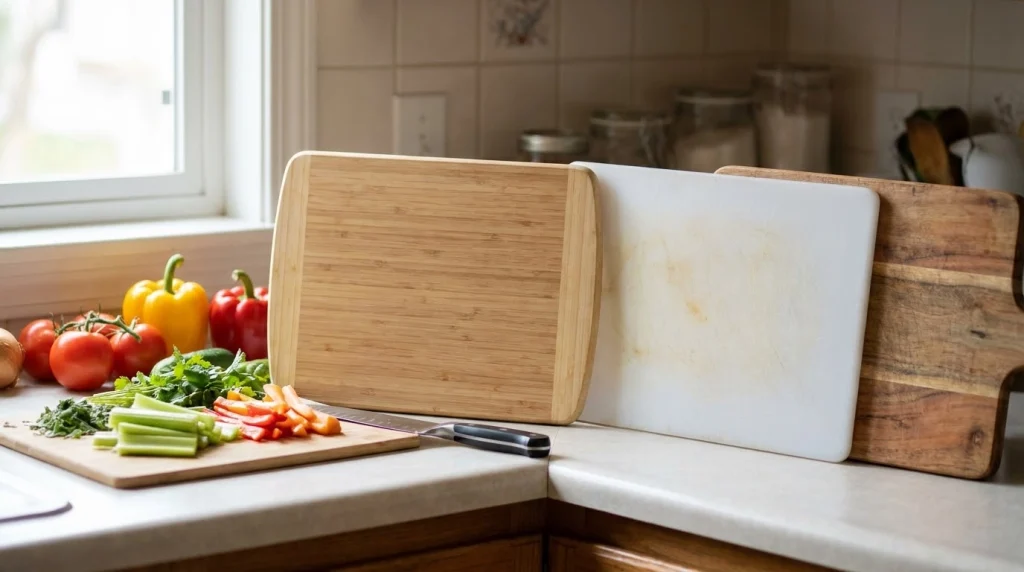
Bamboo, hardwood, and plastic cutting boards can all support safe food preparation when properly maintained. Their hygiene-related advantages depend on construction, surface condition, and cleaning requirements.
| Feature | Bamboo | Hardwood | Plastic |
|---|---|---|---|
| Moisture absorption | Relatively low | Varies by species | Generally nonporous |
| Knife grooves | Develop with use | Varies by hardness | Develop with use |
| Dishwasher compatibility | Generally no | Depends on construction | Many models |
| Oil conditioning | Often recommended | Often recommended | Not required |
| Bacterial contamination possible | Yes | Yes | Yes |
| Practical application | Produce and daily preparation | General chopping | Dedicated raw meat preparation |
I wouldn’t choose a cutting board based solely on claims about natural antibacterial properties. A material that fits your cleaning routine is often the more practical choice.
For example, pairing a bamboo vegetable board with a dishwasher-safe plastic meat board creates a convenient separation system without requiring complicated maintenance.
What Causes Bacterial Growth on Bamboo Cutting Boards?
1. Excessive Moisture
Moisture supports the growth of many microorganisms. Storing a bamboo cutting board while it is still wet can create unfavorable hygienic conditions.
Allow both sides to dry before placing the board inside a cupboard or drawer.
2. Deep Knife Grooves
Repeated cutting creates scratches that can collect small food particles. Deep grooves make it harder for ordinary washing to reach every contaminated area.
Inspect frequently used chopping surfaces for damage, particularly around the center of the board.
3. Raw Meat and Poultry
Raw chicken, beef, pork, and seafood may introduce harmful microorganisms to food preparation surfaces.
The risk increases when you prepare ready-to-eat ingredients on the same board without cleaning it first.
4. Inadequate Washing
A quick rinse may remove visible debris but leave grease and microorganisms behind. Dishwashing soap helps loosen residues that water alone may not remove.
5. Cracked Bamboo Strips
Bamboo cutting boards can develop separated joints after prolonged water exposure, heat damage, or repeated use.
These openings may trap liquids and organic material beyond the reach of routine cleaning.
6. Contaminated Kitchen Tools
Dirty knives, cleaning cloths, sponges, and hands can transfer bacteria back onto a recently washed board.
Maintaining clean preparation tools is part of maintaining a hygienic cutting surface.
How to Clean a Bamboo Cutting Board Properly
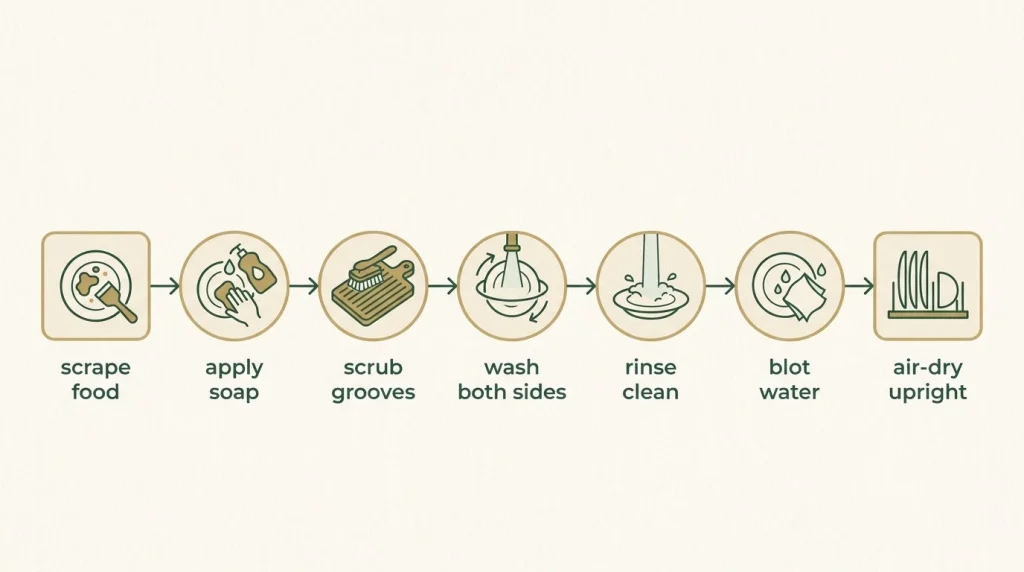
Cleaning a bamboo cutting board involves removing food residue, washing the entire surface, rinsing thoroughly, and drying it completely.
Follow this routine after everyday food preparation.
- Remove leftover food: Use a suitable scraper or soft brush to remove loose food particles.
- Apply dish soap: Wash the board using warm or hot soapy water.
- Scrub the surface: Pay attention to knife marks, juice grooves, edges, and corners.
- Wash both sides: Clean the underside as well as the primary chopping surface.
- Rinse thoroughly: Remove soap and loosened food residue using clean running water.
- Remove excess water: Use a clean paper towel or freshly washed kitchen towel.
- Air-dry vertically: Position the board where air can circulate around both sides.
Never leave a standard bamboo cutting board submerged in the sink. Prolonged soaking can cause swelling, warping, or separation between bonded strips.
Unless the manufacturer specifically approves dishwasher cleaning, wash your bamboo board by hand.
How Do You Sanitize a Bamboo Cutting Board?
Sanitizing reduces microorganisms remaining on a previously cleaned food preparation surface. It is especially useful after contact with raw meat, poultry, seafood, or other potentially contaminated ingredients.
The USDA’s surface sanitizing guidance describes using one tablespoon of plain, unscented liquid chlorine bleach mixed with one gallon of water.
Safe Sanitizing Procedure
- Wash the cutting board thoroughly with dish soap and water.
- Check whether the cutting board manufacturer permits bleach-based sanitizing.
- Choose an unscented bleach product suitable for sanitizing food-contact surfaces.
- Prepare the solution according to the product label and applicable food-contact surface instructions.
- Apply enough solution to cover the cleaned cutting surface.
- Maintain the required wet contact time specified on the sanitizer label.
- Rinse with clean drinking-quality water when required by the instructions.
- Allow the board to dry completely before reuse.
Important safety tip: Never combine chlorine bleach with vinegar, ammonia, or other household cleaners. Always follow the sanitizer manufacturer’s dilution, ventilation, contact time, and rinsing instructions.
Cleaning and sanitizing are different processes. Washing removes dirt and food residue, while sanitizing reduces microorganisms on the cleaned surface.
Does Vinegar Kill Bacteria on Bamboo Cutting Boards?
White vinegar has some antimicrobial activity and can help remove certain odors and residues. However, household vinegar is not a reliable substitute for an approved food-contact surface sanitizer.
Its effectiveness varies depending on concentration, exposure time, bacterial species, and the amount of organic material present.
Cleaning Products and Their Limitations
| Cleaning Method | Primary Purpose | Reliable Sanitizer? |
|---|---|---|
| Dish soap and water | Routine cleaning | Not by itself |
| White vinegar | Odor and residue removal | Not consistently |
| Lemon and salt | Surface scrubbing | No |
| Baking soda | Odor and stain removal | No |
| Suitable diluted chlorine bleach | Sanitizing | Yes, when correctly used |
Natural cleaning methods can complement routine maintenance. They should not be treated as guaranteed protection against foodborne pathogens.
Can You Cut Raw Meat on a Bamboo Cutting Board?
Yes, an intact bamboo cutting board can be used for raw meat if you clean and appropriately sanitize it afterward. However, using separate boards for raw proteins and ready-to-eat foods offers a simpler way to reduce contamination risks.
The Centers for Disease Control and Prevention’s food safety recommendations emphasize keeping raw animal products separate from foods that will not undergo further cooking.
A practical kitchen arrangement could include:
- Bamboo board: Fruits, vegetables, herbs, and bread.
- Plastic meat board: Raw chicken, beef, pork, and seafood.
- Serving board: Cooked foods, cheese, and prepared ingredients.
Consider a simple example involving chicken and a fresh salad. Preparing the salad on a separate board avoids exposing its uncooked ingredients to raw chicken juices.
This approach is easier than relying on memory when preparing several ingredients at once.
Does Oiling a Bamboo Cutting Board Prevent Bacteria?
Oiling a bamboo cutting board helps maintain its surface condition and may reduce excessive moisture absorption. It does not kill bacteria or replace sanitizing.
Food-grade cutting board mineral oil can help limit drying and surface deterioration in unfinished bamboo boards.
How to Oil a Bamboo Cutting Board
- Wash the board and allow it to dry completely.
- Apply food-grade cutting board mineral oil.
- Spread a thin, even layer across the recommended surfaces.
- Allow the oil to absorb according to the product instructions.
- Remove excess oil with a clean cloth.
Condition the board whenever its unfinished surface starts looking dry, following the manufacturer’s care recommendations.
Avoid using ordinary cooking oils unless specifically recommended for your board. Some cooking oils can oxidize, become sticky, or develop unpleasant odors.
Signs Your Bamboo Cutting Board Needs Replacement
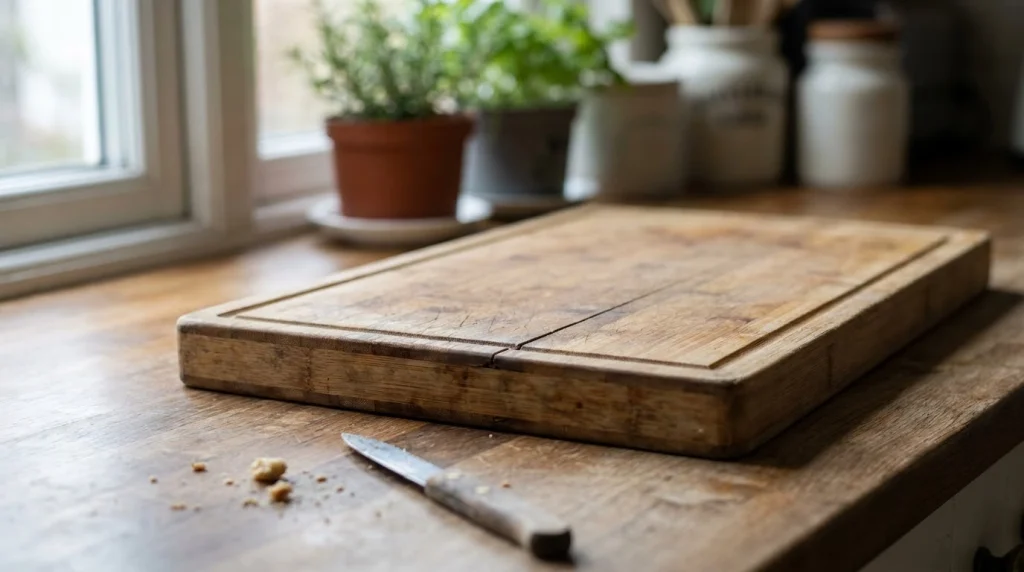
A bamboo cutting board should be replaced when damage prevents effective cleaning. Its age alone does not determine whether it remains suitable for food preparation.
Look for the following warning signs:
- Deep cracks: Openings that trap food and liquid.
- Separated layers: Visible gaps between bonded bamboo strips.
- Persistent mold: Mold growth that remains after appropriate cleaning.
- Deep knife grooves: Channels that are difficult to scrub effectively.
- Persistent odors: Unpleasant smells that remain after thorough washing.
- Severe warping: Damage that makes the cutting surface unstable.
- Loose splinters: Deteriorating bamboo fibers that may enter food.
The USDA’s cutting board safety recommendations advise replacing excessively worn boards and those with grooves that cannot be cleaned effectively.
Surface oil cannot repair structural damage. Replace boards with deep cracks rather than trying to conceal the damage with conditioning products.
How to Prevent Bacteria on Bamboo Cutting Boards
Preventing bacterial contamination requires consistent food preparation and cleaning habits. The goal is to reduce microbial transfer while maintaining a surface that remains easy to clean.
- Wash your cutting board after each food preparation task.
- Use separate boards for raw meat and ready-to-eat ingredients.
- Clean knives and utensils between different food types.
- Sanitize after exposure to potentially contaminated ingredients.
- Allow both sides of the board to dry completely.
- Never store a damp board inside an enclosed cabinet.
- Avoid prolonged soaking and excessive heat exposure.
- Condition unfinished bamboo according to manufacturer instructions.
- Use clean brushes, cloths, or paper towels.
- Replace boards with damage that prevents thorough cleaning.
These habits are more dependable than purchasing a board solely because it carries an antibacterial marketing claim.
Recommended Products for Maintaining Cutting Board Hygiene
A dedicated cutting board set and appropriate maintenance products can make kitchen hygiene easier to manage. These products address different aspects of food preparation and board care.
As an Amazon Associate, I earn from qualifying purchases. The recommendations below are based on practical product features, not independent laboratory or hands-on testing.
🏆 Best for food separation
Totally Bamboo 3-Piece Cutting Board Set
This Moso bamboo set provides three cutting surfaces in different sizes. I’d recommend it for households that want dedicated boards for vegetables, bread, and other everyday ingredients.
🛡️ Best for raw meat
OXO Good Grips Utility Cutting Board
This plastic cutting board offers a nonporous surface and dishwasher-safe construction. I’d pair it with a bamboo vegetable board to simplify raw meat preparation and cleanup.
💧 Best for board maintenance
Howard Cutting Board Oil
This food-grade mineral oil helps condition suitable unfinished cutting board surfaces. I’d choose it for routine maintenance to help reduce excessive drying and surface deterioration.
Frequently Asked Questions
Are bamboo cutting boards naturally resistant to bacteria?
Bamboo cutting boards have a relatively dense structure that may limit moisture penetration compared with some traditional woods. However, commercially manufactured bamboo boards are not guaranteed to kill harmful bacteria and still require regular washing, appropriate sanitizing, and complete drying.
Are bamboo cutting boards safer than plastic cutting boards?
Neither bamboo nor plastic is automatically safer in every kitchen situation. Bamboo offers a firm natural surface, while many plastic boards provide convenient dishwasher cleaning; the safest choice depends on surface condition, cleaning practices, and how you prevent cross-contamination.
Can bacteria grow in bamboo cutting board scratches?
Yes, scratches and deep knife grooves can retain moisture and food residue that support microbial survival or growth. Regular scrubbing helps remove contamination, but you should replace bamboo boards when damage becomes too deep for effective cleaning.
Does washing a bamboo cutting board with hot water kill bacteria?
Hot soapy water helps remove food particles, grease, and microorganisms from bamboo cutting boards. Ordinary hand-washing temperatures do not guarantee that all harmful bacteria will die, so use an appropriate sanitizing method after handling potentially contaminated ingredients.
How often should you sanitize a bamboo cutting board?
Wash a bamboo cutting board after each use and sanitize it whenever it contacts raw meat, poultry, seafood, or other potentially contaminated foods. Use a food-contact surface sanitizer compatible with bamboo and follow the manufacturer’s care instructions.
Final Thoughts
Bamboo cutting boards can harbor bacteria, particularly when moisture, food residue, and surface damage remain after food preparation. Their dense natural structure offers practical advantages but does not make them immune to contamination.
The most effective approach is to maintain separate preparation surfaces, wash thoroughly, sanitize when appropriate, and dry your boards completely.
I recommend inspecting your bamboo cutting board regularly rather than judging its safety by age or appearance alone. Replace it when cracks, separated layers, or deep grooves prevent effective cleaning.
A clean, dry, well-maintained bamboo cutting board can be a practical and hygienic addition to your kitchen.
Start by reviewing your current cutting board routine and separating raw meat preparation from ready-to-eat foods. Small improvements in everyday kitchen hygiene can make a meaningful difference in reducing cross-contamination.

