
How to Remove Odors from a Cutting Board: Easy, Safe Methods
Quick Answer
To remove odors from a cutting board, wash it thoroughly with warm water and mild dish soap. For lingering onion, garlic, or fish smells, gently scrub the clean board with a baking soda paste, rinse, and dry completely. A lemon-and-salt scrub can also help with ordinary food odors. Follow the University of Maine’s cutting board safety guidance for proper cleaning and sanitizing.
Six Quick Steps
- Remove food debris: Scrape away visible particles and rinse the surface.
- Wash thoroughly: Use warm water, dish soap, and a soft brush.
- Apply baking soda: Make a gentle paste with a little water.
- Scrub the surface: Work across the board and into shallow grooves.
- Rinse completely: Remove all cleaning residue with clean water.
- Dry upright: Let air circulate around both sides before storage.
Important Safety Reminder
- Odor removal is not sanitizing: Use appropriate food-contact sanitizing procedures after preparing raw animal products.
- Inspect persistent odors: Replace boards with deep, uncleanable grooves, mold, or extensive damage.
A cutting board can look spotless and still smell like yesterday’s onions, garlic, or fish. Strong aromas sometimes remain even after a normal wash.
I prefer starting with simple cleaning methods before trying stronger treatments. This guide explains how to remove cutting board odors safely and prevent them from returning.
Why Does a Cutting Board Develop Bad Odors?
Cutting board odors develop when food compounds, oils, or moisture remain on or within the cutting surface. Certain ingredients produce particularly persistent smells.
A wooden cutting board has natural pores and fibers that can retain moisture and food residue. Plastic boards are less porous, but knife scratches can trap debris.
Common Causes of Cutting Board Smells
- Onions and garlic: Sulfur-containing compounds leave recognizable, lingering aromas.
- Fish and seafood: Fish-related compounds can create strong smells that remain after rinsing.
- Raw meat juices: Residue can produce unpleasant odors and requires careful food-safety handling.
- Trapped moisture: Improper drying can encourage microbial growth and musty smells.
- Food trapped in grooves: Repeated chopping creates scratches that collect debris.
- Rancid cooking oil: Certain oils used for wood conditioning can oxidize and develop unpleasant odors.
What Is a Cutting Board Odor?
A cutting board odor is an unpleasant smell caused by substances remaining on or inside the board’s surface. Its presence does not identify a particular microorganism or prove contamination.
Likewise, a board without an odor is not automatically sanitary. Cleaning and sanitizing serve different purposes.
What Should You Do Before Removing Cutting Board Odors?
Always begin by washing the cutting board. Deodorizing an unwashed board can spread residue instead of removing the underlying problem.
The cleaning method should match the board’s material and manufacturer’s instructions.
Gather These Simple Cleaning Supplies
- Mild, preferably unscented dish soap
- Warm running water
- A clean sponge or soft-bristled brush
- Baking soda for stubborn food odors
- Fresh lemon and coarse salt, if suitable
- Clean towels or paper towels
- A drying rack with adequate airflow
These supplies are sufficient for most routine food odors. Specialized products become useful when the board needs conditioning or replacement.
Check the Board’s Condition First
Inspect the surface under good lighting. Look for cracks, deep grooves, discoloration, and areas that remain damp.
A badly damaged board may not be suitable for continued food preparation. Surface deodorizing cannot repair structural problems.
How Do You Remove Odors from a Cutting Board Step by Step?
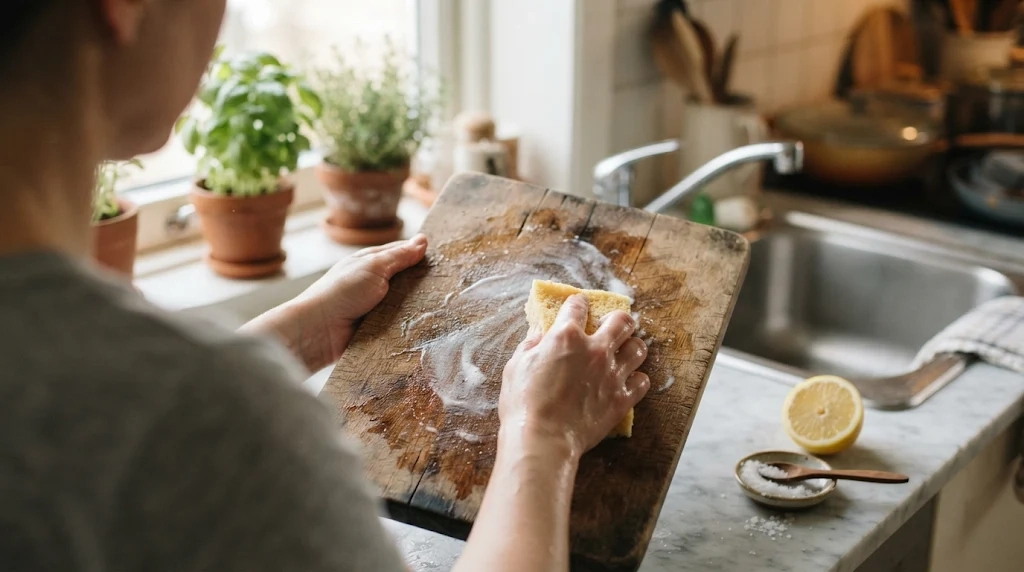
The most practical approach combines proper washing, targeted deodorizing, and complete drying. Start gently, then repeat the odor treatment only if needed.
Step 1: Remove Leftover Food and Residue
Use a soft scraper or sponge to remove food particles. Pay attention to corners, handle openings, and juice grooves.
Discard the debris before washing. This prevents remaining pieces from spreading across the board.
Step 2: Wash With Warm Water and Dish Soap
Apply mild dish soap and scrub the entire cutting surface. Clean both faces and the edges, even if only one side was used.
Rinse thoroughly with clean water. For wooden boards, avoid prolonged soaking.
Step 3: Apply a Baking Soda Paste
Mix approximately one tablespoon of baking soda with enough water to make a spreadable paste. Apply a thin coating to the smelly area.
Gently scrub with a soft sponge for about 30–60 seconds. This is a practical starting technique, not a guaranteed treatment time.
For stubborn odors, let the paste remain briefly before rinsing. Avoid allowing a wet paste to sit on wood for extended periods.
Step 4: Try Lemon and Salt for Persistent Food Smells
If ordinary cleaning and baking soda are insufficient, lemon and salt offer another household deodorizing method. Use it only when the board’s finish tolerates mild acidity and gentle abrasion.
- Sprinkle a small amount of coarse salt over the clean surface.
- Cut a fresh lemon in half.
- Rub the lemon gently across the salt.
- Concentrate on areas with lingering food odors.
- Rinse thoroughly and remove all salt.
Avoid aggressive scrubbing on delicate finishes or damaged wood. Lemon and salt are odor-cleaning aids, not dependable substitutes for sanitizing.
Step 5: Rinse and Dry Thoroughly
Rinse the treated board until no paste, salt, or citrus residue remains. Wipe away excess moisture with a clean towel.
Position the board upright so both sides receive airflow. Wait until it is completely dry before storing it.
Step 6: Check Whether the Odor Remains
Once the board is dry, check its smell again. A lingering strong odor may indicate trapped residue or damage.
Repeat gentle cleaning once if the surface remains sound. If the odor seems rotten, musty, or impossible to remove, inspect the board for replacement.
Which Cutting Board Odor Removal Method Works Best?
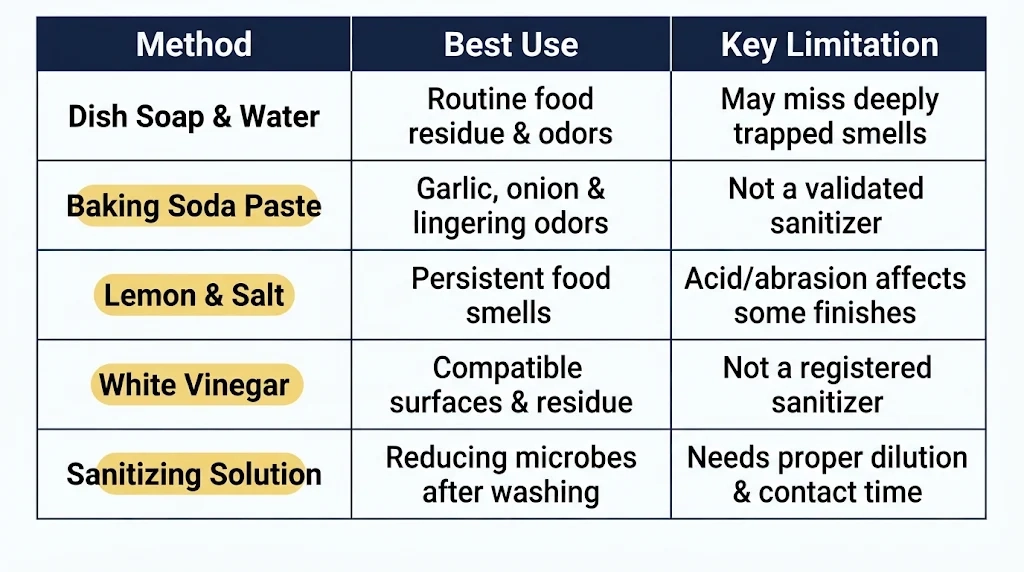
The best method depends on the odor and cutting board material. Soap and water should always remain the foundation of your cleaning routine.
Use the following comparison to choose a suitable approach.
| Method | Best Use | Limitations |
|---|---|---|
| Dish soap and water | Routine food residue and odors | May not remove deeply trapped smells |
| Baking soda paste | Garlic, onion, and lingering food odors | Not a validated sanitizer |
| Lemon and salt | Some persistent food smells | Acid and abrasion may affect certain finishes |
| White vinegar | Supplemental cleaning on compatible surfaces | Not a registered replacement for food-contact sanitizer |
| Proper sanitizing solution | Reducing microbial contamination after washing | Requires correct dilution and contact time |
I would choose a gentle baking soda treatment for ordinary garlic or onion smells. When raw animal products are involved, proper sanitizing takes priority over deodorizing.
How Do You Remove Smells from a Wooden Cutting Board?
Wooden cutting boards need gentle cleaning and careful moisture control. Their fibers can retain food aromas, particularly when the wood becomes dry or poorly maintained.
Begin with mild soap and warm water. Use a soft brush rather than soaking the board.
Deodorize the Wood Without Damaging It
- Clean the board before applying any deodorizing treatment.
- Use a small amount of baking soda paste for stubborn odors.
- Scrub gently instead of using abrasive metal brushes.
- Rinse promptly and dry with a clean towel.
- Stand the board upright until completely dry.
If the wood looks rough or badly worn, deodorizing alone may not help. Learn how to refinish a cutting board before attempting restoration.
Should You Oil a Wooden Cutting Board After Cleaning?
Yes, when the board is fully dry and needs conditioning. Food-grade mineral oil helps maintain wood and reduce excessive moisture absorption.
Oiling does not disinfect the surface or remove existing contamination. Clean and dry the board first.
For the proper application process, follow this guide on how to oil a wooden cutting board.
How Do You Get Bad Smells Out of a Plastic Cutting Board?
Plastic cutting boards are generally easier to clean because their surfaces are nonporous. However, deep knife marks can collect food debris.
Wash with hot, soapy water and scrub any grooves carefully. Rinse thoroughly before checking for remaining odors.
Use Baking Soda for Lingering Smells
Apply a small amount of baking soda paste to the clean plastic surface. Gently scrub, rinse, and allow it to dry.
Many plastic boards are dishwasher-safe, but you should confirm the manufacturer’s instructions. Dishwasher cleaning can help remove routine food residue from suitable boards.
When Should You Replace a Plastic Cutting Board?
Replace plastic boards when repeated cutting creates deep, difficult-to-clean grooves. Extensive scratching can make reliable cleaning difficult.
A badly worn surface is more important than its appearance alone. Do not rely on deodorizing to make damaged plastic safe.
How Can You Remove Specific Food Odors?
Different foods leave different odor-causing compounds. Matching the cleaning method to the residue can make the process easier.
Removing Onion and Garlic Smells
Onions and garlic contain sulfur compounds responsible for their distinctive aromas. These smells can linger after the food itself is gone.
Wash with dish soap and apply a baking soda paste if needed. Rinse well and dry before preparing ingredients with delicate flavors.
Removing Fish Smells
Fish odors can become especially noticeable on frequently used boards. Certain fish-related compounds contribute to the familiar fishy aroma.
Remove every trace of residue with warm, soapy water. A gentle lemon treatment may help the remaining smell, but follow appropriate sanitizing procedures after raw seafood.
Removing Raw Meat Odors
A cutting board used for raw meat requires thorough cleaning and sanitizing. Removing its smell alone does not address potential contamination.
Use separate boards for raw meat and ready-to-eat foods whenever practical. This reduces the chance of cross-contamination.
Removing Sour or Musty Odors
A sour or musty smell may indicate moisture, food residue, or unwanted microbial growth. Inspect the board carefully before reusing it.
Wash and dry an otherwise sound board completely. If you discover mold, severe damage, or a persistent foul odor, replacing the board is the safer choice.
Does Vinegar Remove Cutting Board Odors?
White vinegar can help with certain food residues and odors on compatible surfaces. However, its effectiveness varies with the material and the cause of the smell.
For plastic or bamboo boards, plain white vinegar may serve as an additional cleaning aid. The University of Maine notes that vinegar should not replace a suitable registered sanitizer where reliable sanitizing is required.
How to Use Vinegar Carefully
- Wash the board first with dish soap and water.
- Check whether the surface tolerates vinegar.
- Apply a small amount of plain white vinegar.
- Allow brief contact without prolonged soaking.
- Rinse thoroughly with clean water.
- Dry the board completely before storage.
Avoid vinegar on acid-sensitive stone surfaces or finishes that prohibit acidic cleaners. Never combine vinegar with chlorine bleach.
Does Removing an Odor Also Sanitize a Cutting Board?
No. Deodorizing removes or reduces unpleasant smells, while sanitizing aims to reduce microorganisms on an already cleaned surface.
A board may smell fresh and still contain harmful microorganisms. This distinction matters after cutting raw meat, poultry, or seafood.
How to Sanitize a Cutting Board Safely
The USDA Food Safety and Inspection Service describes a household sanitizing method using one tablespoon of unscented liquid chlorine bleach per gallon of water.
- Wash the board thoroughly with hot, soapy water.
- Rinse away all soap and cleaning products.
- Prepare the bleach solution according to applicable product guidance.
- Apply it evenly to the cutting surface.
- Allow the recommended contact time.
- Rinse with clean water as directed.
- Dry completely before reuse.
Bleach concentration and product instructions can differ. Follow current food-contact guidance and avoid prolonged soaking of wooden boards.
Never mix bleach with vinegar, lemon juice, ammonia, or other cleaners. The Washington State Department of Health explains the dangerous gases these mixtures can produce.
What Mistakes Should You Avoid When Cleaning a Cutting Board?
Some popular cleaning habits can damage cutting boards or create unnecessary safety risks. Avoiding these mistakes helps preserve the surface.
- Soaking wooden boards: Excessive water absorption may cause swelling, cracking, or warping.
- Putting wood in the dishwasher: Heat and prolonged moisture may damage wooden boards.
- Using harsh abrasives: Aggressive scrubbing can damage protective finishes.
- Mixing cleaning chemicals: Combining bleach with acidic products can release dangerous gases.
- Applying cooking oils: Olive and vegetable oils may become sticky or rancid during long-term conditioning.
- Storing boards wet: Trapped moisture can encourage mold and unpleasant odors.
- Ignoring deep grooves: Damaged surfaces can become difficult to clean effectively.
Wooden boards are particularly vulnerable to uneven moisture exposure. Read more about preventing cutting board warping.
How Can You Prevent Cutting Board Odors from Returning?
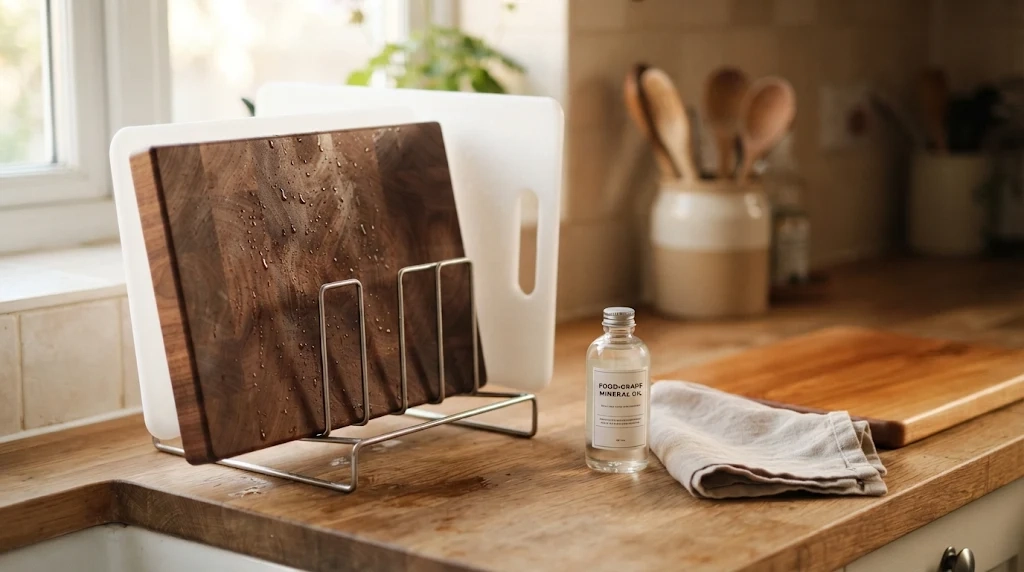
Consistent cleaning is more effective than repeatedly treating severe smells. Small habits after every meal make a noticeable difference.
Follow a Simple Daily Care Routine
- Remove food residue immediately after preparation.
- Wash the board using warm water and mild soap.
- Clean grooves, handles, edges, and both faces.
- Rinse away remaining cleaning products.
- Dry with a clean towel.
- Store upright until completely dry.
Use Separate Boards for Different Foods
Keeping separate cutting boards for raw animal products and ready-to-eat foods reduces cross-contamination risks. The Academy of Nutrition and Dietetics recommends this separation.
You can also reserve one board for strong-smelling ingredients. This may help prevent onion or fish aromas from transferring to bread and fruit.
Prevent Moisture and Mold
Store clean boards where air can circulate freely. Avoid placing a damp board flat against a countertop or inside a closed cupboard.
For additional prevention tips, see how to prevent mold on cutting boards.
Maintain Wooden Boards Regularly
Inspect wooden boards for dryness, scratches, and cracks. Apply a suitable food-grade conditioner when the surface needs it.
As of 2026, food-grade mineral oil and beeswax-based board conditioners remain practical wood-care options. They help maintain the surface but do not replace cleaning.
When Should You Stop Using a Smelly Cutting Board?
Not every lingering smell means a board must be discarded. However, damaged or contaminated surfaces deserve extra caution.
Warning Signs That May Require Replacement
- Deep grooves that cannot be cleaned thoroughly
- Extensive cracks or separation between wooden sections
- Visible mold or suspicious growth
- Persistent rotten or musty odors after cleaning and drying
- Severe plastic scoring or peeling
- Surfaces that remain rough, damaged, or difficult to sanitize
Minor cosmetic scratches on sound wood may be repairable. Significant damage or suspected contamination can make replacement the more sensible option.
A useful board should be easy to clean and maintain. Do not sacrifice food safety to preserve a badly deteriorated surface.
Useful Products for Cutting Board Cleaning and Maintenance
Most everyday odors require only dish soap and simple household supplies. If your wooden board also needs conditioning, these products are worth considering.
The ratings below represent editorial suitability estimates for their stated uses, not verified customer ratings or hands-on testing results.
Affiliate disclosure: The following shopping links may earn a commission from qualifying purchases at no additional cost to you.
🏆 Best for Wood Conditioning
Howard Cutting Board Oil
★★★★½ 4.5/5 editorial fit
Made with pure food-grade mineral oil, this product conditions dry wooden cutting boards without using ordinary cooking oils. I consider it a practical option after a board has been properly cleaned and dried.
🪵 Best for Added Wood Protection
John Boos Boos Block Board Cream
★★★★☆ 4/5 editorial fit
This conditioner combines beeswax and food-grade oil to help protect wooden cutting surfaces. I would consider it for regular maintenance after oiling, especially when the board needs additional moisture resistance.
💧 Best Easy-Clean Board Alternative
OXO Good Grips Carving and Cutting Board
★★★★½ 4.5/5 editorial fit
This nonporous plastic cutting board offers an alternative to wood when convenient cleaning is a priority. I would consider it for a separate raw-protein preparation area, while monitoring its surface for wear.
These products serve different purposes. Conditioning protects sound wood, while a replacement board may help when an existing surface is badly worn.
Frequently Asked Questions
Can baking soda remove garlic smells from a cutting board?
Yes, baking soda can help reduce lingering garlic odors after normal washing. Apply a gentle paste made with baking soda and water, scrub lightly, and rinse thoroughly. Dry the board completely afterward, and remember that baking soda is not a substitute for sanitizing.
Can I use lemon juice on a wooden cutting board?
Lemon juice can help with ordinary food odors on some unfinished wooden cutting boards. Use a small amount, scrub gently, and rinse promptly. Avoid prolonged acid exposure, particularly when the board has a delicate finish or its manufacturer advises against acidic cleaners.
Why does my cutting board smell even after washing?
Food compounds may remain in wood fibers, knife grooves, or surface residue. Moisture trapped during storage can also create unpleasant smells. Inspect the board, wash it thoroughly, use a gentle deodorizing treatment if appropriate, and let it dry completely before checking again.
Can vinegar disinfect a cutting board?
White vinegar may reduce some surface microorganisms, but it is not a reliable replacement for an approved food-contact sanitizing procedure. After handling raw meat, poultry, or seafood, clean and sanitize the board according to appropriate guidance. Never mix vinegar with chlorine bleach.
How often should I deodorize my cutting board?
You do not need to deodorize a cutting board on a fixed schedule. Wash it after every use and treat noticeable lingering food odors when needed. Regular drying, suitable wood conditioning, and separate preparation boards help prevent smells from developing in the first place.
Final Thoughts: Keep Your Cutting Board Fresh and Safe
Learning how to remove odors from a cutting board starts with proper cleaning. Warm water, mild dish soap, and complete drying handle most everyday problems.
For persistent food aromas, baking soda or a gentle lemon-and-salt treatment may help. Always choose methods suitable for the board’s material.
Remember that a fresh smell does not guarantee a sanitized surface. Follow food-safety guidance, inspect worn boards, and replace those that cannot be cleaned effectively.
Make cleaning and drying part of your everyday kitchen routine. Your cutting board will be easier to maintain and better prepared for the next meal.

