How to Prevent Mold on Cutting Boards: A Complete Care Guide
Quick Answer
To prevent mold on cutting boards, wash them with hot, soapy water after each use, rinse thoroughly, and dry them completely before storage. Stand boards upright in a well-ventilated area, avoid prolonged soaking, and inspect grooves and cracks regularly. Follow the four steps to food safety to maintain a cleaner kitchen.
Six simple prevention steps
- Wash immediately: Remove food residue with dish soap and warm or hot water.
- Rinse thoroughly: Remove soap and loosened particles from both sides and edges.
- Dry both surfaces: Use a clean towel or paper towel to remove excess water.
- Store upright: Allow air to circulate around the entire board.
- Maintain wooden boards: Apply food-grade mineral oil when the clean, dry wood needs conditioning.
- Inspect regularly: Replace boards with persistent mold, serious cracks, or hard-to-clean grooves.
Most important habit
- Never store a damp cutting board in an enclosed cabinet. Even a well-cleaned board can develop moisture problems when air cannot circulate.
Cutting boards handle everything from crisp vegetables to juicy meats, making them some of the hardest-working kitchen tools. Unfortunately, moisture trapped in wood, knife grooves, or storage spaces can create conditions where mold grows.
I believe prevention should be simple enough to follow after every meal. This guide explains why mold appears, how to clean each board material, and when replacement becomes the safer choice.
Why Does Mold Grow on Cutting Boards?
Mold grows when fungal spores encounter favorable conditions, particularly moisture and available nutrients. Cutting boards can provide both when food particles remain on a surface that stays damp.
Cutting board mold is fungal growth that develops on or within a cutting board under suitable conditions. It may appear as fuzzy patches, discolored spots, or growth around cracks and edges.
Moisture trapped beneath the board
A freshly washed board can look dry on top while remaining wet underneath. Placing it flat against a countertop can trap moisture between the two surfaces.
This is especially concerning when the board remains in that position overnight.
Food residue left in knife grooves
Small food particles can collect inside scratches, seams, and deep cuts. These areas become increasingly difficult to clean as the board wears.
Food residue also supplies nutrients that support microbial growth.
High humidity and poor ventilation
Humidity can slow drying, particularly in kitchens without adequate airflow. A closed drawer or crowded cabinet may retain moisture longer than an open drying rack.
Consider these common risk factors:
- Storing boards immediately after rinsing.
- Leaving wooden boards submerged in dishwater.
- Keeping damp boards against a wall.
- Using dirty sponges or cleaning cloths.
- Allowing food residue to remain overnight.
- Ignoring cracks, seams, and damaged edges.
Practical tip: Check the underside before storing your board. A dry upper surface does not guarantee that the entire board is dry.
How Do You Clean a Cutting Board to Prevent Mold?
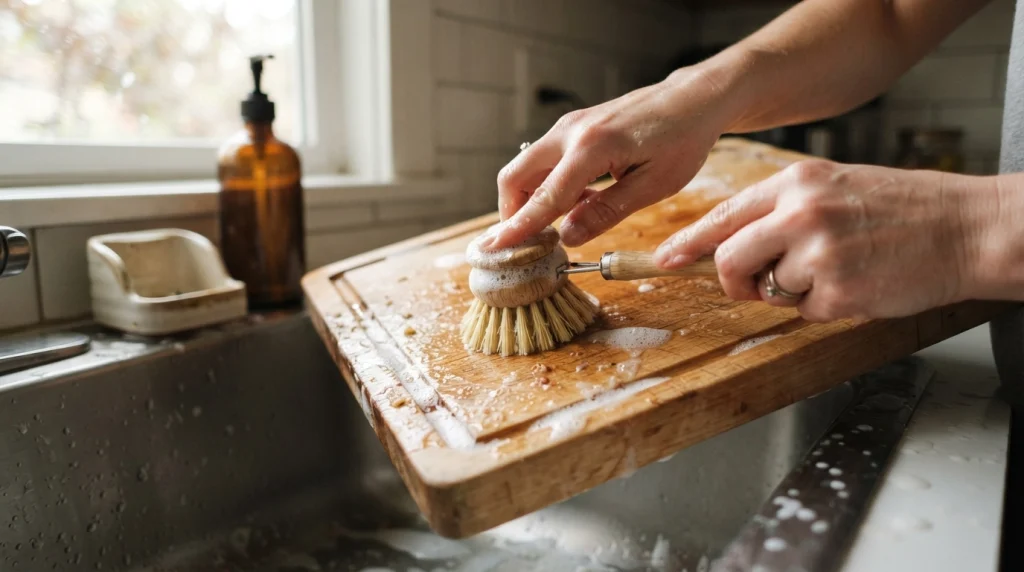 Save
Wash cutting boards with hot, soapy water after preparing each food item, then rinse and dry them completely. Cleaning removes visible food residue and dirt before they become harder to remove.
For routine maintenance, follow this process.
Step 1: Remove leftover food
Use a spatula or clean scraper to remove crumbs, vegetable scraps, and other food particles. Pay particular attention to juice grooves and corners.
Step 2: Wash with dish soap
Scrub the board using warm or hot water and ordinary dish detergent. Clean both sides, even when food touched only one surface.
Use a clean brush or sponge that can reach shallow grooves.
Step 3: Rinse with clean water
Rinse away detergent and loosened debris. Avoid leaving soap or cleaning chemicals on the food-contact surface.
Step 4: Remove excess moisture
Pat both sides and edges dry with a clean towel or paper towel. Drying the surface first helps shorten the remaining air-drying period.
Step 5: Air-dry before storage
Stand the board upright in a clean drying rack with space around it. Wait until both sides and the edges are completely dry before putting it away.
Step 6: Sanitize when necessary
Boards used for raw poultry, meat, or seafood need additional attention because harmful bacteria can spread between foods. Clean the board first, then sanitize using an appropriate food-contact method.
The USDA describes a solution of 1 tablespoon of unscented liquid chlorine bleach per gallon of water for sanitizing cutting boards. Apply it to the cleaned surface, allow several minutes of contact, rinse thoroughly, and dry.
Follow product-label directions and material-manufacturer guidance. Never mix bleach with vinegar, ammonia, or other cleaners.
For more information, consult the USDA guidance on wood and plastic cutting boards.
How Should You Dry a Cutting Board Properly?
The best drying approach is to remove excess water immediately and then allow unrestricted airflow around the board. Complete drying is more important than following a fixed number of minutes.
A thick wooden cutting board generally requires more drying time than a thin plastic board. Kitchen humidity, ventilation, and board construction also affect drying.
Use an upright drying position
Place the board in a stable rack so its broad surfaces remain exposed. Avoid leaning a wet wooden board against a wall where moisture can become trapped.
Keep boards away from standing water
Do not leave a board resting in a wet sink or on a saturated dish towel. These surfaces can transfer moisture back onto the board.
Avoid excessive heat
Do not place wooden cutting boards directly against radiators or other intense heat sources. Rapid or uneven drying can contribute to warping and cracking.
A well-ventilated location at ordinary room temperature is a practical choice.
Which Cutting Board Materials Are Most Resistant to Mold?
 Save
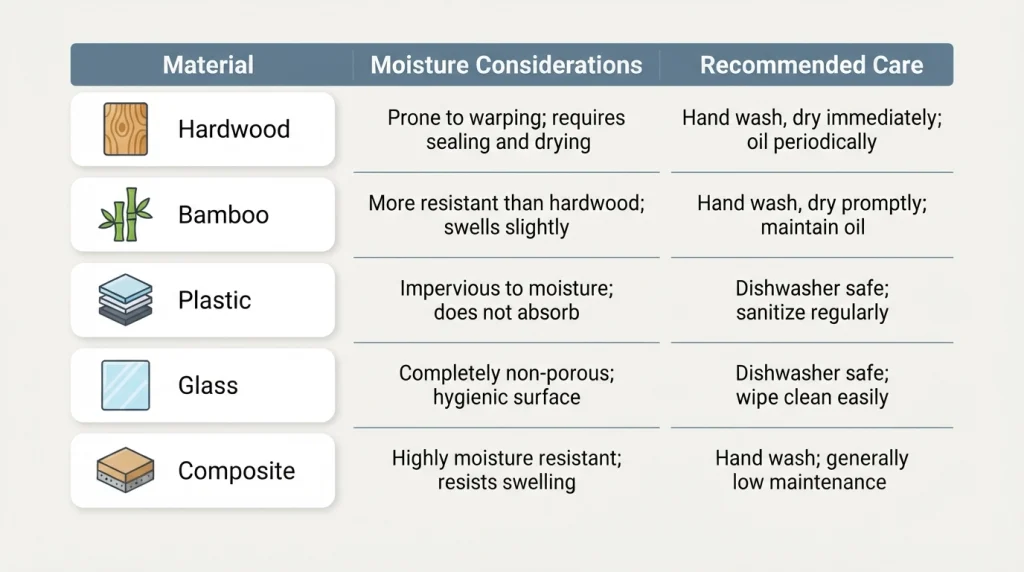
Nonporous materials are generally easier to clean than porous wood, but no reusable board is maintenance-free. All cutting boards need proper cleaning, drying, and inspection.
The following table compares common materials and their care requirements.
| Material | Moisture considerations | Recommended care |
|---|---|---|
| Hardwood | Porous; prolonged moisture can cause swelling or damage. | Hand-wash, dry upright, and condition when needed. |
| Bamboo | Can absorb moisture, especially around joints and cracks. | Avoid soaking and allow complete drying. |
| Plastic | Nonporous, but scratches can trap food residue. | Wash thoroughly; use a dishwasher only when permitted. |
| Glass | Nonporous and does not absorb water. | Clean thoroughly; consider its hard surface and impact on knives. |
| Composite | Depends on the material and manufacturing method. | Follow the manufacturer’s washing and drying instructions. |
For a kitchen that regularly handles raw meat, a dishwasher-safe plastic board can be convenient. A well-maintained hardwood board remains a practical option for preparing vegetables, fruit, and bread.
Material alone does not guarantee hygiene. Cleaning habits and board condition matter considerably.
How Can You Prevent Mold on Wooden Cutting Boards?
Wooden boards need consistent drying, careful washing, and occasional conditioning. The objective is to prevent prolonged moisture exposure while preserving the board’s structural condition.
Never leave wood soaking in water
Prolonged soaking allows moisture to penetrate the wood. Repeated exposure can contribute to swelling, warping, and separation at glued joints.
Instead, wash the board promptly and rinse it without leaving it submerged.
Condition with food-grade mineral oil
Food-grade mineral oil helps condition wooden cutting boards and reduce rapid moisture absorption. It does not replace cleaning or make a board mold-proof.
Apply oil only when the board is thoroughly clean and dry.
- Inspect the surface for cracks, discoloration, or damage.
- Place the completely dry board on a protected work surface.
- Apply a modest amount of food-grade mineral oil with a clean, lint-free cloth.
- Spread the oil across the top, bottom, edges, and exposed end grain.
- Allow it to absorb according to the product instructions.
- Wipe away excess oil before returning the board to use.
Reapply when the wood looks dry or no longer feels properly conditioned. The appropriate frequency depends on how often you wash and use the board.
Avoid ordinary cooking oils that may become rancid during storage.
Check joints and end grain
End-grain boards contain numerous exposed wood fibers, making careful drying especially important. Pay attention to seams where liquid may collect.
Replace boards with opening glue joints or cracks that cannot be cleaned effectively.
Can Vinegar, Baking Soda, or Lemon Prevent Cutting Board Mold?
Vinegar, baking soda, and lemon may help with some cleaning tasks, odors, or stains. However, they should not replace proper washing, drying, or a validated sanitizing method.
White vinegar
Vinegar is commonly used for household cleaning, but its effectiveness depends on concentration, organisms, and contact conditions. It is not a reliable substitute for approved food-contact sanitization.
Do not mix vinegar with chlorine bleach.
Baking soda
Baking soda can help lift some residue and reduce certain odors when used as a gentle cleaning paste. Rinse it away thoroughly after cleaning.
It does not reliably kill all microorganisms that may contaminate a cutting board.
Lemon juice
Lemon juice can help with some odors and superficial stains. Its acidity does not make it an adequate replacement for washing and sanitizing.
The most dependable routine remains dish soap, clean water, and complete drying.
What Should You Do If Mold Already Appears on a Cutting Board?
Stop using the board immediately and inspect the affected area. If there is visible mold on a porous wooden or bamboo cutting board, replacement is the safest practical choice.
Visible growth may not reveal how far contamination extends into cracks, joints, or porous material.
Signs that warrant replacement
- Fuzzy or spreading patches of visible mold.
- Dark growth inside cracks or glued seams.
- Persistent musty odors after cleaning and drying.
- Deep knife grooves that cannot be cleaned effectively.
- Wood that remains damp, soft, or structurally damaged.
- Repeated mold growth after previous cleaning attempts.
Do not rely on sanding, bleaching, or masking odors to make a deeply contaminated wooden board safe. Surface appearance alone cannot confirm that hidden contamination is gone.
What about plastic cutting boards?
A smooth, intact plastic board is easier to clean than porous wood. Nevertheless, visible mold inside deep scratches, cracks, or damaged areas can be difficult to remove reliably.
If contamination persists or the surface is excessively worn, replace the board.
What Are the Biggest Cutting Board Storage Mistakes?
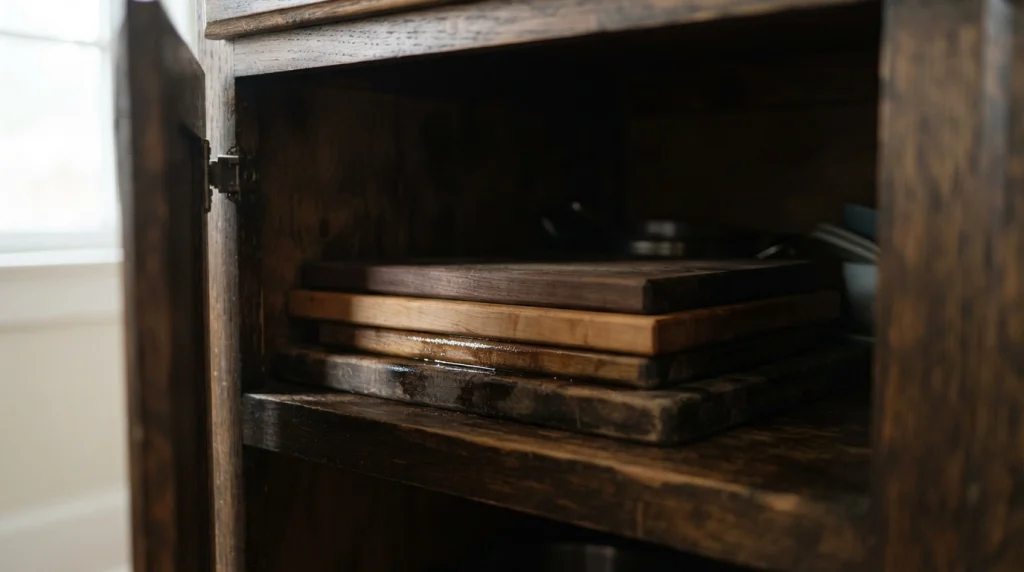 Save
Improper storage can undo careful cleaning. Even a freshly washed board needs suitable airflow before it enters a cabinet.
Avoid these common mistakes:
- Stacking wet boards: Moisture can become trapped between surfaces.
- Using closed drawers too early: Limited airflow can slow evaporation.
- Leaving boards in the sink: Standing water increases moisture exposure.
- Keeping boards near persistent leaks: Damp cabinets encourage unwanted microbial growth.
- Using dirty towels: Contaminated cloths can transfer food residue and microorganisms.
- Ignoring rack hygiene: A dirty drying rack can contaminate a freshly cleaned board.
Choose a clean, dry storage area with enough space between boards. Regularly inspect the cabinet or rack for condensation and moisture.
How Often Should You Clean and Maintain Your Cutting Board?
Clean the board after every use and whenever switching between different food categories. Additional maintenance should depend on the board material, condition, and frequency of use.
| Task | Suggested frequency | Purpose |
|---|---|---|
| Wash and rinse | After every use | Remove food residue and contamination. |
| Dry completely | After every wash | Prevent prolonged moisture exposure. |
| Sanitize | After raw meat contact and when otherwise needed | Reduce contamination risks. |
| Inspect for damage | Regularly, including before use | Identify cracks and worn surfaces. |
| Condition wood | When dry or as manufacturer recommends | Maintain the wooden surface. |
This is a practical maintenance schedule, not a guarantee against mold. Inspect more frequently if your kitchen is humid or your cutting board receives heavy daily use.
How Can You Keep Cutting Boards Hygienic in a Humid Kitchen?
In humid conditions, airflow and storage placement become especially important. A board may take longer to dry even after you remove visible moisture.
Try these adjustments:
- Use a drying rack that exposes both surfaces.
- Improve kitchen ventilation when practical.
- Keep boards away from leaky pipes and damp cabinets.
- Clean and dry the surrounding countertop regularly.
- Do not crowd multiple wet boards together.
- Consider a dehumidifier if indoor humidity remains persistently high.
In a small kitchen, I would prioritize a simple vertical rack over complicated storage accessories. Keeping boards accessible and separated makes regular maintenance easier.
How Do You Prevent Cross-Contamination While Maintaining Cutting Boards?
Mold prevention is one part of cutting board hygiene. Preventing harmful bacteria from transferring between raw and ready-to-eat foods is equally important.
The CDC’s food safety guidance recommends using separate cutting boards for raw animal products and ready-to-eat foods.
- Reserve one board for raw meat, poultry, and seafood.
- Use another board for fruit, vegetables, bread, and ready-to-eat foods.
- Wash boards between food preparation tasks.
- Sanitize appropriately after handling raw animal products.
- Replace boards when damage prevents effective cleaning.
For additional guidance on choosing and cleaning boards, review the University of Illinois Extension cutting board recommendations.
Helpful Products for Cutting Board Maintenance
A few well-chosen tools can simplify daily cleaning and moisture control. These are practical product options to consider rather than independently tested or ranked winners.
Disclosure: The following Amazon search links contain an affiliate tag, and qualifying purchases may earn a commission.
🪵 Wood care option
Howard Butcher Block Conditioner
Customer rating: Not independently verified
A wood-conditioning product formulated with food-grade mineral oil and waxes. I consider this type of product useful for maintaining clean, dry wooden boards, but it is not a mold remover or disinfectant.
🧽 Easy-clean option
OXO Good Grips Utility Cutting Board
Customer rating: Not independently verified
A nonporous cutting board option designed for routine kitchen preparation. I would consider a dishwasher-safe plastic board for tasks involving raw meat because cleaning can be more convenient.
🧴 Simple conditioning option
John Boos Mystery Oil
Customer rating: Not independently verified
A food-safe conditioning oil intended for wooden cutting boards and butcher blocks. For a board that needs routine conditioning, I prefer a dedicated wood-care product over ordinary vegetable oil.
Frequently Asked Questions
Can mold grow on a cutting board even if I wash it regularly?
Yes. Washing alone does not prevent mold if moisture remains trapped after cleaning. Food residue inside grooves, high humidity, and enclosed storage can also contribute. Dry the entire board thoroughly before storage and replace it if persistent mold develops.
Does mineral oil prevent mold on wooden cutting boards?
Food-grade mineral oil helps condition wood and can reduce rapid moisture absorption, but it does not kill mold. Proper washing, complete drying, and ventilated storage remain essential. Never apply oil over a dirty or moldy surface.
Should I throw away a cutting board with black mold?
If a wooden or bamboo cutting board develops visible black or other colored mold, replacement is the safest practical option. Mold color cannot reliably identify its species or toxicity. Discard boards with persistent contamination, especially when growth reaches cracks, grooves, or joints.
Can I put a wooden cutting board in the dishwasher?
Generally, hand-washing is safer for laminated wooden and bamboo boards because dishwasher heat and moisture can damage their structure. Some solid hardwood boards may have different manufacturer instructions. Always check the specific board’s care guidance before using a dishwasher.
How long should a cutting board dry before storage?
There is no universal drying time. Thickness, humidity, airflow, and material all affect how quickly a board dries. Remove excess water first, then keep the board upright until both surfaces and edges are fully dry. Avoid relying only on a fixed time.
Final Takeaway: Keep Your Cutting Board Clean and Dry
Preventing mold on cutting boards comes down to consistent cleaning, complete drying, and sensible storage. These simple habits help maintain a cleaner food-preparation surface and reduce avoidable moisture problems.
Inspect your boards regularly, condition wood when necessary, and replace damaged or persistently moldy surfaces. A few minutes of care after each meal can make everyday kitchen maintenance much easier.
Start with your next wash: Clean both sides, dry the edges, and store the board upright only when it is completely dry.

