Can You Use a Cutting Board for Charcuterie? A Complete Guide
Quick Answer
Yes, you can use a cutting board for charcuterie. A clean, food-safe wooden, bamboo, or plastic cutting board works well for serving cured meats, cheeses, crackers, fruits, and other appetizers. Choose a smooth board without deep cracks or knife grooves, and keep it separate from surfaces used for raw meat whenever possible. Follow basic food safety guidelines to prevent cross-contamination.
What Makes a Cutting Board Suitable?
- Food-safe material: Use a board manufactured for direct food contact.
- Clean surface: Wash and dry the board thoroughly before arranging food.
- Good condition: Avoid deep scratches, cracks, splinters, or peeling finishes.
- Adequate space: Select a board large enough to separate and arrange the ingredients comfortably.
- Safe food handling: Keep refrigerated meats, soft cheeses, and other perishables chilled until serving.
Bottom line: You don’t need an expensive charcuterie board. A well-maintained kitchen cutting board can do the job beautifully.
Can you use a cutting board for charcuterie without buying a special serving board? Absolutely, and it’s often the simplest way to prepare an inviting spread at home.
When I plan a snack board, I focus on cleanliness, enough serving space, and an arrangement that guests can reach easily.
This guide covers suitable materials, board sizes, preparation, presentation, and the food-safety details worth knowing before your next gathering.
In This Guide
Can You Serve Charcuterie on Any Cutting Board?
You can serve charcuterie on most food-safe cutting boards, provided they are clean and in good condition.
A cutting board is a durable surface designed for food preparation. A charcuterie board is a serving surface traditionally used for cured meats, often accompanied by cheese and other snacks.
Those functions overlap, so a suitable kitchen cutting board can serve both purposes.
What Makes a Cutting Board Safe for Serving Food?
The important distinction isn’t whether a product is labeled a cutting board or a serving board. It’s whether the surface can safely contact food and be cleaned effectively.
Check these characteristics before use:
- Food-contact suitability: The manufacturer should identify the material and finish as suitable for food.
- Surface condition: The board should be free from deep grooves, damaged edges, and exposed adhesive.
- Cleanability: You should be able to wash every food-contact area thoroughly.
- Stable construction: The board should rest securely without excessive rocking or sliding.
- Appropriate finish: Any coating or treatment must be intended for food-contact surfaces.
Can You Use a Cutting Board That Previously Held Raw Meat?
A previously used cutting board isn’t automatically unsuitable, but raw meat introduces an important cross-contamination concern.
Raw poultry, seafood, and meat can transfer harmful microorganisms to surfaces. Those microorganisms may then reach ready-to-eat cheese, crackers, or fruit.
For this reason, I recommend keeping a dedicated board for ready-to-eat foods whenever practical.
If you must reuse a board that handled raw meat, thoroughly clean and appropriately sanitize it first.
Replace boards with deep cuts or damage that prevent effective cleaning. The University of Nebraska–Lincoln Extension’s charcuterie safety guidance also recommends using a designated board.
When Should You Avoid Using a Cutting Board?
Some cutting boards should stay out of your serving setup, even if they look attractive.
- Boards with cracks, splinters, or deep knife marks.
- Wooden boards with peeling varnish or unknown finishes.
- Boards previously used for nonfood materials.
- Surfaces with persistent contamination or odors after proper cleaning.
- Decorative boards that aren’t approved for direct food contact.
If you’re unsure about a decorative board’s coating, use a verified food-safe serving plate instead.
Section Takeaway: Most clean cutting boards can become serving boards. Surface condition and food safety matter more than the product’s name.
Which Cutting Board Material Is Best for Charcuterie?
 Save
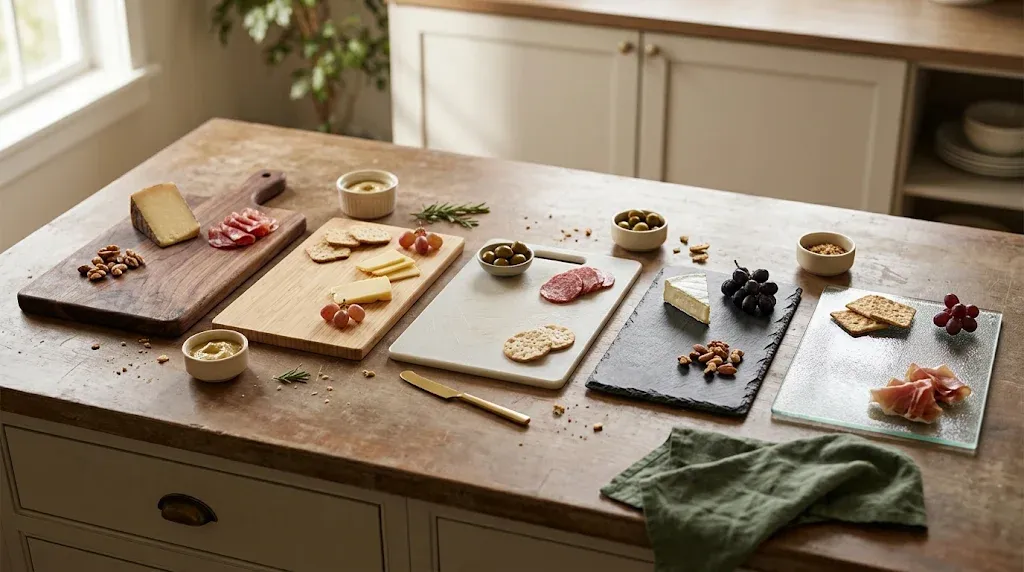
Wood and bamboo are excellent choices for an attractive charcuterie presentation. Food-safe plastic is also practical, especially when easy cleaning matters most.
Stone, glass, and other hard surfaces can work for displaying food, although they have different handling requirements.
Wooden Cutting Boards
Wooden cutting boards offer a warm, natural appearance that complements cheeses, meats, and colorful produce.
Maple, walnut, and other suitable hardwoods are popular because they provide durable serving surfaces when maintained correctly.
Some advantages include:
- Natural grain patterns create an attractive presentation.
- Wood works with casual and formal table settings.
- A suitably maintained board can last for years.
- Its surface is generally more knife-friendly than glass or stone.
Wood requires careful drying and occasional conditioning according to the manufacturer’s instructions. It can warp or crack when exposed to prolonged moisture.
Bamboo Cutting Boards
Bamboo offers a neat, contemporary look and is commonly available at affordable prices.
Many bamboo boards are lightweight and convenient to move from the kitchen to the table.
However, bamboo can also suffer moisture-related damage. Avoid prolonged soaking and follow the board manufacturer’s cleaning recommendations.
Plastic Cutting Boards
Plastic cutting boards provide a practical serving option when appearance is less important than convenience.
Many are lightweight, inexpensive, and easy to clean. Some are dishwasher-safe, depending on the product.
A smooth, food-safe plastic board can work particularly well for picnics or children’s snack platters.
Inspect plastic carefully for deep knife grooves. Excessive wear can make effective cleaning difficult.
Marble, Slate, and Glass Boards
Marble and slate can make elegant serving surfaces when sold for direct food contact.
They are often used to present sliced cheese, olives, and other prepared foods.
However, these materials can be heavy, slippery, or vulnerable to chipping. Their hardness can also dull knife edges during cutting.
Glass is nonporous and relatively easy to wash, but I prefer using it for serving rather than knife work.
Cutting Board Material Comparison
| Material | Main Advantage | Main Limitation | Best Use |
|---|---|---|---|
| Hardwood | Warm appearance and durability | Requires drying and maintenance | Everyday entertaining |
| Bamboo | Lightweight and attractive | Can warp with moisture | Casual gatherings |
| Plastic | Convenient cleaning | Can develop deep grooves | Practical snack boards |
| Marble or slate | Elegant serving appearance | Heavy and hard on knives | Cheese presentation |
| Glass | Nonporous surface | Slippery and knife-unfriendly | Light serving only |
The USDA explains that cutting boards require proper cleaning and replacement when excessive wear makes them difficult to maintain.
Its wood versus plastic cutting board guidance provides additional material and sanitation considerations.
Section Takeaway: Choose hardwood or bamboo for appearance and plastic for convenience. Whichever material you select, prioritize food safety and maintenance.
What Size and Shape Cutting Board Should You Use?
A medium or large cutting board usually offers the most flexibility for charcuterie.
The ideal dimensions depend on your guest count, the ingredients, and how crowded you want the presentation to look.
Suggested Cutting Board Sizes
These are practical planning estimates, not fixed serving standards.
- 10–12 inches: A compact snack arrangement for one or two people.
- 12–16 inches: A modest spread for approximately two to four people.
- 16–20 inches: A larger arrangement for roughly four to six guests.
- 20 inches or larger: A party board with several ingredient groups and serving bowls.
Guest appetite and whether the board is an appetizer or a meal will change how much food you need.
Rectangular, Round, or Irregular Boards?
Rectangular boards make it easy to group ingredients into sections. They’re also convenient when serving on a narrow dining table.
Round boards encourage an arrangement that guests can approach from several sides.
Irregular wooden boards create an organic appearance. Just ensure the surface is stable and provides enough usable space.
Should Your Cutting Board Have a Handle or Juice Groove?
A handle can make a loaded board easier to move, provided the board is properly balanced.
A juice groove isn’t necessary for charcuterie, but it may help contain small amounts of liquid from juicy foods.
Deep grooves can complicate cleaning. A smooth, flat surface is usually easier to arrange and maintain.
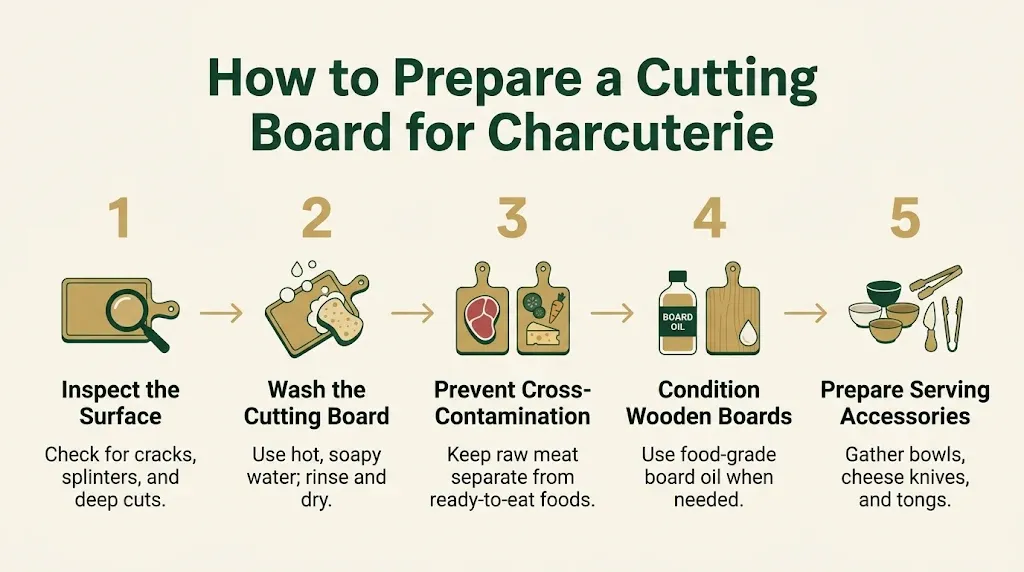
How Do You Prepare a Cutting Board for Charcuterie?
 Save
Start with a thoroughly cleaned and completely dry board.
Preparation takes only a few steps, but it protects your food and improves the finished presentation.
Step 1: Inspect the Surface
Check for deep cuts, cracks, splinters, peeling finishes, and unwanted residue.
Replace a board if its damaged areas cannot be cleaned effectively.
Step 2: Wash the Cutting Board
Wash the board with hot, soapy water and scrub its food-contact surfaces.
Rinse thoroughly, then dry using a clean paper towel or allow it to air-dry completely.
Use the dishwasher only when the board’s manufacturer specifically permits it.
Step 3: Prevent Cross-Contamination
Keep raw meat preparation separate from ready-to-eat ingredients.
If a board has contacted raw meat, sanitize it appropriately before using it for charcuterie. The CDC’s food poisoning prevention guidance explains why separating these foods matters.
Step 4: Condition Wooden Boards When Needed
If the wood appears dry, follow the manufacturer’s recommendations for conditioning with a food-grade board oil.
Apply only products intended for food-contact surfaces. Allow sufficient absorption time and remove excess oil before serving.
A board shouldn’t feel greasy when you arrange food on it.
Step 5: Prepare Your Serving Accessories
Gather your knives, small bowls, and serving utensils before adding ingredients.
Useful accessories include:
- Small bowls for olives, honey, or spreads.
- A cheese knife or spreader.
- Separate tongs or forks for shared foods.
- Small plates for guests.
- Food-safe parchment paper where appropriate.
Should You Put Parchment Paper on a Cutting Board?
Parchment paper is optional, but it can make sticky or crumbly ingredients easier to handle.
It may also create a clean visual separation between certain foods and the board.
However, parchment isn’t a substitute for cleaning or sanitizing. Always prepare the board properly before adding paper.
Section Takeaway: Inspect, wash, dry, and protect the board from cross-contamination. A clean surface is more important than decorative accessories.
How Do You Arrange Charcuterie on a Cutting Board?
Begin with your largest ingredients and work toward the smallest.
This creates a balanced arrangement without requiring professional food-styling skills.
Step 1: Choose Your Main Ingredients
Traditional charcuterie focuses on prepared meats, but modern snack boards often include cheese, fruit, crackers, and accompaniments.
For a balanced assortment, choose from these groups:
- Meats: Salami, prosciutto, or other ready-to-eat cured meats.
- Cheeses: Cheddar, Gouda, Brie, or other contrasting cheese varieties.
- Crackers: Plain crackers, seeded crackers, or toasted bread.
- Fresh fruit: Grapes, berries, apple slices, or figs.
- Accompaniments: Olives, pickles, nuts, honey, or jam.
Check product labels for refrigeration requirements, allergens, and serving instructions.
Step 2: Position Cheeses and Bowls First
Place larger cheese pieces at different points on the board.
Arrange small bowls between them to create natural boundaries for the remaining ingredients.
This approach gives the layout structure before you add smaller foods.
Step 3: Fold and Arrange the Meats
Thin slices of meat can be folded into loose ribbons or small groups.
Keep different meat varieties in distinguishable sections so guests can identify their choices.
I prefer gentle folds over tightly packed piles because guests can pick up individual pieces more easily.
Step 4: Add Crackers and Bread
Arrange crackers in short rows, stacks, or curved lines.
Place them near compatible cheeses or spreads, leaving enough room for guests to reach them.
Keep crisp crackers away from wet ingredients when possible. This helps preserve their texture.
Step 5: Fill the Gaps With Color
Fresh fruit, olives, and small accompaniments help fill empty spaces.
Use contrasting colors and shapes to make the arrangement more inviting.
For example, green grapes, red berries, golden crackers, and pale cheeses create natural visual variety.
Step 6: Add Serving Utensils
Use separate utensils for foods that are difficult to pick up cleanly.
Provide individual tools for dips and spreads, and clearly identify ingredients when guests may have food allergies.
For mixed groups, keep nuts and other common allergens in separate bowls to reduce accidental contact.
Simple Charcuterie Shopping Checklist
- Two contrasting cheeses.
- One or two varieties of ready-to-eat meat.
- One or two cracker varieties.
- One fresh fruit option.
- One salty accompaniment.
- One spread or dip.
- Suitable utensils and small bowls.
This is a useful starting combination for a modest gathering. Adjust quantities for your group rather than purchasing every ingredient imaginable.
Section Takeaway: Arrange large foods first, add smaller ingredients afterward, and prioritize easy access. A well-organized board doesn’t need to be overcrowded.
How Do You Serve and Store Charcuterie Safely?
 Save
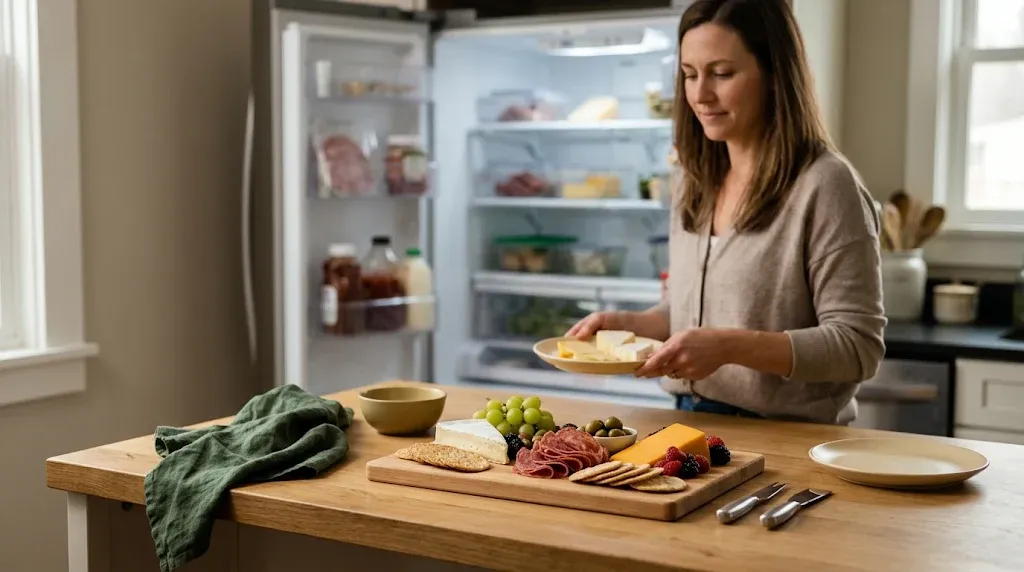
Serve refrigerated ingredients in smaller batches and monitor how long they remain at room temperature.
Even a clean cutting board cannot make temperature-sensitive foods safe indefinitely.
How Long Can Charcuterie Stay Out?
Most perishable foods requiring refrigeration should not remain at room temperature for more than two hours in total.
When the surrounding temperature exceeds 90°F (32°C), that limit drops to one hour.
The FDA’s refrigerated food storage guidance explains these time limits.
Not all cured meats or cheeses have identical storage requirements. Follow the product label rather than assuming every cured product is shelf-stable.
How Can You Keep Charcuterie Fresh During a Party?
Prepare most ingredients ahead of time and refrigerate foods that require chilling.
Put out modest quantities rather than leaving your entire supply on the table.
- Bring refrigerated ingredients out shortly before serving.
- Replenish with properly chilled food as needed.
- Use separate, clean utensils for serving.
- Keep the board away from direct sunlight and excessive heat.
- Discard perishables that exceed recommended time limits.
Don’t add fresh ingredients over old food that has already exceeded its safe serving window.
What Should You Do With Leftovers?
Refrigerate safe, unused perishables promptly in clean, covered containers.
Store crackers and other appropriate shelf-stable foods separately to preserve their texture.
Discard foods that have exceeded safe time limits or may have become contaminated during serving.
How Should You Clean the Board After Serving?
Remove the food and scrape away remaining crumbs or residue.
Wash the board with hot, soapy water, rinse thoroughly, and allow it to dry before storage.
Do not soak wooden or bamboo boards for prolonged periods. Follow any material-specific care instructions supplied by the manufacturer.
Store the board in a clean, dry area rather than placing it against a damp countertop.
Section Takeaway: Food temperature, serving time, and hygiene determine whether your charcuterie remains safe. Small batches and prompt refrigeration are sensible habits.
Frequently Asked Questions
Can You Use a Regular Wooden Cutting Board for Charcuterie?
Yes. A regular wooden cutting board can work well for charcuterie when it’s food-safe, clean, dry, and free of deep damage. Hardwood boards offer an attractive serving surface. Ideally, reserve one board for ready-to-eat foods instead of regularly switching between raw meat preparation and serving.
Is a Cutting Board the Same as a Charcuterie Board?
Not exactly. A cutting board is primarily intended for preparing food, while a charcuterie board is designed or used for presenting cured meats and accompaniments. However, many food-safe cutting boards are suitable for serving, making a separate charcuterie board optional rather than essential.
Can You Put Cheese Directly on a Wooden Cutting Board?
Yes, you can place cheese directly on a properly cleaned, food-safe wooden cutting board. Avoid cracked surfaces, unknown finishes, and contamination from raw meat. Keep temperature-sensitive cheeses refrigerated until needed and follow their packaging instructions for safe storage and serving.
Is Bamboo Good for a Charcuterie Board?
Bamboo is a practical choice for serving charcuterie. It offers a natural appearance and is often lightweight and affordable. Choose a food-safe product, clean it thoroughly, and avoid prolonged soaking. Inspect glued joints and the surface regularly for cracks, separation, or other damage.
Can You Use a Plastic Cutting Board as a Charcuterie Board?
Absolutely. Food-safe plastic cutting boards can serve meats, cheeses, crackers, and fruit. They’re convenient for informal gatherings and easy to maintain when used correctly. Choose a smooth, clean board and replace it when deep knife grooves make thorough cleaning difficult.
Should You Use Parchment Paper Under Charcuterie?
Parchment paper is optional. It can help separate sticky foods from the board and make cleanup easier. However, it doesn’t eliminate the need to wash the cutting board. Use food-safe parchment and avoid relying on paper to cover cracks, contamination, or damaged finishes.
Do You Need a Special Board for Charcuterie?
No special board is required. A clean, sturdy, food-safe cutting board is usually sufficient. Dedicated charcuterie boards may offer decorative features, handles, or larger serving areas, but these are conveniences rather than necessities. Choose according to your available space, ingredients, and cleaning preferences.
Final Takeaway: Make the Most of Your Cutting Board
Using a cutting board for charcuterie is an affordable and practical way to serve an attractive assortment of food.
The best choice is a stable, food-safe board that you can clean thoroughly and maintain properly.
Wood and bamboo create a warm presentation, while plastic provides straightforward convenience. All can work when used correctly.
Start with the cutting board you already own, select a few complementary ingredients, and build a simple arrangement that suits your gathering.
Before serving, remember three things: clean your board, separate ready-to-eat foods from raw meat, and keep perishable ingredients at safe temperatures.
With those basics covered, you can focus on what matters most: sharing good food with the people around your table.

