Do Epicurean Cutting Boards Dull Knives? The Truth About Knife Wear
Quick Answer
Yes, Epicurean cutting boards can dull knives faster than some traditional wooden or softer cutting boards. Their hard paper-composite surface offers less cushioning under a blade, increasing potential edge wear during repeated chopping. However, they’re generally much better for knives than glass or stone. Independent cutting board tests have identified composite surfaces as relatively hard on knife edges.
What You Should Know
- Surface hardness: Epicurean’s dense composite offers less give than many wooden boards.
- Knife sharpness: Frequent chopping may require more regular sharpening.
- Blade quality: Thin, delicate knife edges deserve extra care on firm surfaces.
- Cleaning advantage: Epicurean boards are dishwasher-safe and require no routine oiling.
- Better alternatives: End-grain hardwood and suitable rubber boards may preserve sharpness longer.
My Recommendation
- For convenience: Choose Epicurean if easy cleaning matters most.
- For knife protection: Choose a quality hardwood board for extended chopping sessions.
- For both priorities: Keep an Epicurean board alongside a dedicated wooden cutting board.
I’ve always believed a cutting board deserves as much attention as the knife resting on it. Even a beautifully sharpened chef’s knife can lose its edge faster when used against an unforgiving surface.
Epicurean boards complicate that choice because they’re lightweight, durable, and remarkably convenient to clean. Let’s examine their material, independent testing, and practical alternatives so you can decide whether they’re right for your knives.
What Are Epicurean Cutting Boards Made Of?
 Save
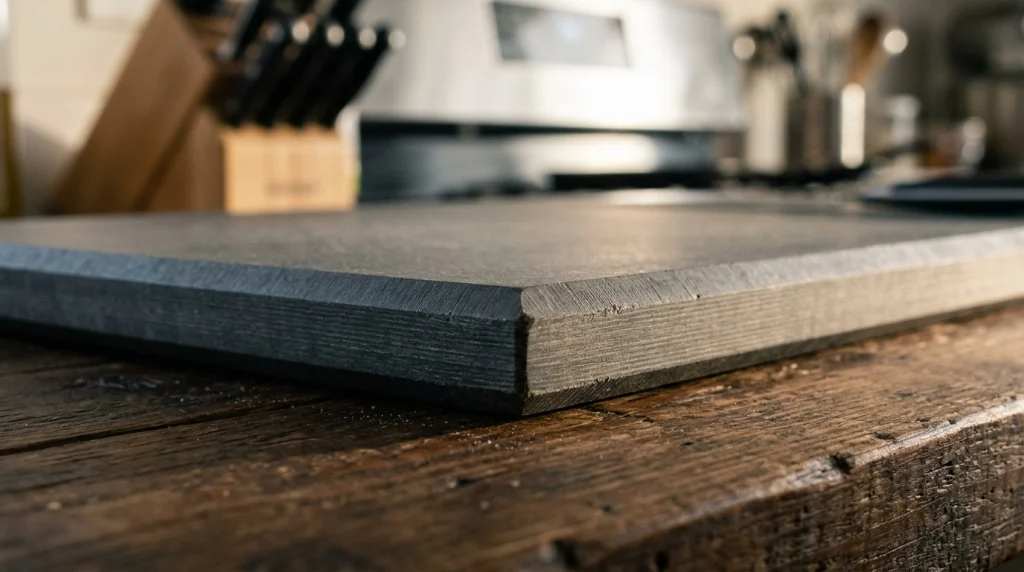
Epicurean cutting boards use a compressed paper-composite material rather than traditional solid hardwood. Layers of paper or wood fibers are bonded with resin under heat and pressure to create a dense cutting surface.
This construction explains their distinctive feel. Unlike ordinary wooden boards, they resist moisture, require little maintenance, and can go into the dishwasher.
How Does Paper Composite Differ From Solid Wood?
Natural wood contains fibers that respond differently when a knife strikes them. Paper composite uses a tightly bonded structure that generally feels firmer under the blade.
That difference influences several everyday characteristics:
- Surface feel: Composite feels harder and less cushioned than many wooden boards.
- Weight: Thin Epicurean boards are generally easier to lift and store.
- Maintenance: Composite boards don’t need the routine oiling recommended for many wooden boards.
- Cleaning: Epicurean offers dishwasher-safe designs.
- Knife contact: A firmer surface can contribute to faster edge wear.
The material itself isn’t inherently unsuitable for kitchen knives. However, the balance between convenience and edge protection deserves consideration.
Are Epicurean Boards Really Knife-Friendly?
Epicurean markets its cutting boards as knife-safe and knife-friendly. That description doesn’t mean knives will retain their sharpness indefinitely.
Every cutting surface produces some degree of edge wear. The important distinction is how quickly wear develops compared with alternative materials.
The manufacturer’s cutting board collection highlights dishwasher safety, paper-composite construction, and knife-friendly performance.
Independent reviewers have reached a more cautious conclusion about relative knife wear. Their findings suggest convenience is Epicurean’s stronger advantage.
Do Epicurean Cutting Boards Dull Knives Faster Than Wood?
Epicurean boards can dull knives faster than well-chosen hardwood cutting boards, particularly during frequent chopping. The difference comes largely from how each material responds to repeated blade contact.
A wooden surface can provide some cushioning. Dense paper composite generally allows less movement beneath the knife edge.
What Does Independent Testing Show?
Independent comparisons provide more useful evidence than relying exclusively on manufacturer claims. Two published testing projects offer insight into Epicurean’s cutting performance.
- Prudent Reviews: In a nine-board comparison, an Epicurean Gourmet board ranked sixth for knife-edge retention.
- TechGearLab: Testing identified composite boards among the hardest surfaces on knife edges.
- Hardwood performance: End-grain wooden boards performed especially well in TechGearLab’s knife-friendliness testing.
In the Prudent Reviews comparison, the knife’s sharpness measurement changed from 355 to 440 after the Epicurean test. The 85-point increase represented reduced sharpness under that testing method.
Those numbers describe one controlled comparison, not a universal amount of sharpness loss. Different knives, board models, and cutting habits can change the outcome.
You can examine the broader results in the independent cutting board comparison.
Why Does a Hard Cutting Surface Affect Sharpness?
A knife’s cutting edge is extremely thin. Repeated contact with a firm surface can gradually deform or wear that delicate metal.
Three factors influence the process:
- Impact: Each downward cut places pressure on the knife’s edge.
- Resistance: Harder surfaces may absorb less cutting force.
- Friction: Sliding or scraping a blade sideways can add unnecessary wear.
Imagine cutting several pounds of vegetables for weekly meal preparation. Hundreds of repeated contacts make small differences in surface behavior more relevant.
Occasional chopping presents a different situation. A home cook preparing one onion and a tomato may barely notice any difference.
Epicurean vs Wood vs Plastic: Which Is Better for Knives?
 Save
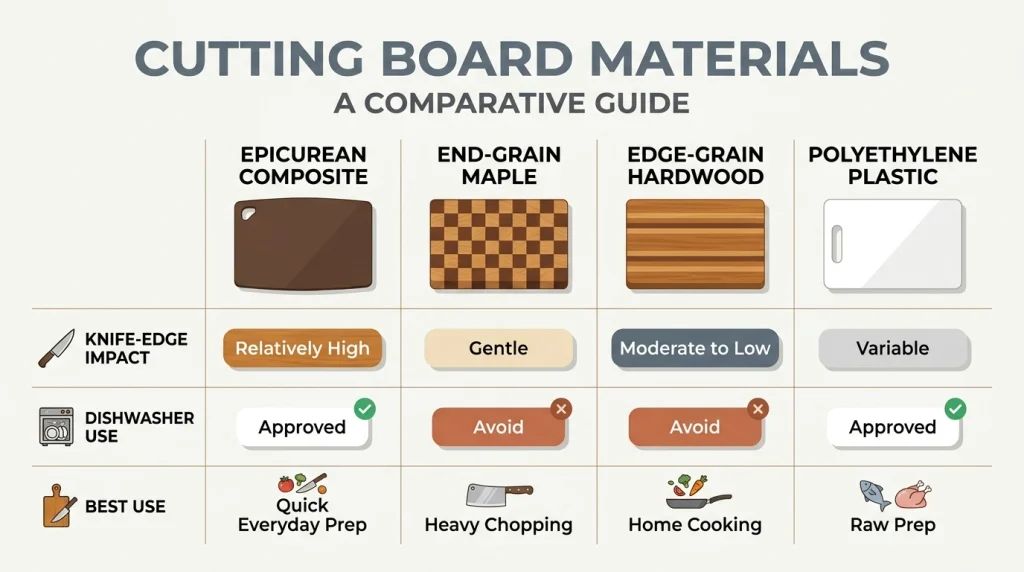
End-grain hardwood and suitable softer plastic or rubber boards often protect knife edges better than paper composite. Epicurean counters with easier maintenance and convenient dishwasher cleaning.
The comparison below summarizes common characteristics rather than assigning universal performance rankings.
| Board Material | Knife-Edge Impact | Dishwasher Use | Best Use |
|---|---|---|---|
| Epicurean paper composite | Relatively high wear in some tests | Yes, manufacturer-approved models | Convenient everyday preparation |
| End-grain maple | Generally gentle | Generally avoid | Frequent knife work |
| Edge-grain hardwood | Generally moderate to low wear | Generally avoid | Regular home cooking |
| Food-grade polyethylene | Varies with formulation | If manufacturer-approved | Easy-clean food preparation |
| Suitable rubber | Often gentle | Model-dependent | Precision slicing |
| Glass or stone | Very hard on edges | Material-dependent | Serving, not knife work |
My practical preference: For extended vegetable preparation, I favor the cushioning properties of end-grain hardwood. For quick ingredients and dishwasher convenience, Epicurean remains a reasonable option.
That recommendation reflects material properties and published tests, not a claim that I’ve personally conducted a controlled blade-wear experiment.
Can Epicurean Cutting Boards Damage Japanese Knives?
Epicurean boards can increase wear on delicate Japanese knife edges, especially when combined with forceful chopping or twisting. A softer cutting surface may offer a better margin of protection.
Japanese knives vary considerably in steel hardness, blade geometry, and edge angle. Those differences affect how they respond to impact.
Why Are Thin Knife Edges More Vulnerable?
Many Japanese chef’s knives use relatively thin cutting geometries. That design supports precise slicing but can make improper cutting techniques more consequential.
A hard board doesn’t automatically chip a Japanese knife. However, aggressive contact and sideways force increase the risk of damage.
Be particularly careful when using:
- Gyuto knives: Avoid twisting the blade during chopping.
- Santoku knives: Use controlled cuts rather than heavy impacts.
- Nakiri knives: Keep downward vegetable cuts straight.
- Thin slicing knives: Avoid scraping food sideways with the cutting edge.
A quality hardwood or appropriate rubber board makes sense for expensive, delicate knives. Epicurean may still work with careful technique, but it wouldn’t be my first choice for maximizing edge retention.
How Can You Prevent Knife Dulling on an Epicurean Board?
You can reduce unnecessary knife wear by adjusting your cutting technique, stabilizing the board, and maintaining your blades. These habits matter regardless of which cutting board you own.
1. Use Controlled Cutting Movements
Let the sharp edge do the work. Excessive downward force increases impact without necessarily improving cutting performance.
Try these adjustments:
- Use smooth slicing motions for tomatoes and softer ingredients.
- Keep the blade aligned during push cuts.
- Avoid repeatedly striking the surface with excessive force.
- Don’t twist a knife while its edge touches the board.
2. Stop Scraping With the Sharp Edge
Dragging a knife sideways across a board adds avoidable contact. Use the blade’s spine or a separate bench scraper to collect chopped ingredients.
It’s a small change. Over repeated meal preparations, it can help reduce unnecessary wear.
3. Keep Your Cutting Board Stable
Some lightweight cutting boards can slide across smooth countertops. A moving board affects both cutting control and safety.
Place a clean, slightly damp towel or suitable nonslip mat underneath boards without gripping feet. Alternatively, choose an Epicurean All-in-One model with built-in silicone feet.
4. Maintain Your Knife Edge
A cutting board cannot compensate for poor knife maintenance. Regular edge care helps you recognize dullness before cutting becomes frustrating.
- Honing: Use an appropriate honing tool when recommended for your knife.
- Sharpening: Restore the edge with a suitable whetstone or sharpening system.
- Cleaning: Wash knives carefully and dry them promptly.
- Storage: Protect blades with a knife block, suitable magnetic rack, or edge guard.
Sharpen according to actual cutting performance rather than a rigid schedule. A knife that struggles with tomatoes or requires excessive pressure may need attention.
Are Epicurean Cutting Boards Worth Buying Despite Knife Wear?
Yes, Epicurean cutting boards can be worthwhile when easy cleaning and low maintenance matter more than maximum knife-edge retention. Their strengths make them practical for many home kitchens.
The decision depends on which trade-offs you find acceptable.
Advantages of Epicurean Cutting Boards
- Dishwasher compatibility: Convenient cleaning after food preparation.
- Lightweight construction: Easier lifting, washing, and storage.
- Low maintenance: No routine board oiling required.
- Stain resistance: Designed to resist many common food stains.
- Thin profile: Useful in smaller kitchens with limited storage.
- Multiple designs: Available with juice grooves and nonslip feet.
Disadvantages Worth Considering
- Potential knife wear: Hard composite may dull blades faster than softer alternatives.
- Firm cutting feel: Some cooks dislike the sound and sensation of chopping.
- Surface scoring: Normal cutting can produce visible knife marks.
- Possible movement: Lightweight models without feet may need extra stabilization.
- Limited cushioning: Less appealing for prolonged precision cutting.
For a small kitchen, those compromises may be entirely reasonable. Convenience has genuine value when a board gets used and cleaned several times daily.
Do Epicurean Cutting Boards Wear Out or Develop Scratches?
Yes, Epicurean boards develop scratches and cutting marks during normal use. Those marks don’t automatically mean the board is defective or unsafe.
However, significant wear requires attention. A deeply damaged surface becomes harder to clean properly.
When Should You Replace an Epicurean Board?
 Save
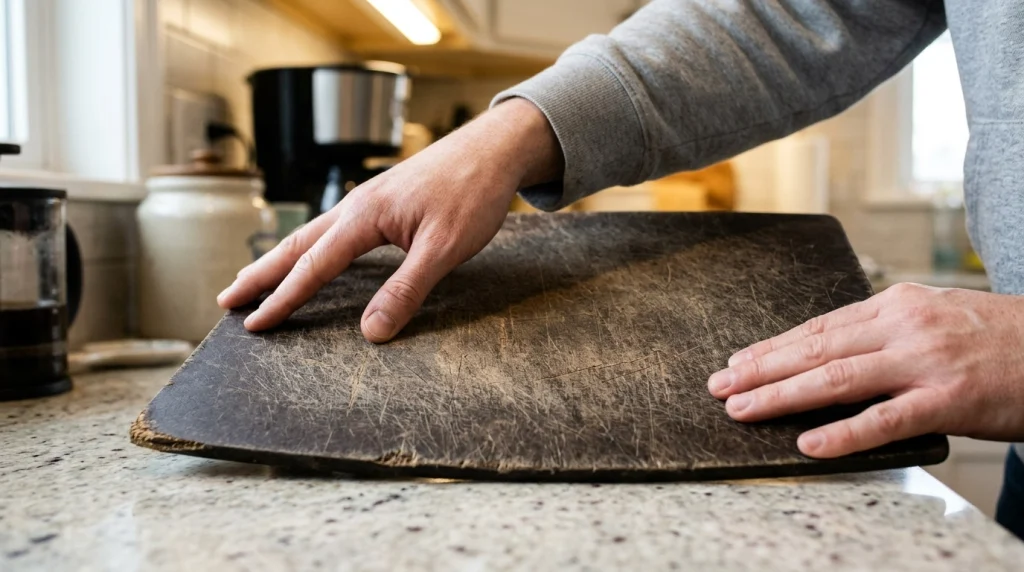
Inspect the board regularly rather than relying solely on its age. Physical condition matters more than the number of months you’ve owned it.
- Deep grooves: Replace the board when cuts become difficult to clean.
- Cracking: Stop using boards with significant structural damage.
- Persistent warping: Replace boards that cannot sit safely and securely.
- Damaged edges: Inspect separation, chipping, or deterioration.
- Persistent contamination: Replace surfaces that cannot be cleaned adequately.
The USDA recommends replacing cutting boards that become excessively worn or develop difficult-to-clean grooves. This advice applies across cutting board materials.
How Should You Clean an Epicurean Cutting Board?
Wash an Epicurean board with warm, soapy water after food preparation, or use the dishwasher when the model’s instructions permit it. Dry it thoroughly before storage.
Cleaning becomes especially important when switching between raw animal products and foods that won’t receive additional cooking.
Simple Cleaning Routine
- Remove scraps: Clear food particles from the cutting surface.
- Wash: Clean thoroughly with dish soap and water.
- Rinse: Remove remaining soap and food residue.
- Dry: Allow the board to dry completely, preferably upright.
- Inspect: Check for excessive grooves or surface damage.
For additional convenience, follow Epicurean’s dishwasher instructions. Avoid leaving the board exposed to standing water for extended periods.
The USDA’s cutting board guidance recommends using separate boards for fresh produce and raw meat when possible.
Are Epicurean Boards Safe for Raw Meat?
Epicurean boards can be used for raw meat when properly cleaned and maintained. A nonporous surface doesn’t eliminate the need for safe food-handling practices.
Wash the board thoroughly after raw poultry, seafood, or meat preparation. Never transfer ready-to-eat food onto an unwashed surface that contacted raw animal products.
For general material comparisons, consult the USDA guidance on wood and plastic cutting boards.
Which Cutting Board Is Best for Your Kitchen?
Choose a board according to your cooking habits, knife collection, and willingness to maintain it. No single material is the ideal choice for everyone.
Here’s how I’d narrow the decision:
- Busy home cook: Epicurean offers convenient cleaning and storage.
- Knife enthusiast: Consider end-grain maple or a suitable rubber board.
- Small kitchen: Thin composite boards save valuable space.
- Frequent meal preparation: A stable hardwood board suits longer chopping sessions.
- Mixed cooking needs: Use separate boards for convenience and knife-sensitive work.
As of 2026, independent comparisons still show meaningful differences between cutting board materials. The best choice balances edge retention, stability, hygiene, and maintenance.
Recommended Cutting Boards for Different Needs
If you’re deciding whether to keep using Epicurean or switch materials, these three options address different priorities. The ratings below represent editorial suitability estimates, not verified customer-review averages or my own laboratory measurements.
Disclosure: As an Amazon Associate, I earn from qualifying purchases. This does not affect the price you pay.
🏆 Best for Easy Cleaning
Epicurean All-in-One Cutting Board
★★★★☆ 4.3/5 editorial rating
This 1/4-inch paper-composite series features four nonslip silicone feet, a juice groove, and dishwasher-safe construction. I favor its practical design for cooks who prioritize quick cleanup, while recognizing that its firm surface isn’t ideal for maximum edge retention.
🔪 Best for Knife Protection
John Boos Maple End-Grain Butcher Block
★★★★☆ 4.6/5 editorial rating
End-grain maple construction offers a more forgiving cutting surface than dense paper composite. This is the type of board I’d prioritize for extended chef’s knife work, provided regular washing, thorough drying, and appropriate wood conditioning fit your routine.
🍽️ Best for Everyday Versatility
OXO Good Grips Utility Cutting Board
★★★★☆ 4.1/5 editorial rating
This plastic utility-board design provides an easy-clean alternative with useful gripping features. I’d consider it for everyday food preparation, although plastic surfaces can develop grooves and wear, and knife-edge performance depends on the specific model and technique.
Frequently Asked Questions
Do Epicurean cutting boards ruin expensive knives?
No, Epicurean cutting boards don’t automatically ruin expensive kitchen knives. However, their firm composite surface may accelerate edge wear compared with more forgiving wooden or rubber alternatives. If you use expensive, thin-edged knives frequently, choosing a gentler cutting surface can help reduce unnecessary sharpening and potential damage.
Are Epicurean cutting boards better than bamboo for knives?
Not necessarily. Some independent tests have found bamboo boards gentler on knife edges than dense composite models. However, bamboo quality, construction, and hardness vary. Epicurean offers a different advantage: dishwasher-safe convenience without routine oiling. Choose based on which characteristic matters most.
How often should you sharpen knives used on Epicurean boards?
There isn’t a universal sharpening interval for knives used on Epicurean boards. Frequency depends on blade steel, edge geometry, cutting pressure, and how often you cook. Monitor cutting performance and sharpen when needed rather than following a fixed monthly schedule.
Can you put Epicurean cutting boards in the dishwasher?
Yes, Epicurean designs its standard paper-composite cutting board series for dishwasher cleaning. Follow the care instructions for your exact model, avoid unnecessary prolonged soaking, and allow the surface to dry thoroughly before storage. Inspect the board regularly for warping, cracks, or excessive wear.
Are Epicurean cutting boards safer for knives than glass?
Yes, Epicurean paper composite is generally a better cutting surface for knives than glass or stone. Those exceptionally hard materials can cause rapid edge wear and increase the likelihood of damage during forceful cutting. Epicurean is more practical for chopping, although softer boards may offer better edge retention.
Final Verdict: Should You Use an Epicurean Cutting Board?
Epicurean cutting boards offer a useful compromise between convenient maintenance and functional everyday cutting. They’re lightweight, dishwasher-safe, and easy to store, but independent testing indicates their hard composite surface can accelerate knife dulling.
If preserving sharpness is your top priority, I’d choose a quality hardwood or suitable rubber cutting board. For straightforward meal preparation and easy cleanup, Epicurean remains a practical choice.
My final recommendation: Use the surface that matches your knives and cooking habits, not simply the board with the most convenient marketing claims. A sharp knife, stable board, and controlled cutting technique will always work better together.

