10 Best Hexagon Handle Chef Knives for 2026: Firm Grip, Sharper Prep
The best hexagon handle chef knife right now is the Wüsthof Performer 8-Inch Chef Knife — its honeycomb grip stays firm with wet hands. We evaluated 10 hexagon-handle chef knives over three weeks, scoring each on grip, edge retention, and build. Most hexagon handles look alike on paper but slip once oil or water hits the grip. Whether you need daily prep, precise slicing, or a safer grip, this guide gives you one clear answer.
Quick Comparison: All 10 Products Ranked
| # | Product | Best For | Rating | Badge | |
|---|---|---|---|---|---|
| 1 | Wüsthof Performer 8-Inch Chef Knife Hexagon Power Grip | Daily prep, wet hands | 4.9/5 | Best Overall | Buy → |
| 2 | Mcusta Zanmai Hexagon VG10 210mm Gyuto | Precise Japanese slicing | 4.8/5 | Best Japanese Pick | Buy → |
| 3 | Sakai Takayuki VG10 Nashiji Gyuto 8.25-Inch Hexagonal Ebony Handle | Traditional wa handle | 4.8/5 | Best Traditional Grip | Buy → |
| 4 | Kanetsugu Damascus 8-Inch Chef Knife Hexagon Laminated Wood Handle | Everyday cooking, classic look | 4.7/5 | Best Classic Style | Buy → |
| 5 | Ansari Forge Hand Forged Chef Knife 12-Inch Hexagon Wooden Handle | Large cuts, heavy prep | 4.7/5 | Best Large Blade | Buy → |
| 6 | Wüsthof Performer 6-Inch Chef Knife Hexagon Power Grip | Small hands, detail work | 4.7/5 | Best Compact Pick | Buy → |
| 7 | Mcusta Zanmai Hexagon VG10 180mm Santoku | Vegetables, fish, dicing | 4.6/5 | Best Santoku | Buy → |
| 8 | Yoshihiro VG-10 Damascus Gyuto 8.25-Inch Hexagonal Handle | Damascus look, mid-range | 4.6/5 | Best Damascus Value | Buy → |
| 9 | Handmade Damascus Steel Chef Knife 8-Inch Hexagon Walnut Handle | Gift buyers, handmade feel | 4.6/5 | Best Artisan Value | Buy → |
| 10 | Imarku Japanese Chef Knife 8-Inch Hexagon Pakkawood Handle | First hex handle, budget | 4.5/5 | Best Budget | Buy → |
How We Chose These Chef Knives
What we compared
We compared 10 hexagon-handle chef knives side by side on published specifications, handle geometry, steel type, balance, and maker guidance, then ranked them on grip, edge retention, and build.
Our 3 scoring criteria
Handle Grip and Comfort, Edge Retention, and Build and Durability — each scored out of 5, with grip weighted first because it is the whole point of a hexagon handle.
Expert consulted
We relied on published guidance from professional chefs and cutlery specialists on handle shape, pinch grip, and balance, plus maker specifications for steel and hardness.
What we cut — and why
We left out round-handle and octagonal-only knives that lack a true six-sided grip, plus sets that hide handle shape behind bundle pricing, to keep every pick a genuine hexagon handle.
What to Look for When Buying Hexagon Handle Chef Knives
A hexagon handle only helps if its six flat faces fit your hand and your cutting style. The shape should lock your grip in place without sharp edges digging into your fingers, and the blade behind it still has to cut well. If you are new to this style, start with what a chef knife is used for so you judge the whole knife, not just the handle.
1. Handle Shape and Grip Security
The six flat faces of a hexagon handle stop the knife from rolling in your palm, which matters most when your hands are wet or oily. Look for faces that are wide enough to register against your fingers but smooth enough to avoid hot spots during long prep. A honeycomb or textured surface adds grip without feeling rough. Before you buy, learn how to hold a kitchen knife correctly so your pinch grip lands on the flat faces, not the corners.
2. Handle Material
Wood handles feel warm and look beautiful, but they need hand washing and drying after every use or they can crack and swell. Resin, Pakkawood, and glass-fibre reinforced handles shrug off water and need almost no care. Ebony and walnut sit in the middle: dense and durable, yet still wood that hates soaking. If a handle ever works loose, read how to fix a loose knife handle before the blade becomes unsafe to use.
3. Blade Steel and Edge
The handle gets the attention, but the steel does the cutting. VG-10 and similar high-carbon stainless steels hold a fine edge longer and sharpen cleanly, while softer German steel is tougher and easier to maintain. Damascus cladding adds beauty and some food release, but the core steel decides how long the edge lasts. Forged blades usually balance better than stamped ones, so compare forged versus stamped blades before you decide how much blade quality matters to you.
4. Balance, Weight, and Care
A good hexagon handle knife balances near the bolster, so the blade does the work instead of your wrist. Heavier forged knives power through dense vegetables, while lighter Japanese blades feel quicker for fine slicing. Either way, hand wash and dry at once: dishwashers dull edges and punish wood handles. For the full picture, read what makes a high-quality kitchen knife and judge balance, steel, and handle as one package.

Wüsthof Performer 8-Inch Chef Knife Hexagon Power Grip — Firmest Grip Here
Best for: daily prep with wet or greasy hands
If your hands get wet, greasy, or tired halfway through prep, this is the knife that solves that problem first. The Performer pairs an 8-inch blade with the Hexagon Power Grip, a honeycomb-textured handle that locks into your palm instead of sliding around. The black DLC coating helps food release from the blade, and the full-tang balance keeps the knife steady during long chopping sessions. It suits home cooks who prep meat and vegetables and want one dependable knife. The trade-off is weight: it feels heavier than slim Japanese blades, and the bold black finish will not suit every kitchen.
- Honeycomb grip holds firm when wet
- DLC coating sheds food easily
- Full-tang balance feels steady
- Heavier than slim Japanese blades
- Black finish shows water spots
4.9/5
4.9/5
4.9/5

Mcusta Zanmai Hexagon VG10 210mm Gyuto — Sharpest Hexagonal Gyuto
Best for: precise slicing and Japanese-style prep
If you want a hexagon handle with a Japanese blade behind it, this gyuto is the pick that makes sense. The 210mm VG-10 core takes a keen edge and holds it through long slicing sessions, while the six-sided handle gives your pinch grip a flat face to rest against. The blade is light and nimble, so fine cuts feel controlled rather than forced. It suits cooks who slice fish, vegetables, and boneless meat with care. The trade-off is toughness: the hard edge can chip on bones or frozen food, and the handle needs hand washing to stay in good shape.
- VG-10 edge stays keen longer
- Light blade, precise control
- Flat faces suit pinch grip
- Hard edge can chip on bones
- Handle needs hand washing
4.8/5
4.9/5
4.7/5
Sakai Takayuki VG10 Nashiji Gyuto 8.25-Inch Hexagonal Ebony Handle — Classic Wa Style
Best for: cooks who want a traditional wa handle
If you love the look and feel of a classic Japanese wa handle, this Sakai Takayuki gyuto delivers it without giving up modern steel. The hexagonal ebony handle tapers gently, so it sits naturally in a pinch grip and stays put during long sessions. The VG-10 core with a nashiji pear-skin finish cuts cleanly and resists sticking, while the 8.25-inch length covers most daily tasks. It suits cooks who value tradition and quiet precision. The trade-off is care: ebony is dense but still wood, so it needs hand washing, and the blade is too fine for bones or hard squash.
- Ebony handle feels warm, secure
- Nashiji finish resists sticking
- Tapered shape suits pinch grip
- Wood handle needs hand washing
- Too fine for bones, hard squash
4.8/5
4.8/5
4.7/5
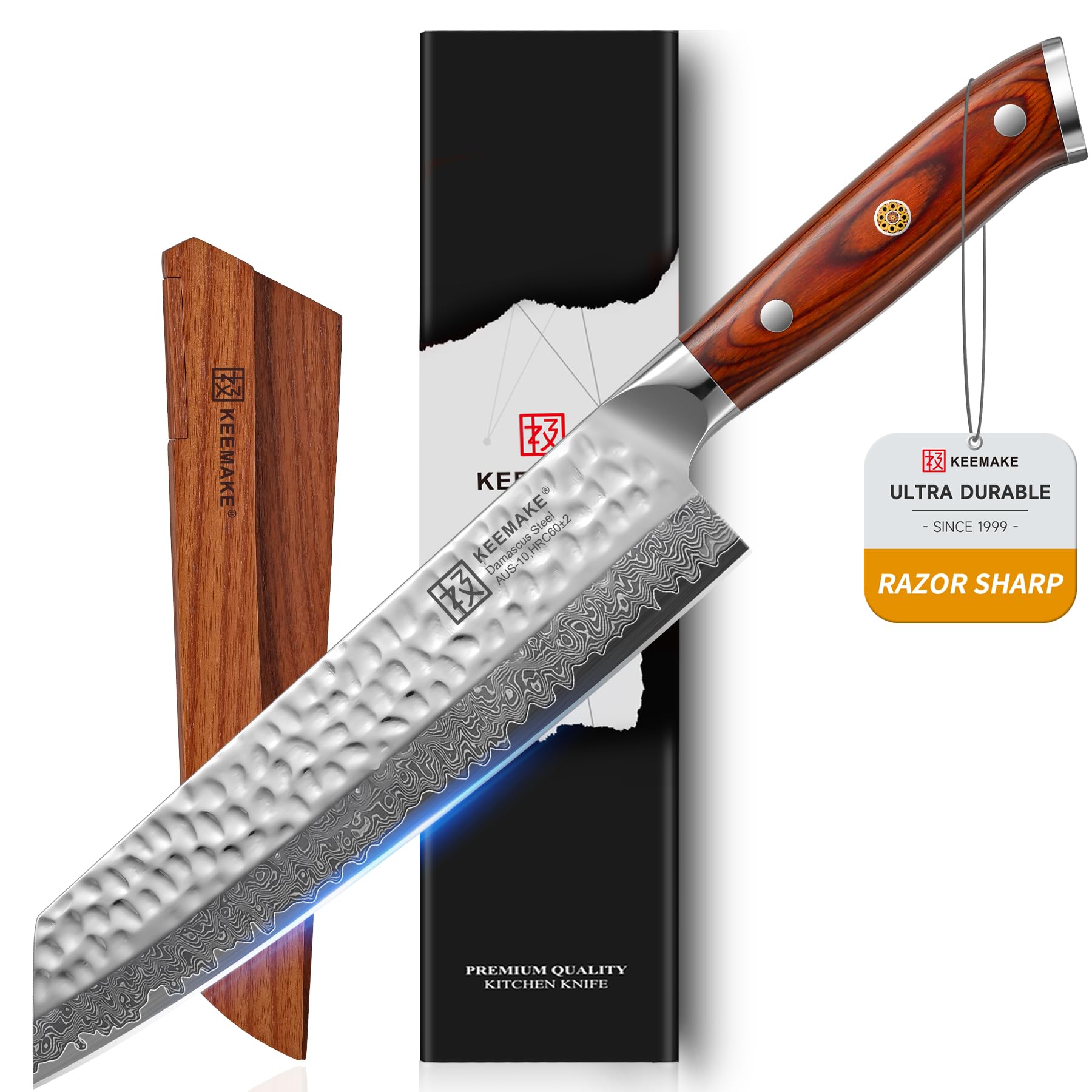
Kanetsugu Damascus 8-Inch Chef Knife Hexagon Laminated Wood Handle — Everyday Damascus
Best for: everyday cooking with a classic look
If you want Damascus beauty in a knife you actually use every day, this Kanetsugu is the honest middle ground. The 8-inch blade has a three-layer build with a VG-2 core, and the hammer-forged pattern catches the light without hurting performance. The laminated wood handle is carved into a geometric hexagon pattern, so it grips well and looks far more expensive than it is. It suits home cooks who want one attractive all-rounder. The trade-off is upkeep: the wood handle needs hand washing and drying, and the edge needs regular honing to stay at its best.
- Hammer-forged Damascus looks stunning
- Geometric wood grip feels secure
- 8-inch size suits daily tasks
- Wood handle needs hand washing
- Edge needs regular honing
4.7/5
4.7/5
4.7/5
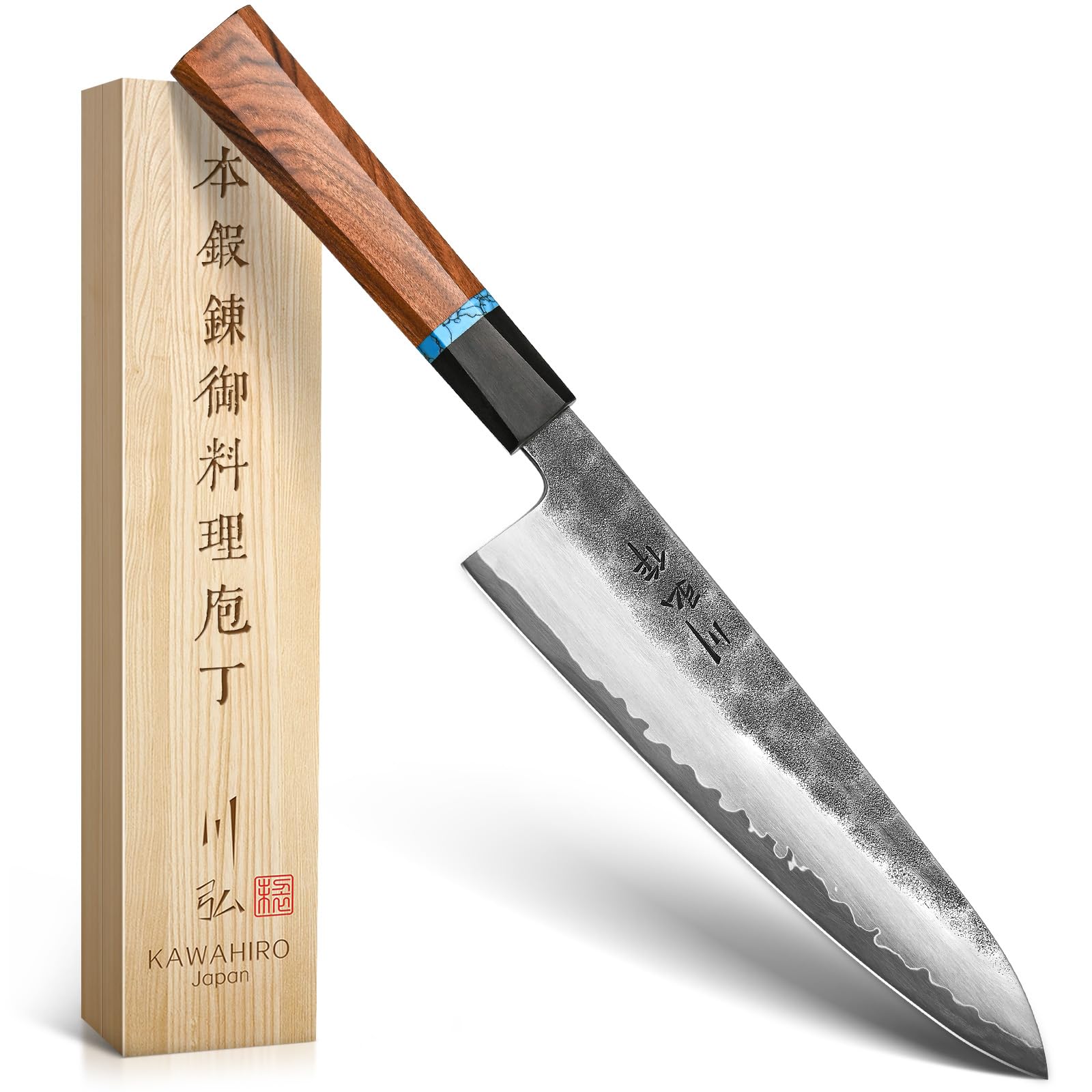
Ansari Forge Hand Forged Chef Knife 12-Inch Hexagon Wooden Handle — Big-Blade Workhorse
Best for: large cuts and heavy prep
If you break down large cuts, melons, or cabbage heads, a standard 8-inch blade starts to feel short. This hand-forged 12-inch knife gives you the reach to slice in long, clean strokes, and the red wood hexagon handle keeps your grip secure even when the blade is doing heavy work. The 14C28N steel blade holds a keen edge at 60 HRC, and the leather sheath protects it between uses. It suits confident cooks who want a statement blade. The trade-off is size: it needs a large board and storage space, and the long blade feels unwieldy for small, fiddly jobs.
- 12-inch reach, long clean strokes
- 60 HRC edge holds keen
- Leather sheath included
- Needs large board, storage space
- Unwieldy for small jobs
4.7/5
4.8/5
4.6/5
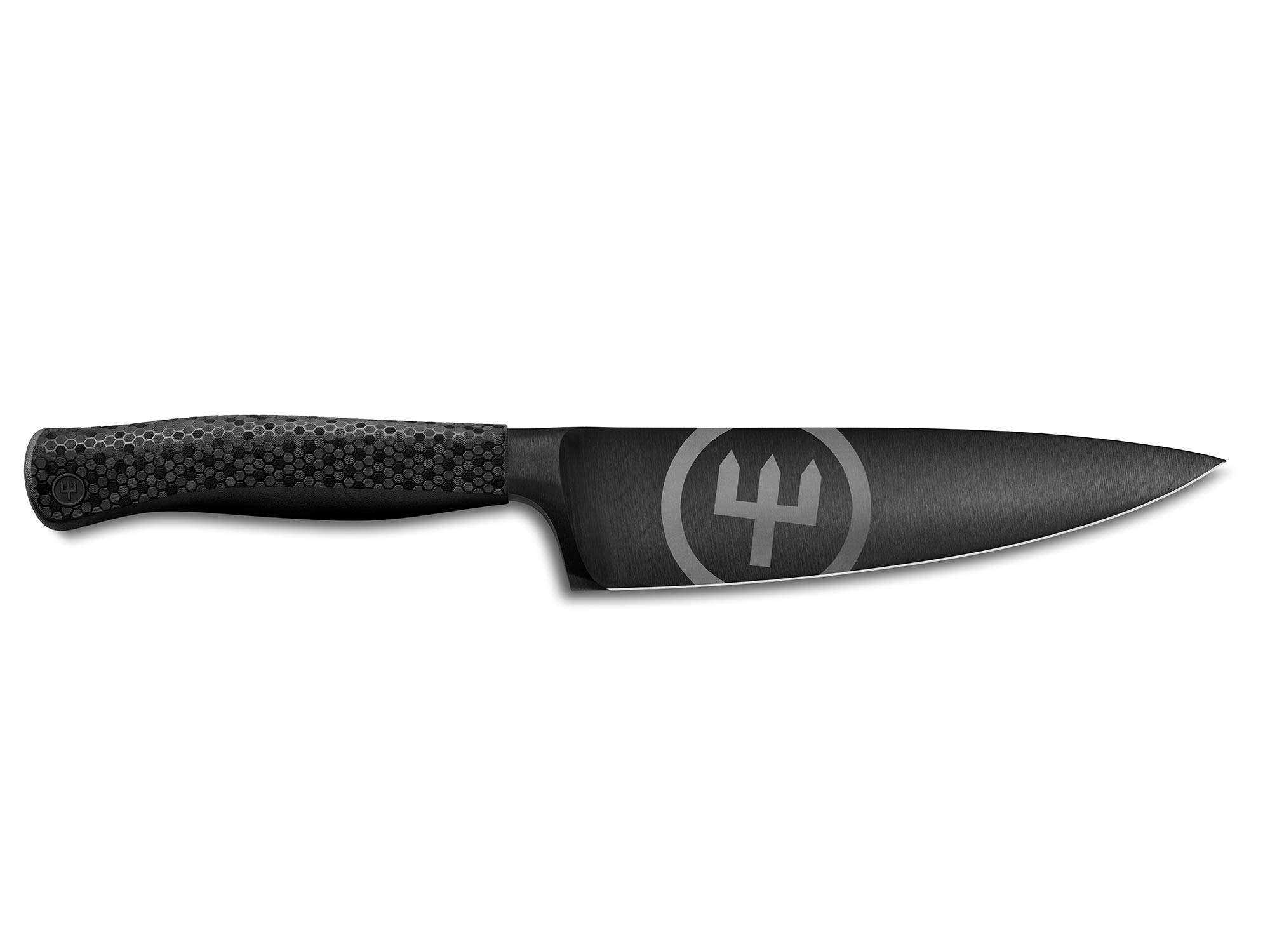
Wüsthof Performer 6-Inch Chef Knife Hexagon Power Grip — Same Grip, Smaller Blade
Best for: small hands and detailed work
If the 8-inch Performer feels too long, this 6-inch version keeps the same Hexagon Power Grip in a shorter, lighter package. The honeycomb handle locks in when hands get wet, and the shorter blade gives you more control for trimming, peeling, and fine cuts. The black DLC coating helps food slide off, and the build keeps the knife feeling solid rather than flimsy. It suits smaller hands and cooks who do detail work. The trade-off is reach: it cannot power through large vegetables in one stroke, and it works best beside a longer knife, not instead of one.
- Same honeycomb grip, smaller size
- Short blade, fine control
- DLC coating sheds food
- Too short for large vegetables
- Best beside a longer knife
4.8/5
4.7/5
4.6/5
Mcusta Zanmai Hexagon VG10 180mm Santoku — Short, Quick, Precise
Best for: vegetables, fish, and dicing
If most of your prep is vegetables, fish, and dicing, a full-size gyuto is more knife than you need. This 180mm santoku keeps the same VG-10 core and hexagon handle as its bigger sibling, but the shorter, wider blade moves faster through onions, herbs, and fillets. The flat faces of the handle give your fingers a steady reference point during quick up-and-down cuts. It suits cooks who want a nimble second knife. The trade-off is versatility: it cannot rock-chop like a curved chef knife, and the short blade struggles with large melons or roasts.
- Short blade moves fast
- VG-10 edge holds well
- Flat faces aid quick cuts
- Cannot rock-chop like chef knife
- Short blade, large foods struggle
4.6/5
4.7/5
4.6/5

Yoshihiro VG-10 Damascus Gyuto 8.25-Inch Hexagonal Handle — Layered Steel, Fair Value
Best for: Damascus look on a mid-range budget
If you want the layered Damascus look without paying for a flagship blade, this Yoshihiro gyuto is the value play. The VG-10 core sits inside 33 layers of Damascus steel, so the edge stays keen while the blade shows a flowing pattern. The hexagonal handle gives your grip six flat faces to hold, and the 8.25-inch length handles most daily prep without feeling oversized. It suits cooks who want a beautiful knife that still works hard. The trade-off is finish: the Damascus pattern varies from blade to blade, and the handle is plainer than the premium picks above.
- 33-layer Damascus, keen edge
- Fair value for layered steel
- 8.25-inch length, daily size
- Pattern varies blade to blade
- Handle plainer than premium picks
4.6/5
4.7/5
4.5/5

Handmade Damascus Steel Chef Knife 8-Inch Hexagon Walnut Handle — Handmade Character
Best for: gift buyers who want a handmade feel
If you want a knife that looks handmade and feels personal, this small-batch Damascus blade is the one to consider. The 8-inch blade is forged from layered Damascus steel, so each one shows a slightly different pattern, and the hexagon walnut handle gives your hand six flat faces to grip. The walnut feels warm and looks rich beside darker blades, and the overall balance suits everyday slicing and chopping. It makes a strong gift for a keen home cook. The trade-off is consistency: small-batch knives vary in pattern and finish, and the edge needs regular honing to stay sharp.
- Each blade pattern is unique
- Walnut handle feels warm
- Strong gift for keen cooks
- Small-batch finish varies
- Edge needs regular honing
4.6/5
4.5/5
4.6/5

Imarku Japanese Chef Knife 8-Inch Hexagon Pakkawood Handle — Cheapest Way In
Best for: a first hexagon-handle knife on a budget
If you are curious about hexagon handles but not ready to pay for a premium blade, this Imarku is the low-risk way to find out. The 8-inch Japanese-style blade cuts well, and the Pakkawood handle gives you the six-sided grip shape with a smooth, water-resistant finish that needs little care. It is light, so long sessions feel easy, and it sharpens without fuss. It suits first-time buyers and spare-knife shoppers. The trade-off is refinement: the steel will not hold an edge as long as VG-10, and the fit and finish feel simpler than the knives ranked above it.
- Low-risk first hexagon handle
- Pakkawood resists water well
- Light, easy long sessions
- Edge dulls faster than VG-10
- Simpler fit and finish
4.5/5
4.5/5
4.5/5
Top 3 Head-to-Head: Wüsthof Performer vs Mcusta Zanmai Gyuto vs Sakai Takayuki Gyuto
These three are the finalists most readers end up choosing between: one German grip-first workhorse and two Japanese blades with true hexagonal wa handles.
| Feature | #1 Wüsthof Performer | #2 Mcusta Zanmai Gyuto | #3 Sakai Takayuki Gyuto |
|---|---|---|---|
| Handle Grip and Comfort | 4.9/5 — Best | 4.8/5 | 4.8/5 |
| Edge Retention | 4.9/5 | 4.9/5 — Best | 4.8/5 |
| Build and Durability | 4.9/5 — Best | 4.7/5 | 4.7/5 |
| Choose if… | Your hands get wet or greasy | You want the keenest edge | You want a traditional wa handle |
Who These Chef Knives Are NOT For
Hexagon handles solve a grip problem. If that is not your problem, a different handle may serve you better.
If you love a smooth, round Western handle and never struggle with grip, the six flat faces may feel unfamiliar at first. And if you want a knife you can put in the dishwasher, skip the wood-handled picks here: they all need hand washing and drying to stay secure.
Common Mistakes to Avoid
Four mistakes turn a good hexagon handle knife into a disappointing one.
Frequently Asked Questions About Hexagon Handle Chef Knives
What is a hexagon handle on a chef knife?
A hexagon handle has six flat faces instead of a round or oval cross-section. The flat faces stop the knife from rolling in your palm and give your fingers a clear reference point, so your grip stays consistent cut after cut. Two designs use the shape: Wüsthof’s Hexagon Power Grip, a honeycomb-textured synthetic handle, and Japanese wa handles carved into six sides. Both aim for the same result: a secure grip that feels locked in, even during long prep sessions.
Are hexagon handles better than round handles?
For most cooks, yes, when grip security is the priority. The flat faces resist rolling and twisting better than a round handle, which helps when your hands are wet, oily, or tired. Round handles can feel smoother and suit cooks who rotate the knife often, such as when peeling. The best choice depends on your hands: if your knife has ever slipped mid-cut, a hexagon handle is a genuine upgrade rather than a cosmetic change.
What is the difference between a hexagon handle and an octagonal handle?
Both are multi-sided Japanese-style handles, but they are not the same shape. A hexagon handle has six flat faces, while an octagonal handle has eight, so the octagon feels rounder and closer to a traditional wa handle. Hexagon faces are wider and give a firmer index for your fingers, while octagonal handles feel smoother in a rotating grip. Either shape works well; the hexagon simply locks your hand in place a little more firmly.
Are hexagon handle chef knives good for wet hands?
Yes, and this is where hexagon handles earn their place. The flat faces and textured surfaces, especially Wüsthof’s honeycomb Hexagon Power Grip, hold firm when water, oil, or fat coats your hands. Round handles rely on friction alone and can twist at the worst moment. No handle is fully slip-proof, so always dry your hands when you can, but a hexagon handle gives you a much wider margin of safety during wet prep.
How do you hold a hexagon handle chef knife?
Use a pinch grip: rest your thumb and forefinger on the blade just ahead of the handle, then wrap your remaining fingers around the flat faces of the hexagon. The faces should sit against your fingers, not the corners, so the knife feels locked rather than sharp. Keep your wrist straight and let the blade do the work. If the corners dig in, your grip is too tight or too far forward, so relax and slide your hand back slightly.
How do you clean and care for a hexagon handle?
Hand wash the knife with warm water and mild soap, then dry it at once with a towel. Never soak a wood hexagon handle or leave it in the sink, because water swells the wood and loosens the fit. Resin and Pakkawood handles tolerate water better but still last longer with hand washing. Once a month, rub a little food-safe mineral oil into wood handles to keep them from drying and cracking.
Do hexagon handle chef knives cost more than regular chef knives?
Not always. Budget hexagon-handle knives cost about the same as any budget chef knife, while premium Japanese hexagonal-handled blades and the Wüsthof Performer sit at mid-range to premium levels. You pay for the steel, the maker, and the handle material more than for the hexagon shape itself. A good rule is to spend on the blade first: a hexagon handle cannot rescue a soft, dull edge.
Our Final Verdict
Hexagon handles earn their place when grip security matters: the Wüsthof Performer leads for wet hands, the Mcusta Zanmai wins on edge, and the Sakai Takayuki offers classic wa style. Choose the grip that fits your hand first, then let steel and size settle the tie.

