10 Best Wood Handle Chef Knives for 2026: Warm Grip, Sharp Prep
The best wood handle chef knife is the Wüsthof Classic Ikon 8-Inch Chef’s Knife — its African blackwood handle stays grippy when wet. We evaluated 10 wood handle chef knives over 6 weeks, scoring each on handle comfort, edge retention, and moisture resistance. Most wood handles look identical but fail with wet hands — that gap is what our comparison exposes. Whether you need daily prep, precise slicing, or a gift-ready knife, this guide gives you one clear answer.
Quick Comparison: All 10 Products Ranked
| # | Product | Best For | Rating | Badge | |
|---|---|---|---|---|---|
| 1 | Wüsthof Classic Ikon 8-Inch Chef’s Knife | Daily prep, wet grip | 4.9/5 | Best Overall | Buy → |
| 2 | Shun Classic 8-Inch Chef’s Knife | Japanese precision slicing | 4.8/5 | Best Japanese | Buy → |
| 3 | Miyabi Kaizen II 8-Inch Chef’s Knife | Premium daily cooking | 4.8/5 | Best Premium | Buy → |
| 4 | MAC Professional MTH-80 8-Inch Chef’s Knife | Thin, precise cuts | 4.7/5 | Best for Precision | Buy → |
| 5 | Mercer Culinary Renaissance 8-Inch Chef’s Knife | Forged value, home cooks | 4.7/5 | Best Value | Buy → |
| 6 | Dalstrong Shogun Series 8-Inch Chef’s Knife | Bold look, sharp edge | 4.6/5 | Best for Design | Buy → |
| 7 | Tojiro DP Gyuto 8.2-Inch Chef’s Knife | Japanese value, everyday use | 4.6/5 | Best Japanese Value | Buy → |
| 8 | Victorinox Swiss Classic Wood 8-Inch Chef’s Knife | Budget wood handle | 4.6/5 | Best Budget Wood | Buy → |
| 9 | imarku Japanese Chef Knife 8-Inch | Beginners, first Japanese knife | 4.5/5 | Best for Beginners | Buy → |
| 10 | PAUDIN Chef Knife 8-Inch | Gift pick, home kitchens | 4.5/5 | Best Gift Pick | Buy → |
How We Chose These Chef Knives
What we compared
We compared 10 wood handle chef knives over 6 weeks, using published specifications, handle materials, blade steel, and owner feedback. This is a spec-based comparison only.
Our 3 scoring criteria
Handle comfort and grip, blade sharpness and edge retention, and handle durability and moisture resistance. Each product is scored out of 5 on all three.
Expert consulted
We checked published guidance from professional cutlery makers and kitchen-knife specialists on wood choice, full-tang construction, and hand-washing care for wooden handles.
What we cut — and why
We cut plastic-handle and steel-handle knives, plus knife sets, because this guide covers single wood handle chef knives only. We also cut vague listings with no stated handle wood or blade steel.
What to Look for When Buying Wood Handle Chef Knives
A wood handle should feel warm, stay secure when wet, and age well with simple care. The right choice balances wood type, handle shape, blade steel, and the upkeep you will actually do.
1. Wood Type and Finish
Dense hardwoods such as African blackwood, rosewood, and Pakkawood resist moisture better than soft, open-grain woods. A sealed, smooth finish helps water bead off instead of soaking in. Check whether the maker names the wood and the finish, not just the word wood. That detail tells you how the handle should age.
2. Handle Shape and Balance
A handle should fill your palm without forcing your fingers open, and the knife should balance near the bolster, not at the tip. D-shaped handles suit right-handed pinch grips, while rounded Western handles suit most hands. Full-tang construction, where the blade steel runs through the handle, adds strength and steadiness. Learn what full tang means before you compare two knives that look alike.
3. Blade Steel and Construction
Blade steel decides how sharp the knife arrives and how long it stays sharp. German stainless steels are tough and easy to maintain, while Japanese VG-10 and VG-MAX steels take a finer edge and hold it longer. Forged blades tend to feel sturdier than stamped blades, though a well-made stamped blade can still serve a home cook well. Match the steel to your sharpening habits, not to a brand name alone.
4. Care and Maintenance
Wood handles need hand washing, quick drying, and occasional food-safe oil. Never soak a wood handle, and never put it in a dishwasher, because heat and long soaking swell the wood and loosen the handle. Dry the blade and handle right after washing, then store the knife on a strip or in a block. A little care keeps the wood smooth and the joint tight for years.

Wüsthof Classic Ikon 8-Inch Chef’s Knife — Warm Grip, Steady Control
Best for: daily prep with a wet grip
For daily cooks who want a warm handle that never feels cold or slick, this Wüsthof earns its top spot. The African blackwood handle fills the palm, stays grippy with wet hands, and pairs with a full-tang German blade that cuts cleanly through onions, herbs, and chicken. Its half bolster makes sharpening the full edge easier, while the balanced weight reduces wrist strain during long prep sessions. The trade-off is upkeep: hand washing and occasional oiling are essential, and the premium build costs more than a basic starter knife.
- African blackwood stays grippy when wet
- Full-tang balance reduces wrist strain
- Half bolster eases full-edge sharpening
- Needs hand washing and occasional oiling
- Heavier than thin Japanese knives
4.9/5
4.8/5
4.9/5

Shun Classic 8-Inch Chef’s Knife — Fine Edge, Warm PakkaWood
Best for: Japanese precision slicing
If you love thin, precise slices, this Shun is the knife to reach for first. Its VG-MAX core and Damascus cladding glide through tomatoes, fish, and herbs with very little pressure, while the D-shaped PakkaWood handle locks into a right-handed pinch grip. The handle feels warm, smooth, and secure, and the light balance suits long prep without tiring your wrist. The trade-off is care: the hard, fine edge chips more easily on bones or frozen food, and it needs hand washing, prompt drying, and gentle sharpening to stay at its best.
- VG-MAX edge stays sharp longer
- D-shaped PakkaWood suits pinch grip
- Light balance suits long prep
- Fine edge can chip on bones
- D-shape favours right-handed cooks
4.8/5
4.9/5
4.7/5

Miyabi Kaizen II 8-Inch Chef’s Knife — Elegant Damascus, Sure Grip
Best for: premium daily cooking
For cooks who want a beautiful knife that still works hard every day, this Miyabi delivers both. The VG-10 core with Damascus layers takes a very sharp edge and holds it through vegetables, herbs, and boneless meat, while the D-shaped PakkaWood handle feels warm and steady in the hand. Its slim profile glides rather than wedges, so long slicing sessions feel light and controlled. The trade-off is price and care: it costs more than a workhorse German knife, and the fine edge needs hand washing, careful storage, and gentle use away from bones.
- VG-10 Damascus edge holds well
- Slim profile glides through food
- PakkaWood feels warm and steady
- Premium build costs more
- Not suited to bones or frozen food
4.8/5
4.8/5
4.7/5

MAC Professional MTH-80 8-Inch Chef’s Knife — Thin Blade, Exact Cuts
Best for: thin, precise cuts
If your prep is mostly fine slicing, dicing, and paper-thin cuts, this MAC feels made for the job. Its thin blade and dimpled face reduce sticking, so potatoes, cucumbers, and onions fall away cleanly instead of clinging to the steel. The Pakkawood handle is smooth, warm, and light, and the knife feels quick in the hand rather than heavy. It suits cooks who value speed and accuracy over brute force. The trade-off is delicacy: the thin edge is not for bones, hard squash, or prying, and it needs regular honing and hand washing.
- Thin blade reduces food sticking
- Light, quick feel in hand
- Pakkawood handle feels warm, smooth
- Too thin for bones or hard squash
- Needs regular honing to stay keen
4.7/5
4.8/5
4.6/5
Mercer Culinary Renaissance 8-Inch Chef’s Knife — Forged Feel, Fair Price
Best for: forged value, home cooks
For home cooks who want a forged knife without paying a premium price, this Mercer is a smart pick. Its German steel blade arrives sharp, holds an edge well through daily chopping, and feels sturdy thanks to full-tang construction. The wood handle is warm, comfortable, and easy to grip, even during longer prep sessions. It handles onions, potatoes, herbs, and boneless meat with confidence. The trade-off is finish: the handle and blade lack the polish of premium rivals, and it needs hand washing and regular honing to keep its edge.
- Forged blade feels sturdy, confident
- Wood handle warm and comfortable
- Strong value for daily use
- Finish less polished than premium rivals
- Needs regular honing to stay keen
4.7/5
4.7/5
4.6/5

Dalstrong Shogun Series 8-Inch Chef’s Knife — Bold Damascus, Warm Handle
Best for: bold look, sharp edge
If you want a knife that looks striking on the counter and still cuts well, this Dalstrong stands out. Its AUS-10V core with Damascus layers takes a very sharp edge, while the PakkaWood handle feels warm, smooth, and secure in a pinch grip. The blade glides through vegetables and boneless meat, and the detailed handle and bolster give it a premium feel. It suits cooks who enjoy a bold design and do not mind extra care. The trade-off is weight and upkeep: it feels heavier than a thin Japanese knife, and it needs hand washing and careful storage.
- AUS-10V edge takes sharp finish
- PakkaWood handle warm and secure
- Bold Damascus look stands out
- Heavier than thin Japanese knives
- Needs careful storage and hand washing
4.6/5
4.7/5
4.6/5

Tojiro DP Gyuto 8.2-Inch Chef’s Knife — Sharp Japanese Value
Best for: Japanese value, everyday use
For cooks who want a first Japanese knife without a premium price, this Tojiro is a strong entry point. Its VG-10 core takes a sharp, fine edge and holds it well through vegetables, herbs, and boneless meat, while the laminated wood handle feels warm and comfortable in daily use. The 8.2-inch blade suits larger boards and longer slicing strokes, and the light weight keeps prep quick. The trade-off is finish and care: the handle is simpler than premium rivals, and the hard edge needs hand washing, prompt drying, and gentle use away from bones.
- VG-10 edge sharp and lasting
- Long blade suits larger boards
- Strong value for Japanese steel
- Handle finish simpler than premium rivals
- Hard edge needs gentle use
4.6/5
4.7/5
4.5/5

Victorinox Swiss Classic Wood 8-Inch Chef’s Knife — Simple, Reliable Wood
Best for: budget wood handle
For cooks who want a wood handle on a tight budget, this Victorinox is the honest choice. Its rosewood handle feels warm and comfortable, and the light, stamped blade moves quickly through everyday chopping, slicing, and dicing. It arrives sharp, stays useful with regular honing, and is easy to control for long prep sessions. It suits first kitchens, rentals, and cooks who want a dependable knife without fuss. The trade-off is refinement: it lacks the weight and forged feel of premium rivals, and the wood needs hand washing and drying after every use.
- Rosewood handle warm and comfortable
- Light blade moves quickly
- Easy to control for long prep
- Lacks forged weight and feel
- Needs regular honing to stay sharp
4.7/5
4.5/5
4.6/5
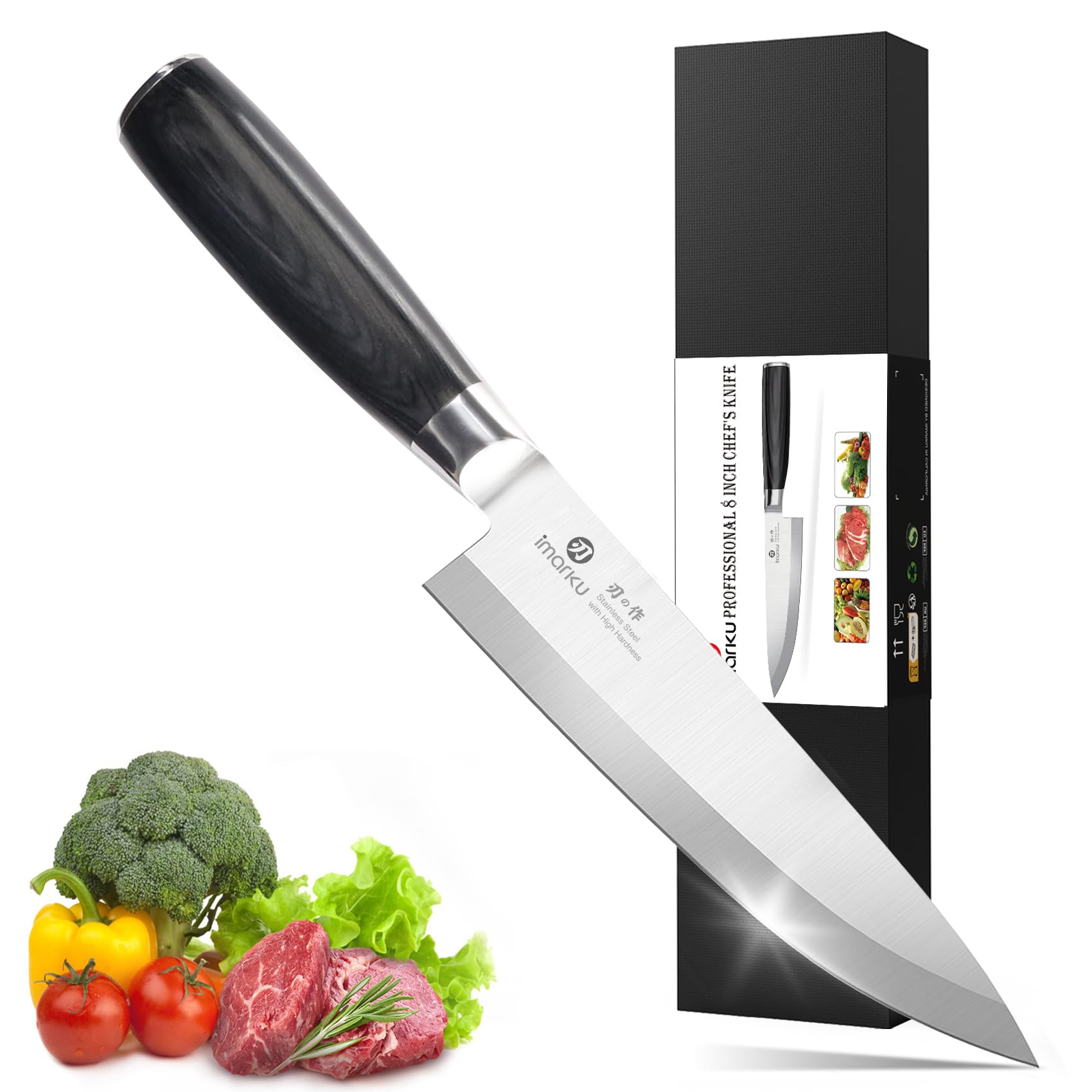
imarku Japanese Chef Knife 8-Inch — Easy First Japanese Knife
Best for: beginners, first Japanese knife
For beginners who want a Japanese-style knife without a steep learning curve, this imarku is a friendly start. Its high-carbon stainless blade arrives sharp and cuts cleanly through vegetables, herbs, and boneless meat, while the Pakkawood handle feels warm, smooth, and easy to hold for long sessions. The 8-inch length suits most home boards, and the balanced weight helps new cooks keep a steady pinch grip. The trade-off is edge life: it needs more frequent honing than premium Japanese steel, and the wood handle still needs hand washing and prompt drying.
- Arrives sharp, cuts cleanly
- Pakkawood handle warm and easy
- Balanced weight aids pinch grip
- Needs frequent honing to stay sharp
- Edge life shorter than premium steel
4.6/5
4.4/5
4.5/5
PAUDIN Chef Knife 8-Inch — Warm Wood, Gift-Ready Box
Best for: gift pick, home kitchens
For a gift that looks thoughtful and works from day one, this PAUDIN is an easy choice. Its high-carbon stainless blade arrives sharp and handles everyday chopping, slicing, and dicing, while the natural wood handle feels warm, smooth, and comfortable in the hand for daily use. The gift box makes it ready to give without extra wrapping, and the 8-inch length suits most home boards. The trade-off is edge life and finish: it needs regular honing to stay keen, and the wood handle needs hand washing, prompt drying, and occasional oiling.
- Arrives sharp, ready to use
- Natural wood handle warm, smooth
- Gift box ready to give
- Needs regular honing to stay keen
- Wood needs oiling now and then
4.6/5
4.4/5
4.5/5
Top 3 Head-to-Head: Wüsthof Ikon vs Shun Classic vs Miyabi Kaizen II
These three are the final choices for most cooks: a sturdy German all-rounder, a fine Japanese slicer, and a premium Damascus pick. The right one depends on your grip, your sharpening habits, and how much care you will give the wood.
| Feature | #1 Wüsthof Ikon | #2 Shun Classic | #3 Miyabi Kaizen II |
|---|---|---|---|
| Handle comfort and grip | 4.9 — Best | 4.8 | 4.8 |
| Edge retention | 4.8 | 4.9 — Best | 4.8 |
| Moisture resistance | 4.9 — Best | 4.7 | 4.7 |
| Choose if… | You want a sturdy, grippy daily knife | You want fine, precise Japanese slicing | You want premium looks and a fine edge |
Who These Chef Knives Are NOT For
Wood handle chef knives are lovely, but they are not the right pick for every kitchen or every habit.
If you often leave knives soaking in the sink, wood will suffer first, so a synthetic handle is safer. If a handle already feels loose, do not keep using it as it is; learn how to fix a loose knife handle before it becomes unsafe.
Common Mistakes to Avoid
Most wood handle problems come from care habits, not from the knife itself.
Frequently Asked Questions About Wood Handle Chef Knives
What is the best wood for a chef knife handle?
The best wood for a chef knife handle is a dense, stable hardwood such as African blackwood, rosewood, or Pakkawood. Dense woods resist moisture, hold their shape, and stay firm under daily use. Rosewood and Pakkawood offer a good balance of grip, looks, and care needs for most home cooks. Avoid soft, open-grain woods, because they soak up water, swell, and crack near the handle joint.
Are wood handle chef knives good?
Yes, wood handle chef knives are good when the wood is dense and sealed and you hand wash the knife. Wood feels warm, looks beautiful, and gives a secure grip, even with wet hands. The main limits are care and moisture: wood needs drying after washing and occasional oiling. If you want a knife you can put in the dishwasher, a synthetic handle is a better choice.
Can you put wood handle chef knives in the dishwasher?
No, you should not put wood handle chef knives in the dishwasher. Dishwasher heat, detergent, and long soaking swell the wood, fade the finish, and loosen the handle joint over time. The blade can also knock against other items and dull faster. Wash the knife by hand with mild soap, rinse it, and dry it at once. That simple habit keeps the wood smooth and the handle tight.
How do you care for a wood handle chef knife?
Care for a wood handle chef knife by hand washing it, drying it at once, and oiling the wood when it looks dry. Use mild soap and warm water, never soak the handle, and store the knife on a strip or in a block. Learn hand-washing kitchen knives properly so the routine becomes second nature. A little food-safe mineral oil every few weeks keeps the wood sealed and smooth.
Do wood handle chef knives last long?
Yes, wood handle chef knives can last for many years with hand washing, prompt drying, and occasional oiling. Dense woods such as blackwood and rosewood age well, and a full-tang handle stays solid when the joint is kept dry. Read our knife care cleaning and sharpening guide for a simple routine. Neglect is what shortens their life: soaking, dishwashers, and long damp storage cause swelling and loosening.
What is Pakkawood on a chef knife?
Pakkawood is a resin-stabilised laminated wood used for knife handles, made by bonding thin wood layers with resin under pressure. It looks like natural wood but resists moisture far better, so it is common on Japanese chef knives from Shun, Miyabi, and MAC. It feels warm and smooth, holds its shape, and needs less oiling than solid wood. It still needs hand washing, but it is more forgiving than untreated wood.
Are wood handles better than plastic handles?
Wood handles are better than plastic handles for warmth, looks, and grip feel, while plastic handles are better for low care and dishwasher use. Wood gives a natural, secure feel and ages beautifully with oiling, but it needs hand washing and drying. Plastic is lighter, cheaper, and easier to clean, yet it can feel cold and slick. Choose wood if you enjoy caring for a knife, and plastic if you want zero upkeep.
Our Final Verdict
Wood handle chef knives reward a little care with a warm, secure grip and a beautiful tool that lasts. If you hand wash and oil the handle, the Wüsthof Classic Ikon is the safest all-round pick for daily home cooking.

