What Is the Best Cutting Board for Fish? A Complete Guide
Quick Answer
The best cutting board for fish is a dedicated, nonporous, food-safe plastic board made from high-density polyethylene (HDPE). It is practical for filleting, portioning, and everyday seafood preparation because it is easy to clean and sanitize. For delicate sushi and sashimi slicing, a quality synthetic rubber cutting board offers a more forgiving surface for sharp knives. Whatever material you choose, follow the FDA’s seafood safety guidelines to reduce cross-contamination.
What to Look For
- Best everyday material: HDPE or comparable food-safe plastic with an easy-to-clean surface.
- Best for sashimi: Quality synthetic rubber or a soft, knife-friendly professional board.
- Practical size: Approximately 18 × 12 inches for many home fish-preparation tasks.
- Important safety feature: A stable, nonslip surface that supports controlled knife movements.
- Hygiene priority: Use a separate board for raw seafood and replace boards with deep, hard-to-clean grooves.
My Recommendation
- For most households: Choose a stable, dishwasher-safe HDPE board and reserve it for raw fish.
- For precision slicing: Consider a professional rubber board, provided its cleaning requirements suit your kitchen.
What is the best cutting board for fish when you’re dealing with slippery fillets, sharp knives, and seafood juices? The answer depends on whether you’re cleaning a whole fish, removing bones, or preparing delicate slices for serving.
I recommend looking beyond appearance and focusing on hygiene, stability, and knife control. This guide explains which materials perform best for different tasks and how to choose a board that fits your kitchen.
In This Guide
- What Makes a Good Fish Cutting Board?
- Which Cutting Board Material Is Best for Fish?
- Which Cutting Board Works Best for Each Fish-Preparation Task?
- What Size and Features Should You Choose?
- How Can You Prevent Cross-Contamination?
- How Should You Clean and Maintain the Board?
- Frequently Asked Questions
What Makes a Good Fish Cutting Board?
A good fish cutting board provides a stable, washable surface for cleaning, filleting, trimming, and portioning seafood. It should allow controlled knife movements while helping you keep raw fish separate from ready-to-eat food.
Fish preparation creates challenges that ordinary vegetable chopping may not. Fish skin can slide, scales spread across the work area, and bones require precise cutting angles.
Why Does the Cutting Surface Matter?
A slippery cutting surface makes knife control harder. A surface that’s excessively hard may also be uncomfortable for repeated slicing and can contribute to faster knife-edge wear.
The goal isn’t to find the softest possible board. You need a surface that balances knife friendliness with durability and easy cleaning.
When comparing cutting boards for fish, I prioritize these characteristics:
- Nonporous construction: Helps make the board easier to wash and sanitize.
- Stable positioning: Prevents unwanted movement during filleting.
- Knife-friendly texture: Supports controlled cuts without unnecessarily harsh contact.
- Adequate work area: Accommodates the fish and your knife movements.
- Simple cleaning: Allows effective washing after exposure to raw seafood.
- Durable construction: Resists warping and premature damage during ordinary use.
Does the Board Need to Be Dedicated to Fish?
Using a separate board for raw seafood is the simplest way to organize a safer kitchen workflow. It reduces the chance of transferring raw fish juices to vegetables, bread, or cooked food.
The CDC’s food safety guidance recommends keeping cutting surfaces used for raw animal products separate from those used for foods that won’t receive further cooking.
A blue cutting board is a convenient choice because blue commonly identifies seafood equipment in commercial color-coding systems. However, color alone does not make a board sanitary.
Section Takeaway: Choose a dedicated fish board that stays stable, cleans thoroughly, and provides enough room for safe knife handling.
Which Cutting Board Material Is Best for Fish?
 Save
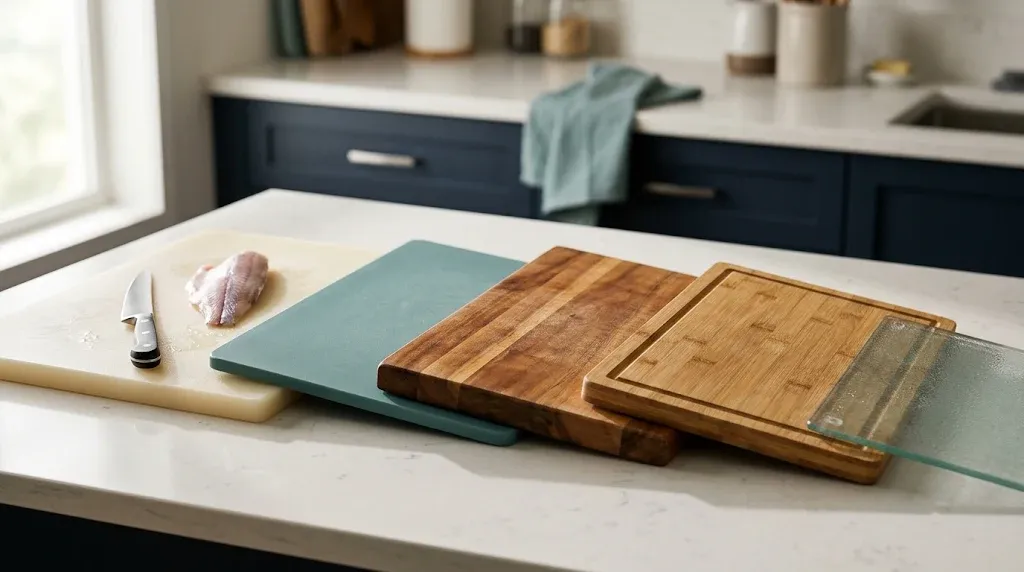
HDPE plastic is my preferred all-around material for routine fish preparation. Synthetic rubber is especially appealing when delicate knife work matters more than convenience or price.
Wood, bamboo, and composite materials can serve different kitchen needs. However, each requires a closer look at cleaning instructions and suitability for raw seafood.
1. HDPE Plastic Cutting Boards
High-density polyethylene is a durable thermoplastic commonly used for food-preparation surfaces. Its nonporous construction makes it a practical choice for handling raw fish.
HDPE boards are available in multiple sizes, thicknesses, and colors. Many are dishwasher-safe, although you should verify the manufacturer’s instructions before using high heat.
Advantages:
- Easy to wash and sanitize when the surface remains in good condition.
- Available in large sizes suitable for whole-fish preparation.
- Usually more affordable than professional rubber boards.
- Can support color-coded separation of raw seafood.
- Many models tolerate dishwasher cleaning.
Limitations:
- Repeated knife cuts gradually create grooves.
- Thin boards may flex or slide during cutting.
- Some boards can warp when exposed to unsuitable temperatures.
Choose a sturdy HDPE board rather than the thinnest available plastic sheet. For filleting, a rigid board provides a more predictable working surface.
2. Synthetic Rubber Cutting Boards
Synthetic rubber boards offer a slightly yielding surface that can be gentle on fine knife edges. This makes them appealing for precision tasks such as slicing sashimi.
Professional rubber boards tend to cost more and may weigh considerably more than plastic alternatives. Some require handwashing rather than dishwasher cleaning.
They can be an excellent investment if you regularly use sharp Japanese-style knives. However, they aren’t automatically necessary for occasional household fish preparation.
3. Wooden Cutting Boards
A well-maintained hardwood cutting board can be suitable for food preparation. However, wood requires more attention to drying, surface condition, and manufacturer-approved care.
For a dedicated raw-fish station, I generally prefer nonporous plastic because its maintenance routine is straightforward. This is a practical preference, not a claim that every wooden board is unsafe.
The USDA’s guidance on wooden and plastic cutting boards emphasizes cleanliness, appropriate washing, and replacing worn surfaces.
If you choose wood, avoid cracked boards and unfinished surfaces that are difficult to clean. Follow the maker’s instructions for washing, drying, and conditioning.
4. Bamboo Cutting Boards
Bamboo cutting boards are often chosen for their appearance and relatively firm surface. However, their hardness can make them less appealing for delicate fish knives.
Bamboo boards also vary in construction and adhesive quality. Dishwasher exposure may damage certain laminated products, so manufacturer guidance matters.
5. Glass, Stone, and Metal Cutting Surfaces
Glass and stone are hard, nonporous materials, but their extreme surface hardness makes them poor everyday choices for fine knife work. They can be particularly unforgiving with delicate blades.
Metal cutting boards may be easy to wipe down, depending on their construction. Still, I wouldn’t choose a bare metal surface over a quality plastic or rubber board for routine filleting.
Fish Cutting Board Material Comparison
| Material | Best Use | Main Advantage | Main Limitation |
|---|---|---|---|
| HDPE plastic | Everyday filleting and seafood prep | Easy cleaning and good availability | Knife grooves develop over time |
| Synthetic rubber | Sushi, sashimi, precision slicing | Gentle contact with sharp blades | Higher cost; cleaning varies |
| Hardwood | General kitchen cutting | Durable with proper care | More maintenance required |
| Bamboo | Occasional general cutting | Firm surface and attractive appearance | Harder feel; care varies |
| Glass or stone | Better suited to serving than filleting | Nonporous construction | Very hard on knife edges |
Section Takeaway: HDPE offers the strongest balance of convenience, hygiene, and value for most fish preparation. Rubber is a worthwhile upgrade for frequent precision slicing.
Which Cutting Board Works Best for Each Fish-Preparation Task?
 Save
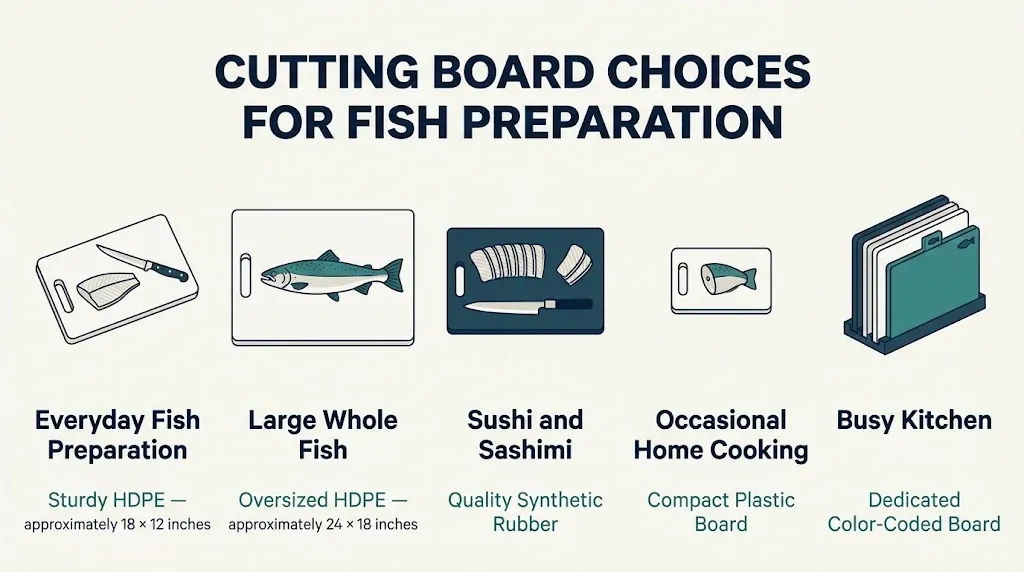
The best cutting board for fish filleting isn’t necessarily the best choice for making sashimi. Different tasks demand different amounts of space, surface grip, and blade control.
Best for Everyday Fish Preparation: Sturdy HDPE
For most households, I would start with an approximately 18 × 12-inch HDPE board. This size gives you room to trim many common fish fillets without occupying an entire countertop.
Choose a board with enough rigidity to remain flat during cutting. Nonslip feet or a food-safe stabilizing mat are valuable additions.
One real product worth comparing is the San Jamar Cut-N-Carry blue cutting board, model CB121812BL. Its documented dimensions are 18 × 12 × 1/2 inches, and the product is designed for color-coded food preparation.
Practical Product Example
San Jamar Cut-N-Carry Blue Cutting Board — CB121812BL
This commercial-style board combines a blue seafood-identification color, a carrying hook, dishwasher compatibility, and an NSF-certified construction. It is a useful reference when comparing dedicated fish boards.
Best for Filleting Large Fish: Oversized Plastic Board
Whole salmon and other large fish need more working space than small fillets. An approximately 24 × 18-inch board can provide a more comfortable area when countertop space allows.
Before buying, measure your counter, sink, and dishwasher. An oversized board becomes inconvenient when you cannot wash it thoroughly after use.
Look for:
- A wide, unobstructed cutting surface.
- Sufficient thickness to resist unwanted flexing.
- Stable placement under sideways knife pressure.
- A manageable weight for lifting and cleaning.
- Food-safe construction suitable for frequent washing.
A fish should fit comfortably within your work area without repeatedly hanging over the edge. Leave enough room for your guiding hand and the knife’s travel.
Best for Sushi and Sashimi: Soft Rubber
For delicate raw-fish slicing, I would favor a quality synthetic rubber board or a professional soft cutting surface. A slightly yielding material can provide a comfortable feel when working with fine Japanese blades.
Hasegawa’s professional soft cutting boards are one example of a knife-friendly option. The manufacturer describes a soft surface supported by a rigid internal structure.
You can compare construction and care information on Hasegawa’s official cutting board guide.
However, a premium board doesn’t make raw fish safe to eat. Safe sourcing, appropriate handling, temperature control, and raw-seafood precautions remain essential.
Best for Occasional Home Cooks: Compact Plastic Board
If you prepare fish once or twice a month, a modestly sized plastic board may be enough. You don’t need commercial equipment for every kitchen.
Choose a size that comfortably accommodates your usual fish portions. Prioritize cleaning convenience over expensive accessories or decorative designs.
Best for a Busy Kitchen: Color-Coded Board
In a kitchen where several people prepare food, a visibly designated fish board helps communicate its intended use. Blue is a common seafood color in food-service board sets.
Make sure everyone understands the system. Even a dedicated blue board must be properly cleaned and sanitized after handling raw fish.
Section Takeaway: Choose the board around the actual job: HDPE for routine work, a larger surface for whole fish, and soft rubber for delicate slicing.
What Size and Features Should You Choose?
The right cutting board should accommodate the fish, remain steady, and fit your cleaning area. An oversized board isn’t automatically better if it becomes difficult to handle.
What Is the Best Cutting Board Size for Fish?
For many home kitchens, 18 × 12 inches is a useful starting size. Larger whole fish may call for an approximately 24 × 18-inch board or a different size matched to the fish.
| Fish-Preparation Task | Suggested Board Size | Reason |
|---|---|---|
| Small fillets and shrimp | 12 × 9 inches | Compact prep area |
| Routine household fish preparation | 18 × 12 inches | Balanced work area and storage |
| Large whole-fish filleting | 24 × 18 inches | More space for knife movements |
These sizes are practical shopping guidelines, not fixed food-safety requirements. The fish, knife, available workspace, and cleaning facilities determine what works best.
Should a Fish Cutting Board Have Juice Grooves?
A shallow perimeter groove may help collect moisture during fish preparation. However, it also adds corners and edges that require careful cleaning.
For precision filleting and sashimi, I prefer a broad, flat cutting area. If you choose grooves, make sure they are accessible and easy to scrub.
Are Nonslip Feet Necessary?
Nonslip features are valuable because fish preparation involves moisture and sideways cutting movements. A board that slides unexpectedly can make a routine knife task dangerous.
Some boards include rubberized feet or built-in grips. Others work with a separate, clean, food-safe nonslip mat.
Test the board’s stability before beginning. Do not rely on pressure from your knife hand to hold it in position.
How Thick Should a Fish Cutting Board Be?
A 1/2-inch-thick commercial-style plastic board is a useful reference for many home kitchens. However, thickness alone doesn’t guarantee that a board will remain rigid.
Check the material, construction, overall size, and manufacturer specifications. A properly supported thinner board may perform better than a poorly made thick one.
Which Features Matter Most?
- Food-safe material: Confirm the board is intended for food preparation.
- Flatness: Reject warped boards that rock during cutting.
- Practical weight: Balance stability with easy cleaning.
- Dishwasher compatibility: Verify temperature and cleaning instructions.
- Simple design: Favor smooth surfaces without difficult-to-clean crevices.
- Easy storage: Choose a shape that can dry completely after washing.
Section Takeaway: A stable, easy-to-clean board with enough working space matters more than extra features or decorative styling.
How Can You Prevent Cross-Contamination When Preparing Fish?
Prevent cross-contamination by keeping raw seafood away from produce, cooked food, and ready-to-eat ingredients. Use dedicated equipment and clean contact surfaces between tasks.
Raw fish can carry microorganisms that spread through hands, utensils, and cutting surfaces. Good kitchen organization helps reduce this risk.
Set Up Your Work Area Before Cutting
Arrange your equipment before opening the seafood package. This prevents unnecessary movement between raw fish and clean kitchen areas.
- Clear the counter: Remove bread, vegetables, clean plates, and unrelated ingredients.
- Place the board securely: Use a stable counter and appropriate nonslip support.
- Prepare your tools: Have your fish knife, waste container, and clean storage dish ready.
- Keep seafood chilled: Take out only the amount you’re ready to prepare.
- Separate finished portions: Place prepared fish into a clean, suitable container.
- Clean the station: Wash and sanitize surfaces and utensils after raw-fish preparation.
Can You Cut Vegetables on the Same Board?
It’s safer and more convenient to use a separate board for foods that will be eaten without cooking. This includes salad vegetables, fruit, bread, and ready-to-eat garnishes.
If you have only one cutting board, prepare ready-to-eat ingredients first and move them away. Then clean the work area as needed before handling raw fish.
The FoodSafety.gov seafood-handling recommendations explain why washing equipment between raw seafood and ready-to-eat food is important.
Does a Blue Cutting Board Prevent Bacteria?
No. A blue cutting board doesn’t inherently kill bacteria or make seafood safer.
Its color serves as a visual reminder that the board is reserved for a particular food category. Cleaning, sanitizing, and avoiding contact with ready-to-eat food provide the actual protection.
What About Raw Fish for Sushi?
Raw fish intended for sushi requires special care because the food won’t receive a final cooking step. A sanitized cutting board cannot compensate for unsafe ingredients or improper storage.
Buy seafood from a knowledgeable supplier and follow recognized raw-fish safety recommendations. Freezing can address certain parasite hazards under appropriate conditions, but it does not eliminate every harmful microorganism.
Pro tip: If you’re preparing fish for raw consumption, review current FDA seafood guidance and local food-safety requirements before serving.
Section Takeaway: Keep raw seafood preparation separate from ready-to-eat foods. A clean board is only one part of a safe preparation process.
How Should You Clean and Maintain a Fish Cutting Board?
 Save
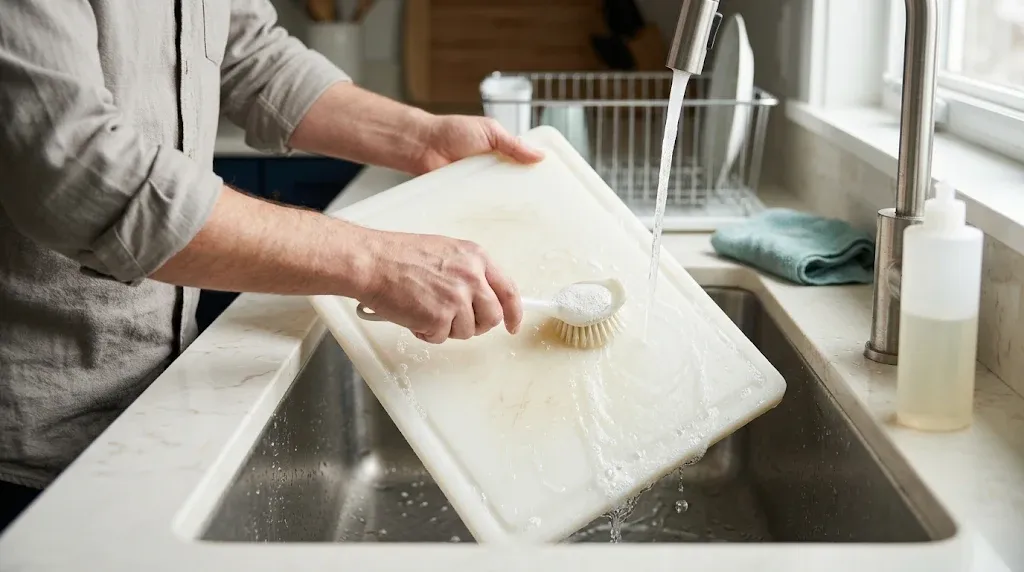
Clean your fish cutting board immediately after use with hot, soapy water, then sanitize it appropriately. Allow the surface to dry completely before storage.
Cleaning removes food residue and visible dirt. Sanitizing is an additional step intended to reduce microorganisms on an already-clean surface.
Step-by-Step Cleaning After Raw Fish
- Remove debris: Collect skin, scales, bones, and food scraps without spreading them around the kitchen.
- Wash thoroughly: Scrub both sides with dish soap and hot water, paying attention to knife marks and edges.
- Rinse: Remove soap and loosened residue with clean water.
- Sanitize: Use a food-contact-surface sanitizer according to its label or applicable public-health guidance.
- Rinse if directed: Follow the sanitizer’s instructions for any required rinse.
- Dry completely: Allow the board to air-dry in a clean location before storing it.
The FDA gives an example sanitizing dilution of one tablespoon of unscented liquid chlorine bleach per gallon of water. Follow appropriate product labeling, contact-time instructions, and surface compatibility guidance.
Never mix bleach with ammonia, acids, or other cleaning chemicals. Do not use a stronger solution simply because the board touched raw fish.
Can Fish Cutting Boards Go in the Dishwasher?
Many nonporous plastic cutting boards are dishwasher-safe, but not every board tolerates high heat. Always confirm the particular manufacturer’s cleaning instructions.
For example, Hasegawa states that its cutting boards are dishwasher-compatible, with specified exceptions among other products. This doesn’t mean all rubber or specialty boards have the same heat tolerance.
Dishwasher washing doesn’t repair deeply damaged surfaces. Inspect the board regularly even if you clean it after every use.
How Do You Remove Fish Odor?
Start with thorough washing using dish soap and water. Persistent odor can indicate trapped residue, damage, or inadequate drying.
A baking soda paste may help with some surface odors, provided the manufacturer permits it. However, deodorizing is not a substitute for proper cleaning and sanitizing.
Don’t cover lingering fish odors with fragrances. Rewash the board, inspect its condition, and replace it if the smell persists despite appropriate care.
When Should You Replace a Fish Cutting Board?
Replace the board when deep grooves, cracks, or damage prevent thorough cleaning. Plastic isn’t maintenance-free, and even a high-quality board eventually wears.
Watch for these warning signs:
- Deep knife grooves that trap debris.
- Cracks, splits, or separating layers.
- Permanent warping that makes the board unstable.
- Rough or damaged areas that resist cleaning.
- Persistent contamination concerns that ordinary maintenance cannot resolve.
There is no universal replacement interval based only on months or years. The board’s actual condition and cleaning effectiveness matter more.
Should You Oil a Fish Cutting Board?
Plastic and synthetic rubber boards generally don’t require the mineral-oil conditioning used for wooden cutting boards. Follow their specific maintenance instructions.
Some wooden boards need periodic conditioning with an appropriate food-safe product. Oiling does not replace washing, sanitizing, or proper drying.
Section Takeaway: Wash promptly, sanitize correctly, and store the board dry. Replace surfaces that can no longer be cleaned effectively.
Frequently Asked Questions About Fish Cutting Boards
Is a Plastic or Wooden Cutting Board Better for Raw Fish?
Plastic is usually the more practical choice for a dedicated raw-fish cutting board because its nonporous surface is easy to clean. Properly maintained wood can also be used for food preparation, but it needs appropriate cleaning, drying, and surface care.
What Is the Best Cutting Board for Filleting Fish?
A rigid, nonslip HDPE cutting board is an excellent general choice for filleting fish. Select a surface large enough for the whole fish and your knife movements, and verify that its material and construction support thorough cleaning after use.
What Cutting Boards Do Sushi Chefs Use?
Many sushi kitchens use professional synthetic rubber or specialized soft cutting boards because their surfaces are gentle on fine knife edges. The exact material varies by chef and workplace. Cleanliness, stability, and suitable equipment remain essential.
Are Bamboo Cutting Boards Good for Fish?
Bamboo boards can be used for certain kitchen tasks when properly maintained, but they aren’t my first choice for frequent fish filleting. Their firm surface and varying maintenance requirements make quality plastic or synthetic rubber more practical for many cooks.
Can You Use the Same Cutting Board for Fish and Meat?
A board can be reused for different raw animal products only with appropriate cleaning and sanitizing between tasks. Dedicated boards for seafood, other raw meats, and ready-to-eat ingredients provide a clearer workflow and can help reduce cross-contamination.
How Do You Stop Fish From Slipping While Filleting?
Begin with a stable cutting board and use a sharp, appropriate fish knife. Keep your hands dry enough for a secure grip, and consider a clean paper towel to help hold slippery fish skin. Avoid forcing the knife through the flesh.
Are Antibacterial Cutting Boards Necessary for Fish?
No. An antibacterial label doesn’t replace effective cleaning and sanitizing. A regular food-safe cutting board in good condition can be suitable for fish when it’s used correctly, cleaned thoroughly, and kept separate from ready-to-eat food.
Final Verdict: Which Fish Cutting Board Should You Buy?
For most home kitchens, my recommendation is a dedicated HDPE plastic cutting board measuring approximately 18 × 12 inches. Choose a sturdy, nonslip model that’s easy to wash and compatible with your preferred cleaning routine.
If you frequently prepare sushi, sashimi, or delicate fish fillets with fine knives, consider upgrading to a professional synthetic rubber board. For larger whole fish, choose a bigger HDPE surface that still fits your cleaning space.
As of 2026, the most important buying principles remain straightforward: choose food-safe construction, maintain a clean surface, prevent cross-contamination, and replace damaged equipment.
My final advice: Buy the board you’ll consistently use, clean, and maintain correctly. A practical board paired with safe seafood handling is a better choice than an expensive board used carelessly.

