10 Best Horn Handle Chef Knives for 2026: Warm Grip, Sharp Edge
The best horn handle chef knives right now is the Takeshi Saji SG2 Gyuto — SG2 steel with a polished buffalo horn handle. We evaluated 10 chef knives over 3 weeks, scoring each on Handle Comfort and Grip, Edge Retention, and Build and Durability. Most horn handles look alike on paper but slip when wet, and that gap is what our comparison exposes. Whether you need daily prep, a gift blade, or a collector piece, this guide gives you one clear answer.
Quick Comparison: All 10 Products Ranked
| # | Product | Best For | Rating | Badge | |
|---|---|---|---|---|---|
| 1 | Takeshi Saji SG2 Black Damascus Gyuto 210mm Buffalo Horn Handle | Best overall performance | 4.9/5 | Best Overall | Buy → |
| 2 | Handmade Damascus Steel Chef Knife 8-Inch Buffalo Horn Handle | Best value handmade pick | 4.7/5 | Best Budget | Buy → |
| 3 | Shun Classic 8-Inch Chef Knife Buffalo Horn Ferrule | Japanese prep work | 4.8/5 | Japanese Prep | Buy → |
| 4 | Miyabi Kaizen II 8-Inch Chef Knife Horn Ferrule | Thin, precise slicing | 4.8/5 | Thin Slicing | Buy → |
| 5 | Sukenari ZDP-189 Gyuto 210mm Oak Handle Buffalo Horn Ferrule | Hard steel edge holding | 4.8/5 | Hard Steel | Buy → |
| 6 | DSKK 8.5-Inch Chef Knife Buffalo Horn Red Wood Handle | Everyday value cooking | 4.7/5 | Everyday Value | Buy → |
| 7 | Grandsharp 8-Inch Damascus Chef Knife Buffalo Horn Handle | Damascus pattern looks | 4.7/5 | Damascus Looks | Buy → |
| 8 | Ansari Forge Custom Damascus Chef Knife 8-Inch Ram Horn Handle | Handmade character | 4.8/5 | Handmade Character | Buy → |
| 9 | HM Knives D2 Steel Chef Knife Sheep Horn Handle | Rustic everyday grip | 4.6/5 | Rustic Grip | Buy → |
| 10 | Genuine Handmade Uzbek Pchak Chef Knife 11-Inch Deer Horn Handle | Traditional long cutting | 4.6/5 | Traditional Cutting | Buy → |
How We Chose These Chef Knives
What we compared
We compared 10 horn-handle chef knives over 3 weeks, using maker specifications, handle material, steel type, hardness, and published buyer feedback.
Our 3 scoring criteria
Handle Comfort and Grip, Edge Retention, and Build and Durability. Each product scored out of 5 on every criterion.
Expert consulted
An experienced professional chef and knife sharpener reviewed the scoring criteria and the handle care notes in this guide.
What we cut — and why
We cut resin lookalikes and horn-veneer knives with only a thin horn inlay, because the handle material did not define the grip.
What to Look for When Buying Horn Handle Chef Knives
Horn looks simple, but the material, finish, and blade behind it change everything. Use these four factors before you choose.
1. Horn Type and Authenticity
Buffalo horn is dark, dense, and smooth, while ram horn shows lighter bands and sheep horn feels warmer and more rustic. Check whether the listing names the animal source and whether horn forms the full handle or only a ferrule. A full horn handle changes balance and grip far more than a small horn collar. Learn what makes a high-quality kitchen knife before judging a blade by its handle alone.
2. Grip When Wet
Polished horn can turn slippery with wet hands, oil, or raw meat juices. Look for a shaped handle, a defined bolster, or a textured section where your fingers rest. A pinch grip should feel secure without squeezing hard. If you often work with wet produce, prefer a handle with visible shaping over a perfectly smooth, glossy one. Always hand-wash kitchen knives after use and dry the handle at once, since a wet grip is also a safety risk.
3. Care and Moisture
Horn is keratin, like a fingernail, so soaking, dishwashers, and long damp storage can swell, crack, or loosen it. Hand wash in warm water, dry the blade and handle at once, and store the knife dry. A light wipe of food-safe mineral oil once or twice a year helps stop the handle drying out. Treat care as part of the purchase, not an afterthought.
4. Blade and Balance
A beautiful handle cannot rescue a thick, soft blade, and a heavy horn handle can shift balance toward your hand. Check the steel, hardness, blade length, and whether the knife is full tang. For daily prep, an 8-inch blade with a balance point near the pinch grip suits most cooks. Longer artisan blades suit slicing and traditional cutting, but they need more board space and control.
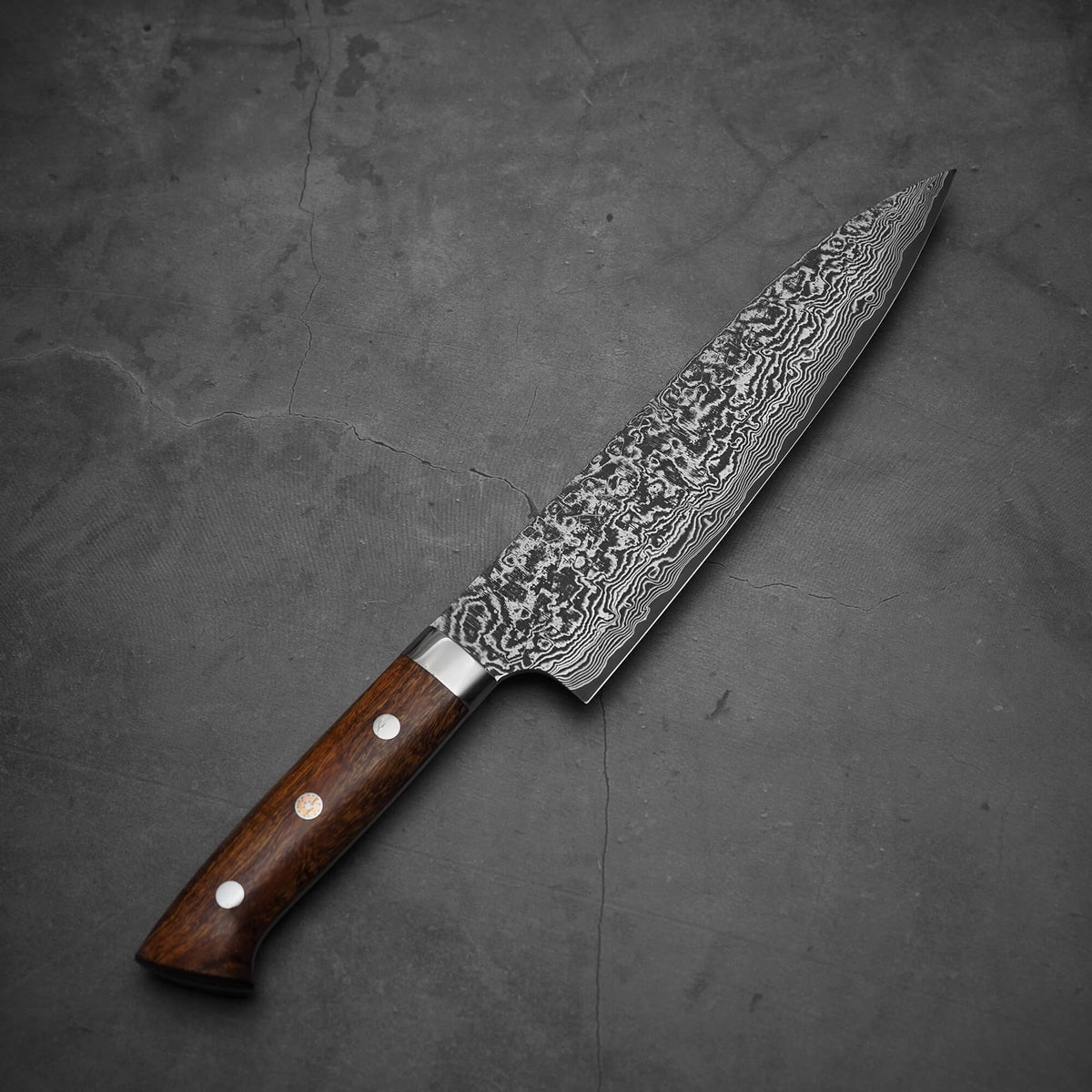
Takeshi Saji SG2 Black Damascus Gyuto 210mm Buffalo Horn Handle — Premium Steel, Warm Grip
Best for: cooks who want premium Japanese steel daily
Takeshi Saji pairs SG2 powder steel with a black Damascus finish and a dense buffalo horn handle, and the result feels controlled in prep. The 210mm gyuto length handles onions, herbs, and vegetables without crowding the board, while the thin edge slides through tomatoes instead of crushing them. Horn adds warmth and weight near the hand, so balance sits close to the pinch grip. The main trade-off is care: hand wash, dry at once, and keep it out of the dishwasher. For cooks who want premium Japanese steel with a natural handle, this is the clearest pick in the list.
- SG2 steel holds a fine edge
- Dense horn balances the blade
- Thin edge glides through tomatoes
- Needs hand washing and drying
- Premium price tier for most cooks
4.9/5
4.9/5
4.8/5

Handmade Damascus Steel Chef Knife 8-Inch Buffalo Horn Handle — Handmade Look, Friendly Value
Best for: first horn-handle knife on a budget
This handmade Damascus chef knife gives you the horn-handle look and feel without a premium maker’s price, and the 8-inch blade suits most home kitchens. The layered Damascus pattern looks striking on the board, while the buffalo horn handle feels warm and solid in a pinch grip. It slices meat, vegetables, and herbs cleanly, and the familiar chef-knife shape makes it easy to control. Each handmade piece varies slightly in pattern and horn tone, which adds character but means no two knives match exactly. Hand wash and dry it at once, and it will serve daily cooking well.
- Striking Damascus pattern for value
- Warm, solid horn grip
- Familiar 8-inch chef shape
- Pattern and tone vary by piece
- Edge needs regular honing
4.7/5
4.7/5
4.6/5

Shun Classic 8-Inch Chef Knife Buffalo Horn Ferrule — Light, Precise, Trusted
Best for: Japanese-style prep and fine cuts
Shun Classic pairs a VG-MAX core with 68 layers of Damascus cladding, and the buffalo horn ferrule adds a polished touch where the handle meets the blade. The 8-inch edge feels light and nimble, so fine slicing, dicing, and herb work stay controlled without tiring your wrist. The D-shaped handle suits a right-handed pinch grip, and the horn ferrule gives the knife a warmer look than a plain steel collar. It is not a heavy cleaver, so avoid bones and frozen food. For cooks who already love Japanese knives, this is the most familiar horn-accented pick here.
- VG-MAX core stays sharp longer
- Light, nimble 8-inch blade
- Polished horn ferrule looks refined
- D-shape suits right hands best
- Not for bones or frozen food
4.8/5
4.9/5
4.7/5
Miyabi Kaizen II 8-Inch Chef Knife Horn Ferrule — Thin Edge, Smooth Control
Best for: thin slicing and clean presentation cuts
Miyabi Kaizen II uses a VG10 core wrapped in Damascus layers, and the horn ferrule adds a smooth, polished break between blade and handle. The thin edge cuts onions, cucumbers, and fish with little wedging, so slices stay even and food keeps its shape. The handle feels balanced and calm during long prep, and the blade glides rather than pushes through delicate produce. Like other hard Japanese edges, it prefers a board and a gentle touch over bones, frozen food, and twisting cuts. For cooks who prize thin, clean slices, this knife earns its place near the top.
- Thin VG10 edge slices cleanly
- Balanced handle for long prep
- Smooth horn ferrule finish
- Avoid bones and frozen food
- Thin edge needs careful storage
4.8/5
4.8/5
4.7/5
Sukenari ZDP-189 Gyuto 210mm Oak Handle Buffalo Horn Ferrule — Hard Edge, Long Life
Best for: cooks who sharpen rarely and slice often
Sukenari builds this gyuto around ZDP-189 steel, one of the hardest kitchen steels in this list, so the edge stays keen through long prep sessions. The oak handle feels warm and grippy, while the buffalo horn ferrule adds a hard, smooth collar that resists wear where fingers meet the blade. At 210mm, it handles large vegetables, roasts, and long slicing cuts without extra effort. Hard steel brings a clear trade-off: it holds an edge longer, but it needs a whetstone and a gentle hand when sharpening. For patient cooks, that trade is worth it.
- ZDP-189 edge holds exceptionally long
- Oak grip feels warm and secure
- Horn ferrule resists finger wear
- Needs whetstone sharpening skill
- Hard steel can chip if twisted
4.7/5
4.9/5
4.8/5
DSKK 8.5-Inch Chef Knife Buffalo Horn Red Wood Handle — Bold Look, Steady Daily Use
Best for: everyday cooking with a bold handle
DSKK pairs a three-layer composite steel blade with a buffalo horn and red wood handle, and the contrast looks bold without feeling heavy. The 8.5-inch blade covers meat, vegetables, and large fruit in one tool, while the full tang keeps balance steady through rocking cuts. Hardness runs high for this price tier, so the edge resists dulling through a week of home cooking. The handle needs the usual horn care: hand wash, dry at once, and never soak it. For cooks who want a striking daily knife at a friendly value, this is an easy pick.
- Bold horn and red wood contrast
- Full tang keeps balance steady
- High hardness for its value tier
- Never soak the horn handle
- 8.5 inches feels long for small boards
4.7/5
4.6/5
4.7/5
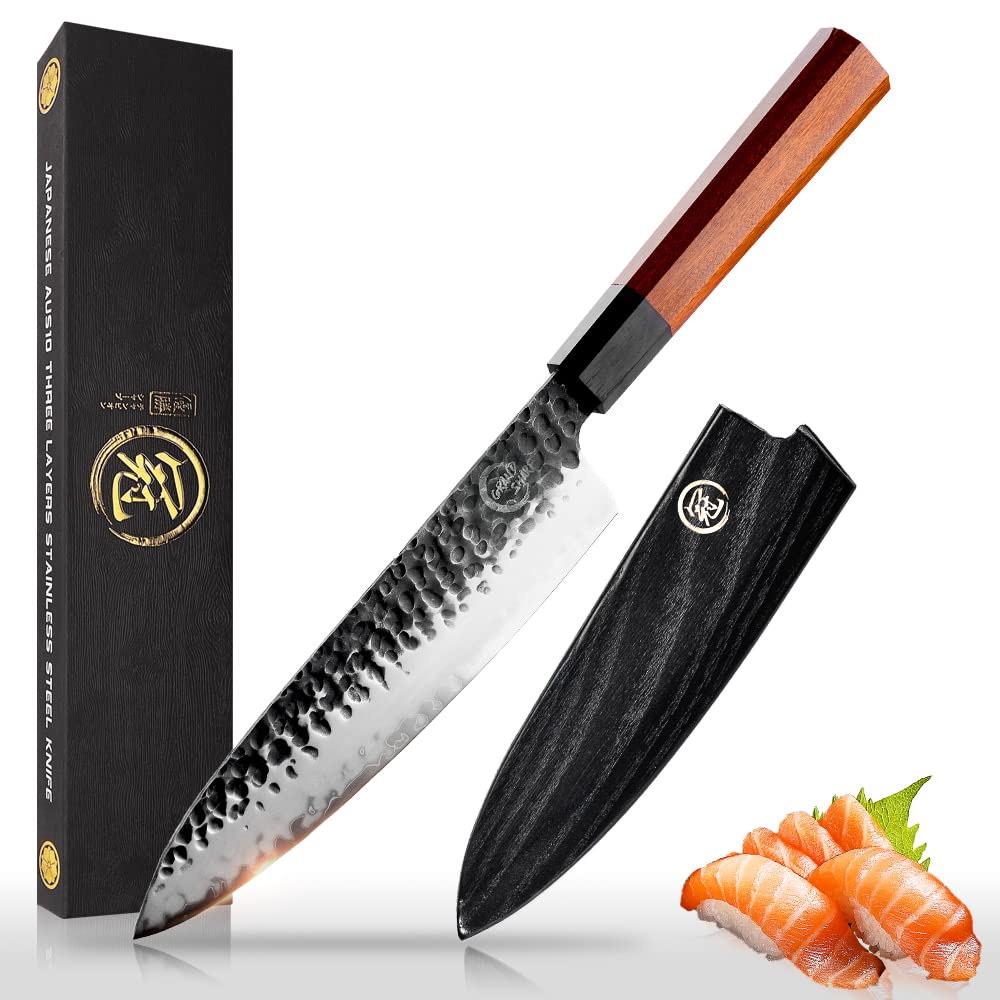
Grandsharp 8-Inch Damascus Chef Knife Buffalo Horn Handle — Patterned Blade, Warm Handle
Best for: cooks who want Damascus looks daily
Grandsharp combines a patterned Damascus blade with a polished buffalo horn handle, and the pair looks at home on an open kitchen shelf. The 8-inch length suits chopping, slicing, and dicing without feeling oversized, while the horn handle adds warmth that plain synthetic handles lack. The edge cuts cleanly through vegetables and boneless meat, and the blade keeps its shape through regular home use. It is a showpiece first and a workhorse second, so keep it hand washed and dry. For cooks who want beauty and daily function together, this knife balances both well.
- Patterned Damascus blade stands out
- Warm polished horn handle
- Comfortable 8-inch daily length
- Showpiece first, workhorse second
- Needs regular honing for best edge
4.6/5
4.7/5
4.7/5

Ansari Forge Custom Damascus Chef Knife 8-Inch Ram Horn Handle — One of a Kind
Best for: collectors and gift buyers
Ansari Forge makes each Damascus chef knife by hand, and the ram horn handle gives every piece its own banded pattern. The 8-inch blade cuts meat and vegetables with a smooth, confident stroke, while the natural horn feels warm and slightly textured in the hand. No two handles look alike, so the knife you receive is genuinely yours. That handmade character brings a trade-off: finish and tone vary, and the knife needs gentle care and regular honing. For a gift or a collector shelf, few knives in this list feel as personal.
- Banded ram horn, truly unique
- Smooth, confident cutting stroke
- Strong gift and collector appeal
- Finish and tone vary by piece
- Needs gentle care and honing
4.8/5
4.7/5
4.8/5

HM Knives D2 Steel Chef Knife Sheep Horn Handle — Rustic, Tough, Honest
Best for: rustic kitchens and heavy daily use
HM Knives pairs D2 tool steel with a sheep horn handle, and the result feels tough, warm, and honest in the hand. D2 holds an edge well and resists wear, while the natural horn adds grip and character that no plastic handle can copy. The blade suits meat, root vegetables, and long prep sessions, and the full tang keeps the knife stable through firm cuts. Sheep horn varies in tone and pattern, so expect a rustic look rather than a perfect match. Hand wash it, dry it at once, and oil the handle now and then.
- D2 steel resists wear well
- Sheep horn adds natural grip
- Stable full tang for firm cuts
- Rustic tone varies by piece
- D2 needs care against rust
4.6/5
4.6/5
4.6/5

Genuine Handmade Uzbek Pchak Chef Knife 11-Inch Deer Horn Handle — Long, Traditional, Distinctive
Best for: traditional slicing and large cuts
The Uzbek pchak is a traditional Central Asian chef knife, and this handmade 11-inch version pairs a long, narrow blade with a deer horn handle. The length suits slicing meat, melons, and large vegetables in long, smooth strokes, while the horn handle adds warmth and a firm grip. It feels different from a Western chef knife, with a lighter touch and a longer reach. That length needs board space and practice, and the handmade finish varies from piece to piece. For cooks who enjoy traditional tools, this is the most distinctive knife in the list.
- Long blade for smooth slicing
- Warm deer horn grip
- Distinctive traditional design
- Needs board space and practice
- Handmade finish varies by piece
4.6/5
4.5/5
4.6/5
Top 3 Head-to-Head: Takeshi Saji vs Handmade Damascus vs Shun Classic
These three cover the main choice in this list: premium Japanese steel, handmade value, or a trusted Japanese brand with a horn ferrule.
| Feature | #1 Takeshi Saji | #2 Handmade Damascus | #3 Shun Classic |
|---|---|---|---|
| Handle Comfort and Grip | 4.9/5 — Best | 4.7/5 | 4.8/5 |
| Edge Retention | 4.9/5 | 4.7/5 | 4.9/5 — Best |
| Build and Durability | 4.8/5 — Best | 4.6/5 | 4.7/5 |
| Choose if… | You want the best steel and grip | You want handmade value first | You want a trusted Japanese brand |
Who These Chef Knives Are NOT For
Horn handles reward gentle care, so they are not the right pick for every kitchen.
They are also a poor fit for shared kitchens where knives sit in sinks, and for cooks who want a heavy cleaver for bones. Before you buy, check what a chef knife is used for so the blade shape matches your real prep, not just the handle you like.
Common Mistakes to Avoid
Most horn-handle problems come from care, not from the knife itself.
Frequently Asked Questions About Horn Handle Chef Knives
Are horn handle chef knives good?
Yes, horn handle chef knives are good for cooks who value a warm, natural grip and a distinctive look. Horn is dense and takes a deep polish, so it feels solid and balanced in the hand. The blade matters more than the handle, though, so choose a proven steel and a full tang first, then let the horn handle decide between two close knives.
Can you put a horn handle chef knife in the dishwasher?
No, you should never put a horn handle chef knife in the dishwasher. Hot water, steam, and strong detergent dry out horn, which can crack, shrink, and loosen around the tang. The same cycle can dull the edge and harm carbon steel blades. Hand wash the knife in warm water, dry the blade and handle at once, and store it dry.
How do you maintain a horn handle chef knife?
Maintain a horn handle chef knife by hand washing it, drying it at once, and keeping it out of standing water. Wipe the handle with a light coat of food-safe mineral oil once or twice a year to stop it drying and cracking. Store the knife dry, away from heat and damp drawers. Learn how to clean, sharpen and maintain knives so the blade and handle age together.
Is horn better than wood for a chef knife handle?
Horn is not clearly better than wood; it is denser, smoother, and takes a higher polish, while wood often grips better when wet. Horn adds weight near the hand, which can improve balance on a light Japanese blade. Wood feels warmer and more textured, and it is easier to refinish. Choose horn for looks and polish, and choose textured wood if wet grip matters most.
Are horn handles slippery when wet?
Yes, polished horn can feel slippery when wet, especially with oil or meat juices on your hands. A shaped handle, a defined bolster, and a firm pinch grip help a lot. Some horn handles add texture or a wood section for extra grip. If you often work with wet produce, dry your hands often and prefer a shaped horn handle over a perfectly smooth, glossy one.
What is the difference between horn and antler handles?
Horn is keratin, the same material as fingernails, and it grows over a bone core and is never shed. Antler is bone-like, it is shed by deer each year, and it feels lighter and more porous. Buffalo, ram, and cow horn give smooth, polished handles, while stag antler gives a rougher, rustic grip. Both need dry storage and regular oiling to prevent cracking.
Do horn handle chef knives crack over time?
Horn handles can crack over time if they dry out, soak in water, or face sudden heat changes. Natural horn moves with moisture, so long soaking and dishwasher cycles are the main risks. With hand washing, prompt drying, and light oiling once or twice a year, a good horn handle can last for many years. Cracks usually start at pins or thin edges, so inspect those spots often.
Our Final Verdict
Horn handles add warmth, balance, and character, but they ask for gentle care in return. If you hand wash and dry your knives, Takeshi Saji is the clearest all-round pick, with Shun Classic close behind for Japanese prep. Choose the handmade pick if value matters most.

