
Can You Use a Pastry Board as a Cutting Board? A Complete Guide
Quick Answer
Yes, you can use a pastry board as a cutting board if it has a food-safe, knife-friendly surface designed to withstand cutting. Solid hardwood pastry boards may handle light slicing, but marble, glass, and silicone pastry surfaces are generally unsuitable for direct knife work. Always check the manufacturer’s instructions and follow food safety and cross-contamination guidelines before using one board for different tasks.
Key Differences to Consider
- Wooden pastry boards: Suitable for light cutting when the wood, finish, and construction support knife use.
- Marble pastry boards: Excellent for rolling dough but too rigid for regular chopping.
- Silicone pastry mats: Useful for rolling and measuring dough, but sharp knives can damage them.
- Food safety: Use separate cutting surfaces for raw meat and ready-to-eat foods.
- Knife protection: Hardwood and suitable plastic are better choices than stone or glass.
My Practical Recommendation
- Best approach: Keep your pastry board for baking unless its manufacturer also approves cutting-board use.
A pastry board provides a convenient workspace for baking, but can it replace your regular cutting board? The answer depends on its material, finish, construction, and intended use.
I prefer choosing kitchen surfaces by what they can safely handle rather than their appearance. This guide explains which pastry boards work for cutting, what to avoid, and how to protect your knives.
What Is a Pastry Board?
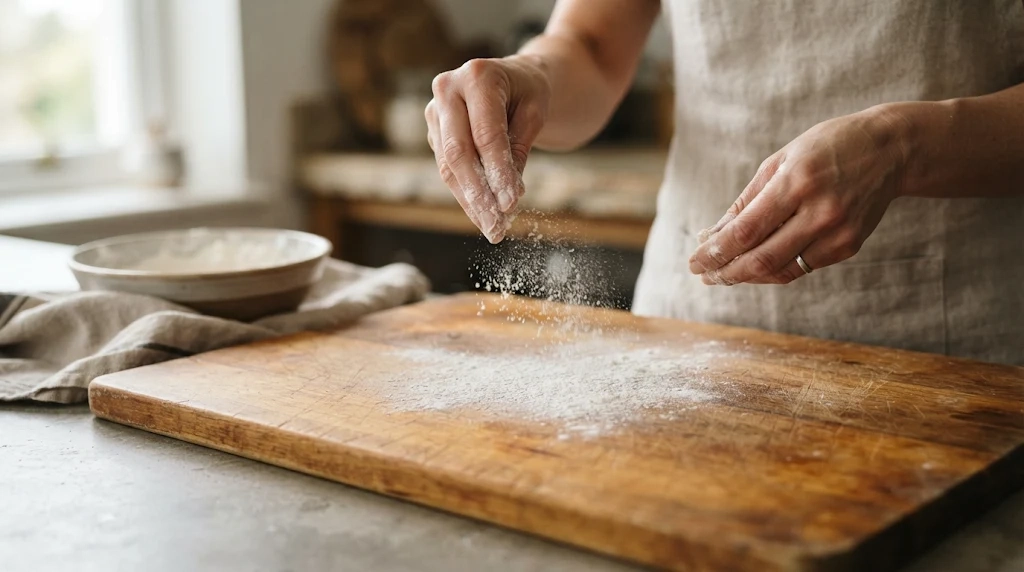
A pastry board is a flat food-preparation surface designed for working with dough. Bakers use it for rolling, kneading, shaping, and portioning pastry.
Unlike a dedicated cutting board, a pastry board prioritizes space and a smooth working surface. Some models also provide a cool surface for handling butter-rich dough.
Common Types of Pastry Boards
- Wooden pastry boards: Provide a spacious, sturdy surface for kneading bread and rolling dough.
- Marble pastry boards: Offer a smooth stone surface that can help keep chilled pastry ingredients cooler.
- Silicone pastry mats: Flexible mats often feature measurement markings and nonstick properties.
- Composite pastry boards: Use manufactured materials with properties that vary by product.
- Glass pastry surfaces: Provide smooth preparation areas but offer little protection for knife edges.
Some wooden pastry boards have a raised lip that fits against a countertop edge. This feature helps stabilize the board during kneading.
However, a stabilizing lip doesn’t automatically make a pastry board suitable for chopping. Always consider the cutting surface itself.
How Is a Pastry Board Different From a Cutting Board?
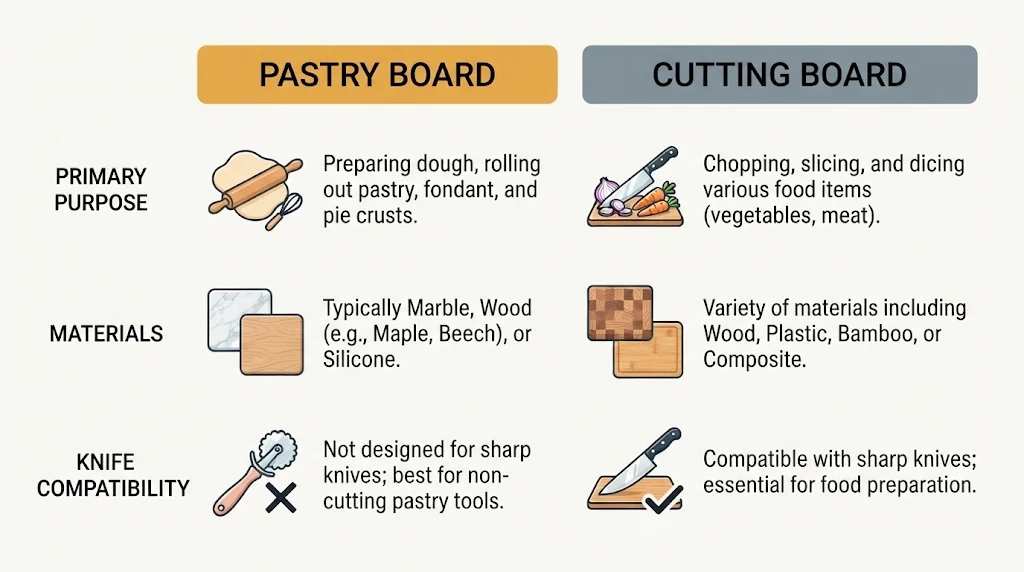
A pastry board is designed primarily for dough preparation, while a cutting board supports repeated knife contact. Both can prepare food, but they aren’t always interchangeable.
My rule is to judge a board by its material and manufacturer’s intended use. The product name alone doesn’t establish whether cutting is appropriate.
Pastry Board vs. Cutting Board Comparison
| Feature | Pastry Board | Cutting Board |
|---|---|---|
| Primary purpose | Rolling and shaping dough | Slicing and chopping food |
| Common materials | Wood, marble, silicone | Hardwood, plastic, rubber |
| Knife compatibility | Depends on material | Designed for regular cutting |
| Typical working area | Often large and flat | Varies from small to large |
| Heavy chopping | Usually not recommended | Suitable when designed for it |
| Cleaning | Depends on material and finish | Designed for routine food preparation |
| Best application | Bread, pastry, pizza dough | Vegetables, fruit, meat, bread |
A wooden board may perform both jobs when properly constructed. However, marble and silicone pastry surfaces generally need a separate cutting board.
The same distinction applies to decorative serving boards. My guide to using a serving board as a cutting board explains why appearance doesn’t determine cutting suitability.
Which Pastry Board Materials Are Safe for Cutting?
Suitable hardwood pastry boards offer the best potential for occasional knife work. Stone, glass, and flexible pastry mats generally perform better when reserved for their intended tasks.
1. Wooden Pastry Boards
Solid wooden pastry boards can sometimes double as cutting boards. The wood must be suitable for food preparation, and the surface must withstand knife contact.
Hard maple is a practical example because its dense, close-grained structure supports everyday kitchen use. Walnut, cherry, and beech are other common cutting-board woods.
- Food-safe construction: Use boards intended for direct food contact.
- Appropriate finish: Avoid decorative coatings that may chip during cutting.
- Stable surface: Ensure the board remains flat under pressure.
- Sound condition: Check for cracks, splinters, and separated glue joints.
- Manufacturer approval: Confirm the product supports cutting as well as pastry preparation.
Not every wooden pastry board meets these requirements. Soft, unfinished, or decorative wood may develop damage during repeated chopping.
For more guidance, see my article on choosing suitable wood for cutting boards.
2. Marble Pastry Boards
Marble pastry boards are excellent for certain baking tasks but poor choices for repeated knife work. Their rigid surface puts unnecessary stress on delicate knife edges.
Marble can be useful for rolling pie crust and other butter-rich doughs. However, its naturally cool feel doesn’t make it a knife-friendly cutting surface.
There are other limitations worth considering:
- Repeated knife contact can accelerate blade dulling.
- Some acidic ingredients can etch polished marble.
- Oils and strongly colored foods may stain susceptible stone.
- Heavy stone slabs can damage countertops if dropped.
- Some finishes and sealants aren’t suitable for every food-preparation task.
I would reserve a marble board for pastry work and suitable food presentation. For a closer look, read whether marble cutting boards are safe and practical.
3. Silicone Pastry Mats
Silicone pastry mats are convenient for rolling dough, but most aren’t intended for sharp knife contact. A kitchen knife can slice or puncture the flexible material.
These cuts may leave loose fragments or make cleaning more difficult. They can also shorten the mat’s useful life.
- Use a rolling pin for flattening dough.
- Use the manufacturer’s approved pastry tools for dividing dough.
- Transfer ingredients onto a proper cutting board before slicing with a sharp knife.
Never assume a mat is knife-safe simply because it’s heat-resistant. Heat tolerance and cut resistance are different properties.
4. Glass and Other Hard Surfaces
Glass and ceramic surfaces generally provide poor contact surfaces for kitchen knives. They are rigid and offer little cushioning during cutting.
These materials may suit selected preparation or serving tasks. However, I wouldn’t choose them for regular vegetable chopping or repeated knife strokes.
When Can You Safely Use a Pastry Board for Cutting?
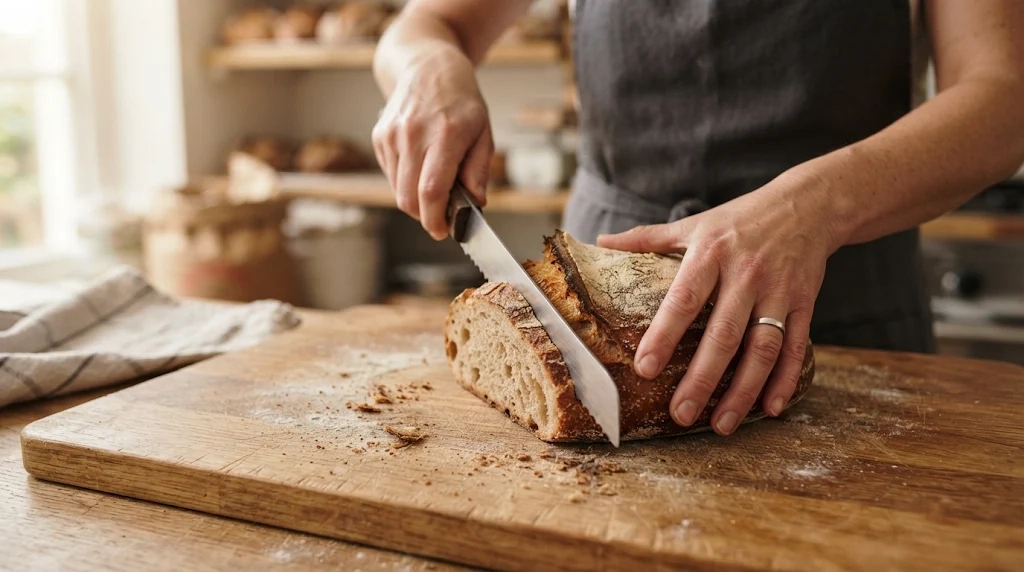
You can use a suitable wooden pastry board for light cutting when its construction and care instructions allow it. The board must also be clean, stable, and in good condition.
A Five-Step Safety Checklist
- Identify the material: Confirm the surface uses suitable food-safe hardwood or another material approved for cutting.
- Check the finish: Look for peeling coatings, cracks, splinters, and damaged joints.
- Confirm knife use: Read the manufacturer’s instructions rather than relying on the product name.
- Stabilize the board: Place it on a secure, level countertop and prevent slipping.
- Clean afterward: Wash, dry, and maintain the board according to its material and food-safety requirements.
A suitable hardwood pastry board may handle simple tasks like slicing bread or cutting soft fruit. These tasks generally place less repeated impact on the surface than heavy chopping.
Which Foods Are Best for Light Cutting?
- Freshly baked bread and rolls
- Soft fruits that require gentle slicing
- Cooked foods that won’t contaminate the board
- Cheese, when the surface and knife are suitable
- Portioned pastry dough, using an approved tool
Even these tasks depend on the particular board. A food-safe, smooth, sturdy surface is essential.
Can You Cut Raw Meat on a Pastry Board?
I don’t recommend using your everyday pastry board for raw meat preparation. A dedicated meat cutting board is easier to manage and reduces opportunities for cross-contamination.
Cross-contamination happens when harmful microorganisms transfer between foods, utensils, or surfaces. Raw meat juices can contaminate dough ingredients and foods that won’t receive additional cooking.
The University of Illinois Extension’s cutting-board guidance recommends dedicated boards for raw meat and separate surfaces for ready-to-eat foods.
Why Separate Boards Make Sense
- Lower contamination risk: Separate surfaces reduce contact between raw meat and ready-to-eat foods.
- Better workflow: You won’t need to interrupt baking to thoroughly clean a meat-preparation surface.
- Appropriate cleaning: Many plastic boards can withstand dishwasher cleaning when their manufacturers permit it.
- Pastry protection: Your dough preparation area stays dedicated to baking.
Using a separate board doesn’t replace proper washing and sanitizing. Every food-contact surface still needs appropriate cleaning.
For a detailed material comparison, see wood vs. plastic cutting boards.
Will Cutting on a Pastry Board Damage Your Knives?
It can, especially when the pastry board is made from marble, glass, or another rigid material. The cutting surface plays an important role in preserving a knife’s edge.
Kitchen knives have thin cutting edges that need controlled contact with the board. Softer, suitable cutting surfaces offer more give than polished stone.
How Different Materials Affect Knife Edges
| Material | Knife Friendliness | Recommendation |
|---|---|---|
| Hard maple | Very good | Everyday cutting |
| Walnut or cherry | Very good | General knife work |
| Cutting-board plastic | Generally good | Daily food preparation |
| Bamboo | Variable | Depends on construction |
| Marble or glass | Poor | Avoid direct cutting |
These are practical material comparisons, not laboratory measurements of edge wear. Knife steel, cutting technique, and specific board construction also matter.
You can explore those differences in my guide to how stone cutting boards affect knife sharpness.
How Do You Clean a Pastry Board After Cutting Food?
Clean a pastry board according to its material, manufacturer instructions, and the food prepared on it. Remove food debris promptly and prevent moisture from collecting in damaged areas.
The University of Minnesota Extension’s home food-safety guidance emphasizes washing food-preparation surfaces and keeping raw foods separate.
Cleaning a Wooden Pastry Board
- Remove loose flour, crumbs, and food residue with an appropriate scraper.
- Wash the surface using warm water and mild dish soap.
- Rinse thoroughly without soaking the wood.
- Dry the surface promptly with a clean towel.
- Allow the board to air-dry completely before storage.
- Condition the wood when needed using a manufacturer-approved food-grade product.
Most wooden pastry boards shouldn’t be soaked or placed in a dishwasher. Prolonged moisture and heat may cause warping, cracking, or separation.
Cleaning a Marble Pastry Board
- Remove flour and crumbs with a soft cloth or suitable scraper.
- Wash using a mild cleaner approved for the stone.
- Avoid acidic cleaning products that can etch marble.
- Dry thoroughly before putting the board away.
- Follow the manufacturer’s instructions for any protective finish.
Avoid harsh scrubbing tools that may scratch polished surfaces. Stone care depends on the finish and treatment of the individual board.
When Should You Replace a Damaged Board?
Replace a board when damage prevents thorough cleaning or stable food preparation. Deep grooves, significant cracks, and peeling finishes can create ongoing problems.
The Academy of Nutrition and Dietetics’ cutting-board safety guidance also emphasizes proper cleaning and replacing surfaces that become excessively worn.
What Mistakes Should You Avoid When Using a Pastry Board?
The biggest mistake is assuming every flat kitchen surface can withstand cutting. A board designed for dough may not tolerate repeated contact with a sharp blade.
Common Mistakes
- Chopping on marble: Repeated blade contact can accelerate knife wear.
- Cutting on silicone: Sharp knives can leave permanent slices in flexible mats.
- Ignoring the finish: Decorative coatings may not withstand cutting or repeated washing.
- Using unstable boards: Sliding surfaces increase the risk of losing knife control.
- Mixing raw and ready-to-eat foods: Poor separation increases cross-contamination risk.
- Soaking wooden boards: Excessive moisture may cause swelling and splitting.
- Ignoring damage: Cracks and deep grooves can make thorough cleaning difficult.
I would prioritize safe construction and easy cleaning over convenience. A second board is often a sensible investment for frequent home cooking.
Is It Better to Have Separate Pastry and Cutting Boards?
For most kitchens, I recommend separate boards when space and budget allow. Dedicated surfaces make everyday preparation easier to organize.
One suitable hardwood board can still perform both jobs if its manufacturer allows it. However, frequent baking and chopping may justify separate tools.
Benefits of Using Two Boards
- Cleaner workflow: Keep baking ingredients away from raw meat preparation.
- Knife care: Use a purpose-built cutting surface for repeated chopping.
- Pastry quality: Preserve a smooth workspace for rolling dough.
- Less surface damage: Avoid unnecessary scratches on specialty boards.
- Easier maintenance: Clean each board according to its intended use.
My preferred arrangement is a wooden cutting board for general preparation and a separate pastry surface for dough. A dishwasher-safe plastic board is useful for raw meat handling.
What Should You Look for When Buying a Dual-Purpose Board?
If you want one board for baking and cutting, choose an explicitly approved wooden model. Its construction matters more than decorative features.
Important Buying Factors
- Material: Choose an appropriate close-grained hardwood.
- Size: A working area around 18 by 12 inches or larger may suit many cooking and baking tasks.
- Thickness: Look for enough structure to remain stable during preparation.
- Finish: Choose a food-safe treatment compatible with knife contact.
- Stability: Prefer a flat surface that won’t move unexpectedly.
- Maintenance: Select a board you can clean, dry, and store conveniently.
The right board depends on how often you bake and what you cut. Someone making pastry weekly has different needs from someone preparing vegetables every day.
Recommended Boards for Baking and Everyday Cutting
If you’re choosing kitchen equipment, I would focus on the task each product performs best. These three established products represent different approaches to cutting and pastry preparation.
Affiliate disclosure: Some links below are Amazon affiliate links. We may earn a commission from qualifying purchases at no additional cost to you.
The ratings below represent editorial suitability judgments for the stated tasks, not verified customer ratings or hands-on test results. Check current product specifications before purchasing.
🏆 Best for Everyday Wood Cutting
John Boos Maple R-Board Series
★★★★☆ 4.5/5 Editorial Suitability
This reversible hard-maple cutting board features a sturdy wooden surface and recessed finger grips. I would choose this style for regular knife work and occasional dough preparation, provided the manufacturer approves the intended tasks.
💰 Best for Easy Cleaning
OXO Good Grips Utility Cutting Board
★★★★☆ 4.4/5 Editorial Suitability
This double-sided cutting board features non-slip feet and dishwasher-safe construction. I would consider it for everyday food preparation when simple cleaning matters more than a traditional wooden appearance.
🥐 Best for Dedicated Pastry Work
Fox Run Marble Pastry Board
★★★★☆ 4.3/5 Pastry Suitability
The Fox Run marble pastry board provides a smooth stone workspace for rolling dough. I would select it for pastry preparation rather than knife cutting because hard marble can accelerate blade dulling.
Frequently Asked Questions
Can you cut vegetables on a wooden pastry board?
Yes, some wooden pastry boards can handle vegetable cutting if they have food-safe finishes and knife-compatible construction. Confirm that the manufacturer permits cutting, keep the surface stable, and clean it thoroughly afterward. Use a dedicated cutting board when the pastry board’s suitability is uncertain.
Can you use a marble pastry board to cut pizza?
A marble pastry board isn’t the best surface for cutting pizza with a sharp metal blade. The rigid stone can accelerate edge wear, while certain cutting tools may scratch the surface. Transfer the pizza onto a suitable cutting board before slicing whenever possible.
Is a wooden pastry board sanitary?
A wooden pastry board can be suitable for food preparation when its material and finish are food-safe. Proper washing, drying, and maintenance are essential. Avoid using a board with deep cracks or damage that prevents thorough cleaning, and keep raw meat preparation separate from ready-to-eat foods.
Can you use a pastry board for both bread and meat?
A suitable board may technically handle different foods with thorough cleaning and appropriate sanitizing between tasks. However, dedicated boards are the safer practical choice. Keep a separate cutting board for raw meat and use your pastry board primarily for baking and ready-to-eat ingredients.
Can you use a regular cutting board for rolling dough?
Yes, a clean, sufficiently large cutting board can work for rolling dough if its surface is smooth and food-safe. Avoid boards with deep knife grooves that trap residue or interfere with rolling. A dedicated pastry surface may be more convenient when working with large quantities of dough.
Final Verdict: Can a Pastry Board Replace a Cutting Board?
Yes, a suitable wooden pastry board can sometimes replace a cutting board for light kitchen tasks. However, the material, surface condition, and manufacturer’s instructions determine whether it’s appropriate.
Marble, glass, and silicone pastry surfaces are better reserved for their intended purposes. A proper cutting board offers better protection for knives during regular food preparation.
As of 2026, my recommendation remains straightforward: choose a board based on its construction and intended use, not simply its name. Prioritize food safety, knife care, and easy cleaning.
Before your next baking session, check what your pastry board is designed to handle. If you aren’t sure it’s approved for knife work, keep it for pastry and use a separate cutting board.

