Wood vs. Plastic Cutting Boards: Which Is Better for Your Kitchen?
Quick Answer
Wood cutting boards are usually the better choice for everyday vegetable preparation, comfortable chopping, and long-term use. Plastic cutting boards are more convenient for raw meat because many models are dishwasher-safe. Both can be food-safe when properly cleaned, maintained, and replaced when damaged. The USDA Food Safety and Inspection Service recommends separate boards for raw animal foods and ready-to-eat ingredients.
Key Differences
- Knife friendliness: Quality hardwood surfaces are generally comfortable for routine chopping.
- Cleaning convenience: Many plastic boards can go directly into the dishwasher.
- Food safety: Both materials require washing and proper separation of raw and cooked foods.
- Maintenance: Wood needs careful drying and occasional conditioning.
- Longevity: A quality wooden board can last for years with proper care.
- Affordability: Basic plastic boards generally cost less upfront.
My Recommendation
- Best everyday setup: Use a hardwood board for produce and a separate dishwasher-safe plastic board for raw meat.
Choosing between wood and plastic cutting boards seems simple until you consider food safety, knife wear, cleaning, and durability. Each material has advantages that become important during everyday cooking.
I’m Michael, and in this guide I’ll explain how these materials compare in practical kitchen situations. You’ll also learn when to replace a board and how to choose the right one.
What Is the Difference Between Wood and Plastic Cutting Boards?
A wooden cutting board is a food-preparation surface made from hardwood or another suitable wood material. Common hardwood choices include maple, walnut, and cherry.
A plastic cutting board usually consists of a food-contact polymer such as polyethylene or polypropylene. Manufacturers offer these boards in different thicknesses, sizes, and colors.
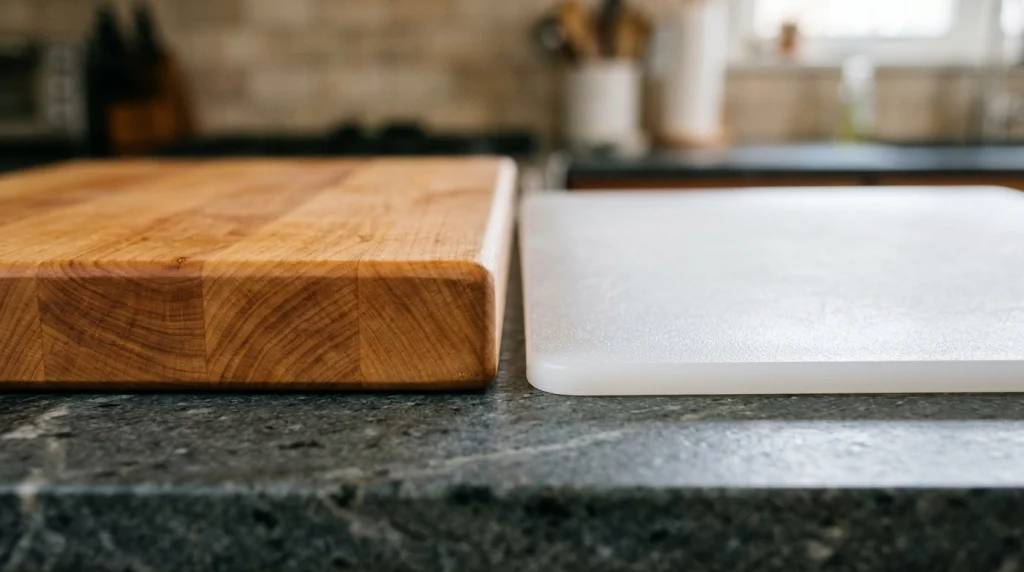
The main difference lies in their construction and cleaning requirements. Wood is naturally porous, while typical plastic boards have nonporous surfaces.
How Wooden Cutting Boards Work
Hardwood boards provide a firm cutting surface that supports repeated chopping and slicing. Their performance depends on wood species, grain orientation, construction, and maintenance.
Two common wooden board constructions include:
- Edge-grain boards: Long wood strips form a durable chopping surface with a familiar wood-grain appearance.
- End-grain boards: The ends of wood fibers face upward, producing a distinctive block-style pattern.
End-grain models are often valued for their cutting feel and appearance. However, they can be heavier and more expensive than comparable edge-grain boards.
How Plastic Cutting Boards Work
Plastic boards offer a lightweight surface that is generally easy to wash. Many dishwasher-safe models work well in kitchens that prepare raw poultry, seafood, and meat.
They also come in multiple colors, making it easier to dedicate individual boards to specific food groups. However, knife cuts gradually leave marks in the plastic.
Wood vs. Plastic Cutting Boards: Side-by-Side Comparison
 Save
The following table highlights the differences that matter most when buying a cutting board. These comparisons describe common household products rather than every board on the market.
| Feature | Wood Cutting Board | Plastic Cutting Board |
|---|---|---|
| Common materials | Maple, walnut, cherry | Polyethylene, polypropylene |
| Porosity | Porous | Generally nonporous |
| Dishwasher use | Usually hand-wash only | Many models dishwasher-safe |
| Knife friendliness | Generally good with suitable hardwood | Generally good with suitable plastic |
| Maintenance | Dry carefully and condition as needed | Wash, inspect, and replace when worn |
| Typical weight | Often heavier | Often lighter |
| Initial cost | Often higher | Often lower |
| Best practical use | Everyday produce and general chopping | Raw meat and quick cleanup |
Bottom line: Neither board wins every category. A two-board setup provides an effective balance of convenient cleaning and comfortable everyday food preparation.
Are Wood or Plastic Cutting Boards More Sanitary?
Both wood and plastic cutting boards can be sanitary when properly cleaned and maintained. The most important factors are handling, cleaning, cross-contamination prevention, and surface condition.
According to USDA guidance on cutting board materials, nonporous surfaces are easier to clean than porous wood. However, both types require inspection and replacement when excessively worn.
Can Bacteria Survive on Wooden Cutting Boards?
Bacteria may contaminate wooden cutting boards when raw food touches the surface. Wood is not automatically unsafe, but its porous structure requires appropriate cleaning and drying.
Some research examines how different woods interact with microorganisms. Those findings should not replace ordinary kitchen hygiene or justify skipping washing.
Can Bacteria Hide in Plastic Cutting Boards?
Plastic cutting boards can also harbor contamination, particularly when deep knife grooves develop. A nonporous material does not guarantee a contamination-free surface.
Deep scratches make thorough cleaning more difficult. Replace a plastic board when its surface becomes excessively scored or develops hard-to-clean damage.
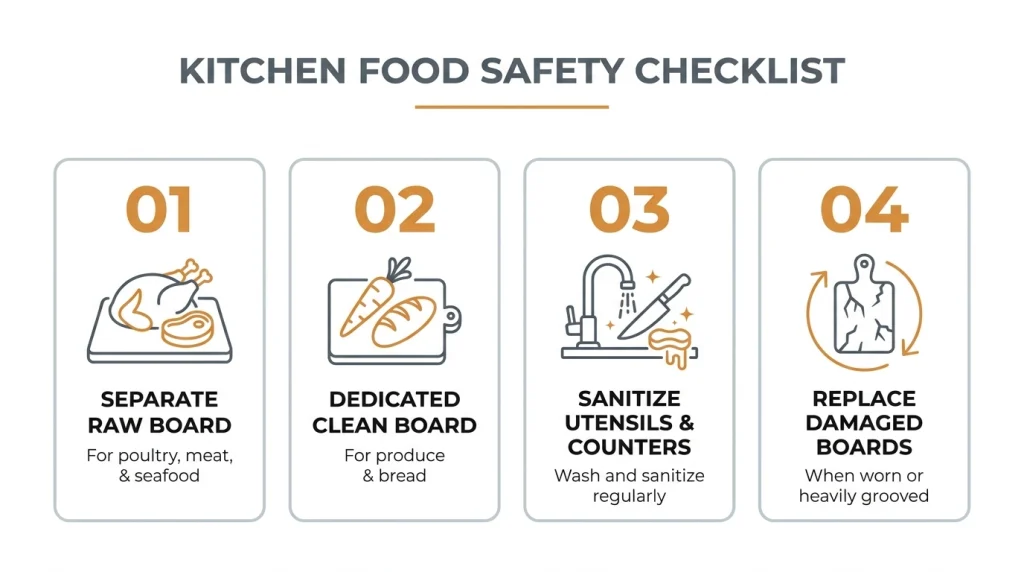
How Can You Prevent Cross-Contamination?
 Save
Cross-contamination happens when harmful microorganisms move between foods, utensils, hands, or preparation surfaces. It becomes particularly important when preparing raw animal products.
The University of Illinois Extension recommends keeping dedicated cutting surfaces for raw meat and ready-to-eat foods.
- Use a separate board for raw poultry, meat, and seafood.
- Keep a clean board available for fruits, vegetables, and bread.
- Wash utensils and countertops after handling raw food.
- Never transfer cooked food to an unwashed surface that held raw meat.
- Replace boards with excessive grooves, cracks, or damaged surfaces.
Practical tip: Color-coded plastic boards can make separating food categories easier. The color itself does not provide antimicrobial protection.
Which Cutting Board Is Better for Your Knives?
Both suitable hardwood and food-grade plastic boards are generally compatible with kitchen knives. Cutting technique, board hardness, surface condition, and knife maintenance all affect edge wear.
For everyday food preparation, I favor choosing a board with a stable surface and enough room to work. A comfortable chopping area matters more than an attractive finish alone.
Do Wooden Cutting Boards Dull Knives?
Quality wooden cutting boards are generally considered knife-friendly. Maple, walnut, and cherry are familiar options for home cooks who want a practical cutting surface.
However, not all woods behave identically. Extremely hard materials, poor construction, or embedded debris can contribute to undesirable knife wear.
Do Plastic Cutting Boards Damage Knife Edges?
Many polyethylene and polypropylene boards provide forgiving surfaces for ordinary kitchen knives. A suitable plastic board should not automatically cause rapid dulling.
Still, different formulations and surface textures can produce different results. Clean the board regularly so grit and other abrasive particles do not accumulate.
What About Glass, Marble, and Stone?
Glass, marble, and stone surfaces are much harder than typical cutting-board materials. They can be particularly unforgiving on knife edges during repeated chopping.
For routine slicing, I would choose a suitable wooden or plastic board instead. Reserve decorative stone surfaces for serving when appropriate.
Which Cutting Board Lasts Longer?
A quality hardwood board can offer excellent longevity when maintained correctly. Plastic boards are convenient, but substantial knife grooves may eventually make replacement necessary.
There is no universal lifespan for either material. Frequency of use, washing habits, construction quality, and storage conditions all influence durability.
Why Wooden Boards Can Last for Years
Thick hardwood cutting boards provide substantial material for repeated everyday use. Certain solid wooden surfaces can also be professionally resurfaced when appropriate.
However, neglected boards may crack, warp, or split. Preventing prolonged water exposure is essential.
Why Plastic Boards Wear Out
Knife blades gradually create scratches and grooves in plastic. Light marks are normal, but heavily damaged surfaces can become difficult to clean.
Watch for these warning signs:
- Deep cuts that trap food residue.
- Persistent odors after thorough washing.
- Cracks, peeling, or deteriorating edges.
- Excessive warping that affects stability.
- Surface damage that prevents effective cleaning.
Replace a board when damage compromises cleaning or safe use. Do not rely on an arbitrary replacement schedule alone.
How Should You Clean Wood and Plastic Cutting Boards?
Cleaning removes food residue and reduces contamination. Washing immediately after use also helps prevent stains and lingering odors.
The cleaning method depends on the material and manufacturer instructions. Never assume every board tolerates the dishwasher.
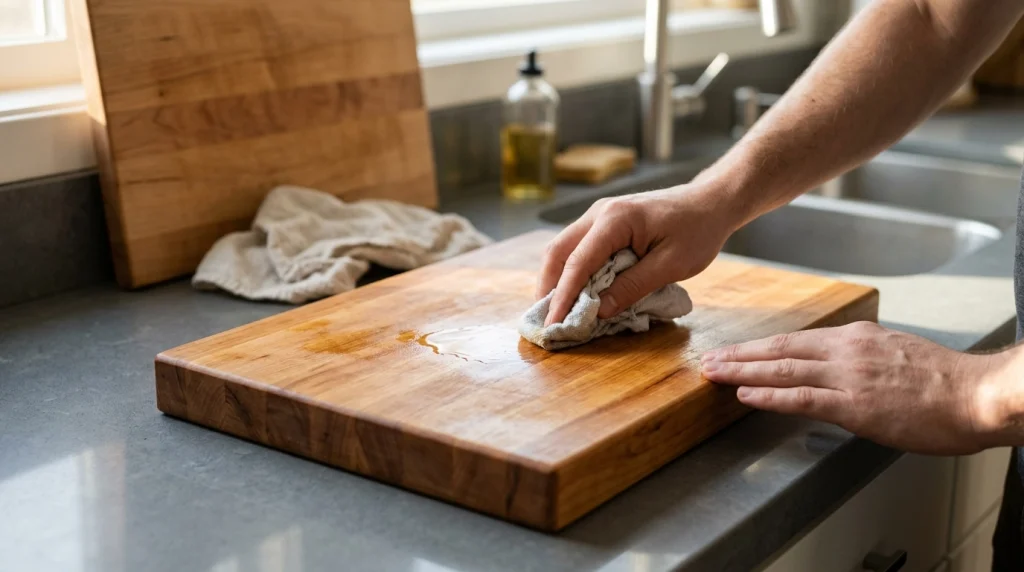
How to Clean a Wooden Cutting Board
 Save
- Remove food scraps: Scrape loose ingredients from the surface.
- Wash thoroughly: Use warm or hot soapy water and a suitable sponge or brush.
- Rinse carefully: Remove soap and remaining food particles.
- Dry immediately: Wipe the surface with a clean towel.
- Air-dry completely: Stand the board upright with airflow around both sides.
- Condition when needed: Apply manufacturer-recommended food-grade mineral oil to suitable unfinished or oil-finished boards.
Do not routinely soak wooden boards or leave them submerged in a sink. Most laminated and finished hardwood boards should also stay out of the dishwasher.
How to Clean a Plastic Cutting Board
- Remove scraps and rinse away loose food particles.
- Wash the surface thoroughly with dish soap and water.
- Use the dishwasher when the manufacturer confirms compatibility.
- Allow the board to dry completely before storage.
- Inspect the cutting surface for deep grooves and other damage.
If a board needs sanitizing after contact with raw meat, follow reliable food-safety guidance. Sanitizer concentration and contact time depend on the product and procedure.
Consult USDA cross-contamination guidance for additional food-handling precautions.
Are Wooden Cutting Boards Better for the Environment?
Wooden cutting boards can be a good choice for people seeking renewable materials and long product life. However, sustainability depends on sourcing, manufacturing, transportation, maintenance, and disposal.
Plastic cutting boards are generally made from petroleum-derived polymers. Their environmental impact also depends on manufacturing methods and whether local recycling facilities accept the material.
Environmental Advantages of Wood
- Wood is a renewable raw material when sourced responsibly.
- Durable hardwood boards may remain useful for many years.
- Some solid wooden boards can be refinished instead of discarded.
- Responsibly sourced products can support more sustainable forestry practices.
Environmental Concerns About Plastic
- Most conventional plastic boards use fossil-derived materials.
- Knife abrasion may release small plastic particles.
- Damaged boards often require replacement rather than repair.
- Recycling availability varies by local collection system and polymer type.
Research into microplastic exposure continues, and the health significance of specific cutting-board exposures remains uncertain. Avoid treating unverified exposure estimates as established health risks.
If sustainability matters most, choose a durable board from a responsible manufacturer. Maintain it well and replace it only when necessary for safe use.
Which Cutting Board Is Best for Raw Meat?
A dedicated dishwasher-safe plastic cutting board is often the most convenient choice for raw meat. Its cleaning flexibility makes it practical for households that frequently prepare poultry, beef, pork, or seafood.
Wood can also be used for food preparation when maintained safely, but cleaning requirements should influence your decision. The FDA Food Code recognizes suitable hard, close-grained wood for certain food-contact applications.
Why I Recommend a Separate Meat Board
Imagine preparing raw chicken and then chopping lettuce for a salad. Using the same unwashed surface creates an avoidable cross-contamination risk.
A dedicated meat board simplifies the workflow. It also makes your cleaning routine easier to organize.
- Raw chicken: Use a separate, washable cutting board.
- Raw beef: Keep the preparation surface separate from ready-to-eat foods.
- Raw fish: Clean the board and utensils after preparation.
- Cooked meat: Transfer it to a clean board or serving surface.
Which Cutting Board Is Best for Vegetables, Fruits, and Bread?
A hardwood cutting board is an appealing everyday option for preparing vegetables, fruits, and bread. Its stability and familiar cutting feel suit a wide range of kitchen tasks.
Plastic is also effective, especially when you prefer lightweight equipment. Neither material is mandatory for these foods.
Best for Vegetables
Choose a spacious surface for onions, carrots, leafy greens, and similar ingredients. Sufficient working room reduces clutter during repetitive chopping.
A sturdy maple board works well for general preparation. A lightweight plastic alternative may be preferable in a small kitchen.
Best for Fruit
Fruit preparation can release significant juice, especially when cutting citrus, melon, or pineapple. A board with a juice groove can help contain liquid.
Clean the board promptly after preparing strongly colored fruits. Some ingredients may leave temporary stains on either material.
Best for Bread
Both wood and plastic work for bread slicing. A sufficiently large, stable board makes handling long loaves easier.
For frequent bread preparation, consider keeping a separate board free from raw-meat contact. This reduces unnecessary cleaning complications.
What Should You Look for When Buying a Cutting Board?
The best board should fit your countertop, cooking habits, and cleaning routine. Expensive materials are not automatically the most practical choice.
Before buying, check these features:
- Size: A board around 12 × 18 inches offers useful preparation space for many kitchens.
- Thickness: Thicker hardwood boards can feel substantial, while thin boards are easier to store.
- Stability: Non-slip feet or a secure non-slip mat can reduce unwanted movement.
- Material: Choose suitable hardwood or food-contact plastic from a reputable manufacturer.
- Cleaning: Check whether the board requires hand-washing or supports dishwasher cleaning.
- Storage: Make sure the board fits your available cabinet, rack, or countertop space.
- Juice groove: Consider this feature when frequently cutting juicy foods.
My practical rule is to prioritize a stable cutting surface over unnecessary accessories. A board that slips during chopping is frustrating regardless of material.
Recommended Cutting Boards for Different Kitchen Needs
If you’re deciding what to buy, these three established product lines cover different priorities. They include a traditional hardwood option, a dishwasher-safe plastic board, and a lightweight composite alternative.
The following recommendations are based on published product features and suitability, not personal hands-on testing. Confirm current availability and specifications before purchasing.
🏆 Best Hardwood Choice
John Boos Maple Chop-N-Slice Cutting Board
★★★★☆
Made with Northern Hard Rock Maple and edge-grain construction, this reversible board offers a traditional hardwood cutting surface. I would shortlist it for regular vegetable preparation and for buyers willing to maintain their wooden kitchen equipment.
💰 Best Easy-Clean Choice
OXO Good Grips Carving & Cutting Board
★★★★☆
This polypropylene board features non-slip feet, a reversible design, and a juice groove. Its manufacturer-approved dishwasher compatibility makes it my practical pick for a dedicated raw-meat preparation board.
🌿 Best Composite Alternative
Epicurean Kitchen Series Cutting Board
★★★★☆
The Epicurean Kitchen Series uses paper-composite construction instead of conventional solid hardwood or plastic. Its lightweight, dual-sided, dishwasher-safe design makes it worth considering when storage space and quick cleaning matter most.
Affiliate disclosure: As an Amazon Associate, qualifying purchases made through eligible links may earn a commission at no additional cost to you.
Frequently Asked Questions About Wood vs. Plastic Cutting Boards
Is a wooden cutting board safer than a plastic cutting board?
Neither material is universally safer. Both can be suitable for food preparation when users clean and maintain them correctly. Separate raw meat from ready-to-eat ingredients, follow appropriate washing procedures, and replace cutting boards when excessive damage makes cleaning difficult.
Do professional chefs prefer wood or plastic cutting boards?
Professional kitchen preferences vary with cooking tasks, workplace sanitation policies, and equipment requirements. Some chefs appreciate the cutting feel of hardwood, while commercial kitchens commonly use washable plastic surfaces. Material choice should follow the kitchen’s food-safety procedures and local requirements.
Can you put a wooden cutting board in the dishwasher?
Most household wooden cutting boards should be washed by hand unless the manufacturer explicitly recommends another method. Dishwasher heat, water exposure, and drying cycles may damage certain wooden constructions. Follow the product’s care instructions and allow the board to dry thoroughly after cleaning.
How often should you replace a plastic cutting board?
There is no single replacement interval for all plastic cutting boards. Inspect the surface regularly and replace the board when deep grooves, cracks, warping, or other damage prevent effective cleaning. Heavy daily use may require more frequent replacement than occasional household use.
Is bamboo better than wood or plastic for cutting boards?
Bamboo boards offer another plant-based option, but their performance depends on construction, adhesive quality, finish, and maintenance. Some bamboo surfaces may feel harder than traditional cutting-board hardwoods. Choose a reputable food-contact product and follow its cleaning instructions rather than assuming bamboo is always superior.
Final Verdict: Should You Choose Wood or Plastic?
For most home kitchens, I recommend combining a good hardwood board with a separate dishwasher-safe plastic board. This setup balances everyday chopping comfort, convenient cleaning, and effective food separation.
Choose wood if you value a durable preparation surface and do not mind hand-washing. Choose plastic if low maintenance, affordability, and dishwasher compatibility are higher priorities.
Whichever material you prefer, keep the board clean, dry it properly, and inspect it regularly. Good food-handling habits matter more than choosing one material alone.
My final recommendation: Start with two dedicated cutting boards rather than searching for one board that handles every kitchen task.

