
Are Bamboo Cutting Boards Good? Benefits, Drawbacks, and Safety
Quick Answer
Yes, bamboo cutting boards are good for everyday kitchen use because they are durable, lightweight, relatively moisture-resistant, and affordable. They work particularly well for chopping vegetables, slicing fruits, and preparing bread. However, bamboo can dull knives faster than softer hardwoods and requires proper cleaning and maintenance, as outlined in the University of Maine’s cutting board safety guide.
Key benefits and drawbacks:
- Good durability: Bamboo provides a firm cutting surface that withstands regular food preparation.
- Renewable material: Bamboo grows quickly compared with many hardwood trees.
- Moisture resistance: Its dense structure can help limit water absorption.
- Affordable pricing: Bamboo boards generally cost less than premium hardwood boards.
- Knife edge wear: The hard surface may require more frequent knife sharpening.
- Hand washing required: Dishwashers and prolonged soaking can damage bamboo boards.
My recommendation:
- Best everyday use: Choose bamboo for fruits and vegetables, and keep a separate cutting board for raw meat.
Bamboo cutting boards have become a popular alternative to traditional wooden and plastic boards. Their natural appearance, reasonable price, and practical construction make them attractive to home cooks.
When choosing a cutting board, I recommend looking beyond its appearance and considering knife protection, food safety, and maintenance. This guide explains where bamboo performs well, where it falls short, and whether it deserves a place in your kitchen.
What Is a Bamboo Cutting Board?
A bamboo cutting board is a food preparation surface manufactured from processed bamboo stalks. Unlike maple or walnut, bamboo belongs to the grass family rather than the hardwood tree family.
Manufacturers typically cut bamboo into strips before bonding them together under pressure. The finished material creates a rigid surface suitable for everyday chopping and slicing.
Common Types of Bamboo Cutting Boards
- Flat-grain bamboo: Displays wider bamboo strips and a natural grain pattern.
- Edge-grain bamboo: Uses narrower strips arranged along their edges.
- End-grain bamboo: Exposes the ends of bamboo fibers on the cutting surface.
- Carbonized bamboo: Undergoes heat treatment to produce a darker appearance.
- Laminated bamboo: Combines bonded layers to create a finished cutting surface.
Construction quality matters more than appearance alone. Well-bonded strips, smooth edges, and a stable surface are important indicators of a practical board.
What Are the Benefits of Bamboo Cutting Boards?

Bamboo cutting boards offer several advantages for home cooks who want an affordable and functional food preparation surface. Their biggest strengths are portability, durability, and versatility.
1. Bamboo Is Durable
Bamboo has a naturally firm structure that resists many shallow scratches and dents. A properly constructed board can handle regular slicing, chopping, and dicing without developing excessive surface damage.
Durability still depends on manufacturing quality and maintenance. Thin boards with weak glue joints may split sooner than thicker, well-made alternatives.
2. Bamboo Is a Renewable Material
Bamboo grows rapidly and can regenerate after harvesting without requiring the entire plant to be removed. This makes it a potentially attractive alternative to slowly growing hardwood trees.
However, not every bamboo product has the same environmental impact. Transportation, adhesives, manufacturing processes, and responsible sourcing also influence sustainability.
3. Bamboo Boards Are Lightweight
Many bamboo cutting boards are easier to lift and move than thick maple butcher blocks. This makes transferring chopped ingredients into pots and pans more convenient.
I would prioritize a lightweight bamboo board for quick tasks rather than choosing a heavy butcher block for every meal.
4. Bamboo Resists Moisture Relatively Well
Bamboo generally has a dense structure that can absorb less moisture than some traditional wooden surfaces. This characteristic is useful when preparing juicy fruits and vegetables.
Moisture resistance does not mean waterproof. Extended exposure to water can still cause swelling, splitting, and separation between bonded strips.
5. Bamboo Cutting Boards Are Affordable
Bamboo boards are often available at lower prices than premium walnut, cherry, or maple alternatives. Multi-board sets also make it easier to separate different food preparation tasks.
For someone building a kitchen on a limited budget, bamboo offers a practical combination of functionality and appearance.
6. Bamboo Boards Are Versatile
A bamboo board can serve as both a food preparation surface and a presentation board. Its natural grain complements many kitchen styles and dining arrangements.
Common uses include:
- Chopping onions and vegetables.
- Slicing apples and other fruits.
- Preparing sandwiches and bread.
- Serving cheese and crackers.
- Cutting fresh herbs.
- Preparing cooked meats on a clean board.
What Are the Disadvantages of Bamboo Cutting Boards?
Bamboo cutting boards are not perfect for every kitchen. Their hard surface and laminated construction introduce limitations that are worth understanding before buying one.
| Disadvantage | Potential Problem | Solution |
|---|---|---|
| Hard surface | Faster knife edge wear | Use softer wood for precision knives. |
| Moisture sensitivity | Warping or splitting | Wash and dry promptly. |
| Bonded construction | Glue joint separation | Avoid prolonged soaking. |
| Maintenance needs | Dry or rough surface | Apply food-grade mineral oil as needed. |
| Lightweight design | Movement during chopping | Place a nonslip mat underneath. |
Are Bamboo Cutting Boards Safe for Food?
Yes, bamboo cutting boards are generally safe for food preparation when manufacturers use suitable food-contact materials. Proper cleaning, drying, and maintenance remain essential for preventing contamination.
The University of Illinois Extension recognizes bamboo as one of the common materials used for kitchen cutting boards.
What About Glue and Chemicals?
Most bamboo cutting boards contain adhesives that hold individual bamboo strips together. The presence of adhesive does not automatically make a board unsafe.
The important consideration is whether the finished product uses materials appropriate for its intended food-contact application.
Before purchasing a bamboo cutting board, look for:
- Clear information about food-contact suitability.
- Manufacturer-provided cleaning instructions.
- Securely bonded bamboo strips.
- A smooth surface without loose fibers.
- Transparent information about coatings and finishes.
- Relevant independent testing documentation, when available.
Do not assume that labels such as natural, organic, or eco-friendly guarantee chemical safety. Check the manufacturer’s material information rather than relying entirely on marketing descriptions.
Are Bamboo Cutting Boards Antibacterial?
Bamboo cutting boards should not be treated as self-sanitizing or naturally germ-free kitchen surfaces. Bacteria can remain on contaminated boards regardless of their material.
Bamboo’s density and relatively low moisture absorption may offer practical advantages. However, these properties cannot replace proper washing and sanitation.
How to Reduce Bacterial Contamination
- Wash the cutting surface after every use.
- Separate raw animal products from ready-to-eat foods.
- Sanitize contaminated boards using an appropriate method.
- Allow the board to dry completely before storing it.
- Replace boards with deep cracks or damaged glue joints.
The condition of your cutting board and your cleaning habits matter more than unsupported antibacterial marketing claims.
Do Bamboo Cutting Boards Dull Knives?
Yes, bamboo cutting boards can dull kitchen knives faster than softer cutting surfaces such as maple or walnut. Their relatively hard structure places greater resistance against a knife’s cutting edge.
Bamboo may also contain naturally occurring silica, which can contribute to abrasive wear. The amount of wear varies with bamboo processing, board construction, knife steel, and cutting technique.
According to N.C. Cooperative Extension, bamboo’s hardness can make it less forgiving on knives than softer cutting board materials.
Which Knives Are Suitable for Bamboo Boards?
- Stainless steel chef knives: Generally suitable for routine chopping.
- Utility knives: Practical for smaller slicing tasks.
- Paring knives: Suitable for light fruit and vegetable preparation.
- Japanese chef knives: Often better paired with a more forgiving cutting surface.
- Ceramic knives: Follow the knife manufacturer’s cutting board recommendations.
For expensive, thin-edged Japanese knives, I would choose an appropriate softer wood board. Bamboo makes more sense for everyday preparation with general-purpose kitchen knives.
Bamboo vs. Wood vs. Plastic Cutting Boards
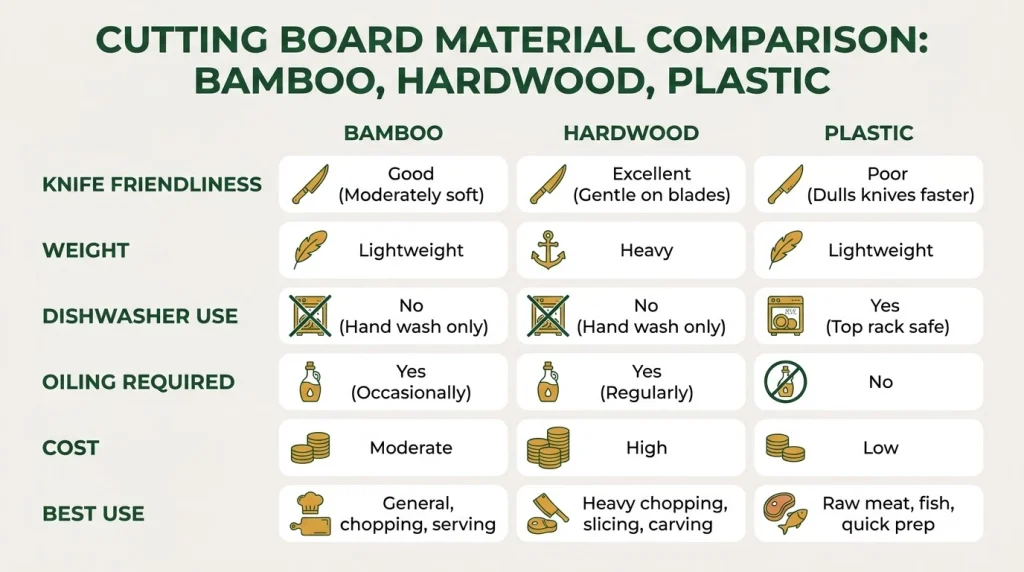
Bamboo provides a useful middle ground between traditional hardwood and plastic cutting boards. Each material offers different advantages depending on how you cook and clean your kitchen.
| Feature | Bamboo | Hardwood | Plastic |
|---|---|---|---|
| Knife friendliness | Moderate | Generally good | Varies |
| Weight | Usually light | Medium to heavy | Usually light |
| Dishwasher use | Generally no | Generally no | Many models |
| Oiling required | Recommended | Recommended | No |
| Relative cost | Low to medium | Medium to high | Low to medium |
| Best use | Everyday produce | Frequent knife work | Raw meat preparation |
Is Bamboo Better Than Wood?
Bamboo can be preferable when affordability, portability, and a compact design are priorities. Traditional hardwood is often preferable when knife edge preservation and long-term restoration matter more.
Is Bamboo Better Than Plastic?
Bamboo offers a natural appearance and a firm surface that often resists visible knife grooves. Plastic provides simpler maintenance, especially when the manufacturer confirms dishwasher compatibility.
Neither material is automatically safer under all circumstances. Choose the board that best fits your preparation and cleaning routine.
Can You Cut Raw Meat on a Bamboo Cutting Board?
Yes, you can prepare raw meat on a suitable bamboo cutting board if you clean and sanitize it afterward. However, a separate dishwasher-safe plastic board is often a more convenient choice.
The USDA cutting board safety guidance recommends separating raw meat preparation from foods that will not receive further cooking.
My Recommended Cutting Board Setup
- Bamboo board: Fruits, vegetables, herbs, and bread.
- Dishwasher-safe plastic board: Raw poultry, seafood, and meat.
- Clean serving board: Cheese, cooked meats, and ready-to-eat snacks.
For example, when preparing chicken salad, chop the vegetables on bamboo and prepare the raw chicken on a separate board. This arrangement makes it easier to avoid transferring raw poultry juices to salad ingredients.
How to Clean a Bamboo Cutting Board Properly
Clean bamboo cutting boards with warm or hot soapy water after each use. Avoid leaving them submerged in water or placing them in a dishwasher unless the manufacturer specifically permits it.
Step-by-Step Cleaning Instructions
- Remove leftover food particles from the cutting surface.
- Wash both sides using dish soap and running water.
- Scrub the surface with a clean sponge or soft brush.
- Rinse thoroughly to remove soap and food residue.
- Sanitize when necessary using a suitable food-contact sanitizing method.
- Remove excess moisture with a clean paper towel.
- Stand the board upright until it dries completely.
For additional food safety information, consult the University of Florida’s cutting board hygiene recommendations.
Important: Lemon juice, salt, and baking soda may help remove stains or odors. They should not replace an appropriate sanitizing method after preparing raw meat.
Do Bamboo Cutting Boards Need Oiling?
Yes, periodic oiling can help bamboo cutting boards resist moisture changes and maintain a smoother surface. Food-grade mineral oil is a common choice for unfinished or oil-finished bamboo boards.
How to Oil a Bamboo Cutting Board
- Wash the board and allow it to dry completely.
- Apply a thin layer of food-grade mineral oil.
- Spread the oil evenly across both sides and edges.
- Allow it to absorb according to the oil manufacturer’s instructions.
- Wipe away any remaining surface oil before using the board.
Oil your board when it looks dry or begins absorbing water unusually quickly. Depending on usage, maintenance may be necessary every few weeks or less frequently.
Avoid ordinary vegetable oil, olive oil, and other cooking oils that may develop unpleasant odors over time.
How Long Do Bamboo Cutting Boards Last?
A well-made bamboo cutting board can last several years with appropriate care. Its useful lifespan depends on construction quality, frequency of use, moisture exposure, and storage conditions.
There is no universal replacement schedule. Inspect the board regularly rather than relying on its age alone.
Signs Your Bamboo Cutting Board Needs Replacement
- Deep cracks that are difficult to clean.
- Separating bamboo strips or glue joints.
- Loose fibers or splinters.
- Persistent mold growth.
- Unpleasant odors that remain after cleaning.
- Severe warping that makes the board unstable.
- Deep grooves that retain food debris.
Replace a damaged board when its surface can no longer be cleaned effectively or used safely. Cosmetic discoloration alone does not necessarily mean the board is unusable.
How to Choose a Good Bamboo Cutting Board
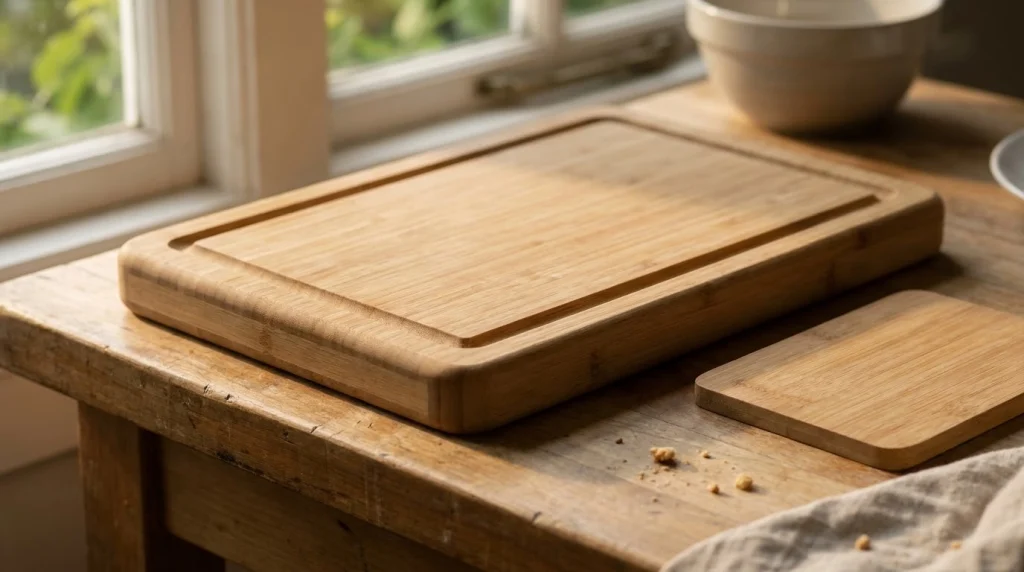
The best bamboo cutting board for your kitchen should offer enough working space, reliable construction, and a stable cutting surface. Avoid selecting a board based only on its appearance or advertised sustainability.
| Board Size | Suggested Dimensions | Suitable Use |
|---|---|---|
| Small | 8 x 6 inches | Garnishes and small fruits |
| Medium | 12 x 9 inches | Everyday vegetable preparation |
| Large | 15 x 11 inches | Family meal preparation |
| Extra-large | 18 x 12 inches or larger | Batch cooking and large ingredients |
Important Features to Consider
- Thickness: A thicker, well-constructed board generally provides greater stability.
- Juice grooves: Helpful for collecting liquids from juicy ingredients.
- Reversible design: Provides additional usable cutting space.
- Surface finish: Choose a smooth surface without splinters.
- Grip features: Nonslip feet or mats can improve stability.
- Food-contact materials: Check the manufacturer’s information about adhesives and finishes.
Are Bamboo Cutting Boards Worth Buying in 2026?
Bamboo cutting boards remain a worthwhile choice in 2026 for home cooks seeking an affordable, renewable-material alternative to traditional kitchen boards. They are particularly useful for everyday produce preparation and serving.
I would choose bamboo for a secondary or general-purpose board rather than treating it as the perfect surface for every knife and ingredient.
Who Should Buy a Bamboo Cutting Board?
- Budget-conscious home cooks.
- People with limited kitchen storage.
- Households that frequently prepare fruits and vegetables.
- Apartment residents and beginner cooks.
- Anyone looking for a versatile preparation and serving board.
Who Should Consider Another Material?
- Professional cooks performing extensive daily chopping.
- Owners of delicate, thin-edged Japanese knives.
- People who prefer dishwasher-only cleaning.
- Anyone who regularly performs heavy-duty cleaver work.
Recommended Bamboo Cutting Boards
If you’re ready to purchase a bamboo cutting board, these options offer different practical advantages based on their documented designs and intended uses.
Affiliate disclosure: As an Amazon Associate, I earn from qualifying purchases. These recommendations are based on product specifications and suitability, not hands-on testing or verified customer star ratings.
🏆 Best for everyday use
Totally Bamboo 3-Piece Cutting Board Set
Made from Moso bamboo, this set includes three different board sizes for routine food preparation. I’d choose it for households that want separate surfaces for different ingredients.
🍽️ Best for cutting and serving
Royal Craft Wood Bamboo Cutting Board Set
This three-piece bamboo set offers different preparation surfaces and a natural serving-friendly appearance. I would consider it for households that regularly prepare snacks and cheese platters.
🍅 Best for juicy ingredients
Totally Bamboo 3-Piece Cutting Board Set with Juice Grooves
This set features perimeter grooves that help collect liquids during slicing. I’d recommend considering it for tomatoes, citrus fruits, and other ingredients that release moisture.
Frequently Asked Questions
Are Bamboo Cutting Boards Better Than Wooden Cutting Boards?
Bamboo cutting boards can be better for portability, affordability, and convenient everyday preparation. Traditional wooden boards made from suitable hardwoods generally offer better knife edge protection and may be easier to restore after years of regular use.
Can Bamboo Cutting Boards Go in the Dishwasher?
Most bamboo cutting boards should not go in the dishwasher because prolonged moisture exposure and high temperatures can damage the material. Hand washing with dish soap, followed by prompt drying, helps protect the board against cracking and warping.
Are Bamboo Cutting Boards Non-Toxic?
Bamboo cutting boards can be suitable for food preparation when their adhesives, finishes, and other materials are appropriate for food contact. Bamboo itself does not guarantee that the finished product is non-toxic, so check the manufacturer’s product information.
Do Bamboo Cutting Boards Harbor Bacteria?
Yes, bamboo cutting boards can harbor harmful bacteria when contaminated or improperly cleaned. Regular washing, appropriate sanitation, complete drying, and separate preparation surfaces for raw animal products help reduce the risk of foodborne illness.
Can Bamboo Cutting Boards Get Moldy?
Yes, bamboo cutting boards can develop mold when stored in damp conditions or exposed to moisture for extended periods. Allow your board to dry upright after washing, and replace it if mold persists or penetrates damaged areas.
Final Verdict: Are Bamboo Cutting Boards Good?
Bamboo cutting boards are a good option for everyday kitchen tasks because they combine affordability, portability, durability, and a natural appearance. They work particularly well for chopping vegetables, preparing fruits, slicing bread, and serving food.
The main trade-offs are increased knife edge wear and the need for regular maintenance. Bamboo is not waterproof, naturally sterile, or suitable for every cutting technique.
My recommendation is to use a quality bamboo cutting board for general food preparation and maintain a separate board for raw meat. Consider a suitable hardwood board if preserving premium knife edges is your highest priority.
Choose a cutting board that matches your cooking habits, clean it after every use, and maintain it properly to get the most value from your investment.

