Are Marble Cutting Boards Safe and Practical? Pros, Cons, and Best Uses
Quick Answer
Are marble cutting boards safe and practical? Yes, food-grade marble boards can be safe for food preparation when properly cleaned and maintained. However, they’re not practical for everyday chopping because the rigid stone can quickly dull knives. Marble works better for pastry preparation and serving, while a knife-friendly cutting board is better for regular slicing and chopping.
What You Should Know
- Food safety: A food-safe marble board can be hygienic when properly cleaned and kept in good condition.
- Knife protection: Marble’s hard surface accelerates knife-edge wear during repeated chopping.
- Pastry preparation: Its cool surface makes marble useful for handling butter-rich dough.
- Maintenance: Acidic ingredients can etch the finish, while oils may stain the stone.
- Everyday convenience: Marble is heavy, potentially slippery, and usually requires handwashing.
Best Practical Choice
- Use marble for rolling pastry, preparing dough, and presenting food.
- Use wood or plastic for routine knife work, vegetables, meat, and poultry preparation.
Marble cutting boards look beautiful, but appearance doesn’t always translate into practical kitchen performance. I’ve found that choosing a cutting surface is much easier when you separate food safety from knife protection.
In this guide, I’ll explain where marble works well, where it creates problems, and how to maintain it. You’ll also learn whether marble is worth buying over wood, plastic, or bamboo.
What Is a Marble Cutting Board?
A marble cutting board is a kitchen surface made from natural marble, a metamorphic stone composed mainly of calcite or dolomite. Manufacturers cut, shape, and finish the stone to create boards for food preparation or presentation.
These boards often feature polished surfaces with distinctive veins and natural color variations. Common colors include white, gray, green, and black.
Unlike traditional wooden cutting boards, marble doesn’t flex noticeably when a knife presses against it. That rigidity explains many of its advantages and disadvantages.
What Makes Marble Different From Other Cutting Boards?
- Natural stone construction: Each board has unique mineral patterns and coloring.
- High thermal mass: Marble stays relatively cool during short pastry-preparation sessions.
- Rigid surface: Its lack of cushioning makes it uncomfortable for repeated knife impacts.
- Substantial weight: Marble tends to stay in place but requires more effort to move.
- Acid sensitivity: Citrus juice, vinegar, and other acidic ingredients can damage its finish.
One important distinction matters: marble is not completely nonporous in its natural state. Its finish, porosity, and any food-safe sealing treatment influence how easily liquids enter the surface.
Are Marble Cutting Boards Safe for Food Preparation?
Yes, marble boards designed for food contact can be safe when properly cleaned, maintained, and used appropriately. However, food safety depends more on cleaning practices and surface condition than appearance alone.
The USDA Food Safety and Inspection Service recognizes marble among possible cutting-board surfaces. Its food-safety guidance emphasizes washing boards and preventing cross-contamination.
Can Bacteria Grow on Marble Cutting Boards?
Bacteria can survive on contaminated marble, just as they can on other kitchen surfaces. A smooth, intact surface may be easier to wipe clean, but that doesn’t make it automatically sterile.
Cracks, rough areas, and trapped food residue create additional cleaning problems. Proper washing remains necessary after every food-preparation session.
The University of Maine Cooperative Extension’s cutting-board guidance also emphasizes cleaning and maintaining boards regardless of material.
Is Marble Safe for Raw Meat and Chicken?
A suitable food-grade marble board can contact raw meat, but I wouldn’t choose it as my primary meat-preparation surface. Its weight, delicate finish, and potentially demanding sanitation needs make it less convenient.
For most kitchens, a dedicated dishwasher-safe plastic cutting board offers a simpler routine. Always check the manufacturer’s cleaning instructions.
- Keep separate boards for raw meat and ready-to-eat foods.
- Wash surfaces after exposure to raw poultry, meat, or seafood.
- Use a manufacturer-approved sanitizing method when necessary.
- Replace boards with cracks or damage that prevents thorough cleaning.
- Never place cooked food onto an unwashed surface previously used for raw meat.
Food safety tip: Don’t assume a polished marble surface is sanitized merely because it looks clean. Visible cleanliness and microbial safety are different things.
Do Marble Cutting Boards Damage or Dull Knives?
Yes. Repeated cutting on marble can dull kitchen knives faster than cutting on suitable wood or plastic surfaces.
Marble doesn’t provide the cushioning that helps protect a thin knife edge. Each cutting stroke brings the blade against an unforgiving surface.
Knife manufacturer KAI recommends wooden or plastic cutting surfaces instead of stone or glass. Those recommendations reflect the importance of avoiding hard contact beneath delicate edges.
Why Is Marble Hard on Knife Edges?
Knife performance depends on more than the hardness of the material beneath it. Surface rigidity, cutting pressure, blade geometry, and repeated impacts all affect edge durability.
Marble lacks the slight give that makes quality wood and plastic useful for chopping. Over time, that difference can contribute to edge rolling, wear, and additional sharpening.
This matters particularly when using thin Japanese-style kitchen knives. Their precise edges benefit from stable, forgiving cutting surfaces.
Which Cutting Boards Keep Knives Sharp Longer?
Wood and suitable plastic are generally better choices than marble for preserving knife edges. End-grain hardwood boards are especially popular among cooks who prioritize blade care.
My practical preference is simple: use a quality wooden board for everyday vegetable preparation and keep marble for tasks that don’t require repeated blade contact.
For more detail, see this guide to why wooden cutting boards are better for knives.
Marble vs. Wood vs. Plastic vs. Bamboo Cutting Boards
 Save
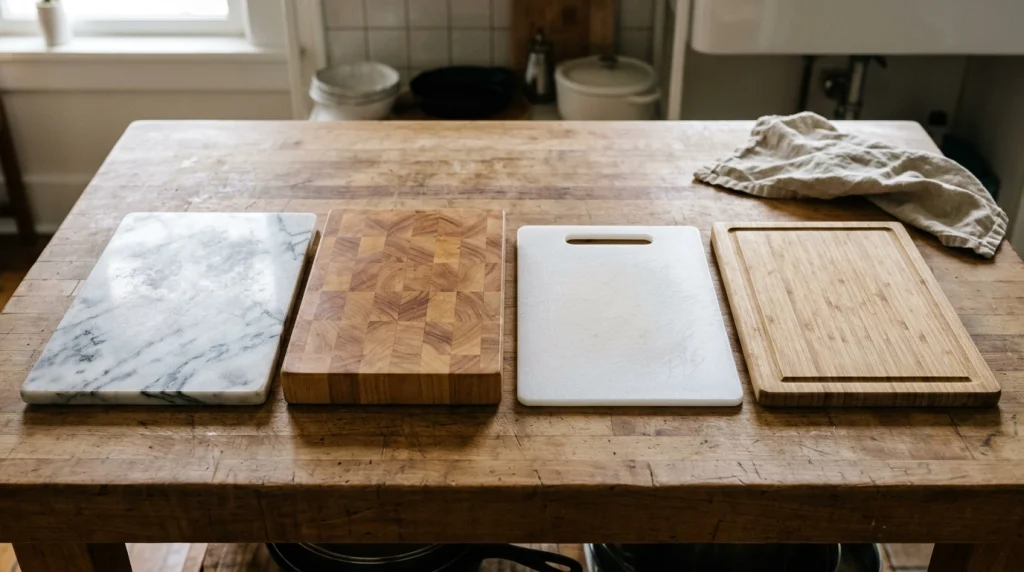
The best cutting-board material depends on how you cook. Marble offers visual appeal and pastry benefits, while wood and plastic handle regular knife work more comfortably.
Here’s how the four materials compare in practical kitchen situations.
| Feature | Marble | Wood | Plastic | Bamboo |
|---|---|---|---|---|
| Knife friendliness | Poor | Excellent with suitable hardwood | Good | Moderate |
| Pastry rolling | Excellent | Good | Good | Good |
| Typical maintenance | Gentle handwashing | Handwash and periodic oiling | Often dishwasher-safe | Handwashing |
| Acid resistance | Poor | Depends on finish | Generally good | Depends on finish |
| Weight | Heavy | Moderate to heavy | Usually light | Usually moderate |
| Best use | Pastry and serving | Everyday chopping | General prep and raw meat | Light and general prep |
My verdict: If you want one board for most cooking tasks, choose wood or quality plastic. Marble makes more sense as a specialized second surface.
What Are the Advantages of Marble Cutting Boards?
Marble has genuine benefits when used for suitable tasks. Its strongest advantages involve temperature, stability, and presentation rather than chopping performance.
1. A Cool Surface for Pastry and Dough
Marble absorbs heat from warm dough and hands, helping keep butter-rich pastry cool during preparation. That makes it useful for pie crusts, shortcrust pastry, and similar recipes.
The stone isn’t actively refrigerated, though. Once it warms up, its cooling advantage gradually decreases.
2. Attractive Food Presentation
Marble creates an elegant surface for displaying cheese, crackers, bread, and other appetizers. Its natural veining also makes each piece visually distinctive.
I especially like the idea of a marble slab as a dedicated serving board. You get its decorative benefits without subjecting expensive knives to repeated contact.
3. Stability During Rolling and Kneading
The weight of marble can help prevent unwanted movement while rolling dough. A properly supported slab also provides a firm, flat working area.
However, heavy doesn’t automatically mean slip-proof. A board with a polished underside can still move on a smooth countertop.
4. Easy Removal of Light Food Residue
A smooth marble finish can make it easy to wipe away dry flour, crumbs, and ordinary food residue. Routine cleanup often requires only mild soap, water, and a soft cloth.
That convenience has limits. Stubborn stains, acid damage, and sanitation after raw meat require more attention.
What Are the Disadvantages of Marble Cutting Boards?
Marble’s biggest problems involve knife wear, surface damage, and everyday convenience. These drawbacks become more noticeable when someone tries to use marble as their only cutting board.
- Faster blade wear: Repeated chopping can shorten the interval between sharpening sessions.
- Heavy construction: Large boards can be difficult to carry, wash, and store.
- Acid etching: Lemon juice, vinegar, and tomatoes can damage polished surfaces.
- Staining risk: Natural stone can absorb oils and pigmented liquids.
- Chipping: Corners may crack or chip after strong impacts.
- Limited cleaning options: Marble generally should not go into a dishwasher.
- Potential slipping: Smooth surfaces need proper stabilization during use.
The Natural Stone Institute is a useful resource for understanding stone selection and maintenance. Always prioritize the specific care directions supplied with your board.
Can Marble Cutting Boards Stain, Scratch, or Crack?
Yes. Marble can develop stains, scratches, etching, and chips despite its solid appearance.
Marble contains minerals that react with acids, and some stones absorb liquids more readily than others. Polished marble can therefore develop visible marks during normal kitchen use.
What Causes Marble Etching?
 Save
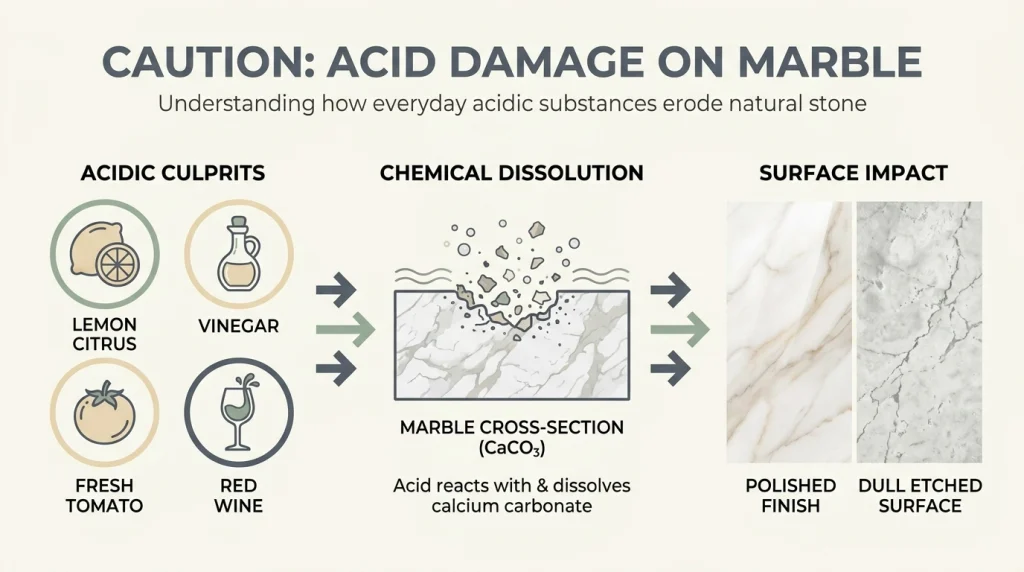
Etching occurs when an acidic substance reacts with calcium-containing minerals in marble. The affected surface may become dull or develop cloudy spots.
Common causes include:
- Lemon and lime juice
- Vinegar and acidic dressings
- Tomato juice and sauces
- Wine and acidic beverages
- Acidic household cleaners
Etching differs from staining because it changes the stone’s surface rather than simply depositing pigment. A protective sealer may reduce staining, but it cannot make marble acid-proof.
Can You Repair a Damaged Marble Board?
Some minor surface marks can be improved with marble-specific polishing products. Deep scratches, structural cracks, or significant chips may require professional repair.
Don’t use an unidentified repair compound on a food-contact surface. Any repair material must be appropriate for the board’s intended use.
A cracked board that cannot be cleaned reliably should no longer be used for direct food preparation.
How Do You Clean and Sanitize a Marble Cutting Board?
Clean marble with warm water, mild dish soap, and a soft, nonabrasive cloth or sponge. Follow the manufacturer’s instructions for sanitizing and protecting the finish.
As of 2026, this remains a sensible daily-care approach for most food-grade marble boards.
Step-by-Step Marble Cutting Board Cleaning
- Remove food: Clear away crumbs, flour, and loose residue.
- Prepare mild soap: Mix a small amount of gentle dishwashing liquid with warm water.
- Wash gently: Wipe the surface using a soft sponge or cloth.
- Rinse thoroughly: Remove remaining detergent with clean water.
- Dry immediately: Use a clean towel to remove moisture.
- Store safely: Keep the board dry on a stable, protected surface.
Important: Routine cleaning doesn’t necessarily replace sanitizing after raw-meat contact. Use only a sanitizer and application method approved for the board’s specific finish.
What Cleaners Should You Avoid on Marble?
- Vinegar or lemon-based cleaning solutions
- Abrasive scouring powders
- Steel wool and harsh scrubbing pads
- Unapproved bleach or ammonia cleaners
- Strong acidic bathroom cleaners
- Unapproved stone sealers or polishing chemicals
Some general food-safety advice recommends vinegar or diluted bleach for particular cutting-board materials. However, marble’s acid sensitivity and finish compatibility require more specific precautions.
Never assume a cleaner suitable for plastic or glass will also be safe for natural stone.
Can Marble Cutting Boards Go in the Dishwasher?
Most natural marble cutting boards should not go in the dishwasher. Heat, prolonged moisture, detergent chemistry, and handling impacts can damage the stone or its finish.
Dishwasher exposure may also affect adhesives, protective feet, or sealers. Handwashing is generally the safer choice unless the manufacturer explicitly states otherwise.
For a more convenient daily-cleaning routine, I would choose a dishwasher-safe plastic board instead.
What Foods and Kitchen Tasks Are Best for Marble Boards?
 Save
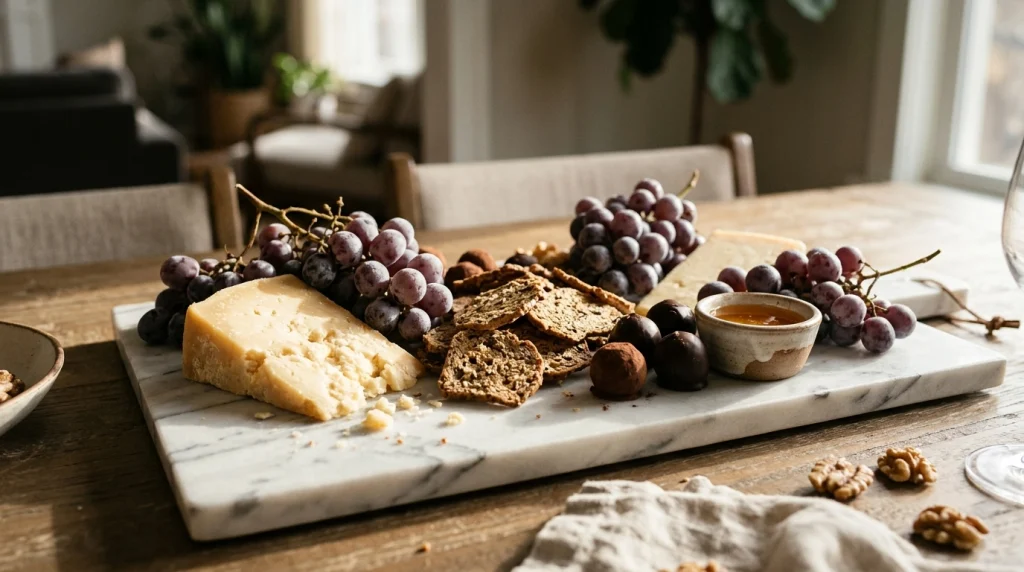
Marble performs best when temperature control, appearance, or a firm surface matters more than knife cushioning. That’s why it often makes sense as a pastry board or serving tray.
| Kitchen Task | Suitability | Reason |
|---|---|---|
| Rolling pastry dough | Excellent | Cool, firm surface |
| Serving cheese | Excellent | Decorative presentation |
| Working with chocolate | Good | Smooth surface and thermal mass |
| Slicing vegetables | Poor | Unnecessary knife wear |
| Cutting citrus fruit | Poor | Acid etching and knife wear |
| Chopping raw chicken | Not preferred | Cleaning convenience and blade protection |
Is Marble Good for Cheese and Charcuterie?
Yes, a food-safe marble board can work beautifully for cheese and charcuterie presentation. The smooth surface helps showcase ingredients without distracting from the arrangement.
Use a separate knife-friendly board for cutting cheese when possible. Then transfer the prepared pieces to marble for serving.
Is Marble Good for Making Pizza Dough?
Marble can be useful for rolling certain doughs, especially when keeping ingredients cool matters. Its weight provides stability, and its smooth finish makes flour removal straightforward.
However, it isn’t necessarily better for every pizza-dough recipe. Dough hydration, room temperature, surface temperature, and handling technique all influence the result.
How Can You Use a Marble Board More Safely?
A few setup choices can make marble easier to handle. The goal is to prevent movement, reduce surface damage, and keep sharp knives away from the stone.
- Check the surface: Confirm the board is labeled or intended for food contact.
- Prevent movement: Use manufacturer-approved nonslip feet or a clean stabilizing mat.
- Protect your countertop: Add suitable protective pads beneath heavy stone boards.
- Avoid chopping: Transfer knife-intensive tasks to wood or plastic.
- Wipe spills promptly: Remove acidic liquids before they etch the finish.
- Lift carefully: Carry large slabs with both hands.
- Inspect regularly: Stop food-contact use if chips or cracks prevent proper cleaning.
For knife-intensive work, practice your cutting technique on a stable wooden or plastic surface. This guide on how to rock chop with a chef knife explains why surface stability matters.
Are Marble Cutting Boards Worth Buying?
Marble cutting boards are worth buying when you need a dedicated pastry surface or attractive serving board. They offer less value as an all-purpose replacement for wood or plastic.
The purchase makes the most sense when you already own a dependable everyday cutting board.
When Marble Is Worth the Investment
- You regularly prepare pastry or butter-rich dough.
- You enjoy presenting cheese boards or appetizers.
- You want a decorative food-safe serving surface.
- You have sufficient storage and countertop space.
- You don’t mind handwashing and careful handling.
When You Should Skip Marble
- You need one board for all chopping tasks.
- You regularly prepare large quantities of vegetables.
- You want lightweight, dishwasher-safe equipment.
- You prioritize maximum knife-edge longevity.
- You frequently cut citrus fruit and acidic ingredients.
If knife preservation is your main priority, explore these cutting boards designed to protect knife edges before purchasing marble.
Recommended Cutting Boards for Different Kitchen Needs
If you’re choosing a cutting board, I would focus on the task rather than appearance alone. These three established product lines represent different approaches to pastry preparation and everyday cutting.
The suitability scores below are editorial judgments, not verified customer ratings or hands-on test scores. Check current specifications and availability before purchasing.
Affiliate disclosure: Some shopping links below are Amazon affiliate search links. Qualifying purchases may earn a commission at no additional cost to you.
🏆 Best for Pastry
Fox Run Marble Pastry Board
★★★★☆ 4/5 task suitability
This natural marble pastry board offers a smooth working surface for rolling dough. I’d prioritize this style if my main goal were baking rather than vegetable chopping. Check the exact model’s dimensions, food-contact instructions, and underside protection.
🔪 Best for Everyday Chopping
John Boos Maple Wood Cutting Board
★★★★★ 5/5 task suitability
John Boos offers solid maple cutting boards designed for regular kitchen use. I’d favor a suitable maple model for daily knife work because wood offers a more forgiving surface than marble. Expect handwashing and periodic board conditioning.
💧 Best for Easy Cleanup
OXO Good Grips Cutting Board
★★★★★ 5/5 task suitability
OXO Good Grips plastic cutting boards provide a practical alternative for everyday food preparation. I’d choose a dishwasher-safe model for kitchens where cleaning convenience matters most. Confirm the exact model’s size, grip features, and care instructions.
Frequently Asked Questions
Are marble cutting boards hygienic?
Marble cutting boards can be hygienic when they are suitable for food contact and cleaned correctly. However, natural marble has varying porosity, and cracks or damaged finishes can complicate cleaning. Wash the board after food preparation and follow manufacturer-approved sanitizing instructions.
Is a marble cutting board better than wood?
Marble is better suited to cool pastry preparation and decorative serving. Wood is generally more practical for chopping because it provides a more forgiving surface for knives. The best material depends on whether your priority is baking, presentation, or everyday food preparation.
Can you cut vegetables on a marble board?
You can cut vegetables on food-safe marble, but frequent chopping isn’t recommended. The rigid stone can accelerate knife wear, while acidic vegetable juices may damage the finish. Wood or plastic is a better choice for regular slicing, dicing, and mincing.
Do marble cutting boards need sealing?
Some marble boards may benefit from an appropriate food-contact-safe stone sealer, depending on their finish and manufacturer instructions. Sealing can help reduce liquid absorption and staining, but it doesn’t prevent acid etching. Never apply an unapproved countertop sealer to a food-contact board.
How long does a marble cutting board last?
A well-maintained marble board can remain useful for many years, although its service life depends on handling, stone quality, and damage. Avoid dropping it, using harsh cleaners, or striking it with heavy tools. Stop using it for food preparation if damage prevents reliable cleaning.
Final Verdict: Should You Use a Marble Cutting Board?
Marble cutting boards are safe for suitable food-contact uses and practical for specific kitchen tasks. Their greatest strengths are pastry preparation, presentation, and the distinctive appearance of natural stone.
For everyday chopping, however, I recommend quality wood or plastic instead. Both provide a more sensible balance of knife protection, cleaning convenience, and routine kitchen performance.
My recommendation: Keep marble as a specialized pastry or serving surface, not your primary chopping board. That approach gives you its advantages without sacrificing the longevity of your kitchen knives.
Before buying, consider how often you actually bake, chop, and entertain. The best cutting board isn’t necessarily the most beautiful one; it’s the one that makes your usual kitchen tasks easier and safer.

