
What Is the Most Sanitary Cutting Board?
Quick Answer
A smooth, undamaged HDPE plastic board is the most sanitary cutting board for most home cooks. It goes in the dishwasher, it takes a sanitizing rinse well, and it costs little to replace once knife cuts pile up. A well-kept hardwood board can match it, so the real contest in wood vs plastic cutting boards comes down to cleaning habits, not the material alone.
Why plastic wins on hygiene
- Dishwasher-safe: High heat and detergent sanitize the full surface in one cycle.
- Nonporous surface: Smooth HDPE resists soaking up meat juices and odors.
- Cheap to replace: A fresh board every year or two keeps deep grooves out of play.
- Color coding: Separate boards for meat and produce cut cross-contamination fast.
- Easy to sanitize: A diluted sanitizing rinse reaches the whole board at once.
When wood holds its own
- Hardwoods like maple pull moisture into the grain, where bacteria dry out and die off.
- Keep the board oiled and sand out cuts before they turn into deep grooves.
- Never put a wood board in the dishwasher, since heat and soaking crack it.
I used to think the priciest board in my kitchen was the cleanest one. Then my old plastic board held a faint onion smell after three washes, and I started testing what I owned.
This guide walks through what I found, material by material, so you can pick the most sanitary cutting board for the way you cook.
What Does “Sanitary” Mean for a Cutting Board?
A sanitary cutting board is a board that keeps bacteria from settling in, lets you clean it fully, and stays free of deep cuts that trap food and moisture.
Definition: A sanitary cutting board is a food-contact surface that resists bacterial growth, survives full washing and sanitizing, and shows no cracks or grooves where germs can hide from soap and water.
Sanitary does not mean sterile. Your board will touch raw chicken, soil from carrots, and juice from ripe tomatoes in a single week.
The goal is a surface you can bring back to clean after each job. Four traits decide whether a board can do that job well.
- Low porosity: The surface should not drink up liquids from raw meat or produce.
- Full washability: You should be able to wash, rinse, and sanitize every inch of it.
- Damage resistance: It should stay smooth under daily knife work for a long time.
- Honest lifespan: It should be cheap or simple enough to fix or replace when it wears out.
No board scores top marks on all four. Plastic nails washability but scars fast, while hardwood resists germs in a surprising way but hates the dishwasher.
Your habits matter as much as your board. A perfect board cleaned poorly still spreads bacteria, and a modest board cleaned well keeps your kitchen safe.
Is Wood or Plastic More Sanitary?
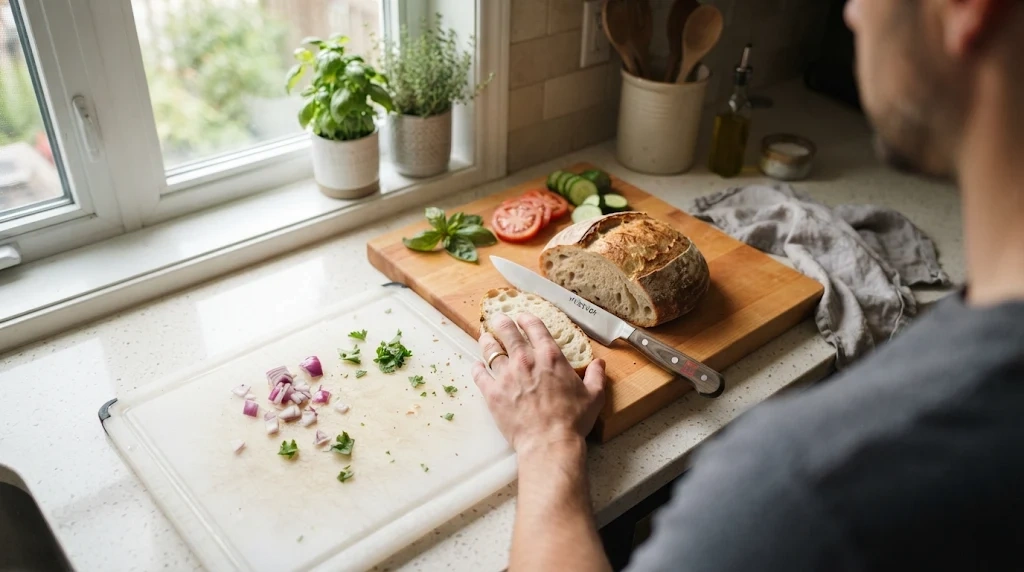
For raw meat, plastic edges ahead because you can sanitize it in the dishwasher and swap it out cheaply. For everyday produce and bread, a well-kept hardwood board is just as safe.
The USDA Food Safety and Inspection Service advises cooks to wash cutting boards in hot, soapy water after each use and to keep raw meat away from ready-to-eat food. That advice applies to every material, and it matters more than the board you buy.
How does plastic hold up?
HDPE plastic, the dense white plastic in most kitchen boards, starts out nonporous and smooth. Soap and hot water slide across it, and a dishwasher cycle adds heat that hand washing can’t match.
The catch is wear. Every knife stroke leaves a thin cut, and those cuts pile into a web of grooves over months of daily use.
Juices settle into those grooves where a sponge can’t reach. I noticed this first with garlic, which left a smell on my old board long after washing.
Plastic still wins for raw meat in my kitchen. I use a dedicated plastic board for chicken, then run it straight through the dishwasher, and I retire it the moment the grooves turn dark or feel rough.
If you want the full safety picture, weigh your board’s material carefully before you buy a new set. The OXO Good Grips Utility Cutting Board is the one I reach for most, thanks to its non-slip edges and deep juice groove.
How does wood hold up?
Wood surprises most people. Hardwoods like maple and walnut pull bacteria down into the grain with the moisture, and the cells dry out and die there instead of multiplying on the surface.
Food scientists at UC Davis ran the best-known lab tests on this years ago. They found bacteria sank into wood grain and failed to recover, while the same bacteria lingered longer on used plastic.
That does not make wood magic. A cracked board, a softwood board, or a board with deep cuts still traps food where a sponge can’t reach it.
Wood needs care to stay sanitary. Oil it with food-grade mineral oil each month, sand out cuts once they show, and wash it by hand with hot, soapy water after every use.
- Best woods: Hard maple, walnut, and cherry, all tight-grained hardwoods that resist deep cuts.
- Woods to skip: Soft pine and open-grained oak, which scar fast and hold moisture.
- Board style: End-grain boards self-heal better than edge-grain boards, since knife cuts close up as the fibers spring back.
I keep a maple board for bread, cheese, and produce. It feels kinder to my knives, and it has never held a smell the way my old plastic did.
What About Glass, Stainless Steel, and Titanium?
Glass, stainless steel, and titanium are all nonporous, so none of them soak up juices. Each one trades hygiene for a different drawback, and knives pay the price for two of them.
Glass looks like the perfect answer at first. It wipes clean in seconds, it never absorbs odors, and you can see every stain on it.
The trouble starts with your knives. Glass dulls a sharp edge fast, and a dropped glass board can chip or shatter across your floor.
Stainless steel shares the same story. It sanitizes well, it survives the dishwasher, and it shrugs off stains, yet it punishes knife edges and feels loud and slippery under a blade.
Titanium is the new arrival in this group. It is light, nonporous, and dishwasher-safe, and makers pitch it as the most hygienic board you can buy.
Early reviews are mixed, and the price still runs far above plastic or wood. If you are curious, read a few hands-on reviews before you spend that much.
As of 2026, I still rank these three behind plastic and wood for daily cooking. They suit serving and light prep, but they ask too much of your knives for heavy chopping.
Which Cutting Board Material Is Most Hygienic? Compared
This table lines up the main materials on the traits that shape hygiene. Scan the dishwasher and groove rows first, since those two decide how clean a board stays over time.
| Material | Nonporous? | Dishwasher safe? | Knife-friendly? | When to replace |
|---|---|---|---|---|
| HDPE plastic | Yes, while smooth | Yes | Good | Grooves turn dark or rough, often 1-2 years |
| Hardwood (maple, walnut) | No, but grain traps and dries bacteria | No, hand wash only | Excellent | Cracks, warps, or deep cuts you can’t sand out |
| Bamboo | Mostly, when sealed | No, hand wash only | Fair, harder than maple | Splits or rough patches appear |
| Glass | Yes | Yes | Poor, dulls edges fast | Chips or cracks appear |
| Stainless steel | Yes | Yes | Poor, hard on edges | Deep scratches hold residue |
| Titanium | Yes | Yes | Fair, gentler than steel | Warps or coating wears |
Plastic and hardwood sit at the top for most kitchens. Glass and steel win on paper but lose in daily use, since dull knives slip and cause more cuts than a clean board ever prevents.
How Do Knife Cuts and Grooves Affect Hygiene?
Knife cuts are the single biggest threat to a board’s hygiene. A fresh board of any material cleans well, while a scarred board hides bacteria where soap and sponges can’t reach.
Each cut opens a tiny valley in the surface. Meat juice, oil, and crumbs settle into those valleys and stay damp long after the flat surface dries.
Damp, sheltered spots are ideal for bacteria. That is why an old plastic board smells faintly of onion even after a dishwasher cycle, and why a cracked wood board feels risky for raw chicken.
Watch for these warning signs during your next wash:
- Dark lines: Grooves that stay stained after washing hold trapped residue.
- Rough feel: A surface that snags your fingertip has cuts too deep to clean well.
- Lingering smell: Odors that survive soap point to bacteria living in the cuts.
- Warping or cracks: Splits open fresh hiding spots and weaken the board fast.
Sanding can rescue a wood board with shallow cuts. Plastic has no such fix, so a grooved plastic board belongs in the bin, not on your counter.
How Should You Clean and Sanitize a Cutting Board?
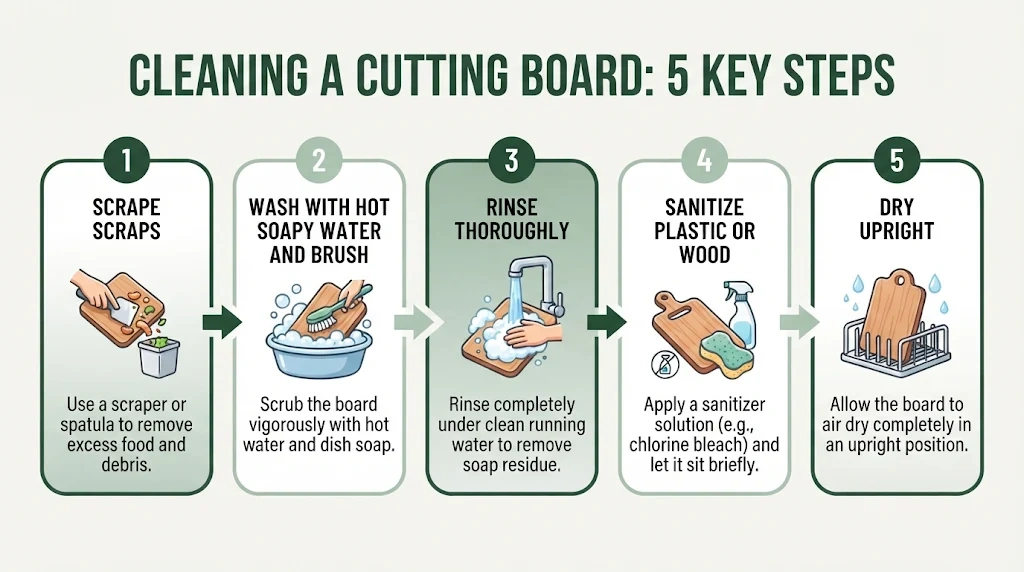
Wash your board in hot, soapy water right after each use, then sanitize it after raw meat and let it dry standing upright. Speed matters here, since dried juice is harder to lift than fresh juice.
FoodSafety.gov stresses the same habit: clean boards after every use, and keep raw meat, poultry, and seafood away from foods you eat raw. A clean board plus separate boards for meat and produce covers most home food-safety risks.
Follow these steps after raw meat, and use the first three after everyday produce:
- Scrape off scraps: Push food bits into the bin with a bench scraper or the back of your knife.
- Wash hot: Scrub both sides with hot water, dish soap, and a stiff brush for at least 20 seconds.
- Rinse well: Rinse under running water until no soap or food film remains.
- Sanitize plastic: Run it through the dishwasher, or wipe it with a diluted sanitizing solution and rinse again.
- Sanitize wood: Wipe it with white vinegar or a diluted sanitizing solution, then rinse and dry it by hand.
- Dry upright: Stand the board on its edge so air reaches both faces before you store it.
Dishwasher heat is plastic’s biggest edge over wood. Check which cutting boards are dishwasher safe before you load yours, since wood, bamboo, and some composites warp or crack in the heat.
Skip the soak for wood boards. Long soaking swells the grain, loosens glue joints, and invites cracks that later trap bacteria.
For the full routine, read my guide on how to use a cutting board safely, which covers knife grip, board placement, and storage alongside cleaning. The CDC also lists clean cutting boards among its core steps for preventing foodborne illness at home.
When Should You Replace a Cutting Board?
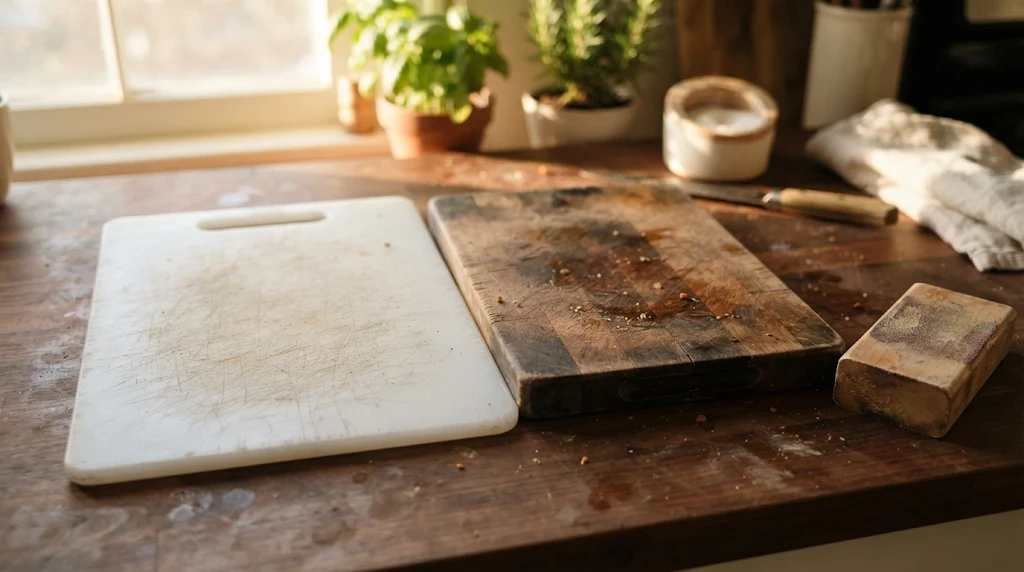
Replace a plastic board once grooves turn dark, feel rough, or hold smells after washing. Replace a wood board once it cracks, warps, or shows cuts too deep to sand out.
Most home cooks keep a plastic board for one to two years with daily use, and you can read more about how long cutting boards last across materials. A hardwood board lasts far longer with oiling and sanding, often five years or more.
Don’t wait for a board to look filthy. Hygiene fades before looks do, and a board that seems fine can still hide bacteria in its cuts.
- Plastic: Swap it when grooves stain, the surface feels fuzzy, or smells linger.
- Wood: Sand first, then replace only when cracks or warping defeat sanding.
- Glass or steel: Replace at the first chip, crack, or deep scratch.
Boards that earn a food-safety stamp from a testing body can help you shop with confidence, which raises the question of whether cutting boards need to be made in a certified facility. NSF certifies food-contact products against its safety standards, and its mark is worth a glance when you compare boards.
If you’re ready to pick one, here’s what I’d recommend:
🏆 Best Overall
OXO Good Grips Utility Cutting Board
★★★★★
HDPE plastic, dishwasher-safe, with non-slip edges and a deep juice groove. This is my daily board for raw meat, and it still looks new after months of dishwasher cycles.
💰 Best Budget
Gorilla Grip Reversible Cutting Board Set
★★★★☆
Three HDPE boards in different sizes, all dishwasher-safe with juice grooves. I keep one for meat, one for produce, and one spare, which makes color coding easy on a budget.
🌿 Best Wood Pick
John Boos Maple Wood Edge Grain Cutting Board
★★★★☆
Hard American maple, edge-grain build, gentle on knives and easy to re-oil. I use mine for bread and produce, and a monthly oiling keeps it smooth and sweet-smelling.
Frequently Asked Questions
Is wood or plastic more sanitary for raw meat?
Plastic is more sanitary for raw meat in most home kitchens, since you can run it through the dishwasher after each use and replace it cheaply once grooves appear. Wood can work too, but it needs hand washing and regular oiling to stay safe.
Can you sanitize a wooden cutting board?
Yes, you can sanitize wood with hot, soapy water followed by a wipe of white vinegar or a diluted sanitizing solution, then rinse it well and dry it by hand. Never soak wood or run it through the dishwasher, since water and heat crack it.
Are glass cutting boards the most hygienic?
Glass is fully nonporous, so it never absorbs juices or odors, but that edge fades in daily use since glass dulls knives fast and can chip or shatter if dropped. Most cooks get better results from smooth plastic or well-kept hardwood.
How often should you replace a plastic cutting board?
Replace a plastic board every one to two years with daily use, or sooner if grooves turn dark, feel rough, or hold smells after washing. Deep cuts trap bacteria where sponges can’t reach, and a fresh board removes that risk at once.
The Bottom Line
The most sanitary cutting board is a smooth HDPE plastic board you wash well and replace on time. Hardwood runs a close second when you oil it, sand it, and keep it out of the dishwasher.
Pick one board for meat and one for produce, wash both after every use, and retire them when grooves show. Do that, and your board stays one of the safest tools in your kitchen.

