Are End Grain Cutting Boards Better? Pros, Cons, and What to Buy
Quick Answer
Yes, end grain cutting boards can be better for frequent knife work because their upright wood fibers tend to show fewer knife marks and provide a forgiving cutting surface. However, they cost more and need careful drying, so compare how wooden boards affect knife edges before upgrading.
The key differences
- Knife contact: End grain lets the blade meet the ends of wood fibers.
- Visible scratches: Fine cuts often appear less obvious.
- Cost and weight: Many end grain boards use thicker construction.
- Daily care: Both styles need washing, drying, and conditioning.
- Best value: Edge grain is often more affordable.
If you have seen the checkerboard pattern on a butcher block, you have probably wondered whether it cuts better. I think the right answer depends on your knives, your prep habits, and how much maintenance you will tolerate.
Here is what actually changes with grain direction, where the trade-offs matter, and which board makes sense for your kitchen.
What Is an End Grain Cutting Board?
An end grain cutting board is a wooden board made with the cut ends of wood fibers facing upward. Makers usually glue short hardwood blocks together, creating a mosaic or checkerboard cutting surface.
Imagine a bundle of drinking straws standing vertically. A knife can slip slightly between the ends, rather than striking the long sides of the straws.
- End grain: Short blocks stand with the fiber ends facing the knife.
- Edge grain: Long wooden strips expose their narrow, lengthwise edges.
- Face grain: Wide plank faces create the cutting surface.
Grain orientation is only part of the story. Wood species, glue quality, board thickness, and finishing also influence performance.
Why Do Cooks Like End Grain Cutting Boards?
The main attractions are a comfortable cutting feel and a surface that can conceal fine chopping marks. Those qualities matter most when you regularly slice, dice, and mince.
1. The Cutting Surface Can Feel More Forgiving
When you bring a sharp knife down, the upright fibers can separate slightly around its edge. This is why end grain is commonly described as knife-friendly.
That does not mean an end grain board makes a dull knife sharp. Steel hardness, wood species, chopping force, and sharpening habits still matter.
2. Fine Knife Marks May Be Less Noticeable
The surface often hides small cuts better than a board with long fibers running across the cutting face. You can still damage it with heavy impacts or a sharp tip.
People sometimes call this effect self-healing. It describes fibers closing around shallow cuts, not wood repairing deep gouges like living tissue.
3. A Thick Block Can Stay Put During Prep
Many end grain boards are substantial enough to resist sliding while you chop. Stability is useful when you are working through a pile of onions or cabbage.
Weight is not the same as slip resistance, though. A stable, dry counter and a nonslip mat are still important.
4. The Pattern Can Double as Serving Presentation
Maple, walnut, and contrasting hardwood blocks can make an attractive kitchen centerpiece. I see this as a bonus, not the main reason to buy.
- Choose maple for a lighter, classic butcher-block appearance.
- Choose walnut for deeper brown tones.
- Compare species carefully because hardwoods vary in hardness and pore structure.
For a closer look at material trade-offs, read this guide to the best wood for a cutting board.
End Grain vs. Edge Grain Cutting Boards: Which Is Better?
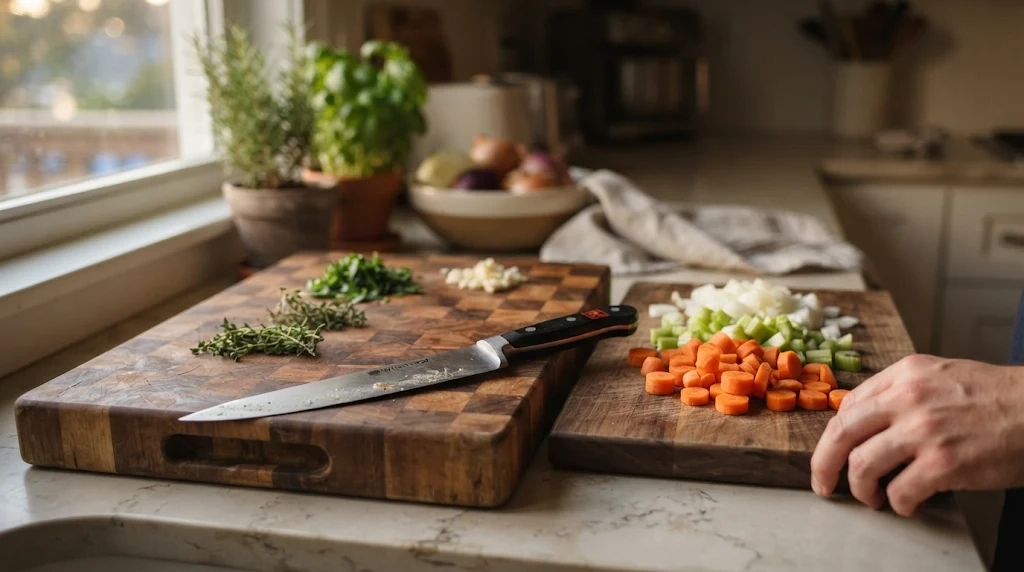
End grain usually wins on appearance of knife wear and premium cutting feel. Edge grain often wins on affordability, lower weight, and easy everyday handling.
Neither construction guarantees a longer-lasting board. A poorly glued end grain block can fail sooner than a well-made edge grain panel.
| Feature | End Grain | Edge Grain |
|---|---|---|
| Wood orientation | Fiber ends face upward | Long fiber edges face upward |
| Knife contact | Often more forgiving | Still knife-friendly |
| Visible cut marks | Often less noticeable | Often more visible |
| Typical construction | Numerous glued blocks | Fewer long glued strips |
| Price tendency | Usually higher | Usually lower |
| Best fit | Frequent food prep | Everyday value |
For example, picture preparing vegetables for a family dinner every night. An end grain block may feel worth its space if it stays on the counter.
If you lift your board from a cupboard after every meal, a lighter edge grain board may be the better tool. Convenience affects how often you use it.
Are End Grain Cutting Boards Better for Your Knives?
They can be, but the improvement is not a universal, measured guarantee. Wood hardness, cutting technique, and the blade itself can outweigh grain orientation.
End grain fibers tend to yield around the blade, which helps explain their reputation. America’s Test Kitchen’s cutting board review also highlights how construction affects cutting behavior.
- Use a suitable hardwood: Maple and walnut are familiar choices.
- Avoid glass and stone: They are less forgiving on knife edges.
- Use controlled chopping: Forceful blows can cause damage.
- Maintain the edge: Regular sharpening is still necessary.
My practical rule is simple: buy a sound wooden board before spending extra for a complicated grain pattern. Construction quality comes first.
Do End Grain Boards Last Longer or Crack More Easily?
A well-made end grain board can last for years, but it is not immune to damage. Its many glue joints and exposed fiber ends demand sensible moisture control.
Water moves through exposed end grain readily. Rapid wetting and drying can stress the joined blocks, sometimes causing cupping or splitting.
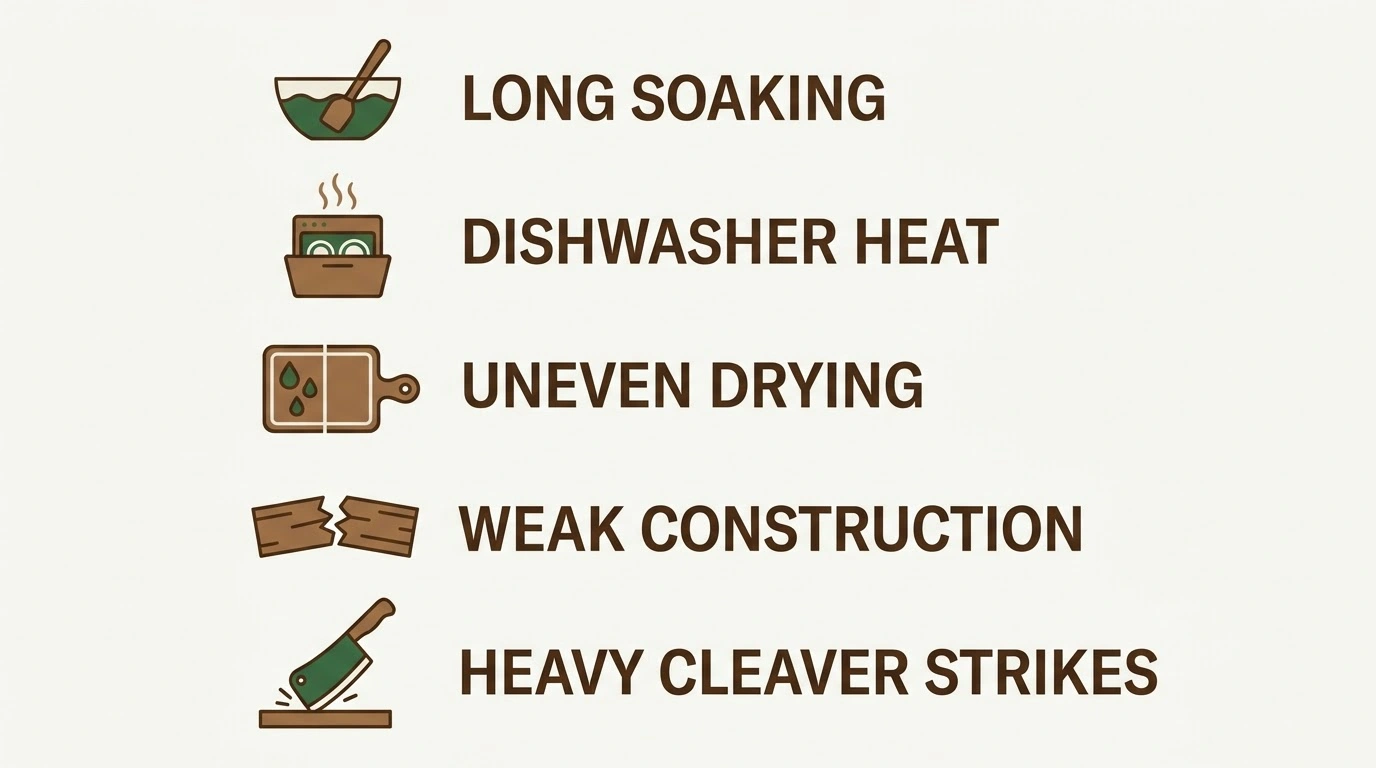
What Causes Warping and Separation?
- Long soaking: Water exposure can swell wood unevenly.
- Dishwasher heat: Heat and repeated wetting can weaken a board.
- Uneven drying: One damp face may move differently.
- Weak construction: Poor glue joints can create gaps.
- Heavy cleaver strikes: Sharp impacts can split wood.
End grain may hide shallow scratches better, yet an edge grain board can be structurally resilient. The correct choice depends on how you work.
See the practical steps for preventing cutting board warping if your sink or drying rack creates problems.
Are End Grain Cutting Boards More Hygienic?
Not automatically. An end grain pattern does not replace washing, drying, or separating raw foods from ready-to-eat ingredients.
The USDA’s wooden-versus-plastic cutting board guidance emphasizes cleaning and maintaining either material.
Can You Cut Raw Meat on End Grain?
Yes, if the board is food-safe, intact, and properly cleaned after use. A separate board for raw meat makes cross-contamination easier to avoid.
Follow the USDA’s advice on preventing cross-contamination, especially before switching from raw poultry to vegetables.
- Scrape food scraps into the trash.
- Wash the board with hot, soapy water.
- Rinse and dry both faces promptly.
- Store upright with airflow until fully dry.
- Sanitize when appropriate using food-safe methods.
For sanitizing directions, consult the USDA’s surface-sanitizing instructions.
What Are the Disadvantages of End Grain Cutting Boards?
The disadvantages are not imaginary. Extra expense and more demanding handling can outweigh the pleasant cutting feel.
- Higher purchase price: Many blocks require extra labor.
- More weight: Thick boards can be awkward to wash.
- Moisture sensitivity: Exposed fibers absorb water readily.
- Maintenance: Drying and conditioning matter.
- Splitting risk: Poor workmanship can damage glue joints.
- Storage space: Large butcher blocks need room.
I would not spend more on end grain for a board that sits unused because it is too heavy. A tool should fit your routine.
How Do You Choose a Good End Grain Cutting Board?
Look for safe materials, solid construction, enough working area, and a size you can comfortably clean. Fancy patterns cannot compensate for a poorly finished board.
Check These Details Before Buying
- Wood choice: Prefer a suitable hardwood.
- Glue joints: Seams should be smooth and closed.
- Flatness: The board should rest without rocking.
- Usable space: About 16 by 12 inches is a useful starting point.
- Thickness: Thick blocks provide stability but add weight.
- Edges and grips: Finger holds can make lifting easier.
- Care instructions: Check the manufacturer’s recommendations.
If you want to understand construction before shopping, explore how end grain boards are made.
How Should You Maintain an End Grain Board?
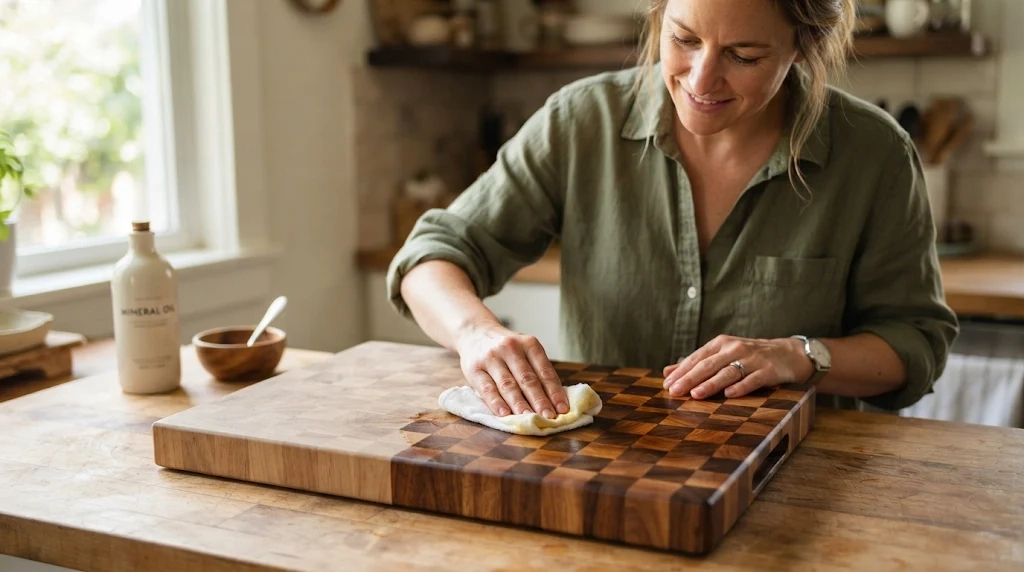
Wash it soon after use, keep it out of the dishwasher, and dry every surface. Apply a suitable food-grade board oil when the wood starts looking dry.
Conditioning helps slow moisture uptake, but it does not make wood waterproof. This guide to oiling a wooden cutting board explains the routine in detail.
A Simple Maintenance Schedule
- After each use: Wash, rinse, and dry.
- When dry-looking: Apply food-grade mineral oil.
- When rough spots develop: Inspect and smooth them if appropriate.
- When seams separate: Stop using the board for food.
- When cracks or mold persist: Replace the board.
The manufacturer’s own instructions always take priority. John Boos’ care guidance is a useful example.
Three End Grain Cutting Boards Worth Considering
These three models serve different needs. Ratings below represent editorial suitability estimates based on published features, not customer ratings or hands-on testing.
Disclosure: We may earn a commission from qualifying purchases through the affiliate links below.
🏆 Best Classic Maple
John Boos R-Series Maple End Grain Board
★★★★½ — 4.5/5 Editorial Fit
A reversible maple design offered in a 20-by-15-inch size with 1.5-inch thickness. I would shortlist it for someone who wants a generous traditional prep surface.
✨ Best Walnut Design
Sonder LA Alfred End Grain Walnut Board
★★★★½ — 4.5/5 Editorial Fit
This 17-by-13-inch American black walnut board has a rich finish and prep-friendly features. I would consider it when appearance matters as much as cutting space.
💰 Smaller-Format Option
Ironwood Gourmet Carolina Acacia Chopping Board
★★★★☆ — 4/5 Editorial Fit
A 14-inch end grain acacia board with a juice channel. I would compare it for smaller counters while checking its shape suits everyday chopping.
Frequently Asked Questions
Are end grain cutting boards worth the money?
They can be worth the extra money if you chop often, enjoy the cutting feel, and have space for a heavy board. If you cook occasionally or prioritize low cost, a well-built edge grain hardwood board is usually better value.
Maintenance is required either way.
Is end grain better than bamboo?
End grain hardwood often offers a more forgiving cutting feel than many common bamboo boards, but quality varies. Bamboo is a grass-based material often assembled with adhesives, and its density differs by product.
Compare actual construction and maintenance requirements rather than relying on the label alone.
Do end grain boards need more oil?
They may absorb conditioner quickly because the fiber ends are exposed. That does not justify a rigid weekly schedule for every board.
Apply food-grade mineral oil when the surface looks dry, then follow the manufacturer’s instructions.
Can you put an end grain cutting board in the dishwasher?
No. Dishwashers expose wooden boards to prolonged moisture, detergent, and heat that can encourage warping and glue-joint failure.
Hand-wash promptly, wipe all sides dry, and let the board air-dry fully. This advice applies to most wooden edge grain boards too.
Are end grain boards safe for raw chicken?
A sound, food-safe wooden board can be used for raw chicken when properly cleaned and sanitized afterward. Prevent cross-contamination by keeping raw poultry apart from ready-to-eat ingredients.
Replace a board with splits or uncleanable damage, regardless of its grain direction.
Final Verdict: Should You Buy End Grain?
Choose end grain if you prep frequently, want a premium wooden cutting surface, and do not mind careful upkeep. It is an appealing upgrade, not a requirement for good knife skills.
Choose edge grain if you prefer a lighter, lower-cost board that still treats knives well. In my view, the best board is the one you can safely clean, dry, and use every day.