How to Prevent a Cutting Board From Warping: A Complete Care Guide
Quick Answer
To prevent a cutting board from warping, keep moisture exposure brief and even, dry both faces promptly, and let air circulate around the board. Condition unfinished wooden boards with food-grade mineral oil on all sides, following the maker’s directions and cutting board care advice from John Boos.
Six habits that matter most
- Wash by hand: Clean wood and bamboo with mild soap and water, without prolonged soaking.
- Dry both sides: Towel-dry the faces, edges, and underside immediately.
- Stand it upright: Let remaining moisture evaporate with airflow on both faces.
- Oil evenly: Condition every unfinished wooden surface, not only the chopping face.
- Avoid harsh heat: Keep boards away from dishwashers, radiators, and hot pans.
- Store completely dry: Choose a clean, ventilated place with stable conditions.
A cutting board that rocks on the counter makes even simple chopping awkward. Learning how to prevent a cutting board from warping protects the board and makes meal preparation more comfortable.
My approach is to prevent uneven drying rather than look for a dramatic repair later. Below, I’ll explain why boards bend, how to clean and oil them, and when a warped board should be replaced.
In This Guide
Why Do Cutting Boards Warp?
Warping happens when one area of a board expands or shrinks more than another. Wood gains and loses moisture as its surroundings change, so uneven exposure can make a previously flat board cup, bow, or twist.
What does warping actually mean?
A warped cutting board no longer rests flat on a level surface. You might see a shallow curve across its width, a raised corner, or a gap underneath the middle.
Cupping describes a curve across the board’s width, while bowing describes a lengthwise bend. Twisting happens when corners rise or fall unevenly.
What causes the uneven movement?
- Water trapped underneath: A wet underside dries more slowly against a countertop.
- One-sided washing: One face absorbs water while the other remains relatively dry.
- Dishwasher exposure: Long wet cycles and heat can stress wood and glued joints.
- Uneven conditioning: Oiling only the top gives the faces different moisture resistance.
- Heat and humidity swings: A sunny window or damp sink area exposes wood to changing conditions.
- Construction differences: Grain direction, thickness, drying quality, and glued pieces influence movement.
Think of an unfinished wooden board as a material that continues reacting to its kitchen. Mineral oil slows moisture exchange, but it cannot make wood completely waterproof.
A quality board can still move slightly as seasons change. The goal is to reduce sharp differences between its faces, not eliminate every natural change.
How Should You Wash and Dry a Cutting Board?
 Save
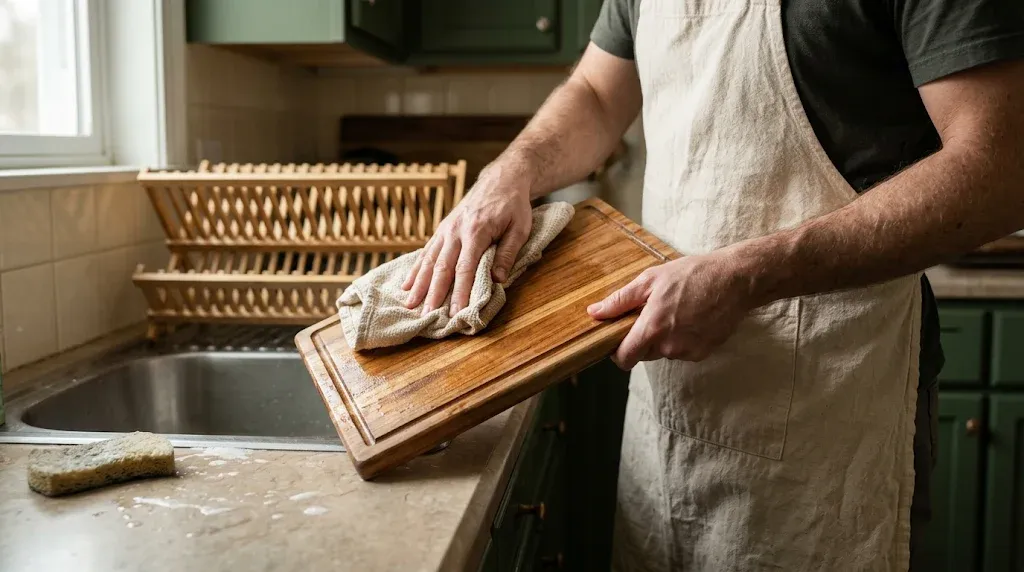
Hand-wash wooden boards promptly, then dry them before storing. Proper cleaning protects food safety, while quick drying reduces the moisture imbalance that contributes to bending.
A simple cleaning routine after every use
- Remove scraps. Scrape off food pieces with a suitable scraper or spatula.
- Wash with mild soap. Use warm running water and a sponge or soft brush on both faces and edges.
- Rinse promptly. Remove soap without leaving the board submerged in a sink.
- Towel-dry thoroughly. Wipe the chopping face, underside, handles, grooves, and edges.
- Air-dry upright. Use a stable rack or safe vertical position until the board is completely dry.
Don’t skip washing the underside just because food touched only the top. A quick, balanced cleaning is better than leaving one face saturated for an extended period.
Should a wooden board go in the dishwasher?
For most household wood and bamboo boards, hand-washing is the safer choice for preserving shape and glued joints. Some solid hardwood products may allow dishwashing, but laminated boards can split.
The University of Maine Cooperative Extension’s cutting board guidance recommends checking the manufacturer’s instructions. Never assume that one board’s dishwasher rating applies to every wooden board.
What about sanitizing after raw meat?
Preventing warping must never come at the expense of food safety. Use separate boards for raw meat and ready-to-eat foods whenever practical.
The USDA’s cross-contamination guidance recommends hot, soapy washing between foods. It also advises replacing boards with grooves that cannot be cleaned properly.
When sanitizing is needed, follow the current instructions for a sanitizer suitable for food-contact surfaces. For example, the USDA describes a dilute solution of one tablespoon of unscented liquid chlorine bleach per gallon of water, followed by rinsing and drying.
Never combine bleach with vinegar or other cleaners. Keep sanitizer contact brief and follow the product label rather than soaking a wooden board.
Section takeaway: Clean every used surface, but avoid prolonged wetness. Thorough towel-drying and open-air drying are just as important as the wash itself.
How Do You Oil a Cutting Board to Prevent Warping?
 Save
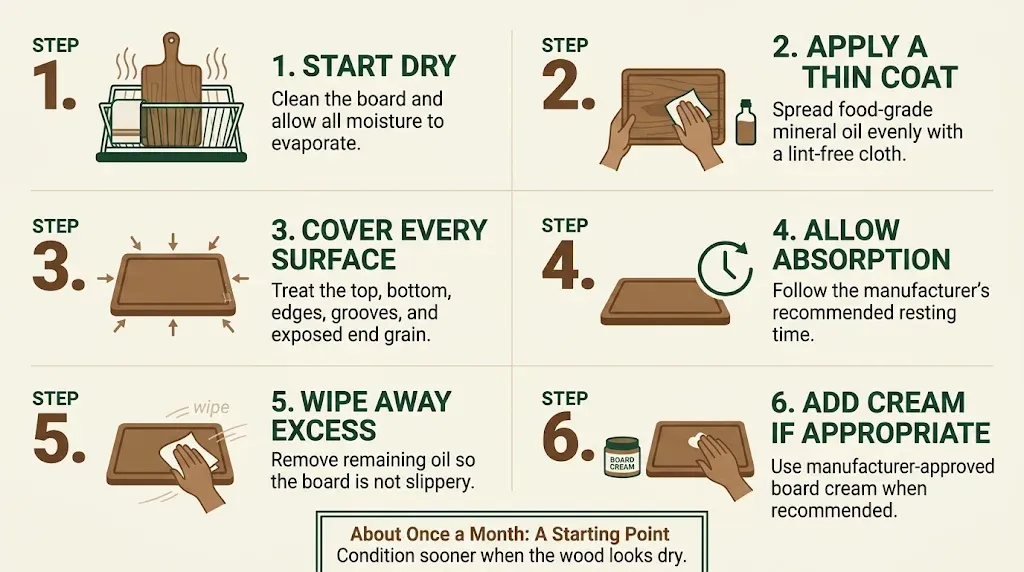
Use food-grade mineral oil on a clean, fully dry, unfinished wooden board. Apply it to both faces and all edges so the surfaces resist moisture more consistently.
Which oil is best?
Food-grade mineral oil sold for cutting boards is a practical default because it is stable and generally odorless. A manufacturer-approved board cream containing mineral oil and beeswax can add surface protection.
Do not substitute ordinary olive, sunflower, or other cooking oils. They can oxidize and develop unwanted odors over time.
Some boards have specialized cured finishes and need different care. Follow the specific manufacturer’s instructions before adding any oil or wax.
How to apply the oil evenly
- Start dry. Wash the board if necessary and let all moisture evaporate.
- Apply a thin, even coat. Use a clean lint-free cloth and food-grade mineral oil.
- Cover every surface. Treat the top, bottom, sides, grooves, and exposed end grain.
- Allow absorption. Let the oil rest for the period recommended by the board’s maker; some recommend overnight.
- Wipe away excess. The board should feel conditioned, not slippery or wet.
- Add cream if appropriate. Follow with a food-safe board cream when recommended for that finish.
How often should you oil a board?
As of 2026, manufacturer guidance still makes about once a month a useful starting point for an oil-finished wooden board. Boards washed frequently or kept in dry conditions may need more attention.
Look for a pale, dry-looking surface or water soaking in unusually quickly. Those signals matter more than a rigid calendar.
Oil is not a repair glue, a sanitizer, or a guarantee against distortion. It supports a good cleaning and storage routine rather than replacing one.
What Is the Best Way to Store a Cutting Board?
Store a completely dry board where both surfaces stay ventilated and temperatures remain fairly steady. For drying, an upright rack is especially useful because it exposes both sides to air.
Dry upright, then store securely
Right after washing, avoid leaving a damp board flat against a counter. Moisture can linger underneath while the exposed upper face dries.
A stable rack with space around the board makes this easier. Once fully dry, a flat shelf or vertical slot can work, provided the board is supported safely.
Keep the board away from these spots
- Beside the sink: Standing water and repeated splashes keep one area damp.
- Next to an oven: Strong heat can dry exposed surfaces unevenly.
- Against a sunny window: Direct sun can heat one face more than the other.
- On a wet dish towel: Trapped moisture slows underside drying.
- Under a hot pan: A cutting board isn’t a substitute for a heat-rated trivet.
Does kitchen humidity matter?
Yes. Wood responds to ambient humidity even when you clean it correctly.
Air conditioning, seasonal heating, and rainy weather can change how quickly a board loses moisture. A relatively stable storage spot is preferable to one that alternates between damp and very hot.
For a reversible board, alternate the usable cutting faces when appropriate. This promotes more even wear and helps you notice dryness or damage on both sides.
Which Cutting Boards Resist Warping Best?
A well-made, properly maintained board matters more than one perfect wood species. Construction, thickness, finish, and cleaning habits all influence how a board behaves.
Compare common cutting board materials
| Board type | Warping considerations | Best care approach |
|---|---|---|
| Edge-grain hardwood | Long wood strips can move with changing moisture; glued joints need protection. | Hand-wash, dry upright, and oil every side. |
| End-grain hardwood | Many glued blocks and exposed end grain require careful moisture control. | Avoid soaking; condition and dry thoroughly. |
| Bamboo composite | Bonded strips can warp or separate when exposed to excessive water. | Hand-wash and follow its approved finish care. |
| Plastic | Thin plastic may deform under high heat; it needs no oil. | Use the dishwasher only if rated safe. |
Does thickness help?
A substantial board may resist short-term bending better than a thin, flexible board, but thickness alone doesn’t guarantee stability. Poor drying or unbalanced construction can still cause a thick board to cup.
When shopping, inspect the finish, flatness, and any gaps along glued seams. Check whether the manufacturer gives clear care instructions and supports the product if it arrives warped.
What about maple, walnut, and teak?
All three appear in kitchen cutting boards, but species names alone don’t predict whether an individual board will stay flat. Grain orientation, construction quality, and moisture exposure also matter.
For everyday chopping, prioritize a well-finished board that’s comfortable to handle and easy to dry. For raw meat prep, a separate dishwasher-safe plastic board can simplify cleaning.
Can You Fix a Warped Cutting Board?
 Save
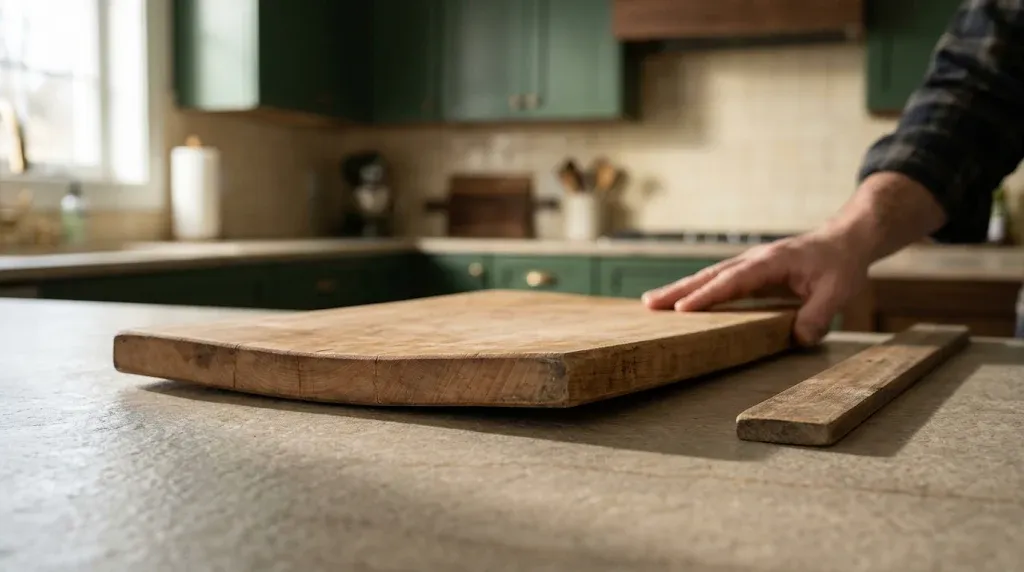
A mildly cupped wooden board may improve as its moisture levels equalize, but severe damage is not reliably repairable at home. Check its condition before trying to make it flat again.
Start with a low-risk assessment
- Clean and dry it. Remove food residue and let the board air-dry with both faces exposed.
- Check the shape. Place it on a clean, level surface and see whether it rocks.
- Inspect every seam. Look for cracks, splinters, loose joints, or deeply contaminated grooves.
- Follow maker-specific advice. Some manufacturers offer instructions for mild cupping; use those rather than a universal home remedy.
- Recheck before chopping. Use the board only when it rests securely and remains easy to clean.
Don’t put the board in an oven or apply boiling water to force it flat. Rapid temperature or moisture changes can make the original problem worse.
A heavy weight alone is not a dependable cure, either. Pressure may conceal the bend temporarily without resolving uneven moisture within the wood.
When should you replace it?
Replace a board that wobbles dangerously, has spreading cracks, or shows deep grooves you cannot clean. Loose glued joints and splintering are also good reasons to stop using it for food preparation.
The Academy of Nutrition and Dietetics’ cutting board safety guidance emphasizes replacing excessively worn boards. A flat-looking board is not automatically safe if its surface traps food residue.
Minor surface scratches on a sound, unfinished wooden board may be sanded and refinished according to the maker’s directions. Sanding should not be used to hide cracked glue lines or serious structural distortion.
Frequently Asked Questions
Why did my cutting board warp after washing it?
One face may have absorbed more water or dried faster than the other, creating an uneven moisture balance. Wash both sides, towel-dry immediately, air-dry upright, and check the maker’s guidance if the bend persists.
Can I prevent warping by oiling just the top?
No: oiling only the cutting surface can leave the underside with different moisture resistance. On unfinished wood, treat the top, bottom, and edges with food-grade mineral oil, unless its manufacturer specifies another finish routine.
Should cutting boards be stored upright or flat?
Upright storage helps a freshly washed board dry because air reaches both faces. Once completely dry, a supported vertical slot or clean, flat shelf can work, provided the board stays stable and away from damp areas.
Can bamboo cutting boards warp?
Yes: bamboo boards often contain bonded strips that can warp or separate after extended exposure to water or heat. Hand-wash them, dry them promptly, and use only the conditioning products recommended for that particular board.
Does mineral oil make a cutting board waterproof?
No: food-grade mineral oil reduces moisture absorption, but it doesn’t create a permanent waterproof seal. Water may still enter through exposed grain, worn areas, and joints, so continue cleaning promptly and drying the board between uses.
Can I use olive oil to stop a board from warping?
Olive oil isn’t recommended as a general-purpose board conditioner because it can oxidize and develop unpleasant odors. Choose food-grade mineral oil or the product recommended by the board’s maker, and apply it only after the wood dries.
Is a warped cutting board still safe to use?
A very slight curve may be manageable when the board stays steady and can be cleaned fully. Stop using one that rocks during knife work or has open cracks, splinters, or deep grooves that trap food residue.
Final takeaway: The most effective way to prevent cutting board warping is to control moisture on both sides, every time. Wash briefly, dry thoroughly, condition unfinished wood evenly, and store it away from prolonged heat and dampness.
Try this routine after your next meal. If your current board is already unstable or cracked, replacing it is the safer choice.

