What Is the Best Wood for a Cutting Board? 2026 Guide
Quick Answer
Hard maple is the best wood for a cutting board for most home cooks. Its fine, close-grained structure and 1,450-pound Janka hardness provide excellent resistance to everyday knife marks without creating an excessively hard cutting surface. Black walnut, cherry, and beech are also excellent choices. The 2026 FDA Food Code specifically recognizes hard maple or equivalently hard, close-grained wood for cutting boards in food establishments.
Best Woods by Kitchen Need
- Best overall: Hard maple offers an excellent balance of durability, cleanliness, and knife-friendly performance.
- Best premium appearance: Black walnut provides a rich, dark surface and a slightly softer cutting feel.
- Best warm-toned option: Cherry offers attractive reddish-brown color and a comfortable cutting surface.
- Best value alternative: Beech delivers reliable hardness and fine grain, often at a competitive price.
- Best for moisture resistance: Teak has natural oils that help resist moisture, although it brings trade-offs for knife maintenance.
My Practical Recommendation
- For everyday cooking: Choose a hard maple edge-grain board at least 1 inch thick.
- For frequent knife work: Consider a well-made end-grain maple or walnut board.
- For food safety: Clean and dry the board thoroughly after use, regardless of wood species.
Choosing the right wood for a cutting board makes a noticeable difference in everyday cooking. Some woods resist knife marks beautifully, while others feel better under a sharp blade.
I prefer judging cutting board wood by grain structure, hardness, construction, and maintenance rather than appearance alone. This guide explains which species deserve a place in your kitchen and which ones are better avoided.
In This Guide
What Makes Wood Good for a Cutting Board?
The best cutting board wood combines moderate-to-high hardness, fine grain, safe surface materials, and reasonable moisture resistance. A good board must tolerate thousands of knife strokes while remaining easy to clean.
Not every hardwood meets these requirements. Some species are too porous, while extremely hard woods can be less forgiving on knife edges.
1. Appropriate Wood Hardness
Wood hardness helps predict how well a cutting board resists dents and impressions. The commonly used Janka test measures the force required to press a steel ball halfway into wood.
A useful starting range for everyday cutting boards is roughly 900 to 1,500 pounds-force (lbf). This is a practical selection guideline, not an official safety threshold.
- Below approximately 900 lbf: Many woods dent or develop knife marks more readily.
- Approximately 900–1,500 lbf: Many popular cutting board species balance durability and cutting comfort.
- Above approximately 1,500 lbf: Some woods may feel less forgiving, depending on grain and construction.
Hardness alone cannot predict knife wear. Blade steel, sharpening angle, cutting pressure, surface texture, and grain direction also matter.
2. Fine, Close-Grained Structure
A close-grained wood has relatively small, fine pores and a smooth texture. This matters because food-contact surfaces must be practical to clean after repeated use.
Maple, cherry, beech, and walnut are commonly selected for their relatively fine-grained surfaces. Open-pored woods can be more challenging to keep free of food residue.
3. Food-Contact Suitability
Choose a known, suitable wood species without unknown chemical treatments. The finish, adhesive, and construction must also be appropriate for contact with food.
Natural wood does not automatically guarantee food safety. Even an excellent maple board becomes a poor choice when its surface develops persistent cracks or contamination.
4. Moisture and Dimensional Stability
Wood naturally absorbs and releases moisture as surrounding conditions change. Repeated wetting and drying can cause swelling, warping, or splitting.
Stable construction and sensible drying habits matter just as much as the species. A well-made board can outperform a poorly constructed board made from more expensive wood.
Section Takeaway: Choose a fine-grained hardwood with balanced hardness, sound construction, and a food-contact-safe finish. These qualities matter more than appearance alone.
Which Types of Wood Are Best for Cutting Boards?
Hard maple, walnut, cherry, and beech are among the strongest everyday choices. Teak and some acacia species can also work, but they require more careful comparison.
Hard Maple: Best Overall
Hard maple, also called sugar maple or rock maple, is my first choice for a general-purpose kitchen board. Its dense, fine texture provides a practical cutting surface for daily preparation.
Its Janka hardness is approximately 1,450 lbf, according to The Wood Database’s hard maple reference.
The light cream color also makes food residue and staining easier to notice. However, discoloration can be more visible than on dark boards.
- Strengths: Strong wear resistance, close grain, widespread availability, and versatile appearance.
- Drawbacks: Visible stains and possible movement when exposed to changing humidity.
- Best use: Everyday chopping, slicing, vegetable preparation, and general kitchen work.
Choose hard maple rather than assuming every product labeled simply “maple” uses the same species. Soft maple varieties can have noticeably lower hardness.
Black Walnut: Best Premium Alternative
Black walnut is an excellent option when appearance and cutting comfort are high priorities. Its chocolate-brown color creates a distinctive look without requiring an exotic wood.
With a Janka hardness of approximately 1,010 lbf, American black walnut is softer than hard maple.
This gives walnut a somewhat more forgiving feel under a knife. It also means the surface may show dents sooner during heavy chopping.
- Strengths: Beautiful dark grain, comfortable cutting feel, and attractive presentation.
- Drawbacks: Usually a premium-priced material and less resistant to dents than hard maple.
- Best use: Frequent knife work, premium kitchen boards, and serving-friendly designs.
Walnut’s darker surface can conceal some discoloration, but this does not make it cleaner. Proper washing and inspection remain essential.
Cherry: Best Warm-Toned Wood
Cherry is another dependable choice for cooks who appreciate a slightly softer surface. Its warm reddish-brown appearance develops more character as the wood ages.
American black cherry has a Janka hardness of approximately 950 lbf, as documented in the black cherry wood reference.
Its relatively fine texture makes it suitable for cutting board construction. However, frequent forceful chopping may leave visible marks sooner than on maple.
- Strengths: Fine texture, appealing color, and comfortable everyday cutting feel.
- Drawbacks: Lower resistance to dents and noticeable color changes with age.
- Best use: Slicing, vegetable preparation, lighter chopping, and attractive everyday boards.
Beech: Best Practical Value
Beech offers a useful balance between surface hardness and fine grain. Its Janka hardness is commonly listed around 1,300 lbf for American beech.
It is often worth considering when a quality maple board exceeds your budget. Availability and pricing vary by region, however.
- Strengths: Good resistance to wear, fine texture, and straightforward appearance.
- Drawbacks: Requires careful moisture management to reduce movement and warping.
- Best use: Budget-conscious everyday cooking and traditional butcher-block-style boards.
Teak: Best for Natural Moisture Resistance
Teak contains natural oils and is valued for its moisture resistance. This can be appealing in kitchens where cutting boards are frequently exposed to water.
However, teak can contain mineral deposits, including silica, that may contribute to knife-edge wear. It is not automatically the best choice for expensive kitchen knives.
- Strengths: Moisture resistance, attractive golden-brown color, and durability.
- Drawbacks: Potential knife-wear trade-offs, variable sourcing, and potentially higher cost.
- Best use: Cooks prioritizing moisture resistance over maximum knife friendliness.
Acacia: A Budget-Friendly Option With Variations
Acacia cutting boards have become popular because of their decorative grain and broad price range. However, “acacia” covers multiple species with different hardness and working properties.
Some acacia boards perform well, while others can feel quite hard under a knife. Construction quality, surface finishing, and the specific species deserve attention.
- Strengths: Distinctive grain patterns and potentially competitive pricing.
- Drawbacks: Inconsistent species identification, variable hardness, and differing construction quality.
- Best use: Everyday boards when the manufacturer clearly identifies the materials and food-safe finish.
Section Takeaway: Hard maple remains the safest general recommendation for most shoppers. Walnut and cherry prioritize a more forgiving cutting surface, while beech offers another practical balance.
How Do the Best Cutting Board Woods Compare?
 Save
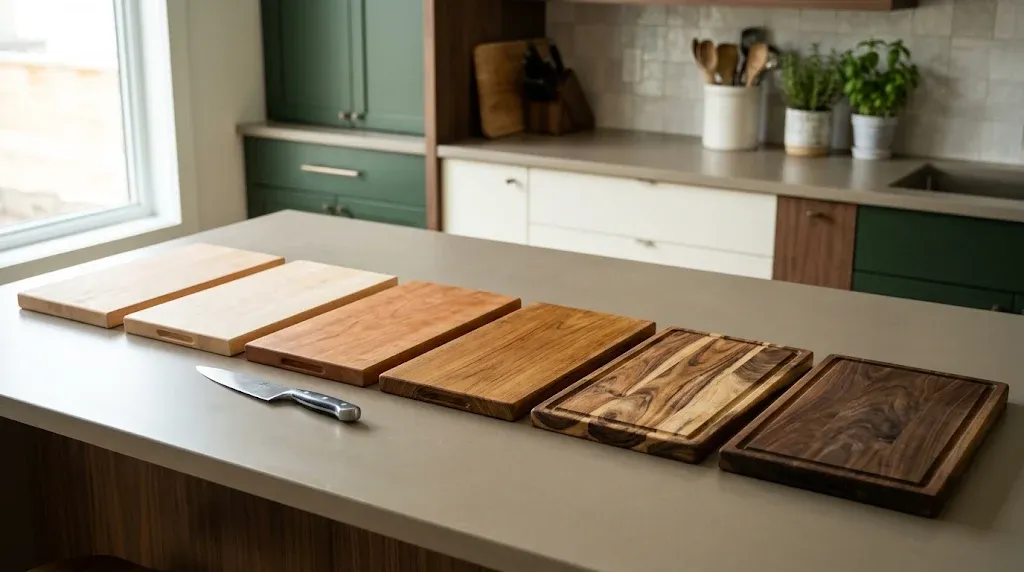
Comparing hardness, grain, and everyday trade-offs makes choosing easier. The table below focuses on common cutting board materials rather than assuming one species fits every kitchen.
| Wood | Janka Hardness | Main Advantage | Main Trade-Off | Verdict |
|---|---|---|---|---|
| Hard maple | 1,450 lbf | Fine grain and durability | Shows stains | Best overall |
| Black walnut | 1,010 lbf | Appearance and cutting feel | Dents more readily | Premium alternative |
| Black cherry | 950 lbf | Warm color and fine texture | Easier to mark | Best for lighter cutting |
| Beech | About 1,300 lbf | Hardness and fine texture | Moisture movement | Strong value choice |
| Teak | Varies by species and source | Natural moisture resistance | Silica-related knife wear | Conditional choice |
| Acacia | Species-dependent | Decorative appearance | Variable hardness and quality | Compare carefully |
Note: Janka figures are representative side-grain hardness values, not direct measurements of cutting board performance. Actual results depend on the species, moisture content, construction, and blade.
Is Maple Better Than Walnut?
Maple is generally better when scratch resistance and practicality matter most. Walnut is appealing when you prefer darker wood and a somewhat softer cutting surface.
For a busy kitchen handling daily vegetable preparation, I would usually choose maple. For a premium board used with carefully maintained knives, walnut is an attractive alternative.
Is Maple Better Than Cherry?
Maple handles repeated impacts better because it is substantially harder than cherry. Cherry offers a softer feel and warm appearance but can accumulate knife marks more quickly.
Neither choice replaces proper maintenance. Even hard maple can become rough or damaged if abused.
Is Beech Better Than Maple?
Beech comes close to maple in practical usefulness, especially when price matters. Maple still has the stronger all-around reputation for kitchen cutting surfaces.
Choose the better-built board when comparing the two. A smooth, properly joined beech board can be preferable to poorly finished maple.
Section Takeaway: Maple wins for all-around practicality, walnut for premium appearance, cherry for a softer surface, and beech for value. Construction quality can outweigh relatively small differences in species.
Is End Grain or Edge Grain Better for a Cutting Board?
 Save
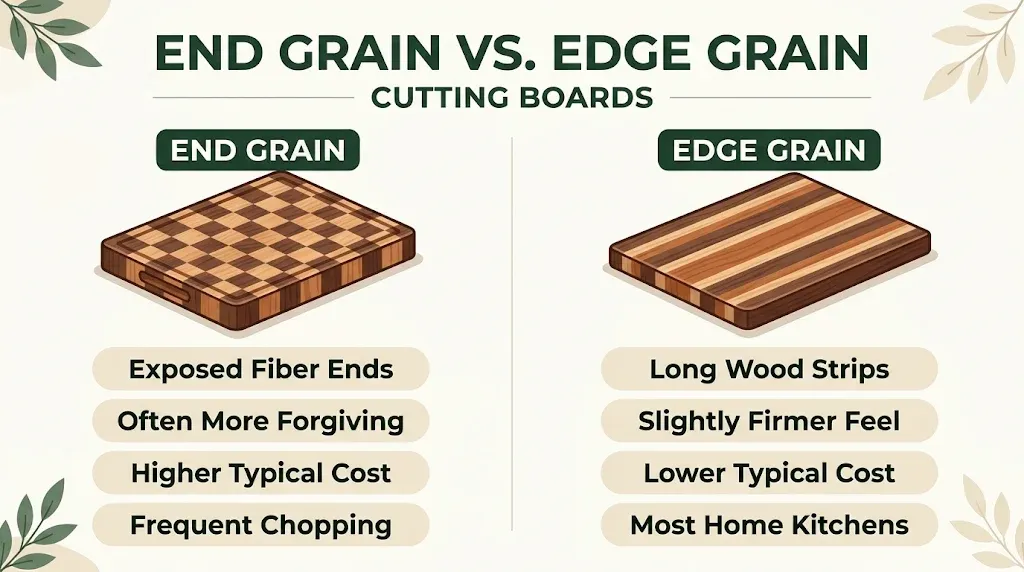
End-grain boards are often more forgiving on knives, while edge-grain boards are generally simpler and more affordable. Both designs can make excellent cutting surfaces when manufactured properly.
What Is an End-Grain Cutting Board?
An end-grain cutting board exposes the ends of wood fibers on its cutting surface. These fibers form the familiar checkerboard pattern seen on many butcher blocks.
When a knife meets the surface, its edge moves between exposed fiber ends to some degree. This can reduce the cutting resistance and visible surface damage associated with repeated chopping.
- Advantages: Comfortable chopping feel, attractive patterns, and potentially reduced visible knife marks.
- Disadvantages: Higher manufacturing cost, numerous glue joints, and greater maintenance demands in some designs.
- Recommended species: Hard maple and black walnut.
What Is an Edge-Grain Cutting Board?
An edge-grain board joins long strips of wood with their narrow sides facing upward. The grain typically runs along the board’s length.
This design offers an excellent combination of strength, practicality, and price. It is often my preferred recommendation for someone buying their first quality wooden board.
- Advantages: Usually less expensive, widely available, and straightforward to maintain.
- Disadvantages: Knife marks may become more visible over time.
- Recommended species: Hard maple, walnut, cherry, and beech.
End Grain vs. Edge Grain Comparison
| Feature | End Grain | Edge Grain |
|---|---|---|
| Typical price | Higher | Lower |
| Cutting feel | Often more forgiving | Slightly firmer |
| Visible knife marks | Often less noticeable | Often more noticeable |
| Construction | Multiple short fiber-end blocks | Long wood strips |
| Best for | Frequent chopping enthusiasts | Most everyday kitchens |
The smartest purchase is not necessarily the most expensive construction. A carefully made edge-grain maple board is enough for most household cutting tasks.
Which Woods Should You Avoid for Cutting Boards?
Avoid unidentified woods, unsuitable softwoods, heavily open-pored species, and wood containing unknown finishes or chemical treatments. A beautiful grain pattern does not guarantee a suitable food-preparation surface.
Softwoods Such as Pine and Cedar
Many softwoods dent easily under repeated knife pressure. Pine may also contain resin pockets, while aromatic cedar can impart noticeable odors.
These materials are generally less practical than proven close-grained hardwoods for an everyday board.
Open-Pored Woods Such as Red Oak
Red oak has prominent open pores that can make thorough cleaning more challenging. Its hardness does not compensate for this surface characteristic.
White oak has a different pore structure, but that does not automatically make every white oak board suitable. For everyday food preparation, maple remains a simpler recommendation.
Extremely Hard Exotic Woods
Some exotic hardwoods have exceptionally high Janka hardness ratings. That may sound impressive, but maximum hardness is not the goal for a cutting surface.
These woods can be less forgiving on knife edges. Certain species can also present sensitization concerns or uncertainty about suitability for food contact.
Reclaimed or Chemically Treated Wood
Never assume discarded furniture, construction lumber, or decorative reclaimed wood is safe for direct food preparation. Its previous treatments and contamination history may be unknown.
- Avoid pressure-treated lumber and wood with unidentified preservatives.
- Avoid painted, stained, or varnished surfaces not verified for cutting-board use.
- Avoid moldy, rotting, or spalted wood of uncertain condition.
- Reject boards with substantial cracks, loose joints, or splinters.
Decorative serving boards also deserve scrutiny. A finish appropriate for serving bread does not necessarily withstand repeated knife cuts.
What About Bamboo?
Bamboo is technically a grass rather than a wood species. Many bamboo boards use laminated strips joined with adhesives.
They can be practical when properly manufactured, but their cutting feel and knife impact vary. For predictable performance, I would choose hard maple before a bamboo board of uncertain quality.
Section Takeaway: Prioritize known, untreated, close-grained hardwoods over unusual appearance or impressive hardness numbers. Avoid materials with uncertain food-contact suitability.
How Do You Choose and Maintain a Wooden Cutting Board?
 Save
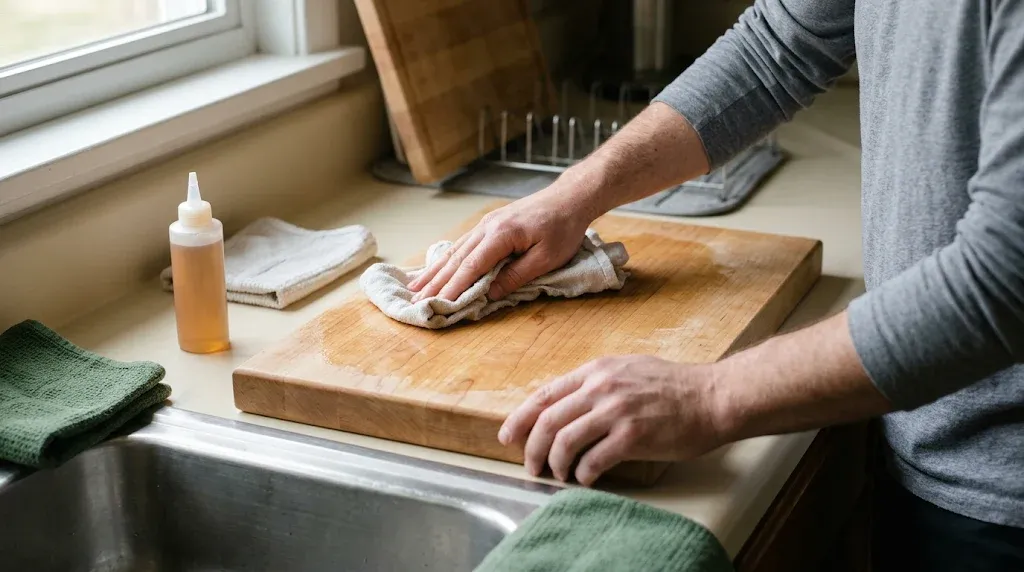
Choose a board large enough for your food preparation, thick enough to remain stable, and finished for direct food contact. Then maintain it with proper cleaning, drying, and occasional conditioning.
What Size and Thickness Should You Buy?
For many home kitchens, a board around 12 by 18 inches provides comfortable room for chopping. Smaller boards work well for quick tasks but may feel cramped during meal preparation.
Thickness affects stability and handling. These dimensions are practical shopping suggestions, not universal industry requirements.
- Small kitchens: Around 10 × 14 inches for compact preparation.
- Everyday cooking: Around 12 × 18 inches for versatile use.
- Large preparation tasks: Around 15 × 20 inches or larger when counter space allows.
- Edge-grain thickness: Approximately 1–1.5 inches is a useful starting point.
- End-grain thickness: Approximately 1.5–2 inches is common for substantial boards.
Heavier boards tend to remain more stable, but they are harder to lift and wash. Choose a weight you can handle safely at the sink.
What Finish Is Best for a Wooden Cutting Board?
Food-grade mineral oil is a common conditioning choice for wooden cutting boards. It helps limit moisture absorption without creating a rigid film that knife cuts can damage.
Some board conditioners combine mineral oil with beeswax. Always verify that the specific product is intended for food-contact wooden surfaces.
- Food-grade mineral oil: Commonly recommended for routine conditioning.
- Mineral oil and beeswax blends: Useful for additional surface conditioning.
- Unverified cooking oils: May become rancid and develop unpleasant odors.
- Decorative film finishes: Generally unsuitable for a surface repeatedly cut by knives unless specifically approved for that application.
How Should You Clean a Wooden Cutting Board?
Wash the board promptly with hot, soapy water after food preparation. Thorough cleaning matters more than claims that a particular wood naturally prevents bacterial contamination.
The University of Minnesota Extension’s home food-safety guidance emphasizes cleaning, preventing cross-contamination, and replacing badly damaged cutting boards.
- Remove food debris: Scrape away loose residue using an appropriate utensil.
- Wash thoroughly: Scrub both sides with warm or hot water and dish soap.
- Rinse: Remove soap and loosened food residue with clean water.
- Dry immediately: Wipe with a clean towel and allow complete air drying.
- Store correctly: Keep the board upright or in a position allowing good airflow.
Do not leave wooden boards submerged in water. For routine home care, avoid dishwashers unless the manufacturer expressly states that the specific board is dishwasher-safe.
Separate boards for raw meat and ready-to-eat produce help reduce cross-contamination. Alternatively, thoroughly clean and appropriately sanitize between those tasks.
Pro tip: Follow current USDA or local food-safety guidance when sanitizing a cutting board. Use only the correct food-contact sanitizer concentration and label instructions.
How Often Should You Oil a Cutting Board?
Oil the board whenever its surface begins looking unusually dry, pale, or rough. A monthly inspection is a useful habit for regularly used boards.
The actual frequency depends on washing, humidity, wood species, and manufacturer recommendations. Some boards need attention more often, while others need less.
- Start with a completely clean, dry board.
- Apply a small amount of food-grade mineral oil.
- Spread a thin, even coat over every exposed side.
- Allow the oil to absorb according to the product directions.
- Wipe away excess oil before returning the board to use.
When Should You Replace a Wooden Cutting Board?
Minor surface marks are normal and do not automatically mean a board needs replacement. Deep, difficult-to-clean grooves and structural damage are different matters.
Replace a board if cracks, separated joints, persistent mold, or severe scoring make it impossible to clean properly. A severely warped board that slips during cutting also presents a safety concern.
Some solid hardwood boards can be professionally resurfaced when damage is only superficial. However, replacement is preferable when hygiene or structural integrity remains uncertain.
Section Takeaway: Buy a sound, appropriately sized hardwood board and maintain it consistently. Cleaning, complete drying, and surface inspection are essential to long-term usability.
Frequently Asked Questions
What Is the Most Food-Safe Wood for a Cutting Board?
Hard maple is a strong choice because of its fine grain, durability, and established use in food-contact cutting surfaces. However, no wood species guarantees food safety on its own. Proper cleaning, sanitizing when appropriate, and replacing damaged boards are essential.
What Wood Is Easiest on Kitchen Knives?
Walnut and cherry are relatively forgiving hardwoods, while end-grain construction can provide a comfortable cutting feel. Knife wear also depends on blade design, pressure, and surface condition. Maple remains an excellent compromise between durability and knife friendliness.
Is Walnut or Maple Better for a Cutting Board?
Maple is generally better for durability and everyday practicality. Walnut is slightly softer and offers a darker, more decorative appearance. Both can make excellent cutting boards when properly constructed, cleaned, and maintained.
Is Oak Good for a Cutting Board?
Red oak is generally less desirable because its open pores can complicate cleaning. White oak differs structurally, but neither is usually my first recommendation for an everyday cutting surface. Hard maple, walnut, and beech offer more straightforward alternatives.
Are End-Grain Cutting Boards Worth It?
End-grain boards can be worth the investment for cooks who chop frequently and appreciate their cutting feel. However, they generally cost more than edge-grain boards. A good edge-grain maple board remains sufficient for most home kitchens.
Can You Use a Wooden Cutting Board for Raw Meat?
Wooden boards can be used for raw meat when the material is suitable and proper food-safety practices are followed. Use a separate board for ready-to-eat foods whenever practical. Thoroughly clean and appropriately sanitize contaminated surfaces before reuse.
How Long Does a Wooden Cutting Board Last?
There is no universal replacement schedule. A well-made hardwood board may remain useful for many years with appropriate care. Its actual lifespan depends on construction, cutting frequency, cleaning habits, moisture exposure, and whether the surface remains cleanable.
Final Verdict: Which Cutting Board Wood Should You Choose?
For most kitchens, hard maple is the best wood for a cutting board. It offers an especially practical combination of fine grain, resistance to wear, and everyday cutting performance.
Choose walnut for a darker premium board, cherry for a warm appearance, or beech for a dependable alternative. Teak and acacia deserve consideration when their specific properties match your needs.
My preferred starting point is a well-made, edge-grain hard maple board around 12 by 18 inches. If frequent chopping and premium construction matter more than price, consider end-grain maple instead.
Remember: The best cutting board is not simply made from the hardest wood. It combines suitable material, reliable construction, sensible maintenance, and a surface you can keep clean.

