How to Oil a Wooden Cutting Board: A Complete Guide
Quick Answer
To oil a wooden cutting board, wash it, let it dry completely, then apply a thin, even coat of food-grade mineral oil. Cover both faces, edges, and corners. Let the oil absorb for several hours or overnight, then wipe away the excess. The University of Maine Cooperative Extension recommends conditioning wooden cutting boards approximately once a month.
Five Simple Steps
- Clean: Wash the board with warm water and mild dish soap.
- Dry: Allow the entire board to become completely dry.
- Apply: Rub food-grade mineral oil over every exposed wooden surface.
- Absorb: Leave the board for several hours or overnight.
- Buff: Remove leftover oil with a clean, dry cloth before using the board.
A wooden cutting board can last for years, but everyday washing gradually removes its protective oil. Learning how to oil a wooden cutting board helps keep the surface comfortable to use and less vulnerable to moisture damage.
I prefer a simple routine: clean thoroughly, dry patiently, and apply only the oil the wood needs. This guide covers suitable oils, application techniques, maintenance schedules, and mistakes worth avoiding.
In This Guide
Why Does a Wooden Cutting Board Need Oil?
Wooden cutting boards need periodic oiling because their surfaces gradually lose moisture-resistant conditioning through cleaning and use. Applying a suitable oil helps limit water absorption and reduces the chances of the wood drying excessively.
Cutting board oiling means applying a food-contact-safe conditioning oil to exposed wood fibers. It is routine surface maintenance, not a substitute for proper cleaning or sanitizing.
How Oiling Protects the Wood
Wood naturally expands and contracts as surrounding humidity changes. Repeated wetting and drying can stress the surface and glued joints, especially when a board stays damp.
Regular conditioning provides several practical benefits:
- Moisture resistance: Helps reduce how readily water enters exposed wood fibers.
- Surface conditioning: Limits the dry, rough feeling that develops with repeated washing.
- Appearance: Restores some of the richer color and visible grain of the wood.
- Maintenance: Supports the board’s condition alongside careful cleaning and drying.
- Longevity: Helps reduce moisture-related wear when used as part of regular care.
What Happens If You Never Oil Your Board?
An untreated board may gradually look pale, feel rough, or absorb water more readily. Over time, repeated moisture changes can contribute to warping, splitting, or problems with glued seams.
However, oil cannot repair every type of damage. A board with structural cracks or grooves that cannot be cleaned properly may need replacement.
Does Oiling Make a Cutting Board Waterproof?
No. Mineral oil makes exposed wood more water-resistant, but it does not create a permanent waterproof coating.
You still need to wash and dry the board correctly. Standing water, prolonged soaking, and careless storage can damage even a recently conditioned board.
Section Takeaway: Oiling maintains the wood’s surface and helps manage moisture exposure. It never replaces good food hygiene.
What Is the Best Oil for a Wooden Cutting Board?
 Save
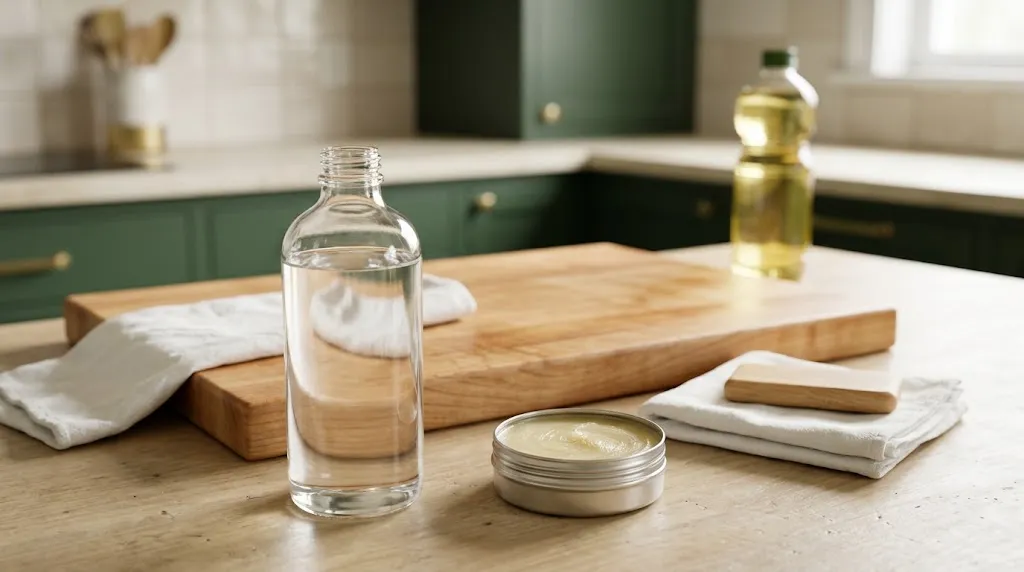
Plain, food-grade mineral oil is one of the most reliable choices for conditioning unfinished wooden cutting boards. It is inexpensive, easy to apply, and does not become rancid like many ordinary cooking oils.
Food-Grade Mineral Oil
Choose mineral oil specifically labeled as suitable for cutting boards or food-contact surfaces. Look for an unscented product without unnecessary fragrances or additives.
Mineral oil penetrates exposed wood and helps condition the surface without creating a hard, permanent finish. For most ordinary kitchen boards, it is the simplest maintenance option.
Beeswax and Mineral Oil Conditioner
A board conditioner combines oil with wax to create a somewhat thicker surface treatment. The oil conditions the wood, while the wax adds another moisture-resistant layer.
Some people apply mineral oil first and a board-safe wax conditioner afterward. The John Boos cutting board maintenance instructions describe this two-product approach.
Can You Use Olive Oil or Vegetable Oil?
I would avoid ordinary olive, vegetable, and other pantry cooking oils for long-term board conditioning. Many can oxidize, develop unpleasant odors, or leave sticky residues.
A purpose-made cutting board oil is a more predictable option. Never assume an oil is appropriate simply because it is edible.
Cutting Board Oil Comparison
| Oil or Finish | Suitability | Main Consideration |
|---|---|---|
| Food-grade mineral oil | Recommended | Simple, stable, and suitable for regular conditioning. |
| Mineral oil and beeswax conditioner | Recommended | Adds a wax-based protective layer. |
| Olive oil | Avoid | Can oxidize and develop unpleasant odors. |
| Ordinary vegetable oil | Avoid | May become sticky or rancid. |
| Furniture polish or unknown wood oil | Do not use | May contain ingredients unsuitable for food-contact surfaces. |
Always check the product label before applying any finish. Boards with factory-applied coatings may require different care from unfinished butcher-block-style boards.
Section Takeaway: Choose a clearly labeled food-grade mineral oil for routine conditioning. Use a compatible board conditioner when extra surface protection is desired.
How Do You Prepare a Board Before Oiling?
Clean the board thoroughly and allow it to dry completely before adding oil. This preparation matters because oiling a dirty or damp board can interfere with proper surface care.
Gather Your Supplies
- Food-grade mineral oil or a cutting board conditioner
- Mild dish soap
- Warm water
- A clean sponge or soft brush
- Two clean, lint-free cloths or paper towels
- A dry rack or other clean, ventilated resting area
You do not need expensive equipment or specialized machinery. A simple cloth works well for spreading oil evenly across the surface.
Wash Away Food Residue
Remove crumbs and food scraps before washing the board with warm water and mild dish soap. Scrub gently, including any grooves that can be cleaned effectively.
Rinse away the soap without leaving the board submerged. Prolonged soaking can contribute to swelling, warping, and damage to glued joints.
Dry the Board Completely
Use a clean towel to remove visible water from both sides and all edges. Then stand the board upright, where air can circulate around it.
Drying time depends on board thickness, room humidity, and how wet the wood became. Do not rely only on a dry-looking top surface if the underside remains damp.
Inspect for Damage Before Applying Oil
Check the board for splinters, loose seams, deep cuts, or cracks. Minor surface roughness may be repairable, but structural damage requires more attention.
Do not use oil to conceal mold, contamination, or deep cracks. If the board cannot be cleaned effectively, replacement is the safer option.
How Do You Oil a Wooden Cutting Board Step by Step?
 Save
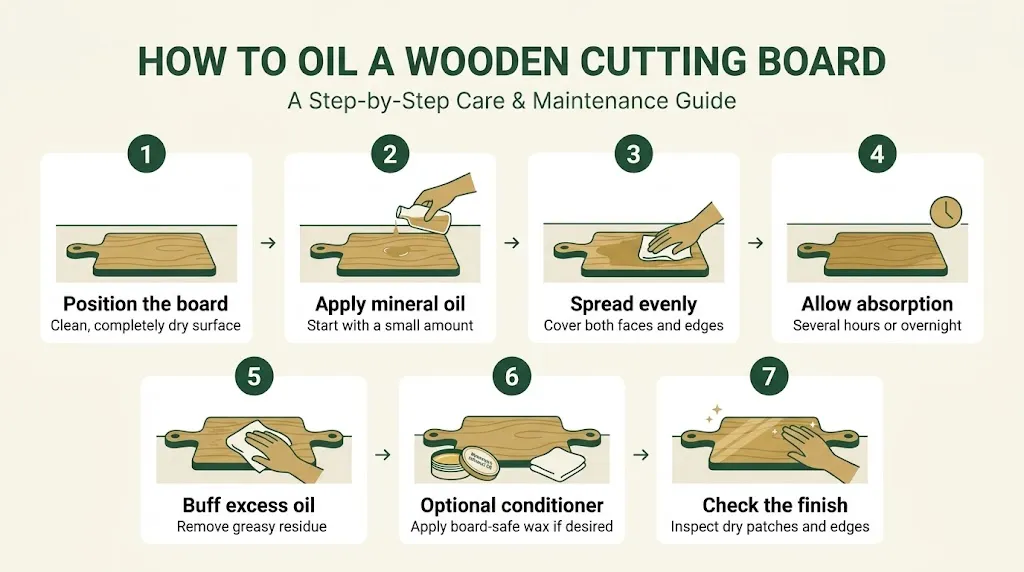
Apply a thin, even layer of food-grade mineral oil to every exposed wooden surface. Give the oil enough time to absorb, then remove the excess before preparing food.
Step 1: Position the Clean, Dry Board
Place the board on a clean, dry work surface. If it is reversible, make sure you can access both sides without transferring dirt onto the freshly oiled wood.
A cloth beneath the board can catch occasional drips. Keep soap, food scraps, and other contaminants away from the work area.
Step 2: Apply a Small Amount of Mineral Oil
Pour a little oil onto the board or onto a clean cloth. Spread it gradually rather than emptying a large amount onto one spot.
The exact quantity depends on board size, wood condition, and how quickly the surface absorbs oil. Start small and add more when necessary.
Step 3: Rub Oil Across the Entire Surface
Use your cloth to spread the oil in smooth, overlapping strokes. Follow the direction of the visible wood grain where practical.
Pay attention to the edges, corners, and end grain. These areas are easy to overlook during routine maintenance.
For consistent coverage, work through these areas:
- Cover the main cutting surface evenly.
- Apply oil around all exposed edges and corners.
- Turn the board over and condition the opposite face.
- Check for dry patches that absorbed the first coat quickly.
- Apply a little more oil only where needed.
Step 4: Allow the Oil to Absorb
Leave the board in a clean location for several hours or overnight. An overnight rest is a convenient choice for a board receiving routine conditioning.
Keep it away from food preparation activities while the oil absorbs. Avoid leaving wet, pooled oil sitting unnecessarily on the surface.
Step 5: Wipe Away Excess Oil
Buff the board with a fresh, dry cloth after the absorption period. Continue until the surface feels conditioned rather than greasy.
A properly finished board should not transfer visible pools of oil onto your fingers. If it still feels slippery, keep wiping away the excess.
Step 6: Add Board Conditioner if Desired
For extra surface protection, apply a thin coat of a compatible mineral oil and beeswax conditioner. Follow the specific product instructions for application and curing time.
Not every board requires wax after every oiling. For basic maintenance, mineral oil alone is often sufficient.
Step 7: Check the Surface Before Use
Inspect the board under good lighting after buffing. Look for dry-looking patches, heavy residue, or untreated edges.
If certain areas remain unusually dry, repeat a light application and allow more absorption time. Otherwise, your board is ready for normal kitchen use.
Section Takeaway: The key is even coverage, adequate absorption time, and thorough removal of leftover oil. More oil does not automatically mean better protection.
How Often Should You Oil a Wooden Cutting Board?
For many household wooden cutting boards, oiling approximately once a month is a useful starting point. Boards that receive frequent washing or live in dry environments may need conditioning sooner.
Look for Signs That the Wood Needs Oil
The board’s appearance is often more useful than following a rigid calendar. A dry, faded surface suggests the previous treatment has worn down.
- Pale appearance: The wood looks noticeably lighter than after its last conditioning.
- Dry texture: The surface feels less smooth than usual.
- Uneven absorption: Some areas absorb a light application much faster than others.
- Frequent washing: Regular cleaning leaves the wood needing attention sooner.
- Seasonal dryness: Low indoor humidity increases the need to inspect the board.
A Practical Maintenance Schedule
| Board Condition | Suggested Action |
|---|---|
| Ordinary household use | Inspect monthly and condition when needed. |
| Heavy daily use | Inspect more frequently, especially after repeated washing. |
| New, unfinished board | Follow the manufacturer’s initial conditioning instructions. |
| Noticeably dry board | Apply a light coat after cleaning and thorough drying. |
| Greasy board | Buff off excess oil rather than adding more. |
This schedule is a practical guideline, not a mandatory treatment interval. Always prioritize your board manufacturer’s instructions.
Does Wood Type Affect Oiling Frequency?
Yes. Maple, walnut, cherry, and other woods can differ in density, grain structure, and moisture absorption.
Construction also matters. End-grain boards, edge-grain boards, and solid boards may respond differently to conditioning.
Rather than assigning every wood species a fixed schedule, observe how your specific board behaves. Treat visible dryness before it develops into serious surface deterioration.
Section Takeaway: Monthly inspection is a useful habit, but the board’s condition should determine when you apply more oil.
What Mistakes Should You Avoid When Oiling and Cleaning?
 Save
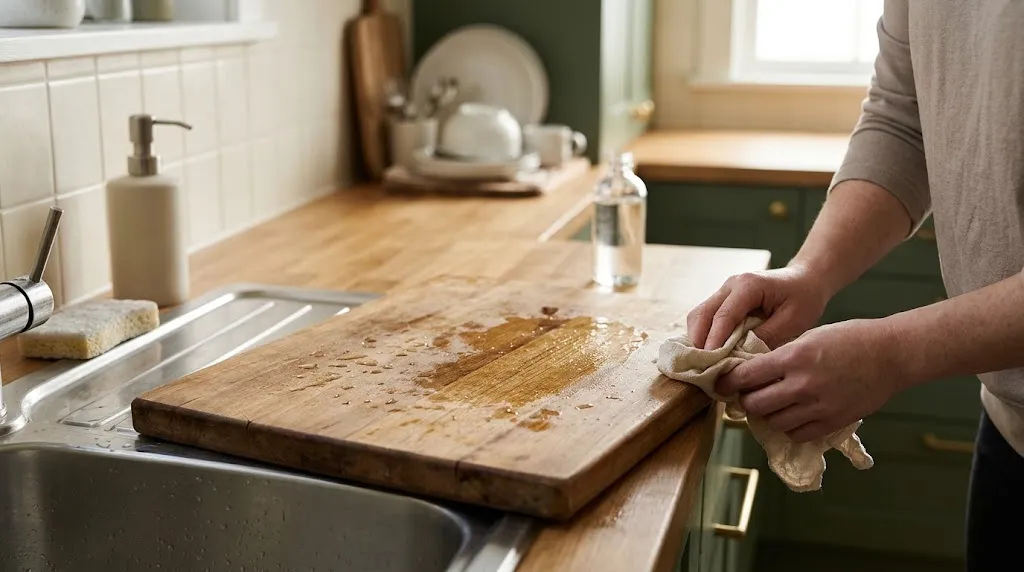
The most common mistakes involve inappropriate oils, excess moisture, and applying more conditioner than the board needs. Avoiding these problems is just as important as the oiling process itself.
Common Oiling Mistakes
- Using cooking oil: Olive and ordinary vegetable oils can develop sticky residues or undesirable odors.
- Oiling wet wood: Moisture may interfere with proper conditioning and remain trapped in poorly dried areas.
- Ignoring the underside: Uneven surface care can leave parts of the board exposed to moisture.
- Using too much oil: Excess oil can leave a greasy surface and waste product.
- Applying furniture products: Unknown polishes or finishes may be unsuitable for direct food contact.
- Ignoring serious damage: Oiling will not repair deep structural cracks or unsafe grooves.
Keep Cleaning Separate From Conditioning
Oil is not a disinfectant. A shiny surface does not tell you whether the cutting board is hygienically clean.
The official FoodSafety.gov food safety guidance recommends washing boards with hot, soapy water and keeping raw animal foods separate from ready-to-eat foods.
A practical daily routine should include:
- Remove food scraps immediately after preparing ingredients.
- Wash the board with warm or hot, soapy water.
- Rinse away detergent and loosened debris.
- Dry with a clean towel.
- Allow air to reach both sides before storage.
- Inspect the board regularly for wear or damage.
Should You Put a Wooden Cutting Board in the Dishwasher?
Hand washing is the safer default for most wooden boards, especially glued boards and butcher blocks. Dishwasher heat and prolonged water exposure can damage some constructions.
Some solid hardwood boards may tolerate dishwashing, but that does not apply universally. Follow the manufacturer’s care instructions rather than assuming every wooden board is dishwasher-safe.
When Should You Replace the Board?
Replace a cutting board when deep grooves, cracks, or damage prevent effective cleaning. Serious splitting or separation of glued sections also deserves attention.
The USDA cutting board guidance recommends discarding excessively worn boards with difficult-to-clean grooves.
Minor cosmetic scratches do not always require replacement. However, structural safety and reliable cleaning should take priority over appearance.
Section Takeaway: Condition only clean, dry, sound wood. Proper cleaning and timely replacement matter more than achieving a polished finish.
Frequently Asked Questions
Can I use olive oil to oil a wooden cutting board?
Olive oil is not recommended for routine wooden cutting board maintenance. It can oxidize over time and may leave a sticky or unpleasant-smelling surface. Food-grade mineral oil is a more reliable option because it remains stable and is commonly used for conditioning food-preparation boards.
How long should mineral oil sit on a cutting board?
Allow mineral oil to absorb for several hours or overnight. The ideal duration depends on the board’s condition and the product instructions. Afterward, remove all excess oil with a clean cloth so the surface does not feel greasy when you handle it.
Can I oil a wooden cutting board too much?
Yes. Applying excessive oil can leave a slippery, greasy residue without offering meaningful additional benefits. Apply an even coat, allow it to absorb, and buff away leftovers. A second application is useful only when the wood still shows clear signs of dryness.
Should I oil both sides of my cutting board?
Yes. Condition both faces and all exposed wooden edges, particularly on reversible boards. This provides more consistent surface care and helps protect areas exposed to moisture during washing. Pay attention to corners and end grain because those parts are easy to overlook.
Can I use coconut oil instead of mineral oil?
Some specialty board conditioners use carefully selected coconut-derived ingredients, but ordinary kitchen coconut oil is not an automatic substitute. Its behavior depends on formulation and storage conditions. Choose a product specifically labeled for cutting board conditioning rather than experimenting with pantry oils.
Do brand-new wooden cutting boards need oiling?
Some new boards arrive preconditioned, while others require an initial treatment. Read the manufacturer’s instructions before applying anything. If the surface is unfinished and needs conditioning, use a recommended food-contact-safe oil and allow it to absorb before preparing food.
Does oiling a cutting board kill bacteria?
No. Mineral oil conditions wood but does not replace washing, sanitizing when necessary, or preventing cross-contamination. Always clean the board after food preparation and use separate boards for raw animal products and ready-to-eat ingredients whenever possible.
Final Thoughts: Keep Your Cutting Board in Good Condition
Learning how to oil a wooden cutting board is straightforward. Clean it, dry it completely, apply food-grade mineral oil, allow absorption time, and buff away the excess.
Check the wood regularly instead of waiting for severe dryness or visible damage. Good maintenance, careful washing, and proper storage will help your cutting board remain useful for years.
Your next step: Inspect your board today. If it looks dry, give it a careful conditioning treatment and make monthly inspection part of your kitchen routine.

