
How Long Do Cutting Boards Last? Lifespan by Material and Signs to Replace It
Quick Answer
Most cutting boards last 1 to 10 years, and the material decides where yours lands. A thick wooden board lasts 5 to 10 years with regular oiling, and you can refinish a wooden board to add even more life. Plastic boards wear out fastest at 1 to 3 years, while bamboo sits in the middle at 3 to 5 years.
Lifespan at a glance
- Wooden boards: 5 to 10 years, or 10 to 20 for thick end-grain boards with steady care.
- Plastic boards: 1 to 3 years, since deep knife grooves trap food and germs.
- Bamboo boards: 3 to 5 years, though hard bamboo can dull knives faster.
- Glass and stone: 10 or more years for the board itself, but they damage knife edges.
- Composite boards: 5 to 10 years, with dishwasher-safe models lasting longest.
Replace it sooner if
- Deep grooves catch your fingernail when you run it across the surface.
- Warping makes the board rock or slide on the counter.
- Stains or smells stay put after a thorough scrub.
I’ve owned cutting boards that gave up in a year and one maple board that’s still going strong after seven. The difference was never luck.
It came down to material, thickness, and about five minutes of care a month. This guide walks through real lifespans by material, the signs yours is done, and the habits that add years.
How Long Does a Cutting Board Last on Average?
A cutting board’s lifespan is the time it stays flat, smooth enough to clean, and safe for food. Once deep grooves, cracks, or warping show up, the board stops doing that job well.
Most home cooks replace a board every 2 to 5 years. Heavy daily use shortens that span, while light use and good care stretch it.
| Material | Typical lifespan | What usually ends it | Best for |
|---|---|---|---|
| End-grain wood | 10–20 years | Rare; deep wear or cracking | Daily cooks who oil boards |
| Edge-grain wood | 5–10 years | Warping, cracks, deep grooves | Everyday prep |
| Bamboo | 3–5 years | Splitting, warping | Light prep, lower budgets |
| Plastic (HDPE) | 1–3 years | Deep grooves, staining | Raw meat, dishwasher users |
| Composite | 5–10 years | Warping, surface wear | Low-maintenance cooks |
| Glass / stone | 10+ years (board) | Chips, knife damage | Serving, not chopping |
Those ranges assume normal home use, not a restaurant line. A board that sees dinner prep once a day will outlast one used for three meals and a baking project.
How Long Do Wooden Cutting Boards Last?
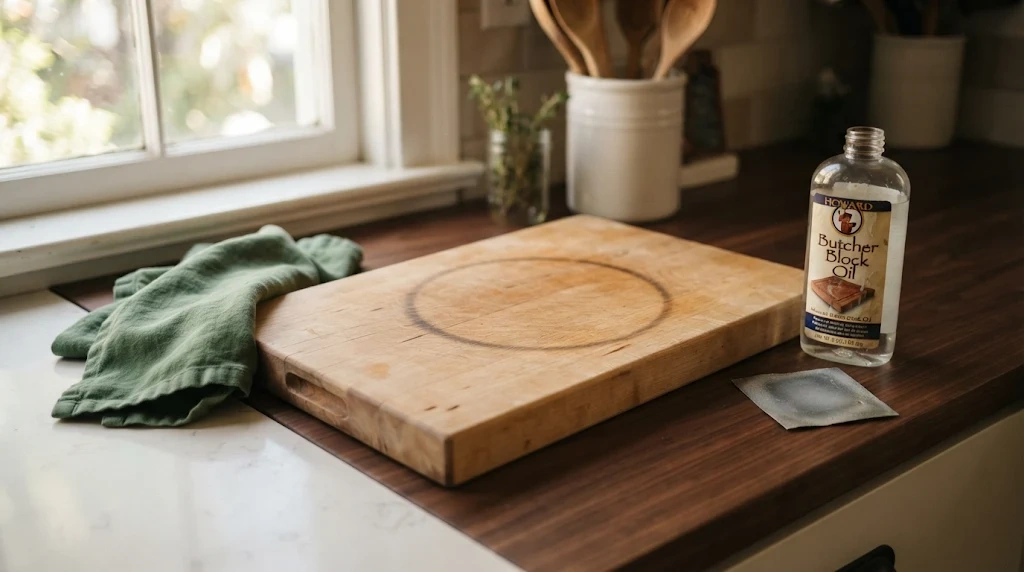
A wooden cutting board lasts 5 to 10 years, and a thick end-grain board can pass 20 years with care. Wood wins on lifespan because you can sand and oil it back to health.
My maple board is seven years old as of 2026. It has one dark ring from a hot pan and a few faint knife marks, but it still sits flat and cleans up fast.
End-Grain vs. Edge-Grain Wood: Which Lasts Longer?
End-grain boards are built with the wood fibers facing up, like a butcher’s block. Knife cuts close up on their own, so the surface heals better and lasts longer.
Edge-grain boards show long grain lines along the surface. They cost less and still last for years, but cuts stay visible and the board wears faster.
Thickness matters as much as grain direction. A board under an inch thick warps sooner, while a 2-inch block shrugs off years of use.
- Oil monthly: food-grade mineral oil keeps wood from drying and cracking.
- Keep it dry: never soak wood or run it through the dishwasher.
- Sand yearly: fine sandpaper erases shallow grooves before they deepen.
- Flip it often: using both faces spreads wear evenly.
If you’re new to board care, here’s how to oil a wooden cutting board step by step. One bottle of mineral oil costs a few dollars and lasts a year.
How Long Do Plastic Cutting Boards Last?
A plastic cutting board lasts 1 to 3 years in a busy kitchen. Thin boards wear out in under a year, while thick HDPE boards hold up closer to three.
Plastic is cheap and dishwasher-safe, which is why I keep one for raw chicken. But every cut leaves a groove, and grooves are where trouble starts.
FoodSafety.gov advises replacing cutting boards once they develop hard-to-clean grooves. Deep cuts trap food bits and moisture, and no scrub reaches the bottom of them.
Light surface marks are fine, and a baking soda scrub lifts most stains. Once grooves catch your fingernail, though, the board has served its time.
Can You Resurface a Plastic Cutting Board?
Sanding can smooth a lightly scarred plastic board, but it rarely pays off. The grooves run deeper than they look, and sanding rarely reaches them all.
Given how cheap plastic boards are, replacement usually beats repair. Save the effort for a wooden board that rewards it.
How Long Do Bamboo Cutting Boards Last?
A bamboo cutting board lasts 3 to 5 years with normal use. Bamboo is hard and dense, so it resists cuts better than soft plastic.
The weak point is moisture, not knives. Bamboo splits and warps when it stays wet, so it needs the same dry-it-fast habit as wood.
I used a bamboo board for two years as my vegetable board. It looked new for most of that time, then a crack ran along one edge after a wet winter week.
Bamboo also runs hard on knife edges, harder than maple or walnut. If you own good knives, that trade-off matters more than the board’s price.
What About Glass, Stone, and Composite Boards?
Glass and stone boards last a decade or more, but they punish your knives. Composite boards last 5 to 10 years and treat knives far better.
I keep a marble board for cheese and bread, never for chopping. One week of daily knife work on stone will dull a good chef’s knife fast.
- Glass: a nearly unbreakable surface, but the hardest on blades.
- Marble and granite: great for serving and pastry, poor for daily chopping.
- Composite (paper or wood fiber): dishwasher-safe, knife-friendly, and slow to groove.
Composite boards like Epicurean sit in a sweet spot for busy cooks. They need no oiling, go in the dishwasher, and still last for years.
If you want a board tested for food-contact safety, look for NSF certification on the label. NSF tests food equipment against published safety standards.
What Shortens a Cutting Board’s Life?
Water, heat, and neglect shorten a board’s life more than knives do. Most boards die from warping, cracking, or grooves, not from wearing thin.
- Soaking in water: wood swells, glue joints fail, and bamboo splits.
- Dishwasher heat: warps wood and bamboo and bends thin plastic.
- Skipping oil: dry wood cracks and drinks up stains and odors.
- One-sided use: when you never flip the board, one face cups and warps.
- Storing upright while wet: moisture pools at the base and feeds mold.
- Raw meat grooves: deep cuts in plastic hold bacteria even after washing.
Warping is the most common killer I see, and it’s mostly preventable. Learn how to prevent a cutting board from warping before your board starts rocking.
The USDA’s Food Safety and Inspection Service recommends separate boards for raw meat and ready-to-eat food. That habit protects your health and spreads wear across two boards.
How Do You Know When to Replace a Cutting Board?
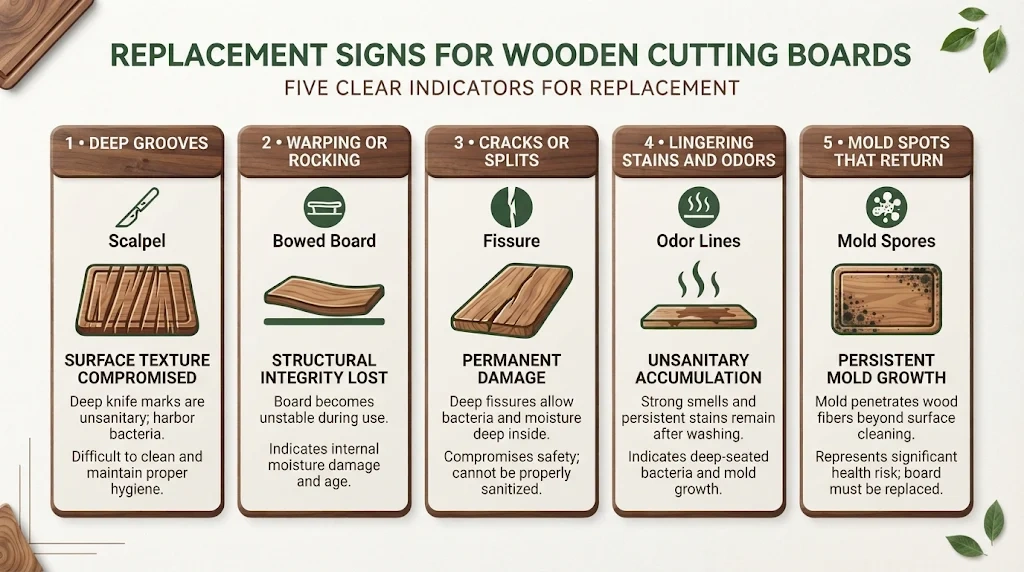
Replace a cutting board when grooves, warping, cracks, or smells survive a deep clean. If you can’t get it truly clean, it’s done, no matter its age.
- Deep grooves: your fingernail catches in cuts across the surface.
- Warping or rocking: the board wobbles and slides while you cut.
- Cracks or splits: bacteria hide where no sponge can reach.
- Stains and odors that stay: garlic or beet marks that won’t scrub out.
- Mold spots: black or green patches that return after cleaning.
Grooves matter most for food safety, since a scored board is harder to sanitize. If hygiene is your top concern, check what makes the most sanitary cutting board before you buy a replacement.
Age alone never decides it. A five-year-old board that’s flat and smooth beats a one-year-old board that’s warped and grooved.
How Can You Make a Cutting Board Last Longer?
Oil wood monthly, dry every board right after washing, and store it on its edge. Those three habits add years to almost any board.
- Wash by hand with hot, soapy water after every use.
- Dry it standing on its edge so air reaches both faces.
- Oil wooden boards monthly with food-grade mineral oil.
- Sand wooden boards yearly to erase shallow grooves.
- Use separate boards for raw meat and produce.
- Flip the board weekly so both faces wear evenly.
That routine takes about five minutes a month, plus the normal wash. My maple board proves the payoff every time I oil it and the grain comes back to life.
Skip the vegetable oil and olive oil, since cooking oils turn rancid on wood. Food-grade mineral oil never goes off, and one bottle lasts most of a year.
Can You Fix a Cutting Board Instead of Replacing It?
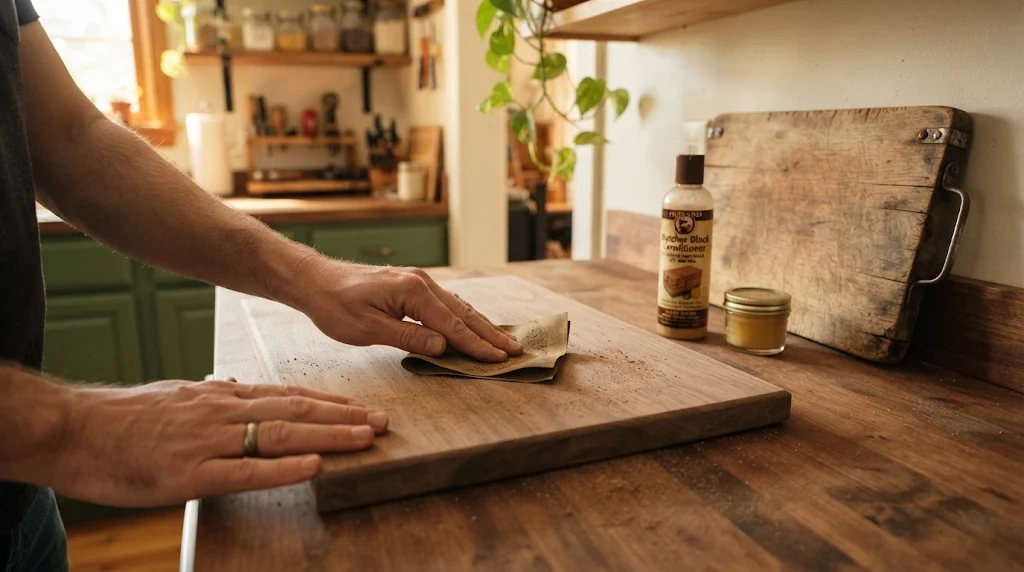
Yes, you can often fix a wooden board by sanding and refinishing it, and a warped board sometimes flattens with moisture and weight. Plastic boards with deep grooves are the one case where replacement wins.
Sanding removes shallow grooves and stains in under an hour. Start with 120-grit paper, finish with 220-grit, then oil the fresh surface well.
Cracks are trickier, and deep splits usually mean the board is done. If the board can’t be saved, check whether cutting boards can be recycled in your area before it goes in the trash.
A board past saving still has a second life as a serving board or trivet. Just keep it away from raw food once the surface is compromised.
What I’d Buy If My Board Was Done
If your board is past saving, here’s what I’d actually buy. Consumer Reports also tests cutting boards for durability and knife wear, and its findings line up with what I’ve seen at home.
🏆 Best Overall
John Boos Block Reversible Maple Wood Cutting Board
★★★★★
End-grain hard maple, 1.5 inches thick, with a reversible flat surface. This is the board I’d buy once and keep for a decade with monthly oiling.
💰 Best Budget
OXO Good Grips Plastic Cutting Board Set
★★★★☆
Two dishwasher-safe HDPE boards with non-slip feet and juice grooves. I keep a set like this for raw meat, then replace it every couple of years without guilt.
✨ Best Low-Maintenance
Epicurean Kitchen Cutting Board
★★★★☆
Paper-composite board that’s dishwasher-safe, knife-friendly, and needs no oiling. It’s my pick for anyone who wants a board that lasts without a care routine.
Frequently Asked Questions
How often should you replace a cutting board?
Replace a plastic board every 1 to 3 years and a wooden board every 5 to 10 years, or sooner if grooves, warping, or cracks appear. Condition matters more than the calendar, so inspect your board every few months and replace it once it stops cleaning up well.
Do wooden cutting boards last longer than plastic?
Yes, wooden boards last far longer than plastic ones. A wooden board lasts 5 to 10 years and can be sanded and refinished, while a plastic board lasts 1 to 3 years and can’t be repaired once deep grooves form.
Can a cutting board last 20 years?
Yes, a thick end-grain wooden board can last 20 years or more with monthly oiling and yearly sanding. Glass and stone boards also last decades, though they wear out your knives instead.
Thin plastic boards will never reach that age.
Is it safe to use an old cutting board?
An old board is safe if it stays flat, smooth, and easy to clean. Replace it once deep grooves, cracks, or warping appear, since those flaws trap bacteria where washing can’t reach.
When in doubt, retire the board.
Does oiling really make a cutting board last longer?
Yes, monthly oiling keeps wood from drying, cracking, and soaking up stains and odors. Use food-grade mineral oil, not cooking oil, and apply a thin coat whenever the wood looks pale or dry.
It’s the single best habit for board life.
The Bottom Line
A cutting board lasts as long as its material and your care allow, from 1 year for thin plastic to 20 for thick end-grain wood. Check yours today for grooves, warping, and cracks.
If it passes, a little oil and a good drying habit will keep it going for years. If it fails, replace it with a board you’ll care for, and it will return the favor.

