Can Cutting Boards Be Recycled? A Complete Disposal Guide
Quick Answer
Can cutting boards be recycled? Sometimes, but it depends on the material and your local recycling program. Plastic boards may qualify for specialized recycling, while wooden and bamboo boards are often better suited to reuse or approved organics programs. Composite, rubber, glass, and silicone boards usually require different disposal methods. Always check your local rules using the EPA recycling guidance before placing a board in a recycling bin.
Recycling Rules by Material
- Plastic boards: Recyclability depends on resin type and local acceptance rules.
- Wooden boards: Consider repair, reuse, or an approved untreated-wood collection program.
- Bamboo boards: Check for adhesives and coatings before considering composting.
- Composite boards: Mixed materials and bonding resins can complicate recycling.
- Glass and rubber: Standard household recycling programs generally do not accept these boards.
Before You Throw It Away
- Identify the material: Look for a resin code, label, or manufacturer information.
- Check local rules: Confirm the exact board type is accepted.
- Consider reuse: Repurpose an intact board if it remains suitable for non-food tasks.
An old cutting board might seem like an easy recycling decision. However, the material that makes a board useful in the kitchen can make disposal surprisingly complicated.
I prefer checking whether a board can be repaired or reused before considering recycling. This guide explains what happens to common cutting board materials and how to dispose of them responsibly.
Are Cutting Boards Recyclable?
Some cutting boards can be recycled through programs that accept their specific materials. However, being made from recyclable material does not guarantee that a finished cutting board belongs in curbside recycling.
Cutting board recycling means collecting and processing a discarded board’s material into something usable again. Whether that happens depends on sorting equipment, available recycling markets, contamination, and local collection rules.
Why Are Cutting Boards Difficult to Recycle?
Most household recycling systems focus on familiar packaging materials. Thick kitchen boards may differ from the containers those systems are designed to process.
- Material thickness: Heavy, rigid boards may not suit standard sorting equipment.
- Mixed construction: Rubber grips, coatings, and bonded layers complicate separation.
- Food residue: Grease and trapped debris can interfere with recycling.
- Unidentified plastics: Some boards lack a clear resin identification code.
- Local restrictions: Municipal recycling facilities accept different materials.
As of 2026, there is no universal recycling rule for every cutting board. Your local waste authority remains the most reliable source for disposal instructions.
Which Cutting Board Materials Can Be Recycled?
 Save
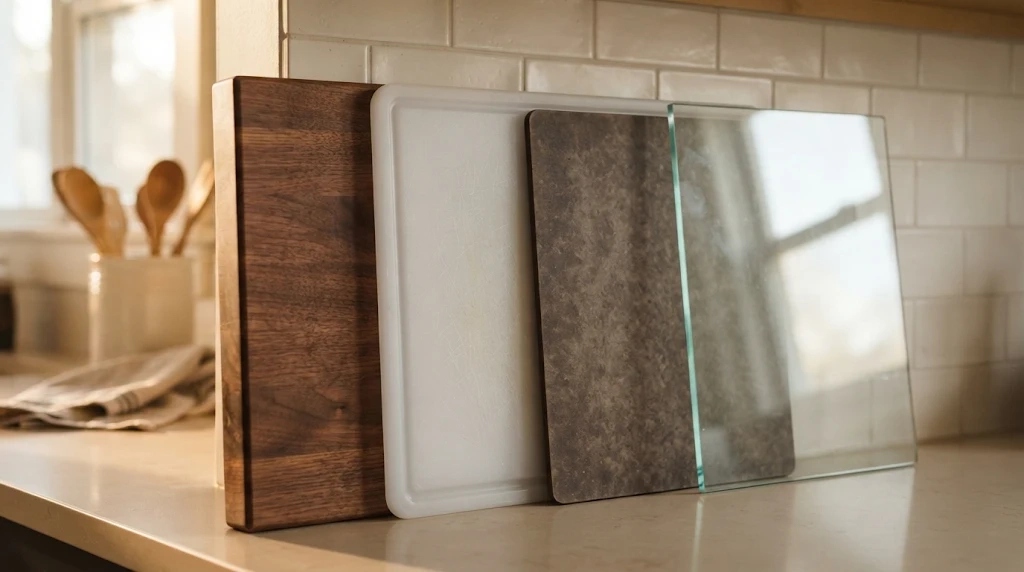
Plastic, hardwood, bamboo, and composite cutting boards have different end-of-life options. The following comparison helps identify which route deserves investigation first.
| Board Material | Curbside Recycling | Alternative | Main Concern |
|---|---|---|---|
| HDPE plastic | Sometimes, where specifically accepted | Specialty plastic recycling | Rigid-product restrictions |
| Polypropylene | Program-dependent | Approved rigid-plastic collection | Product shape and additives |
| Solid hardwood | Generally not | Repair, reuse, or approved wood recovery | Finishes and contamination |
| Bamboo | Generally not | Reuse or approved organics collection | Adhesives and coatings |
| Paper composite | Usually not | Manufacturer-approved recovery | Bonding resins |
| Glass | Generally not | Specialty glass disposal if available | Different from bottle glass |
| Rubber or silicone | Generally not | Specialty collection if available | Limited processing options |
Important: These are general material guidelines, not guarantees of acceptance. A local collection program may have different instructions.
Can Plastic Cutting Boards Be Recycled?
Plastic cutting boards may be recyclable when a facility accepts their exact resin and product format. Many curbside programs reject them despite accepting plastic bottles and containers.
Plastic cutting boards often use high-density polyethylene (HDPE) or polypropylene (PP). Both have recycling applications, but finished kitchen boards may require specialized handling.
Are HDPE Cutting Boards Recyclable?
HDPE, commonly identified by resin code 2, is a plastic used in many durable products. However, an HDPE cutting board is not automatically accepted in household recycling.
Check whether your program accepts rigid household plastic items beyond packaging. Some facilities restrict collection to bottles, jugs, and tubs.
Can Polypropylene Cutting Boards Go in Recycling?
Polypropylene, commonly marked with resin code 5, is another material used in kitchen products. Its acceptance varies by municipality and recycling processor.
A resin identification number describes the plastic family, not guaranteed recyclability. The EPA explains this distinction in its recycling guidance.
How Should You Dispose of an Old Plastic Cutting Board?
- Wash the board and remove remaining food debris.
- Check both sides for a resin identification code.
- Search your local recycling authority’s accepted-items directory.
- Ask whether rigid cutting boards are eligible, not just the resin type.
- Use an approved collection service if available.
- Otherwise, follow local general-waste disposal instructions.
One important distinction is that recycling acceptance and food safety are separate questions. A plastic board can be unsuitable for food preparation even when its material remains technically recyclable.
For more on kitchen safety, explore our cutting board guides and material comparisons.
Can Wooden Cutting Boards Be Recycled?
Wooden cutting boards usually cannot go into standard household recycling bins. However, repair, reuse, and certain wood recovery programs may provide alternatives to disposal.
Solid wood differs from plastic because untreated wood can break down biologically. Yet adhesives, protective finishes, and food contamination can complicate that process.
Can You Compost a Wooden Cutting Board?
Composting may be possible for verified untreated, uncoated solid wood when the composting system permits it. A complete cutting board, however, breaks down much more slowly than ordinary garden waste.
Commercial composting services may refuse finished wooden kitchen products. Check the program’s accepted materials before attempting disposal.
- Untreated solid wood: Potentially suitable for approved wood-processing or composting systems.
- Glued wooden boards: Require confirmation that adhesives are acceptable.
- Varnished boards: May contain finishes unsuitable for compost.
- Moldy or contaminated boards: Should not be casually added to home compost.
Should You Repair a Wooden Cutting Board Instead?
Repair is often worth considering when damage remains superficial. Dryness, light scratches, and raised wood grain do not necessarily mean the board has reached the end of its useful life.
For practical restoration instructions, see how to refinish a cutting board.
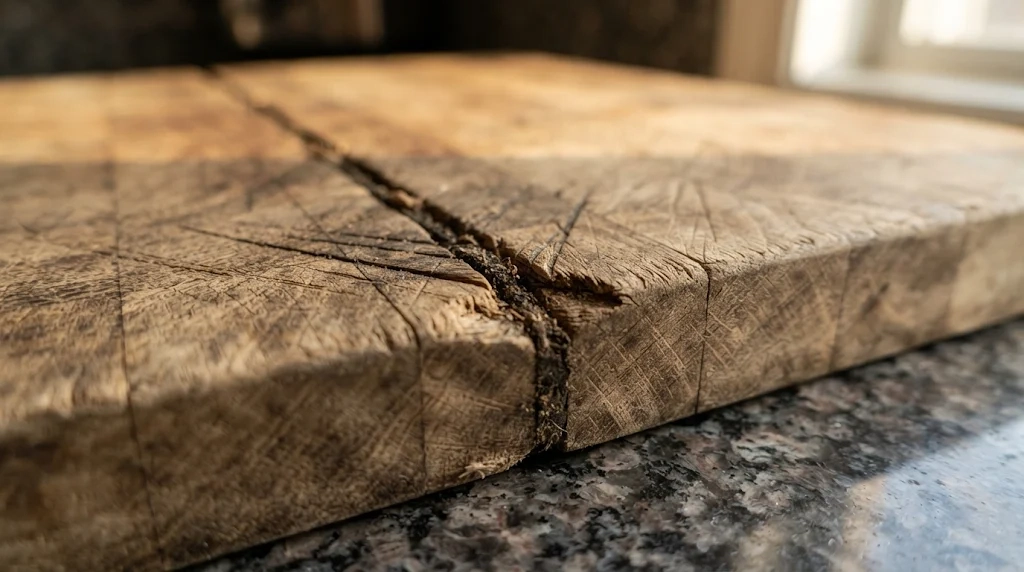
A useful rule is to preserve structurally sound boards and replace unsafe ones. Deep cracks, separated joints, or grooves that cannot be cleaned effectively are reasons to stop using a board for food.
Can Bamboo Cutting Boards Be Recycled or Composted?
Bamboo cutting boards generally do not belong in standard curbside recycling. Their suitability for composting depends on manufacturing details and the receiving compost program.
Bamboo itself is a plant-based material. Many commercially manufactured bamboo boards, however, contain bonded strips and surface treatments.
Why Do Bamboo Board Adhesives Matter?
Manufacturers commonly bond bamboo pieces into durable cutting surfaces. These adhesives can make the finished board unsuitable for composting programs that accept only untreated plant material.
Do not assume a board is compostable simply because its label describes bamboo as natural. Check the manufacturer’s construction details and local composting rules.
How Can You Extend a Bamboo Board’s Lifespan?
- Wash by hand unless the manufacturer states otherwise.
- Avoid leaving the board submerged in water.
- Dry both surfaces thoroughly after washing.
- Condition with an approved food-contact product when needed.
- Inspect glued seams for splitting or separation.
A properly maintained bamboo board may remain useful longer, reducing replacement waste. Our guide on how to oil a bamboo cutting board explains routine conditioning.
Are Composite Cutting Boards Recyclable?
Most composite cutting boards are difficult to recycle through ordinary household programs. Their compressed fibers, resins, and other combined materials may require specialized recovery systems.
Paper-composite cutting boards commonly combine paper fibers with cured bonding resin. They should not be treated as ordinary cardboard or compostable paper.
What About Epicurean-Style Cutting Boards?
Epicurean makes cutting boards from paper-composite material. The brand describes its kitchen boards as durable and dishwasher-safe, but those properties do not establish curbside recyclability.
Check manufacturer disposal guidance and local recycling rules before discarding one. Read our paper composite cutting board safety guide for more about this material.
Can Glass, Rubber, and Silicone Cutting Boards Be Recycled?
Glass, rubber, and silicone cutting boards generally require disposal methods different from household packaging recycling. Their construction and processing requirements limit what conventional facilities accept.
Glass Cutting Boards
Glass cutting boards are not equivalent to standard recyclable glass bottles and jars. Their glass composition or manufacturing process may differ from accepted packaging glass.
Keep unwanted glass boards out of bottle-and-jar recycling unless your program explicitly accepts them. Wrap broken glass securely and follow local disposal instructions.
Rubber Cutting Boards
Rubber boards vary in their formulations and may contain synthetic ingredients. Ordinary municipal recycling systems generally lack a collection route for these products.
Ask the manufacturer about recovery options before disposal. Do not place rubber boards into compost or plastic recycling without explicit approval.
Silicone Cutting Boards
Silicone is not the same material as conventional recyclable thermoplastic. As a result, regular plastic recycling programs typically do not accept silicone boards.
A specialized silicone recycling service may be an option in some regions. Availability should be confirmed before shipping or dropping off a board.
How Do You Recycle or Dispose of a Cutting Board Correctly?
 Save
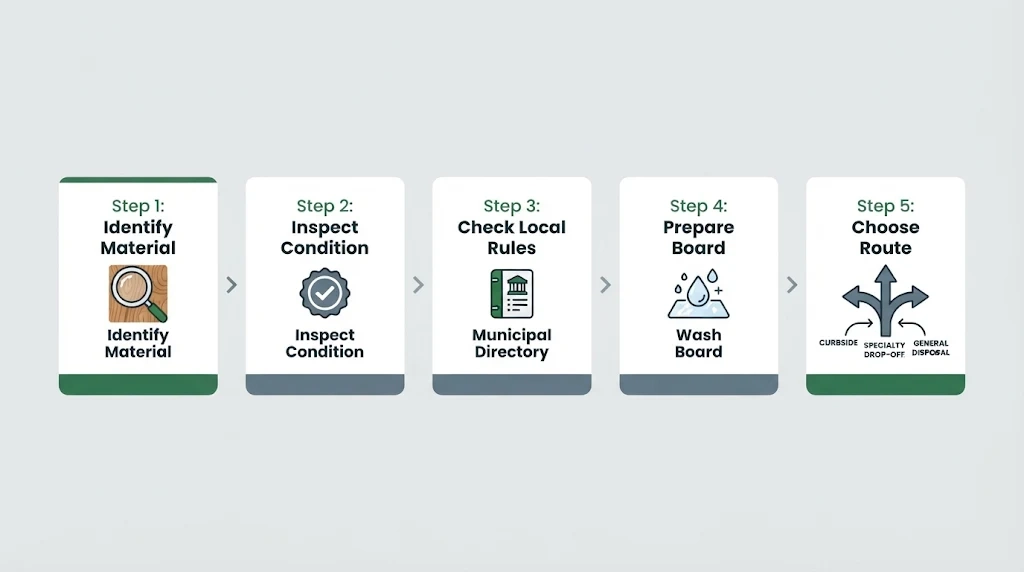
The safest process begins by identifying the material and checking your community’s collection requirements. Never place an uncertain item in recycling simply because it seems reusable or recyclable.
Step 1: Identify the Board Material
Inspect the label, underside, product packaging, or manufacturer’s website. Look for material names such as HDPE, polypropylene, maple, bamboo, or paper composite.
A material description is more useful than appearance alone. Similar-looking boards can contain different substances.
Step 2: Inspect Its Condition
Determine whether the board remains safe to use or suitable for non-food purposes. Avoid donating items with severe cracks, heavy contamination, or unsafe structural damage.
- Minor cosmetic wear: Consider cleaning or appropriate restoration.
- Intact but unwanted: Consider donation if the recipient accepts used kitchenware.
- Deep grooves: Stop using for food if proper cleaning is no longer possible.
- Structural failure: Choose an approved recycling or disposal route.
Step 3: Check Local Recycling Rules
Visit your municipality’s waste-management website or contact its recycling provider. Ask about cutting boards as a specific product category.
For a broader starting point, consult the EPA municipal recycling material guidance. The publication explains common material categories and the importance of local acceptance rules.
Step 4: Prepare an Accepted Board
When a facility confirms acceptance, remove food residue and follow its preparation requirements. Some processors request separate handling for attachments or nonmatching materials.
Do not cut boards into pieces unless the facility specifically instructs you to do so. Smaller fragments can create sorting problems and sharp edges.
Step 5: Choose the Correct Collection Route
- Use curbside recycling only when the exact item is accepted.
- Consider an approved drop-off or specialty recycling program.
- Ask about authorized wood recovery or organics collection when applicable.
- Use regular waste collection when no approved recovery option exists.
What Can You Do With Old Cutting Boards Instead of Throwing Them Away?
Repurposing an intact cutting board can delay disposal and reduce the need for new materials. However, only reuse items that are clean, stable, and appropriate for the intended task.
Creative Ways to Reuse Wooden Boards
- Plant display base: Place a dry, sturdy board beneath indoor planters.
- Workshop surface: Use an old board for suitable non-food craft projects.
- Decorative sign: Turn an intact board into wall decor.
- Storage organizer: Adapt a stable board for appropriate household storage.
- Craft material: Reuse suitable wood pieces after checking for coatings and adhesives.
A cracked or severely damaged board should not be repurposed where structural strength matters. Always use appropriate protective equipment when cutting or sanding reclaimed material.
Can Old Plastic Cutting Boards Be Repurposed?
Clean, intact plastic boards may serve as protective work surfaces for low-risk household projects. Avoid applications involving excessive heat, heavy loads, or uncertain chemical exposure.
Keep boards previously used for non-food projects out of food preparation permanently. Separate uses help prevent contamination.
When Should You Replace a Cutting Board?
Replace a cutting board when wear prevents thorough cleaning or makes the surface unstable. Material alone does not determine when replacement becomes necessary.
The USDA Food Safety and Inspection Service provides guidance on cleaning kitchen cutting surfaces and preventing cross-contamination.
Signs Your Cutting Board Needs Replacement
 Save
- Deep knife grooves that cannot be cleaned effectively.
- Splits or cracks that trap food residue.
- Separating wooden or bamboo glue joints.
- Severe warping that creates an unstable cutting surface.
- Persistent damage or contamination that cleaning cannot resolve.
- Loose fragments, splinters, or deteriorating surfaces.
Don’t discard a board merely because its color has changed. First determine whether the issue is cosmetic, repairable, or a genuine safety concern.
How Can You Choose a More Sustainable Cutting Board?
A sustainable cutting board should combine durability, appropriate materials, repairability, and a realistic end-of-life plan. Recyclability is only one part of the decision.
I would prioritize a board that lasts through years of ordinary kitchen use over one marketed as recyclable without a confirmed collection program.
Four Factors Worth Comparing
- Material construction: Understand whether the board contains solid material, adhesives, or bonded layers.
- Expected durability: Choose a surface appropriate for your cooking habits and knives.
- Maintenance: Consider washing, drying, conditioning, and refinishing requirements.
- End-of-life options: Confirm whether reuse, repair, or local material recovery is practical.
A long-lasting wooden board may be a sensible choice for someone willing to maintain it. A dishwasher-safe board may better suit a household that prioritizes convenient cleaning.
Cutting Boards Worth Considering When Replacing an Old One
If your current board needs replacing, consider these established products. The recommendations focus on practical features, construction, and expected maintenance rather than unverified recycling promises.
The scores below are editorial suitability estimates out of five, not customer-review averages or hands-on test results. Product features are based on published manufacturer information.
🏆 Best for Long-Term Wood Care
John Boos Maple Edge-Grain Cutting Board
★★★★☆ 4.5/5
Editorial suitability score
John Boos offers hardwood cutting boards made from maple. I favor this type of construction for buyers who appreciate traditional wood care and the possibility of refinishing suitable surface wear. Hand washing and periodic conditioning are important.
💰 Best for Easy Everyday Cleaning
OXO Good Grips Utility Cutting Board
★★★★☆ 4.4/5
Editorial suitability score
This reversible plastic board features nonslip feet, a liquid-catching groove, and dishwasher-safe construction. I consider it a practical option for busy kitchens, although its eventual recyclability must be confirmed locally.
🌿 Best Low-Maintenance Composite
Epicurean Kitchen Series Cutting Board
★★★★☆ 4.3/5
Editorial suitability score
Epicurean’s Kitchen Series uses durable paper-composite material and supports dishwasher cleaning. I recommend considering it when convenient maintenance matters, while remembering that composite construction does not guarantee municipal recycling.
Affiliate disclosure: This article contains affiliate links. If you purchase through these links, we may earn a commission at no additional cost to you.
Frequently Asked Questions
1. Can You Put Plastic Cutting Boards in the Recycling Bin?
Only when your local recycling program specifically accepts that type of plastic cutting board. Some programs collect rigid household plastics, while others limit collection to packaging. Check the material identification and local requirements before placing a board in curbside recycling.
2. Are Wooden Cutting Boards Biodegradable?
Untreated wood can biodegrade under suitable conditions. However, a finished wooden cutting board may contain glue, oil, coatings, or other treatments that affect composting suitability. A thick board also takes much longer to break down than small wood particles. Confirm local organics rules first.
3. Can Bamboo Cutting Boards Go in Compost?
Not automatically. Bamboo is plant-based, but many cutting boards contain adhesives that bond multiple bamboo strips together. These products may be rejected by composting services. Only compost a board when its complete construction and the receiving program’s requirements are compatible.
4. Can You Recycle a Cutting Board With Deep Knife Marks?
Deep knife marks do not necessarily prevent material recycling, but they may make a board unsafe for food preparation. Recycling eligibility depends on the board’s material and collection program. If the board cannot be cleaned properly, stop using it for food and investigate approved disposal options.
5. What Is the Most Environmentally Friendly Way to Dispose of a Cutting Board?
First consider safe repair or reuse, which can extend a board’s useful life. If that is impractical, look for a verified local recycling or recovery program. When no program accepts the material, follow municipal waste instructions rather than contaminating the recycling stream.
Final Thoughts: Can Cutting Boards Be Recycled?
Cutting board recycling depends on material, construction, and local collection capabilities. Plastic boards may have specialized recycling routes, while wood and bamboo often present better opportunities for repair or appropriate reuse.
Composite, glass, rubber, and silicone boards generally need more specialized disposal options. None should automatically enter standard recycling simply because their raw materials appear recyclable.
Before discarding your next cutting board, identify its material, check the manufacturer’s instructions, and contact your local recycling authority. When a board remains safe and functional, extending its life can be the simplest way to reduce waste.
Start with the board you already own. Maintain it when practical, replace it when necessary, and choose a responsible disposal route when its useful life ends.

