
How to Use a Cutting Board Safely: A Complete Kitchen Guide
Quick Answer
To use a cutting board safely, place it on a stable surface, separate raw meat from ready-to-eat foods, and keep your fingers away from the knife blade. Wash the board after preparing each food item, sanitize when appropriate, and dry it completely before storage. These habits follow the CDC’s food safety recommendations.
Six Steps for Safer Cutting
- Choose a suitable board: Use a food-safe cutting surface without serious cracks or deep grooves.
- Prevent movement: Secure the board with non-slip feet or a clean, damp towel underneath.
- Separate food groups: Keep raw animal products away from vegetables, bread, and cooked foods.
- Control the knife: Use a sharp, suitable knife and curl your guiding fingertips away from its edge.
- Clean after use: Scrub with hot, soapy water, rinse thoroughly, and sanitize when needed.
- Dry before storage: Remove moisture from both sides and allow sufficient airflow.
Most Important Safety Reminder
- Never cross-contaminate: Don’t put ready-to-eat food on a board that held raw meat unless the board has been properly cleaned and sanitized.
A cutting board looks simple, but the way you use it can affect both food safety and knife control. A slippery board or poorly cleaned surface creates unnecessary risks.
I prefer a straightforward approach: choose the right board, prepare ingredients carefully, and clean everything before moving on. This guide explains each step so you can develop a safer kitchen routine.
What Makes a Cutting Board Safe to Use?
A safe cutting board is a stable, clean, food-contact-safe surface designed to support cutting without excessive movement. It should also withstand the cleaning required for its intended use.
Food-contact-safe means the material is suitable for touching food under normal conditions. Appearance alone doesn’t establish whether a board is suitable.
The Four Main Safety Factors
- Surface stability: The board must stay in place during chopping, slicing, and trimming.
- Food separation: Raw meat juices must not contaminate foods that won’t be cooked.
- Cleanability: The material should allow effective removal of food particles and contamination.
- Physical condition: The board should be free from dangerous cracks, splinters, or excessive wear.
A board doesn’t become unsafe simply because it has ordinary surface scratches. However, deep grooves that trap residue can make reliable cleaning difficult.
Which Type of Cutting Board Is Safest?
Wood and plastic cutting boards can both be safe when properly maintained. The best option depends on what you’re preparing and how you’ll clean the surface afterward.
For most kitchens, I recommend a wooden board for everyday vegetables and a separate dishwasher-safe plastic board for raw meat. This makes food separation easier to manage.
Cutting Board Material Comparison
| Material | Advantages | Cleaning and Safety |
|---|---|---|
| Hardwood | Comfortable for chopping; durable with maintenance | Usually hand-washed; needs thorough drying |
| Plastic | Lightweight; easy to dedicate to raw meat | Many models are dishwasher-safe; replace when deeply scored |
| Bamboo | Firm cutting surface; widely available | Generally needs handwashing and careful drying |
| Paper Composite | Often thin and easy to handle | Some are dishwasher-safe; check manufacturer instructions |
| Glass or Stone | Nonporous and easy to wipe | Hard on knife edges; can be slippery during chopping |
Neither wood nor plastic eliminates the need for careful cleaning. Read my detailed comparison of wood vs. plastic cutting boards for a closer look at their differences.
How Do You Keep a Cutting Board From Slipping?
Place your cutting board on a level, sturdy countertop and make sure it cannot slide. Uncontrolled board movement can cause a knife to move unexpectedly.
Use a Non-Slip Base
Boards with built-in rubber feet provide grip on many smooth counters. For boards without feet, a clean, slightly damp kitchen towel underneath can improve stability.
Keep the towel flat and contained beneath the board. Avoid using one that’s dripping wet or contaminated with raw meat juices.
Check the Board Before Cutting
- Clear the countertop of crumbs, spills, and loose objects.
- Position the board away from the counter’s edge.
- Place a clean non-slip mat or damp towel underneath if needed.
- Press gently on different corners to check for rocking.
- Stop and reposition the board if it moves during cutting.
A warped board may continue rocking even with a towel beneath it. Don’t use an unstable board for knife work.
How Should You Hold a Knife When Using a Cutting Board?
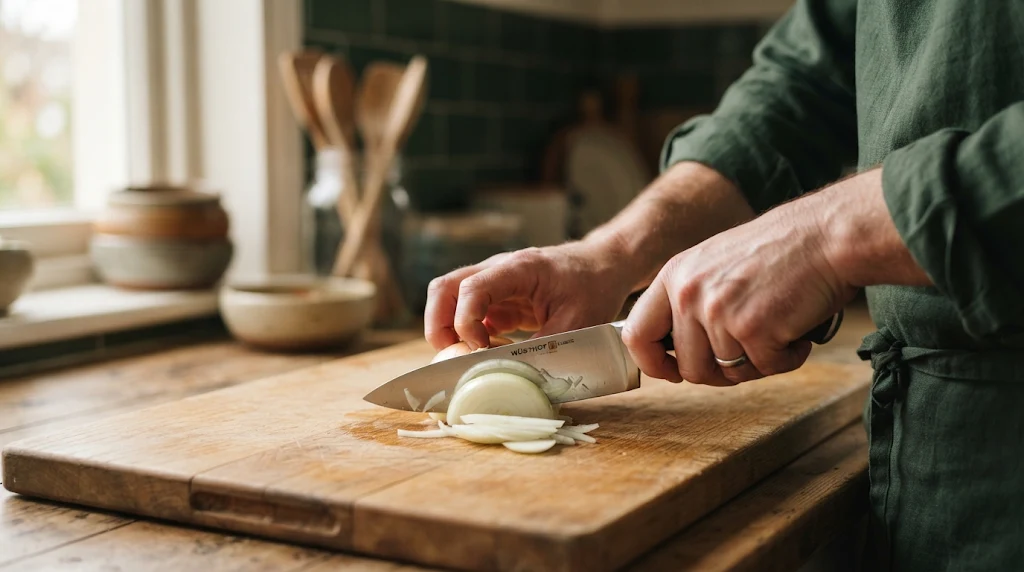
Hold your knife securely and guide the food with fingertips curled away from the cutting edge. Keep the blade’s movement controlled rather than trying to cut quickly.
Use the Claw Grip
The claw grip helps protect the fingers of your guiding hand. Your fingertips curl inward while your knuckles provide a reference point for the knife.
- Place the ingredient securely on the cutting board.
- Curve the fingertips of your guiding hand inward.
- Rest your knuckles lightly against the side of the knife blade when appropriate.
- Move your guiding hand backward as the ingredient becomes smaller.
- Slow down when there is little food left to hold safely.
Choose a Suitable Knife
A sharp, appropriately sized knife usually gives you better cutting control than a dull blade. Dull knives often require additional force and may slip unexpectedly.
A chef’s knife works for many vegetables, while a smaller paring knife suits detailed work. Use a stable cutting surface with either tool.
Make Round Ingredients Stable
Round vegetables can roll while you’re trying to cut them. When practical, carefully create a flat side and place that surface against the board before continuing.
For example, a halved onion sits more securely on its flat face. The same principle helps with potatoes and other irregular ingredients.
How Do You Prevent Cross-Contamination on a Cutting Board?
Use separate cutting boards for raw animal products and ready-to-eat foods. Cross-contamination occurs when harmful microorganisms transfer between foods, hands, utensils, or preparation surfaces.
Raw poultry, meat, and seafood may carry harmful bacteria even when they look fresh. A board used for those ingredients needs proper cleaning before handling other foods.
Assign Boards to Different Foods
- Raw animal products: Dedicate one board to raw poultry, meat, and seafood.
- Fresh produce: Use a separate clean board for fruits and vegetables.
- Ready-to-eat foods: Keep bread, cheese, and cooked foods away from contaminated preparation surfaces.
- Allergen control: Clean equipment carefully between foods when preparing meals for someone with food allergies.
Color-coded boards can make these assignments easier to remember. However, color alone doesn’t prevent contamination.
The FoodSafety.gov four-step food safety guide emphasizes cleaning, separating, cooking, and chilling foods properly.
Prepare Ready-to-Eat Foods First
When practical, prepare salad ingredients and other ready-to-eat foods before handling raw meat. This helps reduce unnecessary contact with raw animal juices.
After switching tasks, wash your hands and clean affected utensils and surfaces. Never return cooked food to an unwashed board that held raw ingredients.
How Do You Clean and Sanitize a Cutting Board?
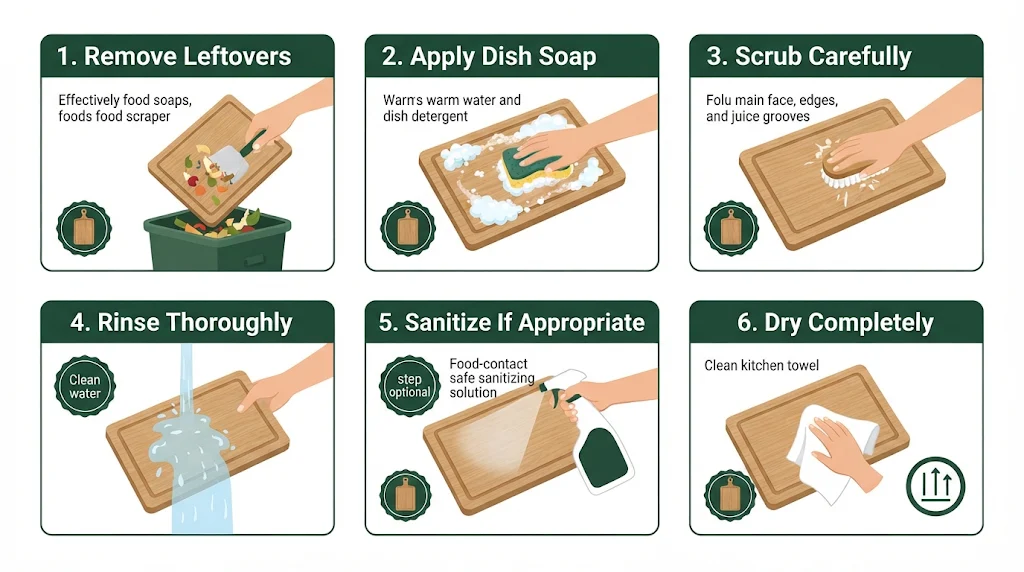
Wash your cutting board with hot, soapy water after preparing each food item, then rinse it thoroughly. Sanitize when needed, particularly after raw animal-product preparation.
Cleaning and sanitizing serve different purposes. Cleaning removes visible debris and grease, while sanitizing reduces microorganisms on a previously cleaned surface.
Step-by-Step Cleaning Instructions
- Remove leftovers: Scrape away food scraps with a suitable scraper or spatula.
- Apply dish soap: Use warm or hot water and ordinary dish detergent.
- Scrub carefully: Clean the cutting face, underside, edges, and juice grooves.
- Rinse thoroughly: Remove loosened debris and detergent with clean water.
- Sanitize if appropriate: Follow an approved food-contact sanitizer’s directions.
- Dry completely: Use clean paper towels or an appropriate clean towel, then allow airflow.
The FDA’s food safety guidance also recommends cleaning utensils and preparation surfaces between foods.
How Do You Sanitize a Cutting Board With Bleach?
The USDA describes a household sanitizing solution made with one tablespoon of unscented liquid chlorine bleach per gallon of water. Always check the bleach label to confirm it’s suitable for food-contact sanitizing.
Clean the board first, then apply the prepared solution according to the product’s directions. Observe the required contact time, rinse with clean water, and dry thoroughly.
- Use only appropriate unscented chlorine bleach.
- Follow the product label and dilution guidance.
- Never mix bleach with vinegar, ammonia, or other cleaners.
- Avoid prolonged soaking, especially with wooden boards.
- Keep cleaning chemicals away from children and food.
Refer to the USDA’s surface sanitizing instructions when choosing a sanitizing procedure.
Can You Put a Cutting Board in the Dishwasher?
Many plastic and some composite cutting boards are dishwasher-safe. Wooden and bamboo boards generally need gentler treatment unless their manufacturers explicitly approve machine washing.
Read the cleaning label before using a dishwasher. My guide to which cutting boards are dishwasher safe explains the differences in greater detail.
How Do You Maintain a Wooden Cutting Board Safely?
Hand-wash wooden cutting boards promptly and dry them thoroughly. Avoid soaking them in water or exposing them to unnecessary heat.
Wood reacts to changes in moisture, which can affect its shape and glued joints. Good maintenance helps preserve the cutting surface.
Condition the Wood When Needed
Unfinished wooden boards may benefit from food-grade mineral oil. This conditioning helps limit moisture absorption but does not sanitize the board.
- Wash the board and let it dry completely.
- Apply a thin layer of food-grade mineral oil.
- Spread the oil over both faces and every exposed edge.
- Allow absorption according to the manufacturer’s directions.
- Wipe off excess oil before using the board again.
For a complete maintenance routine, see how to oil a wooden cutting board.
Prevent Mold and Moisture Damage
A damp board stored in a poorly ventilated space may develop mold. Food residue in cracks and knife grooves can make the problem worse.
Wipe away moisture from both faces and allow the board to air-dry completely. My guide to preventing mold on cutting boards covers these storage habits in detail.
What Cutting Board Mistakes Should You Avoid?
Most cutting board problems come from preventable habits rather than a particular material. Pay attention to these common mistakes.
- Using a moving board: Secure it before beginning knife work.
- Mixing raw and cooked foods: Use separate boards or clean and sanitize before switching.
- Ignoring handwashing: Wash hands after handling raw animal products.
- Using a dull knife: Maintain your knife to improve cutting control.
- Leaving food residue: Wash grooves, corners, and edges after preparation.
- Soaking wooden boards: Limit water exposure to reduce warping and joint damage.
- Using damaged boards: Replace boards that cannot be cleaned reliably.
- Storing boards wet: Allow both faces to dry before placing them in cabinets.
One practical detail deserves attention: cleaning the board isn’t enough if the knife, counter, or your hands remain contaminated. Treat the entire preparation area as one connected workspace.
When Should You Replace a Cutting Board?
Replace a cutting board when damage makes it difficult to clean or unsafe to use. Deep grooves, spreading cracks, splintering, and unstable surfaces are warning signs.
Signs That Replacement Is Necessary
- Deep knife grooves: Food particles remain trapped despite thorough cleaning.
- Open cracks: Contamination can collect in damaged areas.
- Loose wooden joints: Glued sections begin separating.
- Serious warping: The board rocks during normal cutting.
- Persistent mold: Visible growth remains or returns after cleaning.
- Splintering surfaces: Damaged wood creates physical hazards.
Minor cosmetic marks don’t always require replacement. The important questions are whether the board remains stable and whether you can clean it effectively.
The University of Illinois Extension cutting board guidance explains why cleanability and surface condition matter.
What Is the Best Way to Store Cutting Boards?
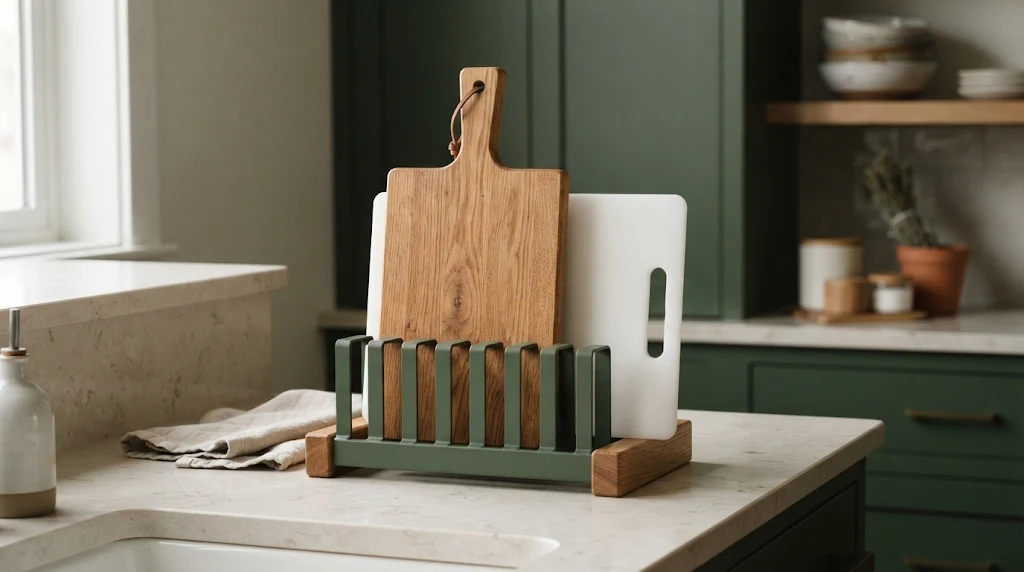
Store cutting boards only after they’re completely dry. Choose a clean location with good airflow and protection from excess heat or moisture.
Simple Storage Habits
- Stand freshly washed boards upright in a stable drying rack.
- Allow airflow around both cutting surfaces.
- Keep boards away from standing water near the sink.
- Don’t trap damp boards inside closed cabinets.
- Keep boards away from hot cookware and direct heat sources.
- Store dedicated raw-meat boards separately when convenient.
Wooden boards can warp when their surfaces absorb or release moisture unevenly. Learn more about how to prevent a cutting board from warping.
A Practical Cutting Board Safety Routine for Everyday Cooking
As of 2026, the basic principles remain simple: clean, separate, and maintain your cutting equipment. I recommend following the same sequence every time you prepare a meal.
Before Preparing Food
- Wash your hands with soap and water.
- Inspect the board for damage or contamination.
- Place the board securely on the countertop.
- Choose the correct knife and cutting surface.
While Preparing Food
- Use controlled knife movements and safe finger positioning.
- Prevent raw juices from contacting ready-to-eat ingredients.
- Switch to a clean board when changing food categories.
- Clean contaminated utensils and wash your hands between tasks.
After Preparing Food
- Remove scraps and wash the cutting board.
- Sanitize when appropriate for the foods handled.
- Rinse and dry according to the material’s instructions.
- Store the board safely once fully dry.
This routine takes little planning once it becomes familiar. Consistency matters more than complicated equipment.
Recommended Cutting Boards for Safer Food Preparation
If you’re setting up a practical kitchen, these three established product options are worth comparing. My selections emphasize cleaning convenience, stability, and material-specific maintenance rather than unverified customer ratings.
🏆 Best for Food Separation
OXO Good Grips 2-Piece Cutting Board Set
★★★★★ Editorial fit: 5/5
This dishwasher-safe set includes two differently sized boards with non-slip feet. The separate surfaces make it convenient to assign one board to raw ingredients and the other to ready-to-eat preparation.
I’d consider it a practical starting point for a household that wants a simple, easy-to-clean setup.
🌿 Best for Wooden Board Fans
John Boos Chop-N-Slice Maple Cutting Board
★★★★☆ Editorial fit: 4/5
This reversible maple board provides a substantial wooden cutting surface for everyday food preparation. Its hardwood construction makes it appealing for cooks who prefer traditional chopping boards.
I’d reserve it mainly for vegetables and other suitable ingredients while following the manufacturer’s handwashing and conditioning instructions.
🧽 Best Lightweight Alternative
Epicurean Kitchen Series Cutting Board
★★★★☆ Editorial fit: 4/5
The Epicurean Kitchen Series uses a thin paper-composite construction with a dual-sided cutting surface. Its dishwasher-safe design and hanging hole simplify cleaning and storage.
I like this option for kitchens where board weight and storage space matter, provided the board is secured before cutting.
Product scores reflect editorial suitability for the stated uses, not verified customer-review averages or laboratory test results. As an Amazon Associate, qualifying purchases may earn a commission at no additional cost to you.
Frequently Asked Questions
Can I Use the Same Cutting Board for Meat and Vegetables?
You can reuse a cutting board for different foods only after thorough cleaning and appropriate sanitizing. However, dedicated boards are a safer, simpler approach for preventing cross-contamination.
Use one surface for raw animal products and another for ready-to-eat vegetables. Never place salad ingredients directly onto a contaminated raw-meat board.
Is a Wooden Cutting Board Safe for Raw Chicken?
A sound wooden cutting board can be used for raw chicken if it is properly cleaned and sanitized afterward. However, a separate dishwasher-safe plastic board may make routine cleaning easier.
Always check the board manufacturer’s instructions. Avoid using wood with open cracks, damaged glue joints, or grooves that cannot be cleaned.
Should I Wash My Cutting Board After Every Use?
Yes. Wash the cutting board after preparing each food item and before switching to another type of food.
Use hot, soapy water, rinse thoroughly, and dry the surface. After handling raw meat, poultry, or seafood, follow appropriate sanitizing guidance before reusing the board.
What Should I Put Under a Cutting Board to Stop It Sliding?
A clean, slightly damp kitchen towel or suitable non-slip mat can help stabilize a cutting board. Some boards already have rubber feet designed to grip countertops.
Test the board before cutting. If it rocks or continues sliding, stop and correct the problem rather than trying to hold it still while cutting.
How Often Should I Replace My Cutting Board?
There is no universal replacement schedule for every cutting board. Inspect it regularly and replace it when cracks, deep knife grooves, severe warping, or other damage prevent safe use.
A clean, stable board with minor cosmetic scratches may remain usable. Proper washing and maintenance can extend its useful life, but they cannot fix every damaged surface.
Final Takeaway: Make Cutting Board Safety a Daily Habit
Learning how to use a cutting board safely doesn’t require expensive equipment. A stable board, controlled knife technique, proper food separation, and consistent cleaning provide a strong foundation.
Start with two dedicated boards whenever possible. Keep one for raw animal products and another for foods that are ready to eat.
Before your next meal, check your board’s stability and surface condition. A few reliable habits can make everyday food preparation cleaner, more controlled, and safer.

