How to Rock Chop With a Chef Knife (Technique & Tips)
Quick Answer
To rock chop with a chef knife, keep the very tip of the blade planted firmly on the cutting board while lifting and lowering the heel in a smooth, continuous rocking motion. Use your non-dominant hand to guide the ingredient while keeping your fingertips tucked inward in a claw grip.
What Is the Rock Chop Technique?
The rock chop is a foundational knife skill used primarily for mincing herbs, garlic, shallots, and small vegetables. Unlike a standard push-cut or chop where the entire blade leaves the cutting board, the rock chop keeps the tip anchored.
This anchoring action creates a pivot point. By lifting the handle end and driving it down in an arc, you can move quickly across a pile of ingredients with steady control. It is an efficient method when you need to reduce soft items into very fine pieces without constantly resetting your blade position.
Mastering this technique improves kitchen speed and minimizes the physical effort needed for repetitive prep work.
Essential Prerequisites Before You Start
 Save
Before practicing the rock chop, ensure your setup meets basic kitchen safety standards. Proper preparation prevents slips, uneven cuts, and accidental injuries.
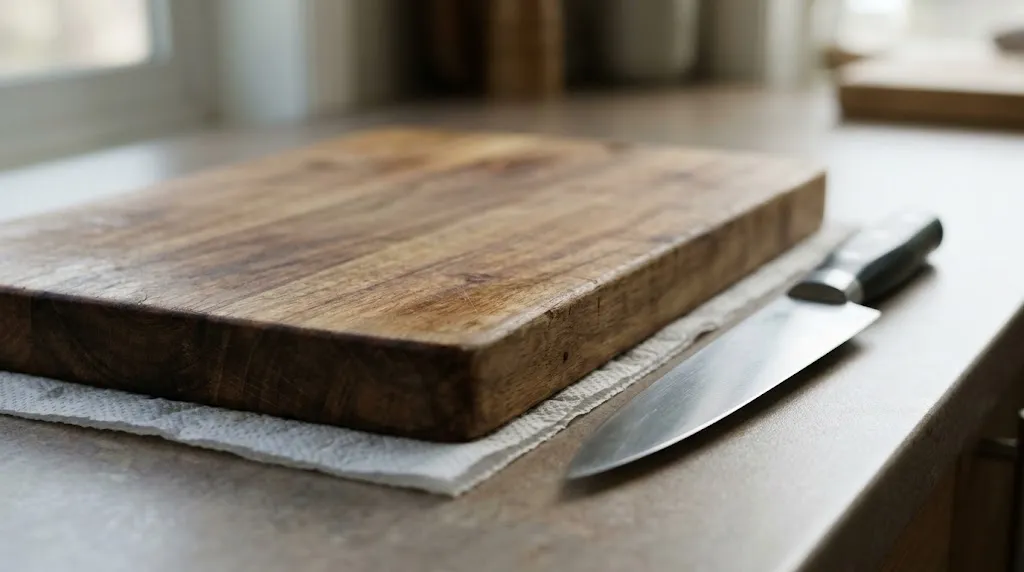
- A stable cutting board: Place a damp paper towel or non-slip mat beneath your wooden or plastic cutting board so it does not slide during motion.
- A sharp chef knife: A dull knife requires excessive downward force and tends to slip off ingredients, increasing the risk of accidents.
- Proper knife grip: Pinch the blade right in front of the bolster with your thumb and index finger, wrapping your remaining three fingers securely around the handle.
Step-by-Step Guide to Rock Chopping
Executing a clean rock chop relies on maintaining contact between the board and the knife tip while your wrist controls the up-and-down motion.
- Gather your ingredients: Pile your herbs or vegetables into a tight mound near the center of the cutting board.
- Anchor the tip: Place the very tip of the chef knife firmly onto the board at the top of the pile. The tip should remain in this exact spot throughout the cutting process.
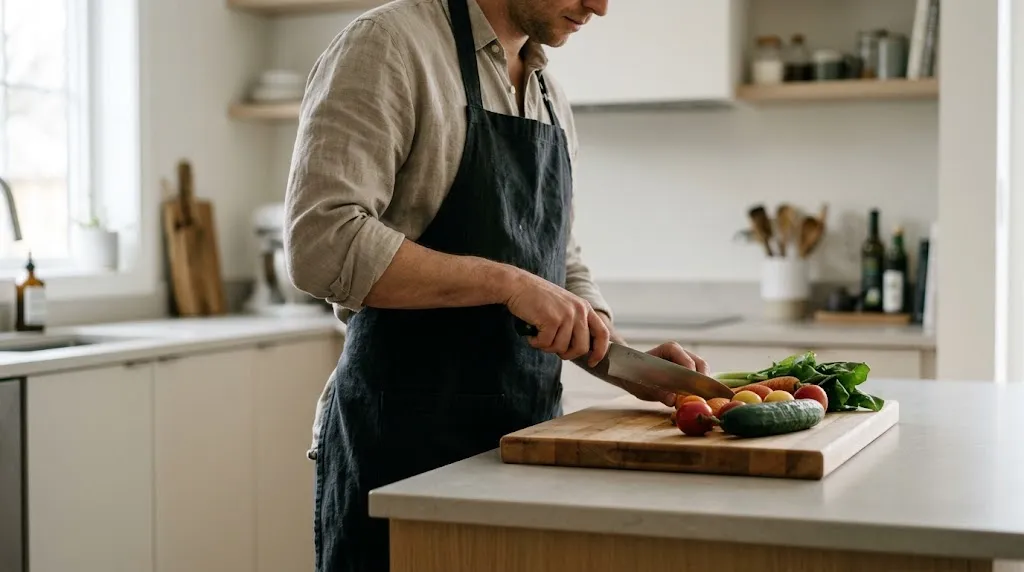
- Adopt the guide hand claw: Form a claw with your non-dominant hand by curling your fingertips inward and resting your knuckles lightly against the flat side of the knife blade. This protects your fingertips from the sharp edge.
- Initiate the rocking motion: Lift the heel of the knife upward, then lower it down and slightly forward in a smooth arc to cut through the ingredients.
- Sweep and repeat: Keep the tip planted, lift the heel, and repeat the motion rhythmically while slowly walking your guide hand backward to process the entire pile.
Tip
Let the weight of the chef knife do most of the work. Avoid slamming the blade down hard onto the board, as this can dull the edge prematurely and bruise delicate herbs like basil or mint.
When to Use the Rock Chop (and When to Avoid It)
The rock chop is versatile, but it is not ideal for every kitchen task. Knowing when to apply this method keeps your cuts clean and protects your equipment.
Use the rock chop for soft herbs, garlic cloves, small shallots, and leafy greens where rapid mincing is required. The pivoting motion allows you to pass over the ingredients multiple times until you reach the desired consistency.
Avoid using the rock chop for hard, dense items like winter squash, large potatoes, or root vegetables. Trying to rock chop dense produce can cause the blade to wedge mid-cut, leading to loss of control. For hard vegetables, use a traditional push-cut or cross-chop with the entire blade leaving the board.
Common Mistakes to Avoid
Refining your technique involves eliminating habits that slow down your prep work or create safety hazards.
- Lifting the tip off the board: If the tip slides away from its anchor point, you lose your pivot and risk uneven cuts. Keep the tip grounded.
- Flat fingers on the guide hand: Extending your fingers flat near the blade invites cuts. Always maintain a protective claw shape with your knuckles guiding the flat of the blade.
- Rushing the rhythm: Speed develops naturally through consistent motion. Focus on smooth, controlled arcs rather than raw velocity when learning the skill.
- Overloading the board: Spreading ingredients across too wide an area prevents the knife from making clean contact during the rock cycle. Keep items gathered in a compact pile.
Warning
Never attempt to rock chop frozen ingredients or foods with hard pits. The sudden resistance can chip the delicate steel edge of your chef knife or cause the blade to slip dangerously.
Maintaining Knife Control and Posture
 Save
Good physical posture supports consistent knife mechanics. Stand comfortably with your feet shoulder-width apart, positioned slightly to the left of your cutting board if you are right-handed. This aligns your dominant shoulder directly over the blade path.
Keep your elbow slightly elevated and relaxed. Bending your wrist too rigidly limits the natural arc of the rock chop. Allow your wrist and forearm to move fluidly together as you lift and lower the heel of the knife.
If your hand begins to cramp or fatigue, pause and check your grip pressure. You should maintain a firm grasp on the handle and pinch grip without squeezing so tightly that your knuckles turn white.
Related Product
Chef Knife Sharpening Stones
Keep your chef knife razor-sharp to ensure smooth rock chopping and clean herb mincing without bruising.
As an Amazon Associate, we earn from qualifying purchases.
Frequently Asked Questions
Can you rock chop with any kitchen knife?
While you can perform a basic rocking motion with many blades, a chef knife or santoku knife is ideal. Their curved bellies and sufficient length provide the proper geometry needed to pivot smoothly around the anchored tip.
Why do my herbs stick to the side of the blade while rock chopping?
Moisture on fresh herbs often causes them to cling to steel surfaces. Using a high-carbon or stainless steel knife with a polished finish can reduce sticking, and wiping the blade with a damp towel between passes helps clear away buildup.
How fast should I move when rock chopping?
Speed is secondary to control. Start slowly to ensure your tip stays anchored and your guide hand maintains the protective claw shape. As muscle memory develops, your natural cadence will speed up safely.
Does rock chopping dull my knife faster than other cuts?
It can accelerate wear near the tip if you press down excessively hard against a hard glass, stone, or bamboo cutting board. Using a wooden or soft plastic board helps preserve your knife edge during repetitive motion.
Can I rock chop garlic without a press?
Yes, the rock chop is one of the best ways to mince garlic by hand. Smash the clove flat with the flat side of the knife first, peel it, coarsely chop it once, and then use the rock chop to reduce it to a fine mince.
What should I do if my knife slips during the chop?
Stop immediately, re-anchor your cutting board with a damp towel underneath, and check that your hands and the knife handle are completely dry. Never attempt to catch a falling knife.
Conclusion
Mastering the rock chop with a chef knife transforms how you handle herbs, garlic, and small vegetables in the kitchen. By keeping the blade tip anchored, using a protective claw grip, and letting the knife’s natural curve guide your motion, you can achieve consistent, efficient results without excessive fatigue. Practice the mechanics slowly, prioritize board stability, and enjoy smoother kitchen prep.

