Chef Knife Blade Thickness Guide: Standards & Differences
Quick Answer
Standard chef knife blade thickness typically ranges from 1.5mm to 4mm at the spine near the handle, tapering down to a razor-thin edge. Western-style chef knives usually feature thicker, more durable spines (around 2.5mm to 4mm), while Japanese-style gyutos are generally thinner (1.5mm to 2.5mm) for enhanced slicing precision and effortless food release.
What Is the Standard Chef Knife Blade Thickness?
 Save
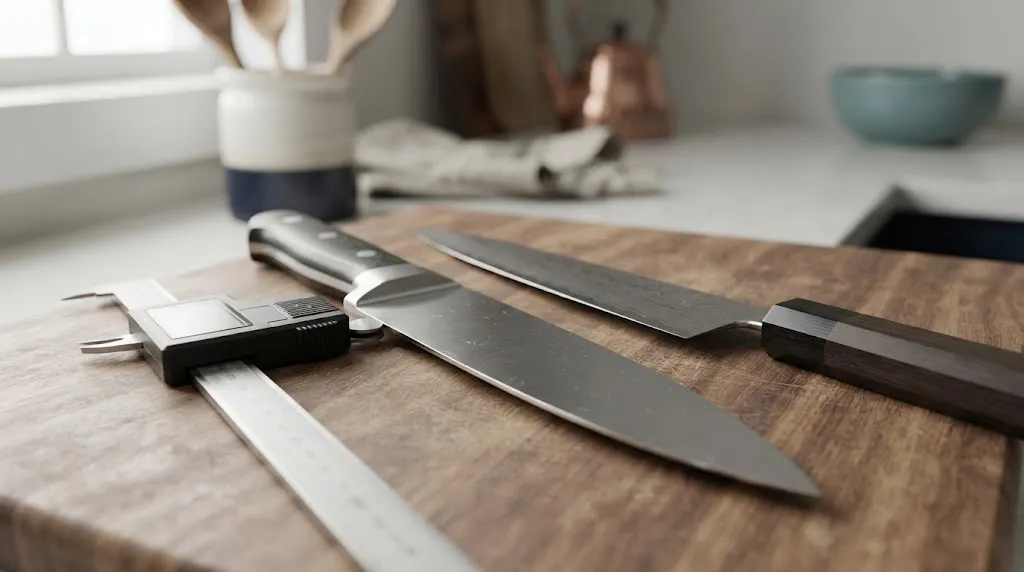
When shopping for a kitchen knife or analyzing your current cutlery, blade thickness is one of the most critical structural specifications. Yet, it is frequently overlooked in favor of steel type, handle material, or brand name. Blade thickness dictates how a knife moves through ingredients, how much physical effort is required during prep work, and how durable the blade remains under heavy pressure.
In general terms, a standard chef knife blade thickness falls between 1.5 millimeters and 4.0 millimeters measured at the thickest point of the spine near the heel. However, this measurement tells only part of the story. A chef knife is rarely uniform in thickness from spine to edge, nor is it identical from the heel near the bolster to the pointed tip.
Manufacturing traditions play a massive role in standard dimensions. Traditional German and French culinary blades are engineered for robust, all-purpose utility—including heavier tasks like cutting through soft poultry bones or dense root vegetables. Consequently, they feature a thicker spine and a more gradual, wedge-like grind. In contrast, Japanese knife-making traditions prioritize nimble, laser-like cutting performance, resulting in significantly thinner spines and a flatter profile behind the edge.
Why Blade Thickness Matters in the Kitchen
The thickness of a chef knife directly influences physical cutting mechanics, user fatigue, and knife longevity. Understanding these dynamics helps explain why two knives with identical steel alloys and hardness ratings can feel entirely different on a cutting board.
First, blade thickness governs the wedge effect. When a blade moves downward through a dense item like a potato or an onion, the sides of the blade push the food apart. A thick blade creates a wider wedge angle, which increases the physical resistance required to push the knife through the food. A thin blade slips through dense matter with minimal resistance, resulting in cleaner cuts and less hand strain during long prep sessions.
Second, thickness dictates structural rigidity and durability. Thicker spines resist bending, twisting, and lateral stress. If you frequently pry apart frozen foods, chop through small squash stems, or apply heavy downward force, a thicker spine provides essential safety margins. Conversely, ultra-thin blades offer superior slicing finesse but demand careful technique. Twisting a thin blade in a hard ingredient can cause micro-chipping or catastrophic failure.
Key Insight
Spine thickness near the handle is only part of the geometry equation. The measurement behind the edge—known as the grind taper—determines actual cutting performance far more than the maximum spine width alone.
Thin Blades vs. Thick Blades: The Core Differences
Evaluating the trade-offs between thin and thick chef knife blades requires looking at specific culinary application categories. Neither style is universally superior; each is optimized for different cooking styles.
| Feature | Thin Blades (1.5mm – 2.5mm) | Thick Blades (3.0mm – 4.0mm+) |
|---|---|---|
| Cutting Resistance | Very low; glides effortlessly through produce. | Higher; can wedge or crack dense vegetables. |
| Durability | Susceptible to chipping if twisted or misused. | High structural resilience against lateral stress. |
| Food Release | Moderate; wet foods may cling to flat sides. | Better natural separation due to wedge taper. |
| Ideal Tasks | Precision slicing, fine brunoise, delicate herbs. | General utility, heavier butchery, robust prep. |
When comparing these options, consider your daily cooking routine. Home cooks who prepare delicate salads, finely slice boneless proteins, and work extensively with fresh produce often prefer a thinner profile. Those who manage heavy-duty meal preparation, split dense winter squashes, or value a forgiving, robust tool lean toward thicker configurations.
How Blade Thickness Varies Across Knife Styles
Regional knife manufacturing traditions approach blade geometry through distinct design philosophies. Recognizing these differences prevents mismatched expectations when purchasing new cutlery.
Western (German/French) Chef Knives
Traditional European brands construct chef knives with durability as a primary objective. The spine often starts at 3.0mm to 4.0mm near the bolster and tapers gently toward the tip. This heavy construction supports rocking motions on the cutting board and provides reassuring weight in the hand. However, this thickness creates more resistance when slicing deeply into rigid ingredients.
Japanese Gyuto and Santoku Knives
Japanese culinary tradition values cutting efficiency above all else. A standard Gyuto features a much thinner spine—frequently between 1.8mm and 2.5mm—and tapers aggressively toward a fine, acute apex. Often referred to as “lasers,” these blades slice through dense ingredients like carrots and sweet potatoes with remarkable ease, though they require disciplined technique to avoid chipping.
Understanding Taper, Spine, and Grind Geometry
A simple measurement at the bolster does not tell the whole story of how a knife performs. Blade geometry relies on three distinct anatomical elements working together:
- Spine Thickness: The flat top edge of the blade, providing structural stiffness.
- Profile Taper: How the spine narrows from the heel toward the tip. A distal taper ensures the tip is nimble and lightweight while the heel retains robust strength.
- Primary Grind: The slope from the spine down toward the cutting edge. Flat grinds, hollow grinds, and convex grinds alter how food separates from the steel.
A well-designed chef knife features a deliberate distal taper. Without this taper, a knife with a thick spine would feel front-heavy, clumsy, and fatiguing during prolonged chopping tasks. A gradual thinning toward the tip ensures balanced handling.
How to Measure Chef Knife Blade Thickness Accurately
 Save
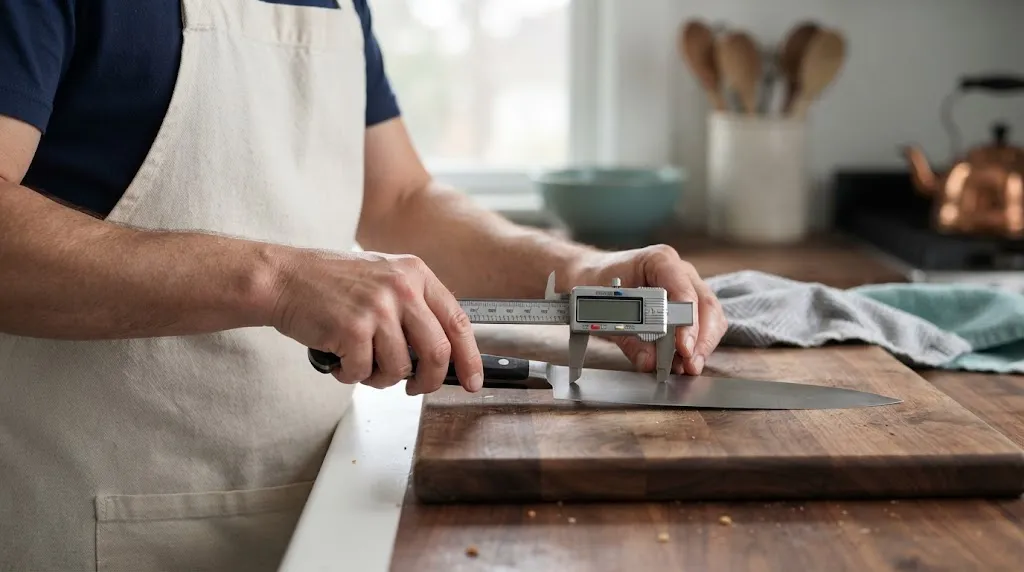
Accurately measuring your knife’s blade thickness requires the right tool. A standard kitchen ruler is insufficient for detecting millimeter-level differences that dramatically affect performance.
To measure correctly, use a digital caliper. Place the measuring jaws at the thickest part of the spine, usually directly above the heel where the blade meets the handle or bolster. Take a secondary measurement halfway down the blade length, and a final measurement near the tip to evaluate the distal taper.
Warning
Never attempt to measure blade thickness with metal calipers while applying excessive pressure that could scratch high-polish finishes or damage delicate edge apexes. Ensure your caliper jaws are clean and dry.
Choosing the Right Blade Thickness for Your Cooking Habits
Selecting the optimal blade thickness depends entirely on your specific culinary workflow and handling preferences. No single specification suits every kitchen task.
If your daily cooking involves intricate vegetable prep, paper-thin fruit slices, and precise push-cuts, a thinner blade (1.5mm to 2.2mm) delivers superior efficiency. You will experience less hand fatigue and cleaner separation of ingredients.
Conversely, if you prepare rustic family meals, handle frequent root vegetable processing, or prefer a heavier, more substantial knife that feels authoritative in the hand, a moderate-to-thick spine (2.5mm to 3.5mm) provides the durability and peace of mind you need.
Related Product
Kitchen Knife Sharpening Stone Set
Maintain optimal cutting geometry and edge performance across thin and thick chef knife blades.
As an Amazon Associate, we earn from qualifying purchases.
Frequently Asked Questions
Is a thicker chef knife always stronger?
Generally, a thicker spine provides greater resistance against bending and lateral stress. However, overall strength also depends on steel alloy composition, heat treatment, and full-tang construction. A thick blade made from brittle steel can still fracture under misuse.
What is the ideal thickness for an all-around home chef knife?
For most home cooks, a spine thickness between 2.0mm and 2.5mm offers the ideal balance. It provides enough rigidity for general tasks while remaining thin enough to slice vegetables cleanly without excessive wedge resistance.
Do Japanese chef knives have thinner blades than German knives?
Yes, traditional Japanese chef knives (like Gyutos) are typically engineered with significantly thinner spines and more acute edge angles compared to traditional German or French knives, focusing heavily on cutting precision.
Does blade thickness affect how often a knife needs sharpening?
Spine thickness itself does not determine edge retention. Edge retention is primarily governed by the steel hardness (measured on the Rockwell scale) and edge geometry near the bevel, rather than the thickness of the spine.
Can a thick knife be thinned down by a professional?
Yes, professional knife sharpeners or custom blade smiths can perform thinning work (known as thinning behind the edge) to improve cutting performance on knives that feel too wedge-like, though it requires removing material from the primary grind.
How does blade thickness impact food sticking to the knife?
Thicker blades create a wider wedge angle that naturally pushes food slices apart more aggressively. Very thin blades often allow moist ingredients like potatoes or cucumbers to cling tightly to the flat sides due to surface tension.
Conclusion
Blade thickness is a foundational specification that shapes every cutting experience in the kitchen. Whether you prefer the robust, forgiving durability of a traditional European blade or the effortless, laser-like precision of a thin Japanese gyuto, understanding these measurements empowers you to select the right tool for your culinary style. By balancing your prep habits with proper geometry and maintenance, you can ensure peak cutting performance for years to come.

