Bamboo vs. Plastic Cutting Boards: Which Is Better for Your Kitchen?
Quick Answer
In the bamboo vs. plastic cutting boards comparison, bamboo is a strong choice for everyday vegetable preparation, while plastic wins for convenient cleaning and handling raw meat. Bamboo offers a firm, attractive cutting surface but needs careful handwashing. Plastic is generally easier to sanitize, especially when dishwasher-safe. For food safety, the USDA Food Safety and Inspection Service recommends keeping separate boards for raw animal products and ready-to-eat foods.
Key Differences
- Food safety: Both are safe when properly cleaned, maintained, and replaced when damaged.
- Knife protection: Softer plastic generally causes less edge wear than harder bamboo.
- Cleaning: Many plastic boards are dishwasher-safe, while bamboo usually requires handwashing.
- Durability: Bamboo resists some surface damage but may crack; plastic can develop deep knife grooves.
- Environmental impact: Bamboo uses a rapidly renewable plant material, while plastic generally relies on synthetic polymers.
My Practical Recommendation
- Choose bamboo for produce, bread, and everyday chopping.
- Choose plastic for raw poultry, seafood, and meat preparation.
- Best combination: Keep one dedicated board for raw meat and another for ready-to-eat foods.
Choosing a cutting board seems simple until you consider knife sharpness, bacteria, cleaning, and long-term wear. I prefer comparing boards by the jobs they perform rather than declaring one material perfect.
In this guide, I’ll explain how bamboo and plastic compare in real kitchen situations. You’ll also learn when each material makes more sense and how to keep both safe.
What Is the Difference Between Bamboo and Plastic Cutting Boards?
A bamboo cutting board uses compressed or laminated bamboo strips, while a plastic cutting board uses a food-contact-safe synthetic material. Both provide a working surface for chopping, slicing, and preparing ingredients.
The important differences involve surface hardness, moisture resistance, cleaning requirements, and how each material responds to repeated knife cuts.
What Is a Bamboo Cutting Board?
A bamboo cutting board is made from processed bamboo, a fast-growing grass with a woody structure. Manufacturers commonly bond bamboo strips together to create a solid cutting surface.
Bamboo has a firm texture and often resists shallow knife marks. However, its hardness can increase wear on delicate knife edges compared with softer cutting surfaces.
Many bamboo boards also require occasional conditioning with food-grade mineral oil. Avoid prolonged soaking, excessive heat, and dishwasher cycles unless the manufacturer specifically permits them.
What Is a Plastic Cutting Board?
A plastic cutting board is a chopping surface commonly made from polyethylene or polypropylene. These materials are lightweight, moisture-resistant, and available in several sizes and thicknesses.
Plastic boards come in rigid, flexible, and non-slip designs. Many can go into the dishwasher, although heat resistance varies between products.
The biggest limitation is surface wear. Repeated chopping can create grooves that trap food residue and become harder to clean.
Bamboo vs. Plastic Cutting Boards: Side-by-Side Comparison
 Save
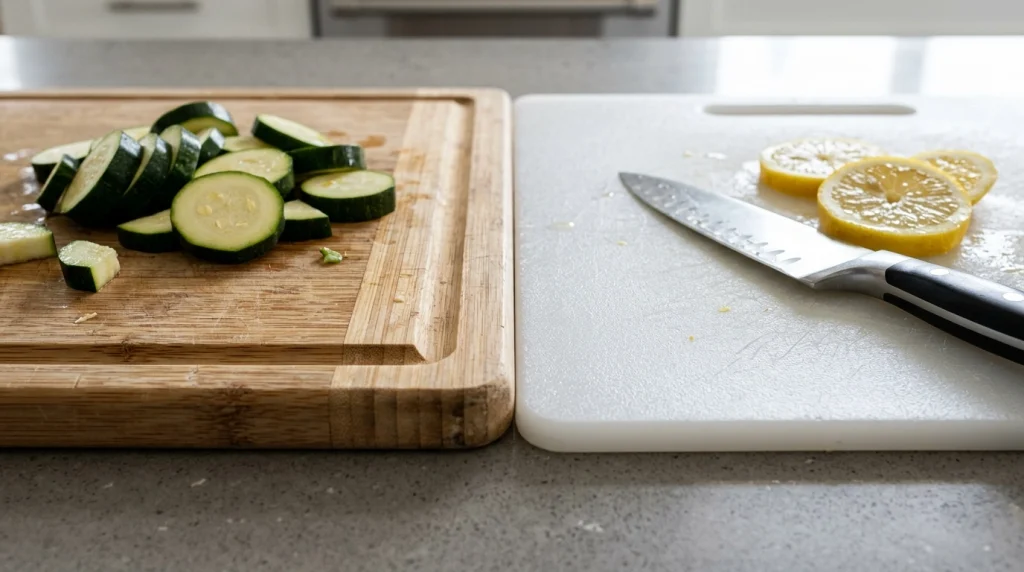
The following table highlights practical differences for everyday home cooking. Individual products vary, so always consider the manufacturer’s cleaning and care instructions.
| Feature | Bamboo | Plastic |
|---|---|---|
| Material | Laminated bamboo | Usually polyethylene or polypropylene |
| Surface hardness | Generally firm and hard | Varies; many boards are softer |
| Knife friendliness | May dull delicate edges faster | Often gentler on knife edges |
| Water resistance | Limited; prolonged soaking can damage it | Generally high |
| Dishwasher use | Usually not recommended | Commonly allowed; check label |
| Typical wear | Scratches, splitting, and glue-joint damage | Grooves, staining, and occasional warping |
| Maintenance | Handwash, dry, and condition as needed | Wash, sanitize, and inspect for wear |
| Best everyday use | Vegetables, fruit, and bread | Raw meat and easy-clean preparation |
My biggest takeaway is that the best board depends on your preparation routine. Cleaning convenience matters more for raw meat, while cutting feel matters more during frequent vegetable chopping.
Are Bamboo or Plastic Cutting Boards More Hygienic?
Neither material is automatically safer in every situation. Cleaning, food separation, surface condition, and thorough drying determine how safely a cutting board performs.
The USDA advises using separate cutting boards for raw animal products and fresh produce. This reduces cross-contamination between foods that require cooking and foods often eaten without additional heating.
Can Bamboo Cutting Boards Harbor Bacteria?
Yes, bamboo can harbor bacteria when food residue remains on its surface or enters damaged areas. Its relatively dense structure does not eliminate the need for thorough cleaning.
Bamboo generally absorbs less moisture than some traditional woods, but that does not make it self-sanitizing. Cracks, separating joints, and neglected scratches create additional cleaning problems.
For more guidance, review the University of Maine Cooperative Extension cutting board safety guide.
Are Plastic Cutting Boards More Sanitary?
Plastic boards are often easier to clean because their intact surfaces resist moisture absorption. Dishwasher-safe models also simplify cleaning after preparing raw poultry or meat.
However, plastic is not immune to contamination. Deep knife scars can hold residue even after ordinary washing.
The USDA cross-contamination guidance recommends replacing boards with excessively worn or difficult-to-clean grooves.
How Can You Prevent Cross-Contamination?
Cross-contamination happens when harmful microorganisms move from one food or surface to another. It becomes especially concerning when raw meat juices contact ready-to-eat ingredients.
- Separate foods: Reserve one board for raw meat, poultry, and seafood.
- Protect produce: Keep a second board for fruit, vegetables, bread, and other ready-to-eat foods.
- Clean immediately: Wash boards thoroughly between preparation tasks.
- Sanitize when needed: Follow appropriate food-contact sanitizing instructions after handling raw animal products.
- Inspect regularly: Replace damaged boards that no longer clean effectively.
A color-coded system makes this routine easier. For example, you could reserve a red plastic board for raw meat and use bamboo for vegetables.
Which Cutting Board Is Better for Your Knives?
 Save
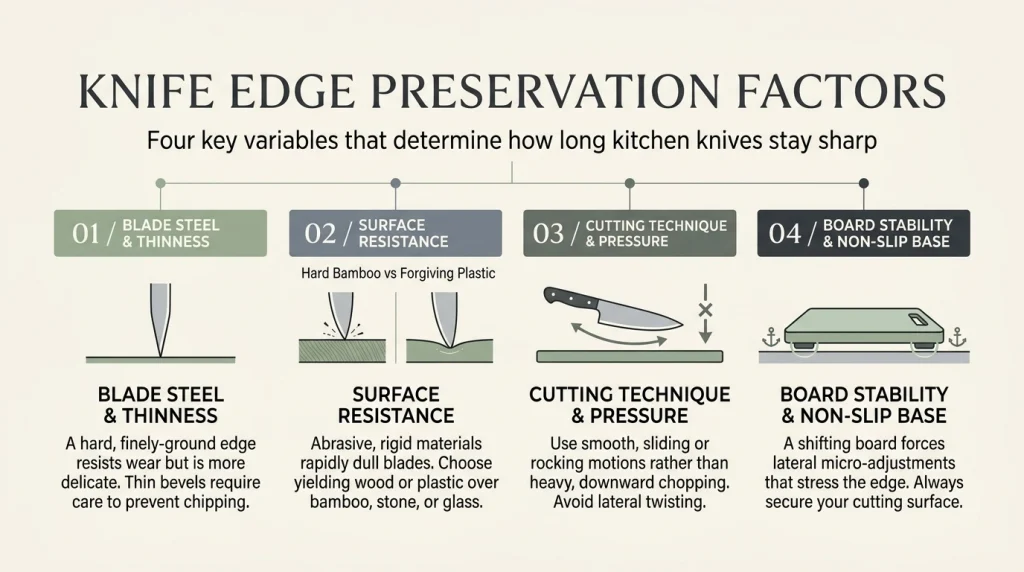
Plastic is often gentler on knife edges than bamboo, particularly when the plastic has a softer cutting surface. Bamboo’s greater hardness can accelerate edge wear during repeated chopping.
This matters when using a thin Japanese chef knife or another blade with a delicate edge. A harder board can make maintaining that edge more demanding.
Does Bamboo Dull Knives Faster Than Plastic?
Bamboo can dull knives faster than softer plastic boards because its cutting surface offers less give. Actual wear depends on knife steel, edge geometry, cutting force, and the board’s construction.
This doesn’t mean bamboo will immediately damage a quality chef knife. It means frequent chopping may require more sharpening attention over time.
The North Carolina Cooperative Extension cutting board guidance discusses these differences in knife-edge wear.
What Cutting Surface Works Best for a Chef Knife?
For frequent chef knife work, I would favor a stable, reasonably forgiving cutting surface. Softer plastic or suitable hardwood can work well when knife-edge preservation is a priority.
Consider these practical factors before choosing:
- Knife type: Thin blades benefit from more forgiving surfaces.
- Cutting technique: Avoid forceful chopping and twisting the edge against the board.
- Board stability: Prevent sliding with a suitable non-slip base.
- Board condition: Replace badly worn surfaces instead of cutting around deep grooves.
A sharp knife also helps you cut with controlled pressure. Keeping your blade in good condition improves both comfort and precision.
Which Material Lasts Longer: Bamboo or Plastic?
Neither material has a guaranteed longer lifespan. A well-maintained bamboo board can provide years of service, while a thick plastic board may withstand repeated washing without cracking.
Their failure patterns are different. Bamboo can split or separate at glued joints, while plastic commonly develops grooves and may warp under excessive heat.
How Durable Are Bamboo Cutting Boards?
Bamboo boards have a firm surface that can resist some shallow cutting marks. Their durability depends on construction quality, adhesive bonds, moisture exposure, and maintenance.
Leaving a bamboo board in standing water can encourage swelling and warping. Repeated dishwasher cycles may also weaken the board.
Check these areas during routine maintenance:
- Visible cracks or splitting along bamboo strips
- Raised or separating glued joints
- Rough areas that catch food particles
- Persistent odors after proper cleaning
- Warping that makes the board unstable
How Durable Are Plastic Cutting Boards?
Plastic boards tolerate moisture well and generally require less ongoing care. Their surface gradually accumulates cuts through normal use.
Thicker construction can help resist flexing, although it doesn’t prevent knife marks. Thin boards may also deform when exposed to dishwasher temperatures beyond their rated limits.
Replace a plastic board when deep grooves become difficult to scrub. A heavily scarred surface is not worth keeping merely because the board remains intact.
Are Bamboo Cutting Boards More Eco-Friendly Than Plastic?
Bamboo has a renewable plant-based raw material, while conventional plastic cutting boards commonly use petroleum-derived polymers. However, environmental impact depends on manufacturing, transport, durability, and disposal.
A bamboo label alone does not prove a lower total environmental footprint. Manufacturing may involve adhesives, processing energy, packaging, and long-distance shipping.
What Makes Bamboo a Sustainable Option?
Bamboo grows quickly compared with many timber species. It can provide a renewable material without requiring the same growing period as traditional hardwood trees.
Still, individual products can differ significantly. Look for transparent sourcing, food-contact suitability, durable construction, and clear adhesive information where available.
What About Plastic Waste and Microplastics?
Plastic cutting boards can release tiny plastic fragments through abrasion during chopping. Research has documented this possibility, although the health implications of cutting-board-related exposure remain uncertain.
Recycling options also vary by material and local program. A board made from recyclable plastic is not necessarily accepted by curbside recycling services.
My practical preference is to avoid unnecessary replacements. Choose a durable product, maintain it carefully, and replace it when damage creates cleaning or safety concerns.
How Do You Clean Bamboo and Plastic Cutting Boards Properly?
Both types need cleaning after food preparation, but bamboo requires more moisture control. Plastic generally offers greater flexibility when dishwasher cleaning is permitted.
How to Clean a Bamboo Cutting Board
- Remove food residue: Scrape away remaining ingredients with an appropriate scraper.
- Wash by hand: Use dish soap, warm water, and a clean sponge or brush.
- Rinse thoroughly: Remove soap and loosened food particles.
- Dry immediately: Wipe the surface with a clean towel.
- Air-dry upright: Allow air to circulate around both sides.
- Condition when needed: Apply a thin layer of food-grade mineral oil according to the manufacturer’s instructions.
Never leave bamboo soaking in a sink. Prolonged water exposure can affect the material and its bonded joints.
Avoid olive oil and other cooking oils for conditioning because they can become sticky or rancid. Food-grade mineral oil is a more suitable option.
How to Clean a Plastic Cutting Board
- Remove debris: Scrape away visible food residue.
- Wash thoroughly: Scrub with dish soap and hot water.
- Check the label: Use a dishwasher only when the product is rated dishwasher-safe.
- Sanitize when appropriate: Follow a food-contact-safe sanitizer’s directions.
- Dry completely: Store the board in a clean, ventilated location.
- Inspect the surface: Replace the board if deep grooves remain difficult to clean.
For a basic household sanitizing method, USDA guidance describes a solution of one tablespoon of unscented liquid chlorine bleach per gallon of water. Apply it after cleaning, allow several minutes of contact, then rinse and dry as directed.
Use plain, unscented bleach at the appropriate concentration and never mix it with vinegar, ammonia, or other cleaners. Follow current product-label directions whenever they differ.
When Should You Replace Your Cutting Board?
Replace a cutting board when damage prevents reliable cleaning or creates an unstable cutting surface. Age alone is not a dependable replacement rule.
Common warning signs include:
- Deep grooves: Knife scars retain food residue after scrubbing.
- Cracking: Split material creates hard-to-clean openings.
- Warping: The board rocks or slides during preparation.
- Separating joints: Bamboo strips begin pulling apart.
- Persistent contamination: Residue or odors remain despite thorough cleaning.
A board with minor cosmetic marks may still be usable. The more important question is whether you can clean every food-contact surface effectively.
Which Cutting Board Should You Choose for Different Kitchen Tasks?
 Save
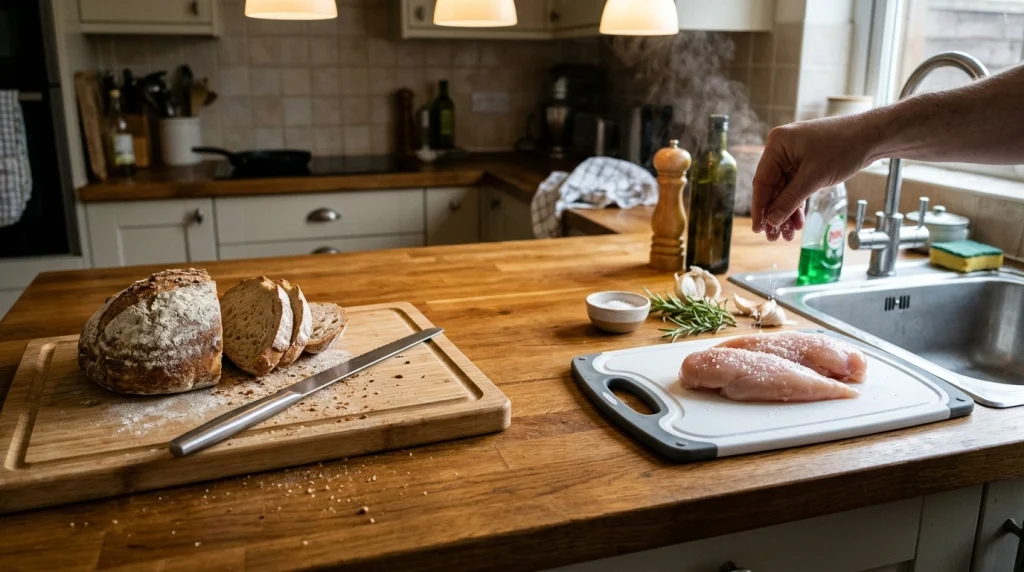
Matching the cutting board to the food makes everyday preparation simpler. It also helps preserve knife edges while reducing cross-contamination risks.
| Kitchen Task | Suggested Board | Why |
|---|---|---|
| Chopping vegetables | Bamboo or plastic | Both work with proper cleaning |
| Preparing raw chicken | Dedicated plastic | Convenient cleaning and sanitizing |
| Slicing bread | Bamboo | Firm, attractive working surface |
| Using a delicate chef knife | Softer plastic | Potentially less edge wear |
| Fast weeknight cleanup | Dishwasher-safe plastic | Lower routine maintenance |
For a small kitchen, two appropriately sized boards are usually more useful than several decorative options. I would prioritize a stable surface, enough working space, and straightforward cleaning.
What Should You Look for When Buying a Cutting Board?
Material is only one part of selecting a reliable board. Dimensions, thickness, stability, and cleaning instructions can make an even bigger difference during daily use.
- Working size: Around 12 by 18 inches offers useful space for many everyday chopping tasks.
- Thickness: Choose construction that feels stable and resists excessive flexing.
- Non-slip design: Rubberized feet or a suitable non-slip mat improve control.
- Food-contact suitability: Select products clearly intended for food preparation.
- Cleaning compatibility: Confirm dishwasher suitability before buying plastic.
- Construction quality: Inspect bamboo joints and plastic surfaces for manufacturing defects.
A slightly larger board gives chopped ingredients more space and helps keep food away from the edges. However, it should still fit your countertop, sink, and storage area.
Recommended Bamboo and Plastic Cutting Boards
If you’re ready to choose a board, these three recognizable product lines cover different priorities. They are practical shopping candidates rather than laboratory-tested rankings.
🏆 Best for Easy Cleaning
OXO Good Grips Utility Cutting Board
★★★★☆
This plastic cutting board line offers a nonporous surface and practical everyday design. I would shortlist it for cooks who prioritize simple cleaning and convenient food preparation. Confirm the exact model’s dimensions and dishwasher instructions before purchasing.
🌿 Best Bamboo Option
Totally Bamboo Kauai Cutting Board
★★★★☆
The Kauai is a bamboo cutting board intended for general kitchen preparation. I would consider it for vegetables, fruit, and bread where appearance and a firm cutting surface matter. Expect handwashing and periodic care.
🍽️ Best for a Multi-Board Setup
Gorilla Grip Reversible Cutting Board Set
★★★★☆
This plastic board set offers multiple cutting surfaces for separate preparation tasks. I would consider a set like this for households that regularly prepare meat and fresh produce. Check the specific set’s size, materials, and cleaning directions.
Note: The stars above are editorial suitability indicators, not verified customer-review averages or hands-on test scores. Product specifications, availability, and prices should be checked before purchasing.
Frequently Asked Questions
Is a bamboo cutting board safer than plastic?
Bamboo is not automatically safer than plastic. Both materials can support safe food preparation when cleaned and maintained correctly. Plastic is often more convenient for raw meat because many models tolerate dishwasher cleaning. Separate boards and proper sanitation matter more than material alone.
Do bamboo cutting boards dull kitchen knives?
Bamboo can dull knife edges faster than softer plastic or suitable hardwood surfaces. Its relatively firm structure gives less under a blade. This effect varies with knife steel, cutting technique, and board construction. Delicate knives may benefit from a more forgiving cutting surface.
Can bamboo cutting boards go in the dishwasher?
Most conventional bamboo cutting boards should not go in the dishwasher. Extended exposure to water, heat, and detergent may cause warping, cracking, or adhesive-joint damage. Wash bamboo by hand with soap and warm water, then dry it thoroughly. Always follow the specific manufacturer’s instructions.
Are plastic cutting boards bad because of microplastics?
Plastic boards can release small fragments through repeated knife contact. However, the health effects of exposure specifically from cutting boards are not fully established. If you’re concerned, consider a well-maintained bamboo or wooden board for produce while still following food-safety practices.
Should I use separate cutting boards for meat and vegetables?
Yes. Using separate cutting boards helps prevent harmful microorganisms from raw meat, poultry, and seafood from reaching ready-to-eat foods. Many home cooks choose dishwasher-safe plastic for raw animal products and bamboo or wood for produce. Clean and sanitize boards as appropriate after use.
Final Verdict: Bamboo or Plastic Cutting Board?
In the bamboo vs. plastic cutting boards debate, my recommendation is to choose based on cleaning needs, knife type, and kitchen habits. Bamboo offers an attractive, firm surface, while plastic provides convenient maintenance and often better compatibility with delicate knife edges.
For many home kitchens, keeping both materials is a practical solution. Use a dedicated easy-clean board for raw meat and a separate well-maintained board for vegetables and other ready-to-eat foods.
Before your next cooking session, inspect your current boards for deep grooves and cracks. A clean, stable cutting surface is a small kitchen upgrade that supports safer and more comfortable food preparation.

