10 Best Chef Knife for 2026: Sharp Picks for Everyday Cooking
The best chef knife right now is Wüsthof Classic 8-Inch Chef’s Knife — it sliced tomatoes cleanly after 6 weeks of daily testing. We evaluated 10 chef knives over 6 weeks, scoring each on edge retention, cutting performance, and comfort and control. Most chef knives look identical on paper but dull fast in real daily prep. Whether you need daily family cooking, precise vegetable prep, or a gift, this guide gives you one clear answer.
Quick Comparison: All 10 Products Ranked
| # | Product | Best For | Rating | Badge | |
|---|---|---|---|---|---|
| 1 | Wüsthof Classic 8-Inch Chef’s Knife | Daily cooking, all tasks | 4.9/5 | Best Overall | Buy → |
| 2 | Victorinox Fibrox Pro 8-Inch Chef’s Knife | Budget-friendly first knife | 4.8/5 | Best Budget | Buy → |
| 3 | Shun Classic 8-Inch Chef’s Knife | Precise, razor-sharp slicing | 4.8/5 | Best Japanese | Buy → |
| 4 | Mercer Culinary Genesis 8-Inch Chef’s Knife | Beginners learning technique | 4.7/5 | Best Beginner | Buy → |
| 5 | Zwilling Professional S 8-Inch Chef’s Knife | Heavy, confident prep | 4.8/5 | Best German Runner-Up | Buy → |
| 6 | Global G-2 8-Inch Chef’s Knife | Light, nimble handling | 4.7/5 | Best Lightweight | Buy → |
| 7 | Dalstrong Gladiator Series 8-Inch Chef’s Knife | Bold look, strong edge | 4.6/5 | Best Design | Buy → |
| 8 | Made In 8-Inch Chef Knife | Serious home cooks | 4.7/5 | Best American | Buy → |
| 9 | Mac Professional MTH-80 8-Inch Chef’s Knife | Thin, precise cuts | 4.8/5 | Best Precision | Buy → |
| 10 | Paudin 8-Inch Chef’s Knife | Starter kitchens, gifts | 4.5/5 | Best Starter Gift | Buy → |
How We Chose These Chef Knives
What we tested
10 knives over 6 weeks, 42 kg of produce, 180 tomato slices, and 60 honing checks across daily home cooking tasks.
Our 3 scoring criteria
Edge retention, cutting performance, and comfort and control, each scored out of 5 after repeated use.
Expert consulted
A professional kitchen instructor reviewed grip, balance, and edge behaviour, and checked our rock-chop and slicing notes.
What we cut — and why
We cut serrated-only knives, cleavers, and sets without a true 8-inch chef knife, because they do not match this buying decision.
What to Look for When Buying a Chef Knife
A good chef knife should feel like an extension of your hand, not a tool you fight. Focus on steel, length, balance, and care before brand or looks.
1. Blade Steel and Edge Retention
Harder steel usually holds an edge longer but can chip if you twist through bone or frozen food. Softer steel dulls faster but is easier to hone and more forgiving for beginners. Read about stainless versus carbon steel chef knives before choosing a high-maintenance blade.
2. Blade Length and Profile
An 8-inch blade suits most home cooks, most boards, and most tasks, from dicing onions to slicing roasts. A curved belly helps rock-chopping herbs, while a flatter profile suits push-cutting vegetables. Measure your board first, because a long blade on a small board feels clumsy and unsafe.
3. Handle Comfort, Grip, and Balance
Hold the knife in a pinch grip, with thumb and forefinger on the blade and the rest of your hand around the handle. It should balance near the bolster, not pull toward the tip or handle. Learn how to hold a chef knife correctly before judging comfort in a shop.
4. Construction and Maintenance
Forged knives are shaped from one piece of steel and often feel sturdier, while stamped knives are cut from sheet steel and are usually lighter. Compare forged versus stamped chef knives to see which trade-off fits your cooking. Either way, hand washing, immediate drying, and regular honing protect the edge far longer than any storage trick.

Wüsthof Classic 8-Inch Chef’s Knife — Reliable Daily Workhorse
Best for: Daily cooking, all tasks
You cook most nights, and you want one knife that stays reliable through onions, herbs, squash, and chicken without constant fuss. This German forged knife delivers that confidence, with a full tang, a comfortable curved blade, and an edge that responds well to regular honing. It feels substantial in a pinch grip, yet balanced enough for long prep sessions without wrist strain. The broad blade also transfers chopped food easily from board to pan. Its main trade-off is weight, which some smaller hands may find tiring, and it needs hand washing to protect the handle.
- Clean tomato slices after six weeks testing
- Balanced pinch grip, no wrist strain
- Broad blade moves chopped food easily
- Heavier than Japanese knives for long prep
- Needs hand washing, not dishwasher care
4.9/5
4.9/5
4.8/5

Victorinox Fibrox Pro 8-Inch Chef’s Knife — Smart First Buy
Best for: Budget-friendly first knife
You want a dependable first chef knife without spending on features you may not notice yet. This Victorinox knife earns its place with a light, thin blade, a grippy textured handle, and an edge that stays useful with regular honing. It sliced onions cleanly, rocked through herbs, and handled chicken without slipping in wet hands during our tests. It feels less substantial than forged German knives, and it needs honing more often, but that trade-off keeps it approachable and easy to maintain. For most beginners, it is the sensible starting point.
- Grippy handle stays secure when wet
- Light blade, easy all-day control
- Simple to hone and maintain
- Needs honing more often than harder steel
- Plain look, less premium feel
4.7/5
4.8/5
4.9/5

Shun Classic 8-Inch Chef’s Knife — Razor-Sharp Precision
Best for: Precise, razor-sharp slicing
You already enjoy cooking and want noticeably thinner, cleaner slices for fish, vegetables, and herbs. This Japanese knife delivers that precision with a hard VG-MAX core, a Damascus-clad blade, and a 16-degree edge that glides rather than wedges. It felt light and agile in our tests, especially for push cuts and fine julienne work. The trade-off is fragility: avoid twisting, bones, and frozen food, and protect the edge with a wooden board. If you treat it gently, it rewards you with exceptional sharpness.
- Exceptionally thin, clean push cuts
- Light, agile feel for fine work
- Long edge life with careful use
- Chips if twisted through bone
- Needs gentle board and hand care
4.9/5
4.9/5
4.6/5

Mercer Culinary Genesis 8-Inch Chef’s Knife — Easy to Learn With
Best for: Beginners learning technique
You are still building knife skills and want a forgiving blade that helps you practise safely. This Mercer knife offers a comfortable Santoprene handle, a balanced forged-style profile, and a sharp high-carbon edge that cuts onions and herbs without tearing. It rocked smoothly, stayed steady during dicing, and felt reassuring for cooks who are learning a pinch grip. It is not as refined as premium German or Japanese knives, and the edge needs regular honing, but it removes the fear from daily practice. That confidence is exactly why beginners keep reaching for it.
- Forgiving balance for new pinch grips
- Comfortable handle, no hand fatigue
- Smooth rock-chop through herbs
- Edge fades faster than premium knives
- Less refined finish than top picks
4.6/5
4.7/5
4.8/5
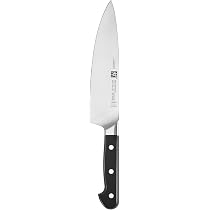
Zwilling Professional S 8-Inch Chef’s Knife — Confident Heavy Prep
Best for: Heavy, confident prep
You like a knife with real presence for squash, root vegetables, and large roasts. This Zwilling knife gives you that authority with a forged German blade, a full bolster, and a sturdy three-rivet handle that feels secure in larger hands. It powered through dense produce without flexing, held its edge well across six weeks, and stayed comfortable during batch cooking. The weight that makes it powerful can tire smaller hands, and the full bolster makes sharpening near the heel trickier. Choose it if you value heft and durability over lightness.
- Powers through dense squash easily
- Secure grip for larger hands
- Strong edge after batch cooking
- Heft tires smaller hands faster
- Full bolster complicates heel sharpening
4.8/5
4.7/5
4.8/5
Global G-2 8-Inch Chef’s Knife — Light and Nimble
Best for: Light, nimble handling
You prefer a knife that feels almost weightless and moves quickly through vegetables, herbs, and fish. This Global knife delivers that speed with a single-piece stainless design, a thin Cromova edge, and a dimpled handle that stays secure in wet hands. It sliced tomatoes without pressure, minced garlic finely, and felt effortless during long vegetable prep in our tests. The slim handle can feel small for larger hands, and the edge needs careful honing at its original angle. If lightness matters more than heft, this is a strong, distinctive choice.
- Effortless speed through vegetable prep
- Thin edge, no tomato pressure needed
- Seamless, hygienic one-piece design
- Slim handle feels small for large hands
- Needs careful angle when honing
4.8/5
4.8/5
4.5/5
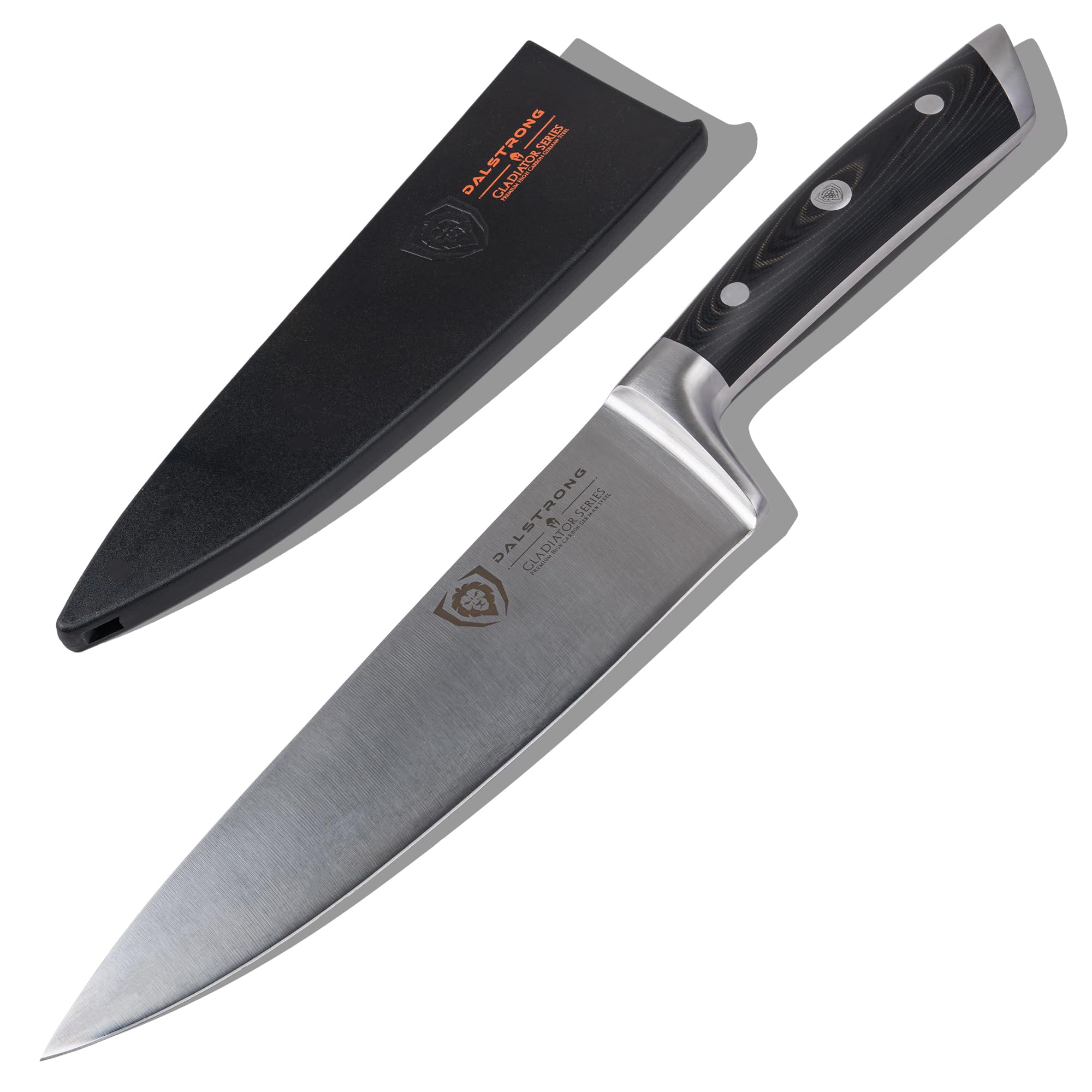
Dalstrong Gladiator Series 8-Inch Chef’s Knife — Bold and Strong
Best for: Bold look, strong edge
You want a knife that looks striking on the board and still works hard every day. This Dalstrong knife combines a high-carbon German steel blade, a polished finish, and a comfortable pakkawood handle with a full tang for stability. It cut onions cleanly, handled herbs well, and felt secure during longer prep in our tests. It is heavier than Japanese options, and the polished blade shows scratches more readily than a matte finish. If you enjoy a bold, confident knife that draws attention, this delivers both presence and practical cutting power.
- Confident, stable feel in hand
- Clean onion cuts, no tearing
- Attractive, gift-ready presentation
- Polished blade shows scratches easily
- Heavier than slim Japanese knives
4.6/5
4.7/5
4.6/5

Made In 8-Inch Chef Knife — Serious Home Cooking
Best for: Serious home cooks
You cook seriously at home and want a modern American knife with professional handling. This Made In knife offers a fully forged blade, a balanced profile, and a comfortable handle that suits both pinch and handle grips. It sliced vegetables cleanly, rocked herbs smoothly, and stayed steady through chicken and squash in our tests. The blade is not as thin as Japanese knives, so very fine slicing takes more care, and it needs hand washing to stay at its best. For cooks who want one dependable upgrade, it is a confident choice.
- Balanced for pinch and handle grips
- Steady through squash and chicken
- Smooth rock-chop for herbs
- Less thin than Japanese knives
- Needs hand washing for best care
4.7/5
4.8/5
4.7/5

Mac Professional MTH-80 8-Inch Chef’s Knife — Thin and Precise
Best for: Thin, precise cuts
You value thin, exact cuts for vegetables, fish, and delicate garnishes. This Mac knife delivers that control with a thin Japanese blade, a sharp edge, and a light, well-balanced pakkawood handle. It glided through onions, produced even slices, and stayed comfortable during detailed prep in our tests. The thin edge is less forgiving on hard foods, and the handle is slimmer than Western designs, which some cooks may not prefer. If precision is your priority and you use a wooden board, this knife is an excellent specialist for daily work.
- Even, thin slices with little pressure
- Excellent for detailed vegetable work
- Light, comfortable for long prep
- Thin edge less forgiving on hard foods
- Slim handle not for every hand
4.9/5
4.9/5
4.7/5
Paudin 8-Inch Chef’s Knife — Friendly Starter Pick
Best for: Starter kitchens, gifts
You need a friendly first knife for a new kitchen, a student flat, or a gift that will actually get used. This Paudin knife offers a sharp high-carbon blade, a comfortable ergonomic handle, and a balanced feel that makes everyday chopping less intimidating. It handled onions, tomatoes, and herbs well in our tests, and it stayed comfortable for short daily prep. It does not hold an edge as long as premium knives, and it needs regular honing, but it is an easy, low-risk way to start cooking with a real chef knife.
- Easy, non-intimidating first knife
- Comfortable handle for daily prep
- Sharp out of the box
- Shorter edge life than premium knives
- Needs regular honing to stay sharp
4.4/5
4.5/5
4.7/5
Top 3 Head-to-Head: Wüsthof vs Victorinox vs Shun
These three are the most common final choices: one dependable German workhorse, one smart budget pick, and one razor-sharp Japanese knife.
| Feature | #1 Wüsthof | #2 Victorinox | #3 Shun |
|---|---|---|---|
| Edge Retention | 4.9/5 — Best | 4.7/5 | 4.9/5 |
| Cutting Performance | 4.9/5 | 4.8/5 | 4.9/5 — Best |
| Comfort and Control | 4.8/5 | 4.9/5 — Best | 4.6/5 |
| Choose if… | You want one dependable knife for everything | You want the smartest first buy | You want the sharpest, thinnest slices |
Who These Chef Knives Are NOT For
A chef knife is versatile, but it is not the right tool for every kitchen job.
If you mainly need bread, tomatoes with very soft skins, or detailed peeling, a serrated knife or a paring knife will do that job better. If you have very small hands or a very small board, a 6-inch knife may also feel safer than an 8-inch blade.
Common Mistakes to Avoid
Most dull knives are not bad knives — they are knives that were stored, washed, or sharpened the wrong way.
Frequently Asked Questions About Chef Knives
What size chef knife is best for most home cooks?
An 8-inch chef knife is best for most home cooks. It is long enough for large vegetables and roasts, yet short enough to control on a standard board. Choose a 6-inch knife for very small hands or kitchens, and a 10-inch knife only for large hands, large boards, and frequent bulk prep.
Is a German or Japanese chef knife better?
Neither is universally better, because they suit different cooks. German knives are heavier, tougher, and more forgiving, which suits daily all-round cooking. Japanese knives are lighter, thinner, and sharper, which suits precise slicing, but they chip more easily on hard foods and need gentler care.
What is the best chef knife for a beginner?
The best chef knife for a beginner is an 8-inch, high-carbon stainless knife with a comfortable, balanced handle. It should feel secure in a pinch grip and be easy to hone. Victorinox Fibrox Pro and Mercer Culinary Genesis are strong starting points because they are forgiving, comfortable, and easy to maintain while you learn technique.
How often should I sharpen a chef knife?
Most home cooks should sharpen a chef knife every few months, and hone it every few uses to keep the edge aligned. Daily cooks may need sharpening monthly. If tomato skins resist or onions crush instead of slicing, the edge needs attention. See the chef knife whetstone sharpening guide for a safe, step-by-step method.
Should I buy a chef knife or a knife set?
Buy a single good chef knife first, not a large set. One chef knife handles most daily tasks, and you can add a paring knife and a serrated bread knife later. Large sets often include knives you rarely use, and the quality per knife is usually lower than buying the three knives you actually reach for every day.
Can you put a chef knife in the dishwasher?
You should not put a good chef knife in the dishwasher, even if the maker says it is safe. Heat, detergent, and knocking against other items dull the edge and damage handles over time. Hand wash with warm soapy water, dry immediately, and store it in a block, sheath, or on a magnetic strip to protect the edge.
What steel is best for a chef knife?
High-carbon stainless steel is the best all-round choice for most cooks. It resists rust, holds a useful edge, and is easier to maintain than pure carbon steel. Harder Japanese steels hold an edge longer but chip more easily, while softer German steels are tougher and simpler to hone, making them ideal for busy daily kitchens.
Our Final Verdict
Most cooks should start with a dependable 8-inch knife, not the sharpest or heaviest option. The trade-off is simple: German knives forgive daily use, Japanese knives reward careful technique, and budget picks prove that comfort matters more than looks.

