Are Tempered Glass Cutting Boards Heat Resistant? A Complete Safety Guide
Quick Answer
Yes, tempered glass cutting boards are heat resistant, but they are not heatproof. They can tolerate some warmth and moderate heat, depending on their design. However, placing hot cookware directly from the stove or oven onto an ordinary glass cutting board can cause cracking or sudden breakage. Always check the manufacturer’s temperature rating and follow tempered glass care recommendations before exposing your board to heat.
What You Need to Know
- Moderate heat: Some tempered glass boards tolerate warm dishes, but limits vary by manufacturer.
- Hot cookware: Avoid placing pots or pans directly from an oven or burner onto the board unless explicitly permitted.
- Thermal shock: Sudden temperature changes can cause tempered glass to fracture.
- Oven use: A cutting board is not oven-safe unless its manufacturer specifically says so.
- Knife protection: Glass surfaces can dull knife edges faster than wood or plastic.
Safest Approach
- Use a dedicated heat-rated trivet for hot cookware and reserve your glass board for suitable food preparation or serving.
Glass cutting boards look beautiful on kitchen counters, but their ability to handle heat often causes confusion. A board may feel strong and durable, yet still crack when exposed to a hot skillet.
In this guide, I’ll explain how tempered glass reacts to heat, which kitchen activities are safe, and when you should choose another surface.
What Is a Tempered Glass Cutting Board?
A tempered glass cutting board is a food-preparation surface made from glass that has undergone a strengthening process. Manufacturers commonly use controlled heating and rapid cooling to create compressive stress at the surface.
This process makes the finished glass more resistant to certain impacts and mechanical stresses than ordinary glass. It does not make the board unbreakable.
How Is Tempered Glass Different From Regular Glass?
Regular annealed glass and tempered glass behave differently under stress. Tempered glass is designed to provide greater strength and a different breakage pattern.
- Regular glass: Can break into large, sharp fragments.
- Tempered glass: Generally breaks into numerous smaller fragments when it fails.
- Surface strength: Tempering improves resistance to certain stresses.
- Heat performance: Depends on the glass composition, thickness, manufacturing process, and product design.
- Durability: Damage to edges or surfaces can compromise strength.
One important distinction is that tempered glass is not automatically oven-safe glass. Those terms describe different characteristics and should not be treated as interchangeable.
Are Tempered Glass Cutting Boards Heat Resistant?
Yes, tempered glass cutting boards have some resistance to heat. However, the safe temperature depends on the specific board and its manufacturer’s instructions.
For example, KESPER lists approximately 200°C (392°F) heat resistance for certain glass cutting plates. Its instructions still warn against placing cookware directly from the stove or oven onto the plate.
That distinction matters. A laboratory temperature rating doesn’t guarantee safety when a hot pan transfers concentrated heat to one area.
What Temperature Can Tempered Glass Cutting Boards Withstand?
There is no universal maximum temperature for all tempered glass cutting boards. Different products have different ratings, coatings, decorations, rubber feet, and permitted uses.
Some manufacturers publish temperature limits, while others only describe their boards as heat resistant. If a rating is missing, don’t assume the product can safely handle hot cookware.
- Warm serving dishes: May be acceptable when the manufacturer permits them.
- Hot dinner plates: Check the board’s care instructions first.
- Freshly heated pots: Use a trivet instead.
- Direct burner contact: Avoid completely unless the product specifically supports that use.
- Oven temperatures: Do not assume an ordinary cutting board is oven-safe.
Remember that cookware temperature and glass temperature are not necessarily equal. Heat enters the glass unevenly through the points where cookware touches it.
Why Can Tempered Glass Break From Heat?
 Save
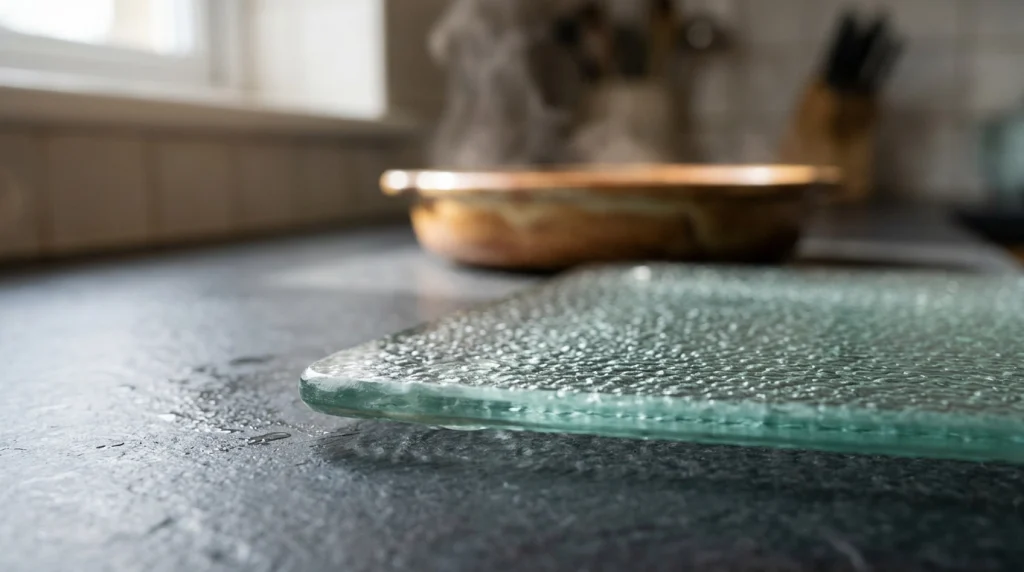
Tempered glass can break when temperature differences create enough internal stress. This phenomenon is called thermal shock.
A board might survive exposure to moderate, evenly distributed heat but fail when one area heats or cools much faster than another.
What Is Thermal Shock?
Thermal shock occurs when rapid or uneven temperature changes create mechanical stress inside a material. Glass expands as it heats and contracts as it cools.
If different areas expand or contract at different rates, the resulting stress can cause cracks or sudden breakage.
Common Situations That Increase Thermal Shock Risk
- Placing a hot frying pan onto a cold glass board.
- Pouring cold water over glass that is still hot.
- Moving a heated board onto a wet or cold countertop.
- Exposing one section to concentrated heat.
- Placing cookware over a chipped or scratched section.
- Moving a board rapidly between extreme temperatures.
Even small edge damage can reduce the strength of tempered glass. Stop using a board if you discover chips or cracks.
Can You Put a Hot Pan on a Tempered Glass Cutting Board?
For ordinary tempered glass cutting boards, the safest answer is no. Use a heat-rated trivet unless your board’s manufacturer specifically approves direct contact with hot cookware.
This is especially important for cast-iron skillets, baking trays, and heavy stainless-steel pans. These items can transfer substantial heat through a relatively small contact area.
What About a Warm Pot or Serving Dish?
A warm serving dish creates a different situation from a pan removed directly from a burner. Some glass-board manufacturers permit moderate heat.
However, terms such as “warm” and “moderate” aren’t reliable temperature measurements. Follow the manufacturer’s stated use limits rather than guessing.
Can a Glass Cutting Board Replace a Trivet?
Only when the manufacturer specifically identifies the board as suitable for that purpose. Tempered glass alone does not establish a safe trivet rating.
I recommend keeping a dedicated silicone, cork, or other properly heat-rated trivet near the stove. That removes the need to judge cookware temperature by touch.
Tempered Glass vs. Wood vs. Plastic Cutting Boards
 Save
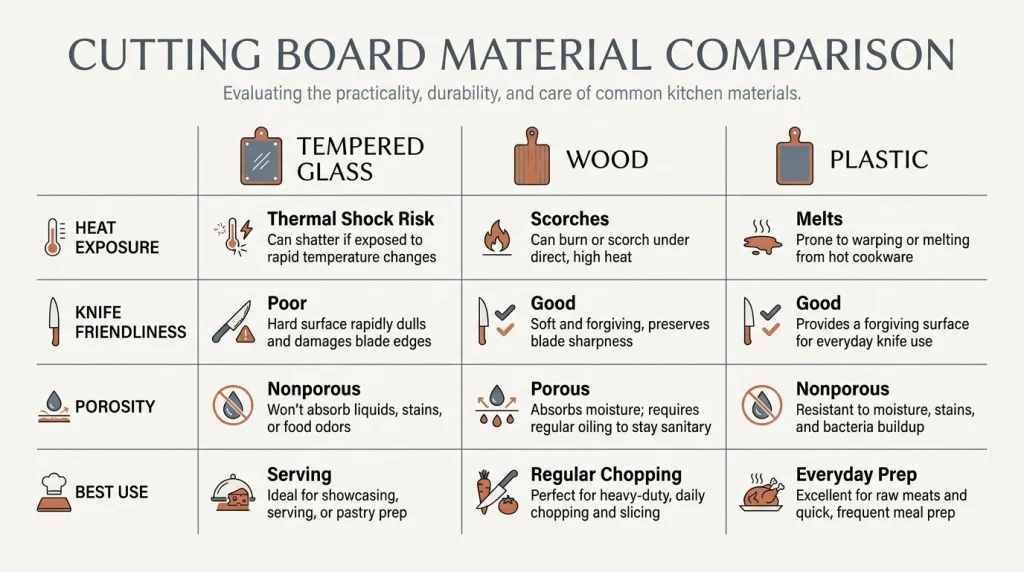
Heat resistance is only one factor when selecting a cutting board. Knife protection, cleaning requirements, and everyday handling matter too.
The comparison below highlights practical differences rather than assuming every product within a material category performs identically.
| Feature | Tempered Glass | Wood | Plastic |
|---|---|---|---|
| Heat exposure | Product-specific; thermal shock risk | Can scorch or warp | Can soften, melt, or warp |
| Knife friendliness | Poor | Generally good | Generally good |
| Porosity | Nonporous | Porous | Nonporous |
| Dishwasher use | Often permitted; check label | Usually hand wash recommended | Many models are dishwasher-safe |
| Breakage risk | Can shatter | Can split or crack | Can crack or deform |
| Best use | Serving and light preparation | Regular chopping and slicing | Everyday preparation |
For frequent knife work, I prefer a quality wooden or plastic board. Glass offers easier surface cleaning, but its hardness makes it less suitable for repeated chopping.
Are Tempered Glass Cutting Boards Safe for Everyday Cooking?
Tempered glass boards can be useful in everyday kitchens when used according to their instructions. Their smooth, nonporous surfaces are relatively easy to clean.
The USDA identifies tempered glass among nonporous cutting-board materials. However, hygiene still depends on proper washing, sanitizing, maintenance, and food separation.
Advantages of Tempered Glass Cutting Boards
- Nonporous surface: Doesn’t absorb moisture like untreated porous materials.
- Easy cleaning: Smooth glass can be washed with dish soap and water.
- Odor resistance: Glass generally doesn’t retain food smells.
- Stain resistance: Food pigments are less likely to penetrate the material.
- Presentation: Decorative designs work well for serving snacks and appetizers.
- Low routine maintenance: Glass doesn’t need wood-conditioning oil.
Disadvantages You Should Consider
- Hard surfaces can quickly dull kitchen knives.
- Glass may crack or shatter after impact or thermal shock.
- Wet glass can become slippery.
- Knife contact can produce an unpleasant noise.
- Some glass boards lack adequate nonslip support.
- Decorative coatings or rubber feet may have their own heat limitations.
A glass board is useful for selected kitchen tasks, but it isn’t my first choice for heavy chopping. A softer cutting surface is usually more practical.
Do Glass Cutting Boards Damage Kitchen Knives?
Yes, repeated cutting against glass can dull knife edges faster than cutting on wood or suitable plastic. Glass provides very little give when a knife meets the surface.
That repeated hard contact can wear delicate edges and increase sharpening frequency. The University of Maine Cooperative Extension also recommends limiting glass boards to lighter work or serving.
When Should You Avoid Using Glass for Cutting?
- Heavy chopping with a chef’s knife.
- Repeated mincing of herbs or vegetables.
- Cleaver work involving strong impacts.
- Delicate slicing with a fine-edged knife.
- Tasks requiring fast, repeated knife contact.
If you like the appearance of glass, consider using it as a serving board. Keep a separate wooden or plastic cutting board for knife-intensive preparation.
How to Protect a Tempered Glass Cutting Board From Heat Damage
 Save
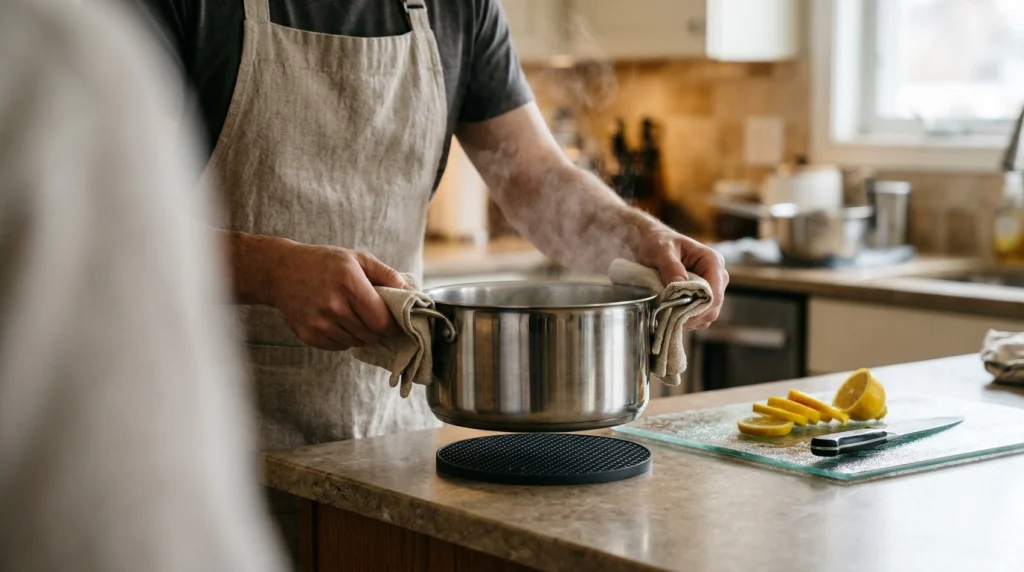
Protecting a glass board means controlling temperature changes and preventing physical damage. A few careful habits can reduce avoidable risks.
1. Check the Manufacturer’s Heat Rating
Read the product label or care instructions before using your board near heat. Look for specific temperature limits and warnings about hot cookware.
Never assume that the word “tempered” means the product is suitable for baking, stovetop use, or direct contact with a hot skillet.
2. Use a Dedicated Trivet
Place cookware on a trivet designed for its expected temperature. Select a stable model large enough to support the entire pot or pan.
Keep the trivet close to your cooking area. This simple habit helps prevent accidental placement of hot cookware on glass.
3. Avoid Sudden Temperature Changes
Don’t rinse hot glass with cold water. Allow the board to return gradually to room temperature before washing.
Likewise, avoid transferring a heated board directly onto a cold or wet work surface. Temperature differences can create unnecessary stress.
4. Inspect the Surface and Edges
Check for chips, cracks, and other damage before each use. Pay particular attention to the corners and edges.
Discard damaged tempered glass boards rather than trying to repair them. Their structural strength may already be compromised.
5. Follow the Cleaning Instructions
Wash the board using the method recommended by its manufacturer. Some models permit dishwasher cleaning, while others require hand washing.
Decorated surfaces, adhesive feet, and printed coatings can introduce additional restrictions. Follow the instructions for the complete product, not just the glass material.
Can Tempered Glass Cutting Boards Go in the Oven?
No, not unless the manufacturer explicitly certifies the specific board for oven use. Heat resistance alone does not establish oven safety.
Ordinary glass cutting boards may include coatings, feet, or decorative components unsuitable for oven temperatures. Even the glass itself may not be designed for this application.
What About Microwave Use?
Do not assume microwave safety either. Use the board in a microwave only if its manufacturer specifically permits it.
Oven-safe bakeware, microwave-safe glassware, and tempered glass cutting boards are different product categories. Their safety instructions are not interchangeable.
Are Tempered Glass Cutting Boards Dishwasher Safe?
Many tempered glass cutting boards are dishwasher-safe, but not all models are. Always confirm the dishwasher instructions for your exact product.
The American Cleaning Institute notes that some nonporous glass boards can be cleaned in a dishwasher. However, coatings and attached components can affect compatibility.
How to Clean a Tempered Glass Cutting Board Safely
- Let it cool: Allow the board to return to a safe handling temperature.
- Remove residue: Clear away food scraps without striking the surface.
- Wash: Use dish soap and warm water with a soft sponge.
- Rinse: Remove soap and remaining food residue.
- Sanitize when needed: Follow approved food-contact surface sanitizing instructions, especially after raw meat preparation.
- Dry: Allow the board to dry thoroughly before storage.
The USDA recommends cleaning cutting boards after food preparation and taking additional steps to prevent cross-contamination. You can read its guidance through the USDA Food Safety and Inspection Service.
For more kitchen hygiene information, the American Cleaning Institute provides practical guidance on cleaning food-preparation surfaces.
How Can You Tell Whether a Glass Cutting Board Is Heat Safe?
The most reliable method is to check the manufacturer’s written specifications. Appearance, thickness, and weight cannot reliably establish the board’s heat limits.
What Should You Look for Before Buying?
- Temperature rating: A clearly stated maximum and permitted use.
- Hot-pan instructions: Specific approval or warnings.
- Thermal-shock guidance: Information about sudden temperature changes.
- Surface construction: Details about decorative coatings and printing.
- Nonslip feet: Material and temperature restrictions.
- Cleaning instructions: Clear dishwasher or hand-washing guidance.
- Manufacturer support: Accessible care documentation and product identification.
I would avoid buying a glass board specifically for hot cookware unless the listing clearly states that purpose. A vague “heat-resistant” label isn’t enough.
What Are the Best Alternatives to Glass Cutting Boards?
The best alternative depends on your main kitchen task. A cutting board and a hot-pot protector serve different purposes.
For Everyday Food Preparation
Choose a well-made wooden or plastic cutting board with a stable base. These materials are typically more forgiving on knife edges than glass.
For Hot Pots and Pans
Use a dedicated trivet with an appropriate temperature rating. Cork, silicone, and other heat-rated materials offer practical options.
Check the product’s limits before placing extremely hot cookware on it. Not every trivet withstands the same temperatures.
For Serving and Presentation
Tempered glass can make an attractive surface for arranging cheese, fruit, and appetizers. Its easy-to-clean finish is useful for these tasks.
Keep serving foods at temperatures permitted by the manufacturer. Avoid exposing decorative boards to concentrated heat.
Recommended Kitchen Boards and Accessories
If you’re choosing a new kitchen surface, these options serve different purposes. I would select based on the task rather than expecting one board to handle both chopping and hot cookware.
Affiliate disclosure: Some product links below are Amazon affiliate search links. Qualifying purchases may earn a commission at no additional cost to you.
Best for everyday chopping
OXO Good Grips Cutting Board
★★★★☆
A practical alternative for routine slicing and chopping. I would choose a knife-friendly plastic board like this over glass for frequent food preparation. Check the dimensions and care instructions of the specific version before ordering.
Best for glass-board use
KESPER Glass Cutting Plate
★★★☆☆
A glass option worth considering for appropriate food preparation and serving. KESPER publishes heat-related care instructions for its glass cutting plates, including warnings against direct contact with hot cookware. Check the exact model documentation before use.
Best for protecting countertops
Le Creuset Silicone Trivet
★★★★☆
A dedicated trivet is a more sensible choice for hot cookware than a standard glass cutting board. I would use a suitably rated silicone trivet to keep concentrated heat away from delicate surfaces. Confirm the selected model’s heat limit before use.
Note: The star symbols are editorial suitability assessments for the described use cases, not verified customer-review averages.
Frequently Asked Questions
Can tempered glass cutting boards withstand boiling water?
Some tempered glass products can tolerate hot water, but that doesn’t establish safety for every cutting board. Sudden exposure to boiling water may create thermal shock, especially when the board is cold. Check the manufacturer’s instructions and avoid pouring boiling water directly onto a board without explicit approval.
Can you put a tempered glass cutting board in the oven?
Do not put a tempered glass cutting board in the oven unless its manufacturer explicitly approves oven use. Ordinary cutting boards may contain coatings, decorative finishes, or rubber feet that aren’t suitable for oven temperatures. Use properly rated oven-safe cookware instead.
Will a hot pan crack a tempered glass cutting board?
Yes, a hot pan can cause a tempered glass cutting board to crack or shatter. Concentrated heat and rapid temperature changes create stress within the glass. Unless the manufacturer explicitly permits direct hot-pan contact, use a dedicated heat-rated trivet.
Are tempered glass cutting boards better than wooden boards?
Tempered glass boards are nonporous and relatively easy to clean, making them useful for serving and light preparation. Wooden boards are generally more forgiving on knife edges. For frequent chopping, wood is often the more practical choice, while glass suits selected serving tasks.
How long do tempered glass cutting boards last?
There is no fixed replacement schedule for every tempered glass cutting board. Its useful life depends on handling, impacts, temperature exposure, and surface condition. Inspect it regularly and stop using it immediately if you notice chips, cracks, or other damage.
Final Verdict: Are Tempered Glass Cutting Boards Worth Using?
Tempered glass cutting boards can be useful, attractive, and easy to clean. They also offer some heat resistance, but that doesn’t make them suitable for unrestricted contact with hot cookware.
The biggest concern is thermal shock. A sudden temperature difference can damage glass even when it appears strong and durable.
- For serving: Glass can be a convenient choice when used within its specifications.
- For chopping: Wood or plastic is generally kinder to knives.
- For hot cookware: Choose a dedicated heat-rated trivet.
- For safety: Follow the manufacturer’s care instructions and discard damaged glass.
My recommendation is simple: treat tempered glass as a specialized kitchen surface, not an all-purpose heat shield. Choose the right tool for each task, and you’ll protect your cookware, countertops, and knives.
Before buying your next cutting board, compare its heat restrictions, surface material, cleaning instructions, and intended use. A little research now can prevent expensive kitchen mistakes later.

