Why Chef Knife Steel Chips: Causes, Prevention & Fixes
Quick Answer
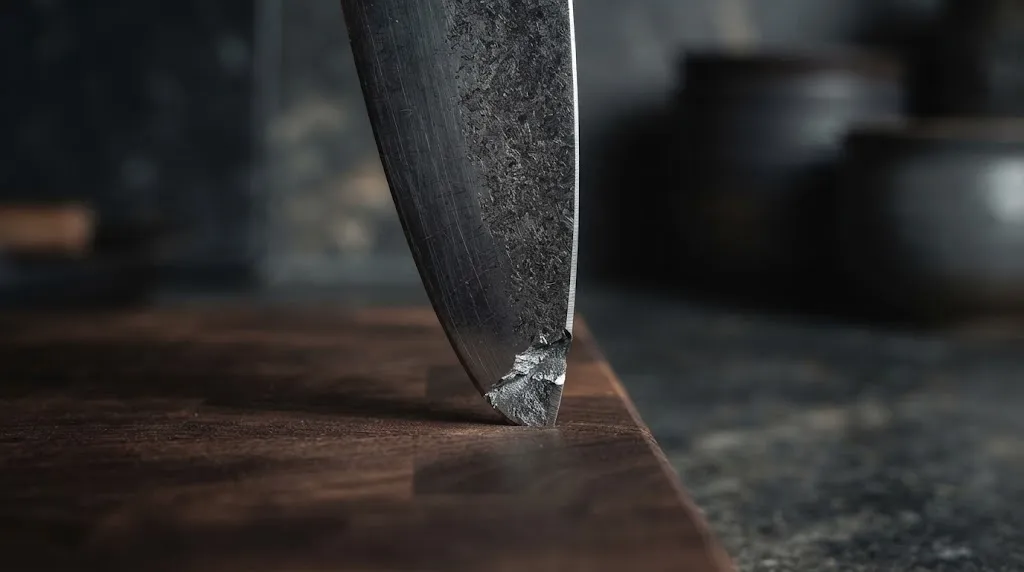
Chef knife steel chips because hard or sudden lateral forces exceed the structural limits of the fine apex. This most commonly happens when cutting frozen foods, bones, or hard pits, or when twisting the blade mid-cut—especially in high-hardness, high-carbon Japanese steels designed for extreme thinness rather than impact resistance.
The Core Mechanics: Why Knife Steel Chips Instead of Bending
 Save
When a kitchen knife encounters resistance, many cooks expect the edge to roll or bend. However, high-performance chef knife steel often fractures rather than flexes. This behavior is directly tied to the trade-offs of metallurgy.
Knives that hold a razor-sharp edge for months are typically forged from high-carbon steels or advanced stainless alloys hardened to 60+ on the Rockwell scale (HRC). While high hardness provides incredible wear resistance and allows for a razor-thin geometry, it also makes the steel more brittle. When an unexpected physical stress hits a micro-thin edge, the crystalline structure of the steel snaps, resulting in a microscopic notch or a visible chunk missing from the blade.
Primary Causes of Chef Knife Chipping
Blade chipping is rarely a spontaneous defect; it almost always traces back to specific mechanical stresses during food prep. Recognizing these triggers helps protect your investment.
1. Lateral Stress and Twisting
Kitchen knives are engineered to handle vertical forces moving straight up and down. They have virtually no structural tolerance for sideways pressure. If a blade binds in a dense ingredient—such as a thick squash skin or a root vegetable—and the user twists the handle to pry the pieces apart, the thin steel near the edge undergoes severe shear stress, causing it to snap off.
2. Impact With Hard Foods and Hidden Pits
Hitting unexpected hard objects is a classic chip culprit. Chopping through chicken bones, fish spines, frozen meat, or hard cheese rinds puts concentrated pressure on a tiny surface area. Similarly, a forgotten olive pit or stone fruit seed hidden in a soft handful of produce can instantly notch a delicate edge.
3. Cutting Board Impact and Excessive Force
Pounding down onto a rigid cutting surface (such as glass, granite, or composite stone) with excessive downward force forces the delicate steel apex to strike a surface harder than itself. Even on wooden boards, slamming a knife down aggressively can cause micro-chipping over time.
Warning
Never use a high-end chef knife to chop frozen food. Deep internal ice crystals make items like rock-solid meat or dense frozen vegetables dangerously rigid, virtually guaranteeing a large, multi-centimeter chip or structural crack.
How Steel Composition Affects Chipping Vulnerability
Not all chef knives react to stress the same way. The steel alloy and heat treatment dictate how forgiving a blade will be in a busy kitchen.
| Steel Type / Category | Typical Hardness (HRC) | Chipping Risk | Primary Behavior |
|---|---|---|---|
| Western Stainless (e.g., X50CrMoV15) | 54–58 HRC | Low | Softer steel tends to roll or bend rather than fracture under stress. |
| High-End Japanese (e.g., SG2 / R2, ZDP-189) | 62–66 HRC | High | Exceptional edge retention, but brittle under lateral torque or hard impacts. |
| Traditional Carbon Steel (e.g., Shirogami / Aogami) | 60–64 HRC | Moderate to High | Relatively easy to sharpen out, but fine edges require disciplined cutting angles. |
Understanding your knife’s specific steel profile allows you to match the tool to the food prep task without risking structural failure.
Practical Steps to Prevent Edge Chipping
Preventing chips requires altering minor habits during food preparation and storage. Small adjustments can drastically extend the life of your blade.
- Use the spine for scraping: When moving chopped ingredients off your cutting board, always flip the knife over and push food with the spine rather than dragging the sharp edge.
- Adopt a clean push or rock cut: Ensure your blade travels cleanly through food vertically without twisting or torquing inside dense materials.
- Select proper tools for hard tasks: Reserve heavy-duty cleavers or bone saws for poultry bones, dense gourds, and frozen items, leaving your chef knife for precision slicing.
- Choose forgiving boards: Stick to end-grain or edge-grain wood boards (such as maple, hinoki, or teak) or soft plastic instead of glass or marble.
How to Repair a Chipped Chef Knife Edge
 Save
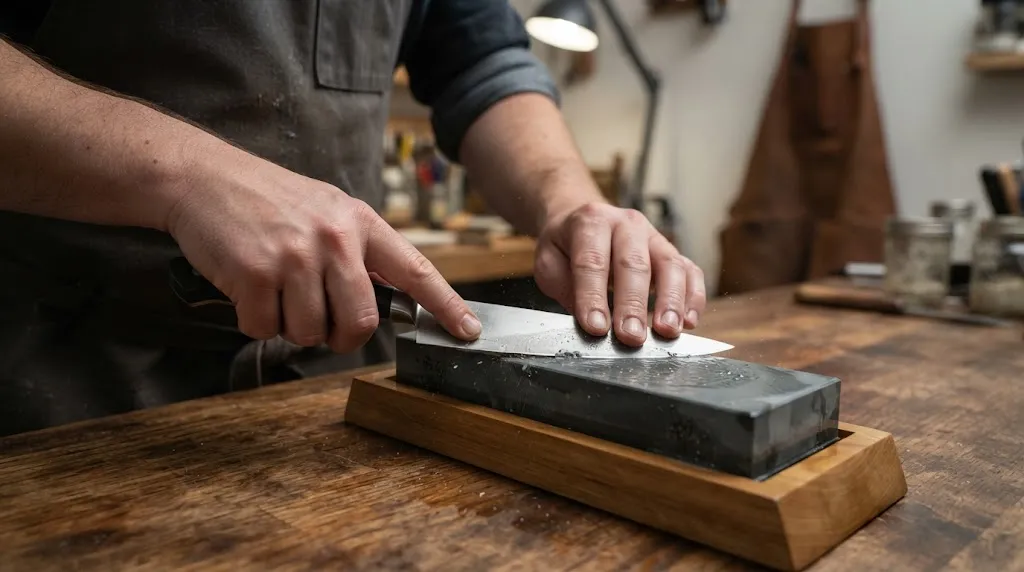
Finding a chip can be disheartening, but the vast majority of chips can be successfully ground out through proper sharpening.
For small micro-chips, standard maintenance on a medium-grit whetstone (around 1000 grit) is usually sufficient. By grinding down the surrounding steel until the edge profile is uniform again, the notch disappears. For larger chips, you will need to start on a coarser stone (such as 200 to 400 grit) to reshape the entire primary bevel before refining the edge on finer stones. Patience is critical; forcing the process by applying too much heat or pressure can compromise the steel’s temper.
Related Product
Whetstone Sharpening Stone Set
A dual-grit whetstone kit helps you grind out minor edge chips and restore a razor-sharp, stable profile to your chef knife.
As an Amazon Associate, we earn from qualifying purchases.
Frequently Asked Questions
Is a chipped chef knife ruined forever?
No. Most chips can be completely repaired by removing enough material from the edge to match the depth of the chip, though deep chips require significant time and patience on coarser whetstones.
Can I use a pull-through sharpener to fix a chip?
Pull-through sharpeners are generally ineffective for fixing chips because they remove very little steel at the exact point of damage and can worsen blade alignment on high-hardness knives.
Why do Japanese chef knives chip more easily than Western knives?
Japanese knives are typically forged from harder steels and ground to much thinner, acute cutting angles to maximize precision. This makes them brittle compared to softer, thicker Western blades.
Can cutting vegetables cause a knife to chip?
Soft vegetables will not chip a knife, but extremely dense items like hard squash skins or hidden pits in stone fruit can cause micro-chipping if the blade is twisted or forced.
How can I tell the difference between a rolled edge and a chipped edge?
A rolled edge feels dull and looks like a leaning wave of metal when viewed under a light, whereas a chip creates a distinct missing gap where light reflects off a flat broken face of steel.
Does professional knife repair cost a lot?
Professional sharpening services usually charge a modest fee based on blade length and the severity of damage, making it a cost-effective alternative if you lack the whetstones or experience to grind out deep chips yourself.
Conclusion
Chef knife steel chipping is primarily a consequence of high blade hardness meeting unexpected lateral stress or rigid hazards like bones and frozen items. By understanding how metallurgy dictates steel brittleness and adopting proper cutting habits—such as avoiding twists and using the spine for scraping—you can protect your blades. When chips do happen, patient stone sharpening will restore your edge and return your knife to peak performance.

