How Stamped Chef Knives Are Made: Step-by-Step Guide
Quick Answer
A stamped chef knife is manufactured by cutting the blade profile directly out of a flat sheet of stainless steel using a mechanical press or laser cutter. Unlike forged knives that are heated and hammered from a single block of steel, stamped blades undergo precise heat treatment, flat or taper grinding, handle assembly via rivets or molding, and final edge sharpening.
Understanding how kitchen tools are constructed helps you evaluate their performance, weight, and durability in the kitchen. While forged knives often receive the most attention for their traditional weight and integrated bolsters, stamped chef knives make up a massive share of modern cutlery. They offer unique manufacturing efficiencies, lighter handling characteristics, and distinct structural advantages.
What Is a Stamped Chef Knife?
A stamped chef knife is a blade cut directly out of a rolled sheet of stainless steel rather than shaped through thermal forging. Think of the process like cutting cookies out of dough using a custom cookie cutter or high-powered press. The resulting flat piece of steel—known as a blank—then undergoes a series of thermal treatments, grinding phases, and handle assembly steps to transform into a fully functional kitchen knife.
Because the steel sheet maintains a uniform thickness across the main body of the blade before grinding, stamped knives lack the thick, forged bolster found near the handle of traditional heavy-duty knives. This simpler baseline geometry changes how the knife feels in the hand, making it lighter and more agile during fast food-prep tasks.
Step-by-Step Manufacturing Process of Stamped Chef Knives
Modern cutlery production combines high-speed mechanical cutting with precise metallurgical engineering. The transformation from a raw industrial steel coil to a finished chef knife involves several critical stages.
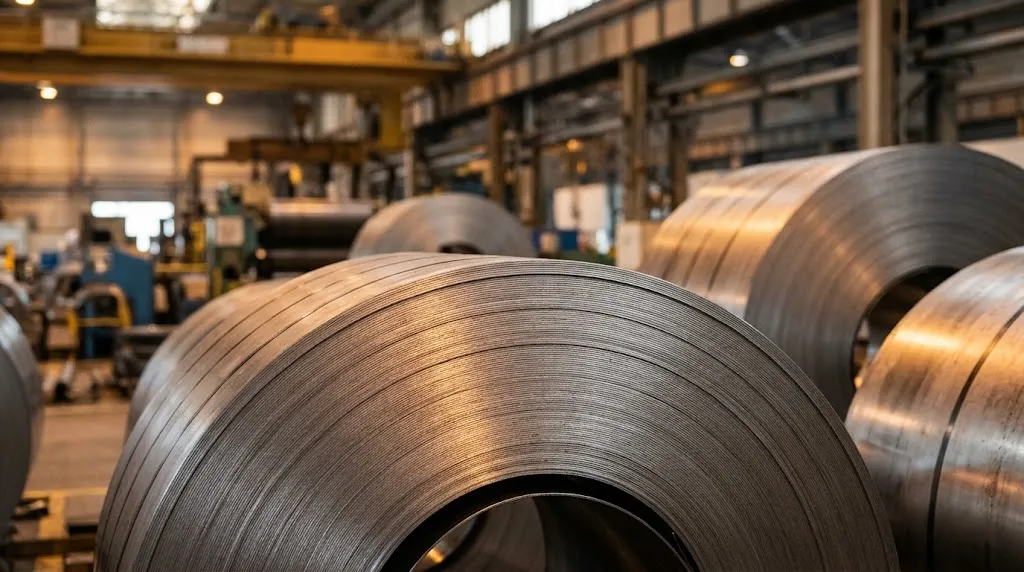
1. Steel Selection and Coil Preparation
 Save
The manufacturing journey begins with certified stainless steel alloys supplied in large coils or sheets. Common industry-standard grades include German 1.4116, 5Cr15MoV, or higher-end alloy variations chosen for their corrosion resistance, structural strength, and ability to hold a clean cutting edge. Mills test the steel composition before it enters the production line to ensure uniform performance.
2. Blanking and Cutting
Once the steel sheet is uncoiled and flattened, a high-tonnage mechanical press or high-precision industrial laser cutting machine punches out the individual knife profiles. This step outlines the blade shape, spine, tang, and handle screw holes in a single fast operation. Laser cutting offers exceptional flexibility for intricate profiles, while heavy stamping presses excel at high-volume commercial manufacturing.
3. Heat Treatment and Hardening
Raw cut steel blanks are initially too soft for practical kitchen use. To develop the necessary rigidity and edge retention, the blanks pass through automated vacuum furnaces heated to precise high temperatures, followed by rapid quenching. Many manufacturers also apply a sub-zero cryogenic cooling phase using liquid nitrogen to stabilize the steel structure, eliminate residual stresses, and achieve a balanced Rockwell hardness rating, typically between HRC 54 and 58.
4. Surface Grinding and Tapering
After hardening, the flat steel blank undergoes surface grinding and taper grinding. Because stamped blades start from a uniform sheet thickness, grinding wheels or computer-controlled belt sanders taper the blade smoothly from the spine down to the cutting edge, as well as thinning it toward the tip. A continuous stream of water flushes over the steel during this stage to prevent frictional overheating, which could otherwise damage the newly achieved metallurgical temper.
5. Polishing and Surface Finishing
The blade surface is polished to achieve a clean satin, mirror, or stonewashed finish. Surface polishing removes microscopic imperfections from the grinding phase, enhances the stainless steel’s natural resistance to staining, and prepares the blade for brand logo etching and model marking.
6. Handle Assembly and Fitting
The handle is secured to the knife’s tang—the extension of the steel blade running into the handle. Stamped knives can feature a full tang (where the steel runs the entire length of the handle) or a partial tang. Workers or automated fixtures attach handle scales made of materials like wood, composite Pakkawood, or molded polymers (ABS, POM) using mechanical rivets, industrial adhesives, or ultrasonic welding.
Tip
When shopping for a stamped chef knife, look for a full-tang construction where the visible steel strip runs completely through the handle. This provides superior structural balance and prevents handle wobble over years of regular kitchen prep.
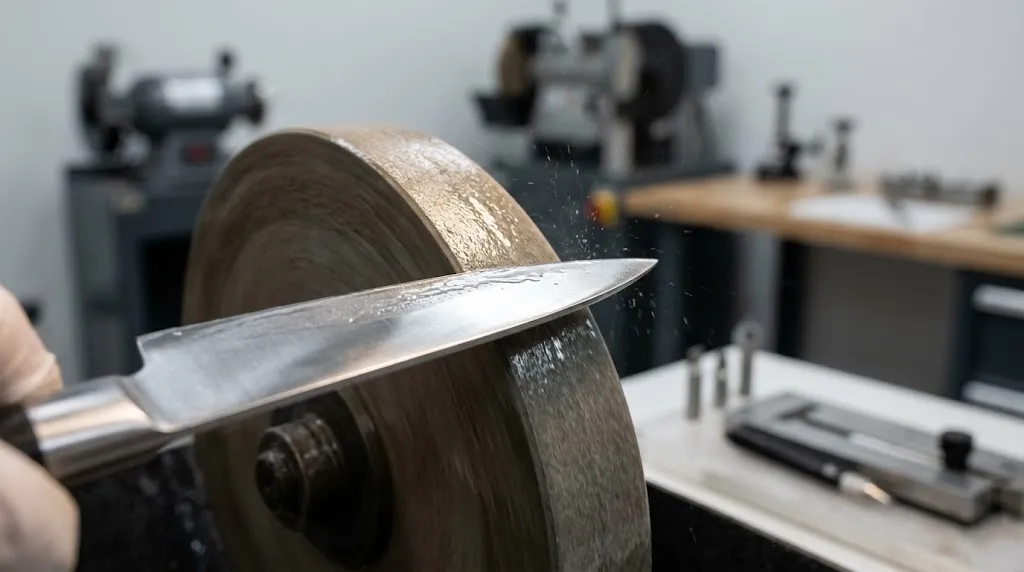
7. Edge Sharpening and Quality Control
 Save
The final manufacturing step establishes the cutting edge. Specialized wet grinding wheels or robotic sharpening systems apply a precise bevel angle—usually between 15 and 20 degrees per side. Each finished knife undergoes stringent quality control checks, including sharpness testing, edge alignment verification, and structural inspection, before being packaged for distribution.
Stamped vs. Forged Knives: Key Structural Differences
Understanding how manufacturing methods affect knife behavior helps clarify why you might choose one style over the other for your kitchen workflow.
| Feature | Stamped Chef Knife | Forged Chef Knife |
|---|---|---|
| Production Method | Cut from a rolled steel sheet via press or laser | Heated and hammered from a solid steel billet |
| Weight & Balance | Typically lighter, nimble, and balanced toward the blade tip | Heavier, with solid heft balanced near the bolster |
| Bolster | Absent or lightweight secondary bolster | Thick, integrated forged steel bolster |
| Price Point | Generally more affordable and accessible | Higher cost due to labor and energy requirements |
The comparison highlights that neither manufacturing method is universally superior; rather, they serve different user preferences. Stamped blades excel for cooks who prefer a lightweight, agile knife that minimizes wrist fatigue during long chopping sessions.
Advantages of Modern Stamped Chef Knives
Early stamped knives earned a reputation for being flimsy or prone to bending under heavy pressure. However, modern manufacturing innovations have dramatically elevated their quality.
- Agility and Reduced Fatigue: The lighter overall weight allows for faster repetitive motion when dicing vegetables or mincing herbs.
- Affordability: Streamlined production and lower material waste make high-performing stamped cutlery much more budget-friendly.
- Consistent Geometry: Computer-guided laser cutting and robotic grinding ensure uniform blade thickness and reliable performance across production batches.
Related Product
Kitchen Knife Sharpening Stones
Maintain a razor-sharp edge on your stamped chef knife with a dual-grit whetstone designed for regular blade maintenance.
As an Amazon Associate, we earn from qualifying purchases.
Frequently Asked Questions
Are stamped chef knives lower quality than forged knives?
Not necessarily. While traditional stamped knives were often thin and flexible, modern stamped chef knives made with high-carbon stainless steel and full-tang construction offer excellent durability, edge retention, and cutting performance.
Do stamped chef knives have a bolster?
Most stamped chef knives do not feature a traditional forged bolster. Instead, they transition smoothly from the blade heel straight into the handle. Some manufacturers add a lightweight synthetic bolster for cosmetic balance, but it is not forged from the same single piece of steel.
How can you tell if a chef knife is stamped or forged?
Examine the area where the blade meets the handle. If you see a thick, swollen ridge of steel (the bolster) bridging the blade and handle, it is likely forged. If the blade maintains a consistent thickness right up to the handle scale without a forged swell, it is stamped.
Are stamped knives easier to sharpen?
Yes, stamped knives often feature slightly thinner blade profiles behind the cutting edge. This makes them quick to sharpen on a whetstone or honing rod, allowing you to restore a razor-sharp edge with minimal effort.
Can a stamped chef knife handle heavy-duty kitchen tasks?
High-quality stamped chef knives handle everyday prep work—such as slicing meat, dicing vegetables, and chopping fruit—exceptionally well. However, they should not be used to hack through frozen foods or dense bone, as excessive lateral twisting can warp any thin-profile blade.
Why are stamped knives usually less expensive?
The manufacturing process requires fewer labor-intensive steps, less specialized machinery, and generates less scrap metal waste than drop-forging. These production efficiencies translate directly into lower retail costs for consumers.
Conclusion
The manufacturing process of a stamped chef knife relies on precision cutting, advanced heat treatment, and careful grinding rather than traditional hot forging. By understanding how these blades are blanked from steel coils, tapered, and assembled, you can better appreciate the value and agility they bring to culinary prep work. Choosing a well-constructed stamped knife with quality steel and a secure full tang ensures reliable everyday performance without unnecessary weight.

