Chef Knife Blade Geometry Explained: Performance & Grind Types
Quick Answer
Chef knife blade geometry refers to the cross-sectional shape, taper, and edge grinding style of the blade. It dictates how the knife moves through food, balancing cutting efficiency, food release, and structural durability.
The performance of a chef’s knife is rarely determined by steel type alone. While hardness and edge retention matter, how the steel is shaped—its geometry—defines how the knife cuts, how much resistance it meets, and how smoothly food separates from the side of the blade.
What Is Blade Geometry and Why Does It Matter?
Blade geometry encompasses every physical dimension and contour of a knife blade, from spine thickness to the grind angle behind the edge. It determines the physical mechanics of cutting, transforming downward force into lateral separation.
When you push a knife through dense produce like a carrot or a potato, the blade acts as a wedge. A well-designed geometric profile minimizes friction, prevents wedging, and reduces the physical effort required by the cook. Poor geometry causes food to crack rather than slice cleanly, sticking stubbornly to the blade flanks.
Key Insight
Blade geometry is a series of engineering tradeoffs. Thinner profiles cut exceptionally well but sacrifice durability, while robust profiles withstand heavy impact at the expense of cutting performance.
Core Elements of Chef Knife Blade Geometry
To understand why two knives of the exact same steel perform differently, you must examine the distinct geometric components that make up the blade profile.
Spine Thickness and Taper
The spine is the unsharpened top edge of the blade. In a high-performance chef’s knife, the spine features a distinct taper. It is thickest near the handle to provide structural stability and thins down progressively toward the tip. A gradual distal taper reduces overall weight and balances the knife in the hand.
Primary Grind Profiles
 Save
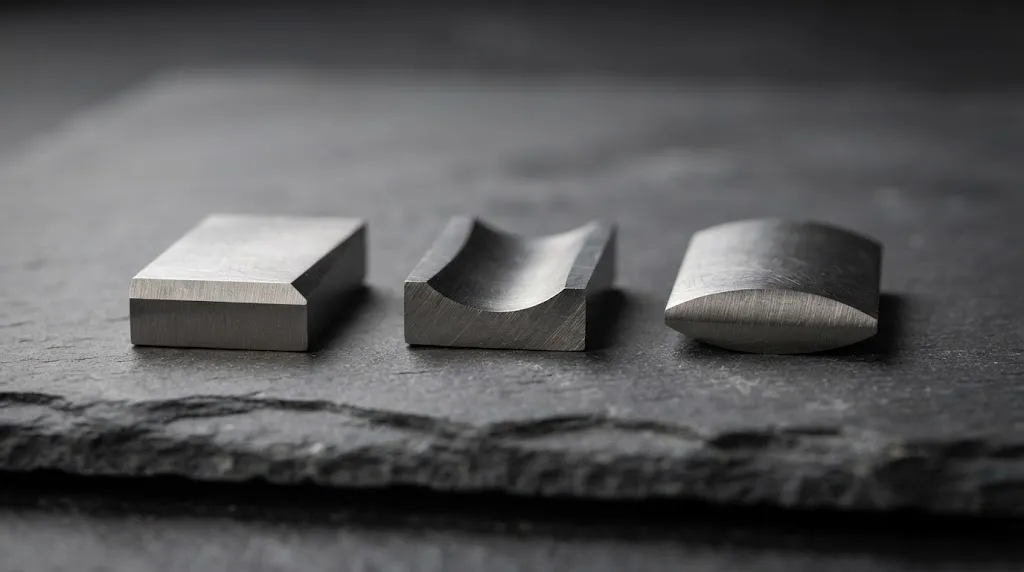
The primary grind defines how the blade transitions from the thick spine down toward the cutting edge. The most common grinds include:
- Flat Grind: Tapers evenly from the spine to the edge, offering a great balance of durability and low cutting resistance.
- Hollow Grind: Features a concave indentation on the sides, creating an extremely thin and sharp edge, though it can wedge in hard foods.
- Convex Grind: Curves outward toward the edge, providing maximum strength and food release, common in heavy-duty or traditional Japanese blades.
- Saber Grind: Maintains a thick spine thickness halfway down the blade before sloping to the edge, prioritizing rugged durability.
Edge Geometry and Behind-the-Edge Thickness
The final cutting edge is where performance is won or lost. Even a knife with a sharp 15-degree angle will cut poorly if the steel directly behind the edge is too thick. High-end chef knives feature a very thin cross-section just above the bevel, allowing the blade to glide through ingredients with minimal resistance.
Western vs. Japanese Blade Geometry Philosophies
Different culinary traditions approach blade geometry based on how knives are traditionally used in professional and home kitchens.
Western (German/French) chef knives traditionally prioritize durability and versatility. They feature thicker spines, robust primary grinds, and slightly more obtuse edge angles (typically 20 degrees per side). This geometry allows the knife to withstand twisting forces, heavy rocking cuts, and accidental contact with bone or dense surfaces without chipping.
Japanese chef knives, by contrast, prioritize cutting efficiency and precision. They utilize thinner stock steel, acute edge angles (often 12 to 15 degrees), and flat or compound grinds. This geometry minimizes cell damage when slicing proteins and vegetables, resulting in cleaner cuts and superior edge retention under proper technique.
| Geometric Feature | Western Chef Knife | Japanese Chef Knife |
|---|---|---|
| Spine Thickness | Thicker (2.5mm to 4mm+) | Thinner (1.5mm to 2.5mm) |
| Edge Angle | 18° to 22° per side | 10° to 15° per side |
| Steel Hardness (HRC) | Lower (54–58 HRC) for toughness | Higher (60–64+ HRC) for edge holding |
| Primary Priority | Durability, twisting resistance, all-purpose use | Cutting efficiency, razor sharpness, precision |
Understanding these foundational differences helps match the tool to your prep style, ensuring you select a geometry that aligns with your daily cooking tasks.
How Geometry Affects Cutting Performance and Food Release
The interaction between the blade’s profile and the food being cut dictates two major performance metrics: cutting drag and food release.
When a blade enters dense produce, friction builds along the flanks. Knives with flat or hollow grinds reduce surface contact area, allowing the blade to slip through ingredients smoothly. However, flat surfaces can cause wet or starchy foods—like potatoes, apples, and cucumbers—to stick tightly due to suction and starch adhesion.
To combat food sticking, manufacturers utilize specific geometric enhancements:
- Hollow-ground edges (Grantons): Scallops carved into the side of the blade create air pockets that break the vacuum seal, helping slices fall away cleanly.
- Slight convexity: A subtly rounded flank profile pushes food away from the blade naturally as the cut deepens.
- Hand-finished distal tapers: Gradual thinning toward the tip prevents the blade from binding midway through a long push cut.
Warning
Do not attempt to twist a thin, high-performance Japanese blade or pry frozen items. The acute geometry and hard steel make the edge vulnerable to chipping under lateral torque.
Common Geometric Mistakes and Misconceptions
 Save
A frequent error among home cooks is assuming that a knife’s sharpness is solely a function of its apex angle. If a knife has been sharpened repeatedly without thinning the shoulder behind the edge, the blade’s cross-section becomes thick and wedge-like. This is known as “thick behind the edge,” and it causes the knife to crush food rather than slice it, regardless of how sharp the very tip of the edge is.
Another misconception is that heavier knives cut better. In reality, a heavy knife relies on mass to plow through ingredients, whereas a well-geometries light knife relies on acute angles and low friction to slice effortlessly.
How to Evaluate Blade Geometry Before Purchasing
When shopping for a chef knife, looking at marketing descriptions is not enough. Inspect the knife visually and physically using these evaluation criteria:
- Look down the spine: Check for a clean, progressive taper from handle to tip. Avoid knives that maintain a uniform thickness all the way to the point.
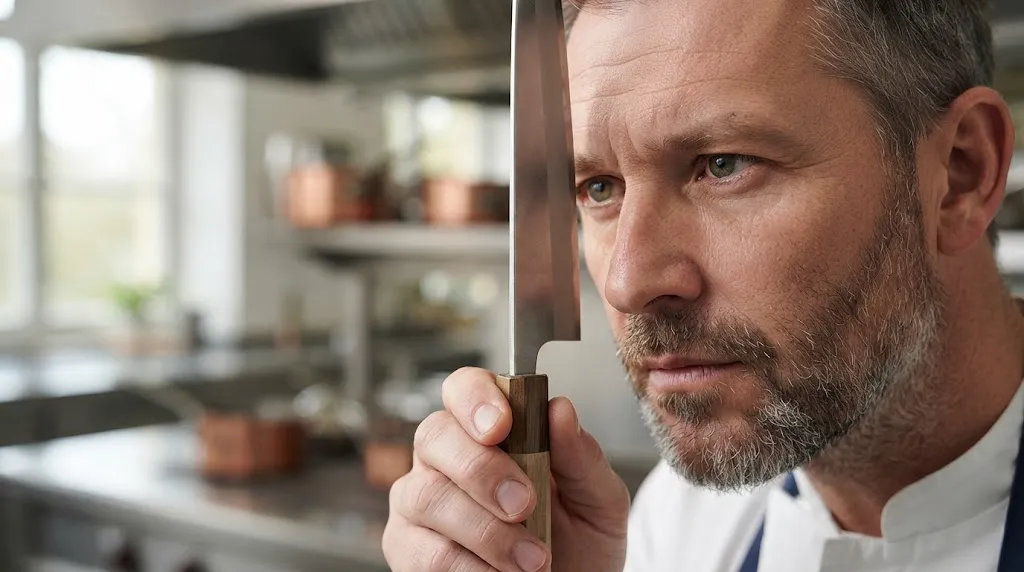
- Inspect the cross-section: Hold the knife tip toward your eye and sight down the blade to observe the transition from spine to edge. Look for a smooth, uniform grind line without warping.
- Check behind the edge: Assess the thickness just above the bevel. A fine kitchen knife should taper down to a fraction of a millimeter before the final sharpening bevel begins.
Tip
When sharpening your chef knife on stones, periodically thin the shoulders of the blade (perform thinning passes flat against the stone) to maintain optimal cutting geometry over years of use.
Related Product
Chef Knife Sharpening Stone Set
Maintain your knife’s precise edge geometry and thinning profile with a dual-grit whetstone set designed for kitchen cutlery.
As an Amazon Associate, we earn from qualifying purchases.
Frequently Asked Questions
What is the ideal edge angle for a chef knife?
The ideal angle depends on the steel quality and intended use. Western knives typically perform best at 18 to 20 degrees per side, while harder Japanese steel can support acute angles between 12 and 15 degrees per side for enhanced cutting performance.
How does a hollow-ground (Granton) edge affect geometry?
A Granton edge features alternating scalloped dimples ground into the sides of the blade near the edge. This reduces surface tension and creates tiny air pockets that prevent moist foods like meat and cheese from sticking to the steel.
Why does my knife wedge in carrots and potatoes?
Wedging usually occurs when the blade is too thick behind the edge or features an overly abrupt primary grind. Even if the very apex of the edge is sharp, a thick cross-section forces food apart aggressively, causing friction and binding.
Can blade geometry be modified through sharpening?
Yes. Over years of standard edge sharpening, the blade profile can thicken behind the edge. Restoring optimal geometry requires thinning—grinding the actual flanks of the blade flat against a coarse whetstone to reduce cross-sectional thickness.
What is a distal taper?
A distal taper is the gradual reduction in spine thickness from the handle heel to the knife tip. Good blade geometry incorporates a taper to optimize weight distribution, improve balance, and make the tip nimble for delicate prep work.
Is a thinner blade always better?
Not necessarily. While thinner blades offer superior cutting performance and minimal food resistance, they lack structural durability. Thicker blades are better suited for heavy-duty tasks, butchery, and high-impact commercial kitchen environments.
Conclusion
Chef knife blade geometry is the hidden architecture that dictates how a knife performs on the cutting board. By understanding spine thickness, primary grinds, distal tapers, and behind-the-edge geometry, you can look past steel marketing hype and select a blade that delivers true cutting efficiency. Matching the right geometric profile to your cooking style ensures smoother cuts, reduced food drag, and a more comfortable prep experience.

