What Is a Full Tang Chef Knife? Strength & Balance Explained
Quick Answer
A full tang chef knife is a kitchen knife where the metal of the blade extends continuously all the way to the end of the handle. This single-piece construction provides superior balance, structural strength, and long-term durability compared to partial tang designs, making it the preferred choice for regular culinary use.
What Does “Full Tang” Mean in a Chef Knife?
 Save
When shopping for kitchen cutlery, you will frequently see the term “tang” mentioned in product specifications. The tang refers to the unsharpened portion of the metal blade that extends backward into the handle.
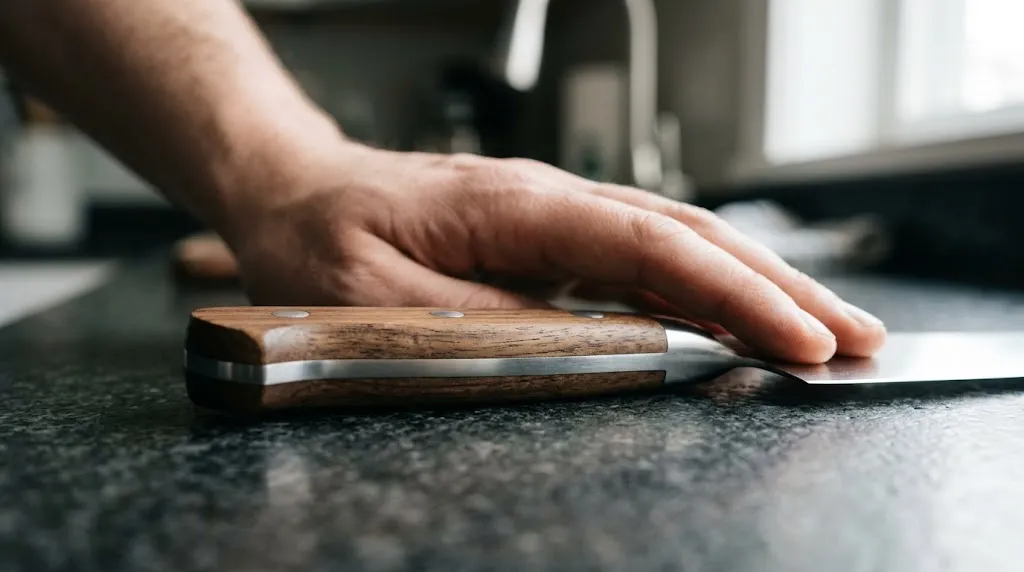
In a full tang chef knife, that piece of steel runs the entire length and width of the handle grip. The handle scales—often made of wood, composite material, or synthetic resin—are pinned, riveted, or bonded to both sides of the steel core. This means the knife is forged or stamped from a single, continuous sheet of metal from the tip of the blade to the butt of the handle.
Understanding this anatomy helps explain why knife construction directly impacts everyday food preparation, hand fatigue, and overall kitchen safety.
Why Full Tang Construction Matters for Performance
The primary advantage of a full tang design is structural integrity. Kitchen tasks often require applying downward pressure, rocking motions when dicing herbs, or cutting through denser ingredients like winter squash and root vegetables.
Knives with partial tangs—where the metal blade extends only an inch or two into the handle and is held in place by friction or adhesive—are vulnerable at the junction where the blade meets the handle. Under heavy leverage, a partial tang can loosen, bend, or snap completely.
A full tang distributes stress evenly throughout the entire tool. When you press down on the spine of the knife, the force travels solidly through the handle rather than relying on adhesive bonds.
Full Tang vs. Partial Tang: Key Differences
To better understand how construction impacts utility, it helps to compare full tang knives directly against other common handle attachment methods found in kitchen cutlery.
| Feature | Full Tang | Partial / Rat-Tail Tang |
|---|---|---|
| Metal Continuity | Runs full length and width of handle | Narrows or stops partway into handle |
| Durability | High resistance to snapping under heavy leverage | Prone to loosening or breaking at the joint |
| Balance | Heavier handle; weight is evenly distributed | Blade-heavy unless a heavy bolster is used |
| Typical Use | General prep, heavy-duty dicing, professional kitchens | Light tasks, budget utility knives |
As shown above, blade construction fundamentally alters how a knife feels in the hand during extended cooking sessions.
How Balance and Weight Are Affected
Weight distribution is another critical factor influenced by the tang. A full tang adds metal mass to the handle area, counterbalancing the heavy steel of the blade.
When a chef knife is properly balanced, the pivot point or balance point typically rests right at the bolster—where the blade meets the handle. This allows the knife to feel like a natural extension of your hand, reducing wrist fatigue during repetitive tasks like mincing garlic or chopping onions.
Knives lacking a full tang often feel blade-heavy, forcing your forearm muscles to work harder to control the tip.
Tip
You can check a knife’s balance by resting the bolster across your index finger. A well-balanced full tang knife will remain steady without tipping sharply forward or backward.
How to Identify a Full Tang Knife Before Buying
 Save
Manufacturers are not always explicit in product titles, so knowing how to inspect a knife visually is helpful.
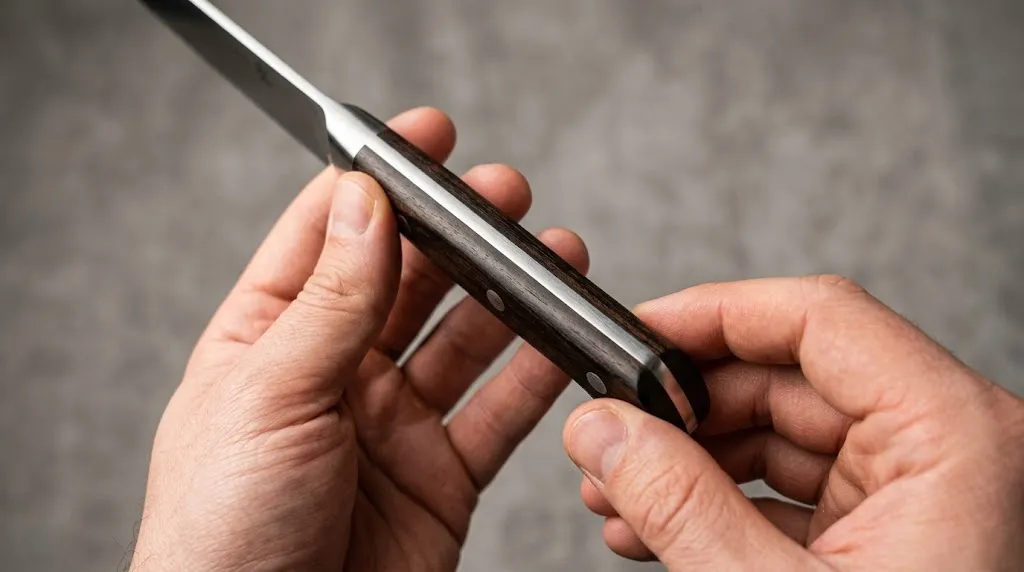
- Examine the spine and butt: Look at the rear end of the handle. If you see a continuous strip of bare metal sandwiched between the handle scales, it is a full tang.
- Check for rivets: Most full tang knives feature visible metal rivets or bolts securing the handle material tightly against the steel core.
- Inspect the weight profile: Pick the knife up. If the handle feels completely hollow or significantly lighter than the blade, it may use a hidden partial tang or hollow handle construction.
Warning
Be cautious of decorative metal caps at the end of some handles. A metal cap does not guarantee that a full strip of steel runs through the entire grip; it can sometimes be glued onto a hidden partial tang.
Maintenance Considerations for Full Tang Knives
While full tang construction provides exceptional mechanical strength, it also introduces specific care requirements, particularly regarding handle longevity.
Because the steel core runs all the way to the edge of the handle, poorly sealed wooden handles can allow moisture to seep inward during washing. Over time, trapped water can cause wooden handle scales to swell, warp, or cause the steel tang to rust underneath.
To prevent this, always hand-wash your chef knife in warm soapy water and dry it immediately with a towel. Never submerge wooden-handled knives in standing water or run them through a heated dishwasher cycle.
Related Product
Kitchen Knife Sharpening Stones
Maintain a razor-sharp edge on your full tang chef knife with a quality dual-grit whetstone.
As an Amazon Associate, we earn from qualifying purchases.
Frequently Asked Questions
Are all professional chef knives full tang?
Most high-quality Western and modern hybrid chef knives use full tang construction because professional kitchen environments demand high durability. However, certain traditional Japanese knife styles utilize partial tangs secured into wooden handles in a way that allows easy blade replacement.
Does a full tang make a knife heavier?
Yes, adding steel through the entire handle increases the overall mass of the knife compared to hollow-handled or partial tang alternatives. However, this weight is usually offset by improved balance and better control during cutting.
Can a full tang knife break?
While extremely durable, any knife can break if subjected to extreme misuse, such as prying frozen foods, using the tip as a screwdriver, or dropping it onto a hard concrete floor. The tang itself, however, is rarely the point of failure.
How can I tell if my existing knife is full tang?
Inspect the top spine of the knife just above where your thumb rests. If the metal strip continues uninterrupted along the top edge of the handle toward the back end, and you can see rivets or seams on the sides, it is a full tang.
Is full tang necessary for home cooking?
For casual home cooking where you mostly chop vegetables and soft proteins, a full tang knife is still highly recommended because it provides better safety, longevity, and balance than flimsy budget knives.
Does full tang affect how the knife is sharpened?
No, the tang is located entirely within the handle and has no direct impact on sharpening the cutting edge of the blade. Sharpening depends entirely on the steel alloy, edge angle, and bevel design.
Conclusion
Choosing a full tang chef knife is one of the best ways to ensure your kitchen tool remains sturdy, balanced, and safe for years of meal preparation. By running a single piece of steel through the entire handle, full tang knives provide the structural strength needed to handle demanding cutting tasks without weakening at the joint. When building your kitchen toolkit, prioritizing full tang construction guarantees reliable performance and better overall control.

