Why Chef Knife Steel Rusts: Causes, Prevention & Removal
Quick Answer
Chef knives rust when moisture and oxygen react with the iron content in the blade, creating iron oxide. While carbon steel rusts rapidly when left damp or exposed to acidic foods, stainless steel can also rust if neglected, exposed to harsh chemicals, or left in wet environments. You can prevent rust by hand washing and drying your knife immediately after every use, and you can remove existing surface rust using a gentle abrasive paste or rust eraser.
Why Chef Knife Steel Rusts
Understanding why a chef knife rusts starts with looking at what steel is made of. At its core, kitchen knife steel is an alloy composed primarily of iron and carbon, often mixed with other elements like chromium, vanadium, and molybdenum.
When the iron exposed on the surface of the blade encounters water (moisture) and oxygen simultaneously, a chemical reaction called oxidation occurs. This reaction transforms the iron into hydrated iron oxide, which we recognize as reddish-brown rust.
Unlike other forms of wear, rust does not just sit on top of the metal. It actually consumes the iron molecules, weakening the structural integrity of the edge and creating microscopic pitting that ruins the smooth finish of the blade.
The Role of Moisture and Oxygen
 Save
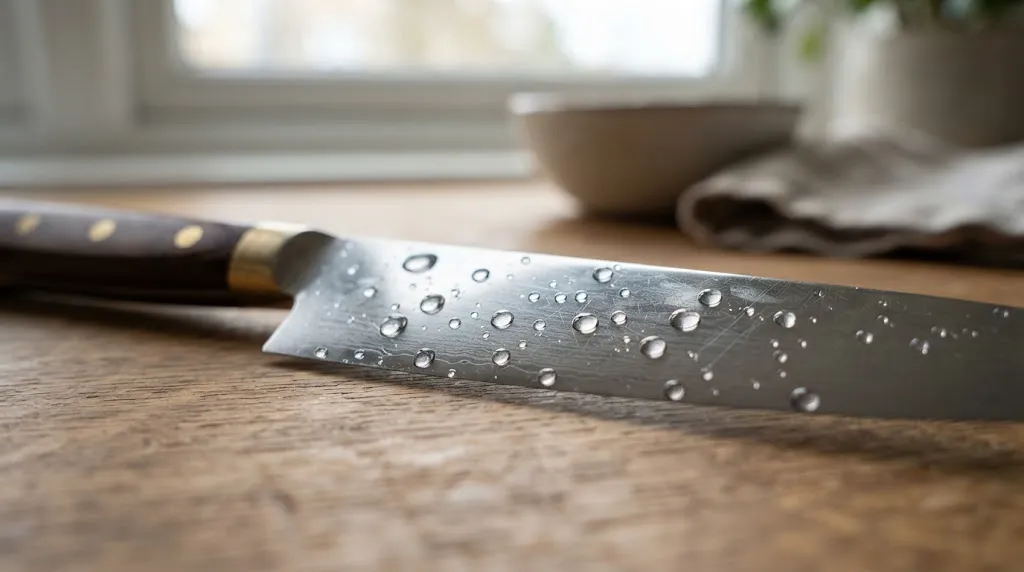
Moisture is the primary catalyst for oxidation. Even ambient humidity in a kitchen can trigger rust if a blade is stored unprotected for long periods.
Oxygen acts as the fuel for the reaction. When a wet knife is left sitting out on a counter, oxygen from the air continuously feeds the oxidation process until the moisture evaporates completely.
How Acidic Foods Accelerate Corrosion
Acids found in citrus fruits, tomatoes, onions, and vinegar drastically speed up the rusting process. Acid breaks down any protective microscopic barriers on the steel and lowers the pH on the blade surface, creating an ideal environment for rapid oxidation.
Carbon Steel vs. Stainless Steel Rust Resistance
Not all chef knives react to moisture the same way. The specific type of steel used to forge the blade determines how quickly it will corrode.
Knife enthusiasts generally choose between carbon steel and stainless steel, each offering distinct performance characteristics and maintenance requirements.
| Steel Type | Chromium Content | Rust Susceptibility | Best Maintenance Practice |
|---|---|---|---|
| Carbon Steel | Low (< 10.5%) | High | Wash, dry immediately, and oil regularly. |
| Stainless Steel | High (10.5%+) | Low | Wash and dry thoroughly after use. |
Carbon steel is prized by professional chefs for its ability to take an exceptionally sharp edge and hold it longer. However, because it lacks significant chromium, it lacks natural corrosion resistance. Without a protective patina or oil coating, carbon steel can develop rust within minutes of exposure to water.
Stainless steel contains at least 10.5% chromium, which forms a passive, microscopic layer of chromium oxide on the surface. This invisible shield prevents oxygen and moisture from reaching the underlying iron. However, stainless steel is “stain-less,” not “rust-proof.” Under harsh conditions, that protective layer can break down.
Common Everyday Habits That Cause Chef Knives to Rust
Most instances of knife rust are entirely preventable and stem from routine kitchen habits that place stress on the blade material.
Leaving Knives in the Sink
Soaking a chef knife in a sink filled with water and dirty dishes is one of the fastest ways to ruin it. Prolonged water exposure overwhelms even high-grade stainless steel. Furthermore, letting a sharp blade rattle against ceramic plates or silverware in a crowded sink causes microscopic chips and scratches where rust can easily take root.
Putting Chef Knives in the Dishwasher
The dishwasher is the ultimate enemy of kitchen cutlery. High water temperatures, harsh alkaline dishwasher detergents, intense drying heat cycles, and the physical bouncing around of the blade combine to strip away protective coatings, dull edges, and cause aggressive rusting.
Air-Drying Without Wiping
Leaving a freshly washed knife in a dish rack to air dry allows lingering water droplets to pool along the spine or near the bolster. As water slowly evaporates, minerals and oxygen concentrate on the steel surface, initiating localized pitting and rust spots.
Warning
Never store a damp chef knife inside a wooden knife block. Trapped moisture inside the narrow slots creates a dark, humid microclimate that will cause the blade to rust rapidly and can warp the internal wood.
How to Safely Remove Rust From a Chef Knife
If you discover rust spots on your chef knife, do not panic. Surface rust can usually be removed easily with household items without ruining the blade’s edge or geometry.
Method 1: Baking Soda Paste
 Save
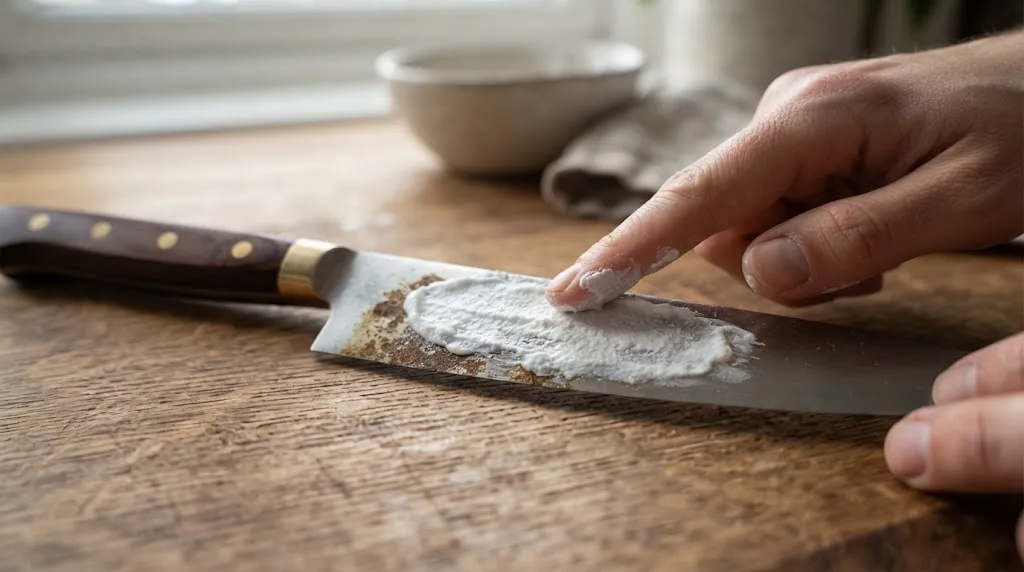
Mix baking soda with a few drops of water to form a thick paste. Apply the paste directly to the rusted areas of the blade and let it sit for 15 to 30 minutes to loosen the iron oxide. Use a soft cloth or a non-scratch nylon scrubbing pad to gently buff the rust away in the direction of the steel’s grain. Rinse thoroughly and dry completely.
Method 2: White Vinegar Soak
For more stubborn rust, submerge just the rusted portion of the blade in a shallow dish of white vinegar for 10 to 15 minutes. The mild acetic acid in the vinegar dissolves the rust bonds. Do not soak the knife for too long, as acid can pit the steel. Scrub the softened rust away with a soft sponge, wash with dish soap, and dry immediately.
Method 3: Rust Erasers and Fine Abrasives
Specialty rust erasers (rubber blocks impregnated with fine abrasive grit) work exceptionally well on carbon steel blades. Rub the eraser across the rust spots with light pressure. Always work parallel to the spine of the knife to maintain a clean, uniform scratch pattern.
Deep Pitting and Advanced Restoration
When rust is left unattended for weeks or months, it evolves from surface discoloration into deep pitting. Pitting occurs when corrosion eats microscopic craters directly into the metal body of the knife.
If deep pits form near the cutting edge, the blade may require thinning or regrinding on a coarse whetstone to restore structural integrity. For severe damage that compromises the safety or geometry of an expensive knife, professional knife restoration services or blade reprofiling may be necessary.
However, for minor pitting along the flat of the blade, finer grit wet-and-dry sandpaper (such as 1000-grit to 2000-grit) lubricated with mineral oil can smooth out the craters and restore an acceptable finish.
Best Practices for Long-Term Rust Prevention
Preventing rust is far easier than removing it. Adopting consistent handling habits will keep your chef knife looking pristine and performing at its best for years.
- Wash by hand immediately: Clean your chef knife with warm water and mild dish soap right after food preparation, especially after cutting acidic items like lemons, onions, or tomatoes.
- Dry thoroughly with a towel: Never skip drying. Use a clean, dry dish towel to wipe every inch of the blade, bolster, and handle immediately after washing.
- Apply a protective oil coat: If you use a carbon steel knife or live in a humid climate, apply a thin layer of food-safe mineral oil or camellia oil to the blade using a paper towel before storing it.
- Store in a secure, dry location: Use a magnetic knife strip, an in-drawer tray, or a universal knife block where air circulation prevents moisture buildup.
Tip
If you are storing a carbon steel chef knife for an extended period, coat it generously in food-safe mineral oil and wrap it loosely in VCI (vapor corrosion inhibitor) paper or plastic wrap to block ambient oxygen and moisture.
Related Product
Knife Maintenance and Mineral Oil Care Kit
Protect your kitchen cutlery from moisture, oxidation, and rust with food-grade mineral oil and specialized cleaning accessories.
As an Amazon Associate, we earn from qualifying purchases.
Frequently Asked Questions
Can rust on a chef knife make you sick?
Rust itself is iron oxide and is not inherently toxic or poisonous in small trace amounts. However, rusted knives often feature microscopic pitting and rough surfaces that trap food particles, bacteria, and organic debris. This bacterial buildup can cause foodborne illness, which is why rusted blades must be thoroughly cleaned and sanitized before use.
Will putting a chef knife in the dishwasher cause rust?
Yes. Dishwashers expose knives to prolonged standing water, high heat, and harsh detergents that strip protective finishes. This environment accelerates oxidation, frequently resulting in visible rust spots and severe blade pitting after just one or two wash cycles.
Can vinegar remove rust from a chef knife?
White vinegar contains acetic acid, which effectively breaks down and dissolves iron oxide bonds. Submerging the rusted section of the blade in vinegar for 10 to 15 minutes makes scrubbing away surface rust much easier, provided you wash and dry the blade immediately afterward.
Does stainless steel chef knife steel ever rust?
Yes. Stainless steel resists corrosion due to its chromium content, but it is not completely rust-proof. If left wet for extended periods, exposed to harsh chemicals, or subjected to salty environments, stainless steel can and will develop rust.
How often should I oil my carbon steel chef knife?
You should apply a thin coat of food-safe mineral oil after every use if you live in a humid climate or use the knife frequently with acidic ingredients. For knives used less often, oiling them whenever they are cleaned and put into long-term storage is sufficient.
Does rust ruin a chef knife permanently?
Surface rust is purely cosmetic and does not ruin a knife permanently. It can be easily scrubbed off. However, deep structural pitting that weakens the cutting edge or creates holes near the apex can permanently alter the knife’s performance and require professional repair.
Conclusion
Rust on a chef knife is the natural result of iron encountering moisture and oxygen, but it is entirely manageable with proper care habits. By understanding the differences between carbon and stainless steel, avoiding corrosive habits like dishwashing or leaving knives in sinks, and practicing immediate hand washing, drying, and oiling, you can keep your kitchen blades pristine. If rust does appear, simple household remedies like baking soda or vinegar can restore your knife’s finish quickly and effectively.

