Chef Knife Corrosion Resistance: The Real Truth
Quick Answer
A chef knife’s corrosion resistance comes primarily from chromium in the steel, which forms a thin, self-repairing oxide layer on the blade surface. Stainless steels with roughly 10.5% chromium or more resist rust under normal kitchen use, but no steel is fully immune. High-carbon steels and prolonged moisture exposure can still cause staining, pitting, or rust if the blade is not cleaned and dried promptly.
What Actually Makes a Chef Knife Corrosion Resistant?
 Save
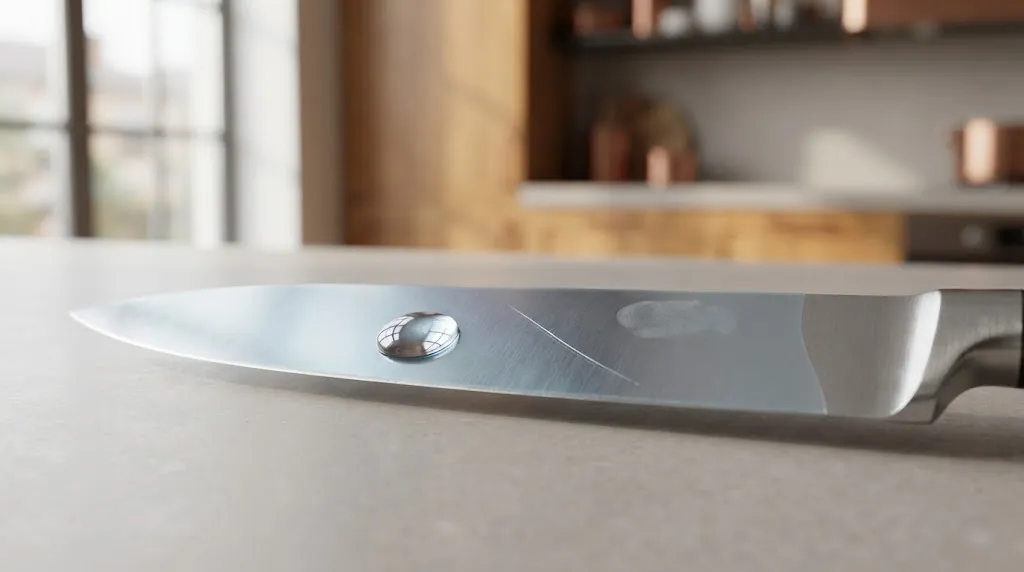
Corrosion resistance in a chef knife is not a single feature or a marketing label. It is the result of the steel’s chemistry, how that chemistry is distributed in the blade, and what happens at the surface when the knife meets water, salt, acid, and oxygen.
The central element is chromium. Stainless steel is defined as a steel alloy containing at least 10.5% chromium. When chromium is present in sufficient amounts, it reacts with oxygen in the air to form a chromium-rich oxide film on the blade surface. This film is extremely thin, invisible, and—critically—self-repairing. If the film is scratched or removed, more chromium from the steel beneath is exposed to oxygen and forms a new protective layer.
That passive layer is what separates a stainless chef knife from a carbon steel one. Carbon steel has little or no chromium, so it lacks this built-in barrier. It will rust if left wet, and it develops a patina—a dark, stable oxidation layer—that offers some protection over time but is not equivalent to the passive film on stainless steel.
Molybdenum and nitrogen also contribute to corrosion resistance, particularly against pitting—the small, localized pits that can form when chlorides (like salt) attack the passive layer. But chromium remains the foundational element. Without enough chromium in solution at the surface, the other elements cannot compensate.
Why “Stainless” Steel Can Still Stain, Pit, or Rust
The word “stainless” is one of the most misleading terms in kitchen gear. It does not mean the knife cannot stain. It means the steel is designed to resist staining under normal conditions—and “normal” is doing a lot of work in that sentence.
Stainless steel’s passive layer depends on oxygen exposure to maintain itself. When a knife is left wet, submerged in a sink, or run through a dishwasher, the surface may be deprived of the oxygen needed to repair microscopic damage to the chromium oxide film. In that environment, chlorides from salt, detergent, or food can begin attacking the steel at weak points.
The result is often pitting corrosion: tiny dark pits surrounded by a ring of rust, frequently appearing near the edge or where the blade meets the handle. Pitting is not a sign that the knife is defective. It is a sign that the passive layer was overwhelmed in a specific spot.
High-carbon stainless steels—the kind favored for edge retention in quality chef knives—are especially vulnerable to this trade-off. More carbon allows the steel to harden and hold a sharp edge, but it also ties up some chromium in carbides, reducing the amount of chromium available to form the passive film. These steels are excellent cutting tools, but they are not maintenance-free.
Key Insight
A chef knife with excellent edge retention often has slightly less free chromium available for corrosion protection. The steel is not worse—it is optimized for a different priority. Understanding this trade-off helps you choose the right knife and care for it correctly.
Which Knife Steels Resist Corrosion Best?
Not all stainless steels perform equally in a kitchen. The differences come down to chromium content, how the steel is processed, and what else is in the alloy.
At the high end of corrosion resistance are steels designed with marine or saltwater exposure in mind. Vanax, for example, uses a nitrogen-based nitride structure rather than relying solely on chromium carbides, giving it corrosion resistance that meets surgical instrument standards. MagnaCut, developed by metallurgist Larrin Thomas, keeps nearly all of its chromium in solution rather than locked in carbides, which allows it to resist rust at levels approaching Vanax in salt-spray testing despite having only about 10.7% chromium.
For more typical kitchen use, steels like CPM S35VN, S30V, and M390 offer strong corrosion resistance alongside good edge retention. M390 and its equivalents use high chromium content for corrosion protection combined with vanadium carbides for wear resistance. They require more effort to sharpen but resist staining well in humid or salty environments.
Budget-friendly stainless steels still provide meaningful protection. A steel like 14C28N is formulated for a balance of hardness and corrosion resistance, and it performs well in demanding conditions without the premium price of super steels. The key is to recognize that every steel represents a compromise. A knife that resists corrosion exceptionally well may sacrifice some edge stability or ease of sharpening. A knife that holds an edge for an extremely long time may need more attentive drying.
| Steel Type | Corrosion Resistance | Practical Kitchen Note |
|---|---|---|
| Carbon steel | Low | Forms patina; rusts if left wet; requires immediate drying |
| Standard stainless (e.g., typical European knives) | Moderate to good | Resists normal use; can pit with salt and prolonged moisture |
| High-carbon stainless (VG10, S30V, etc.) | Good | Excellent edge retention; dry promptly to avoid pitting |
| Premium corrosion-focused (MagnaCut, Vanax, M390) | Very high | Best for humid climates, salt air, or low-maintenance habits |
The table is not a ranking of “best to worst.” A carbon steel knife can be the right choice for a cook who values its edge feel and is willing to dry it immediately. The point is to match the steel to your actual habits, not to buy the most corrosion-resistant blade and then treat it carelessly.
The Habits That Matter More Than the Steel Label
 Save
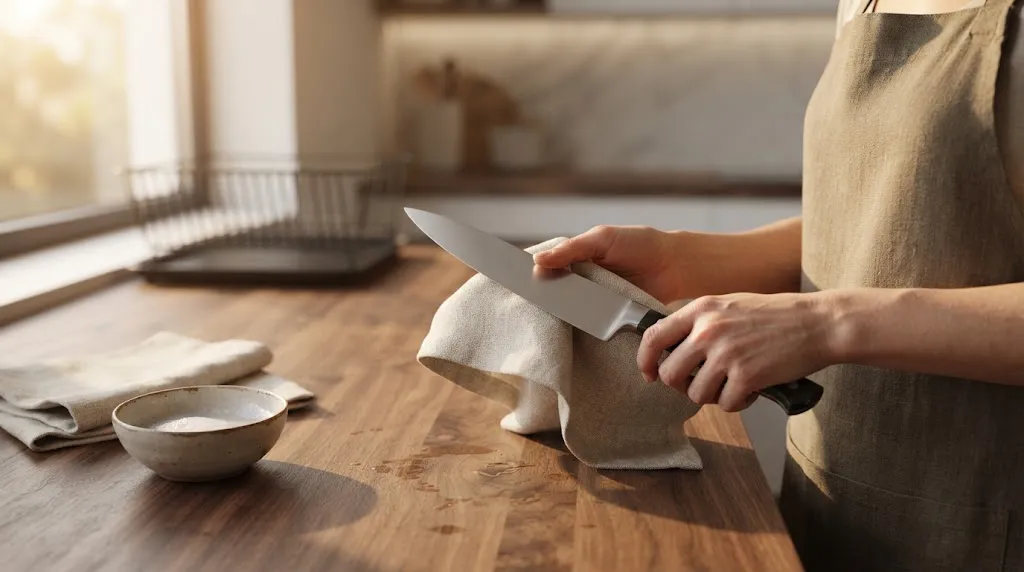
A chef knife with excellent corrosion resistance can still rust if it sits wet on a counter overnight. A modest stainless blade that is washed and dried immediately after use will usually look better after a year than a premium knife that goes through the dishwasher.
The single most effective habit is drying the blade promptly. Wash the knife by hand with mild soap and warm water, rinse it, and dry it immediately with a towel. Do not let it air-dry in a rack where water can pool near the handle or along the edge.
The dishwasher is a predictable problem for chef knives, regardless of steel type. Dishwasher detergent is alkaline and often contains chlorides. The rinse-and-hold cycle leaves the blade warm and wet for extended periods, which is exactly the condition that allows pitting to begin. Handle materials can also degrade, and the knife can knock against other items during the cycle.
Acidic foods deserve attention as well. Lemon juice, tomato, vinegar, and salty marinades can attack the passive layer if left on the blade. This does not mean you need to stop cutting acidic ingredients. It means you should not leave the knife sitting in them. A quick wipe during prep and a proper wash afterward is sufficient for most stainless steels.
Warning
If you see small dark pits or rust rings on a stainless blade, the passive layer has been breached in those spots. Remove the rust with a mild abrasive and keep the blade dry going forward, but the pits themselves may remain visible. Pitting is a structural change, not just a surface stain.
When Corrosion Resistance Becomes a Safety Issue
For most home cooks, surface rust or cosmetic staining on a chef knife is an appearance and maintenance annoyance, not a health hazard. Rust on a stainless blade is typically iron oxide, and washing the knife before use removes loose particles.
Deep pitting is different. Once pits form, they can harbor food residue and moisture, and they can deepen over time if the knife continues to be exposed to wet conditions. A heavily pitted blade is harder to clean thoroughly and may eventually develop cracks or weak points along the edge. If the pitting is severe or spreading despite proper care, the blade’s integrity is worth evaluating.
Carbon steel knives require a different safety consideration. The patina that develops on carbon steel is protective and stable, but active orange rust is not. Rust on carbon steel should be removed promptly, and the blade should be dried and lightly oiled to prevent recurrence. A carbon steel knife that has been neglected may develop rust along the edge that affects cutting performance and food contact.
Choosing a Chef Knife With Your Habits in Mind
If you rinse and dry your knife immediately after every use, you have more flexibility. A high-carbon stainless steel or even a carbon steel blade can work well, and you may gain edge retention or a particular cutting feel that you value.
If you know yourself well enough to admit that a knife will sometimes sit in the sink for an hour, or that you prefer not to baby your tools, prioritize corrosion resistance. MagnaCut, Vanax, and high-chromium stainless steels like M390 are designed for exactly that reality. You will still need to avoid the dishwasher and prolonged soaking, but the blade is more forgiving of occasional lapses.
If you cook with a lot of salt, citrus, or acidic ingredients, pay closer attention to the transition between blade and handle. That junction is a common starting point for pitting because moisture can linger there and the passive layer is harder to maintain. A knife with a tight, well-sealed handle fit reduces the places where water can hide.
The practical conclusion is not that one steel is best. It is that corrosion resistance is a property you can either work with or work against. A blade that matches your maintenance habits will outperform a “better” steel that is treated poorly.
Frequently Asked Questions
Can a stainless steel chef knife rust in the dishwasher?
Yes. Dishwasher detergent contains chlorides and is often strongly alkaline, and the rinse-and-hold cycle keeps the blade warm and wet for extended periods. This combination can break down the passive layer and cause pitting or rust, even on quality stainless steel. Hand washing and immediate drying are safer for any chef knife.
Is high-carbon stainless steel less corrosion resistant than regular stainless?
Not necessarily, but the trade-off is real. High-carbon stainless steels are formulated to balance hardness and corrosion resistance. However, more carbon can mean more chromium is tied up in carbides, leaving slightly less free chromium for the passive layer. These steels resist rust well under normal use but are often less forgiving of prolonged moisture than lower-carbon stainless steels.
What does the patina on a carbon steel knife actually do?
Patina is a stable, dark oxidation layer that forms on carbon steel with use. It provides some protection against active rust by acting as a barrier on the surface. It is not the same as the chromium oxide passive layer on stainless steel, and it does not make the knife waterproof. Carbon steel still needs to be dried after use.
How do I remove rust from a chef knife without damaging it?
For light surface rust, a soft cloth with a mild abrasive cleanser or a dedicated rust eraser is usually enough. Work gently along the blade and avoid using coarse sandpaper or steel wool, which can scratch the finish. After removing the rust, wash and dry the knife thoroughly and address whatever moisture exposure caused the rust in the first place.
Does a more expensive chef knife resist corrosion better?
Price and corrosion resistance are not directly linked. Some premium knives use high-carbon steels optimized for edge retention, which may be slightly more sensitive to moisture than a mid-range stainless blade. Conversely, some very corrosion-resistant steels are used in moderately priced knives. The steel type and your care habits matter more than the price tag.
Can I restore a pitted chef knife?
You can remove the visible rust around a pit with a mild abrasive, and you can keep the blade dry to prevent the pit from worsening. However, the pit itself is a small depression in the steel and will not disappear. If pitting is extensive or the edge feels compromised, the blade may need professional attention or replacement.
Conclusion
Chef knife corrosion resistance is not a binary property or a guarantee. It is the result of chromium in the steel forming a passive layer that protects the blade—until that layer is overwhelmed by moisture, salt, or neglect. The steel you choose matters, but the habits you bring to it matter just as much. Dry the blade after washing, keep it out of the dishwasher, and pay attention to the warning signs of pitting. A knife that matches your actual maintenance routine will serve you better than a more corrosion-resistant blade that is treated as if it were indestructible.

