Chef Knife Weight Guide: What Is Normal & How It Affects Cutting
Quick Answer
A standard chef’s knife typically weighs between 7 and 10 ounces (approx. 200 to 280 grams). Weight varies based on blade length—usually 8 inches—along with the knife’s construction type (forged vs. stamped), tang style, and handle materials.
Understanding Chef Knife Weight and Balance
When selecting or evaluating a kitchen knife, weight is one of the most critical tactile factors. It influences how the tool feels during extended food preparation tasks, how much wrist fatigue accumulates, and how effortlessly the blade moves through dense ingredients.
Knife weight does not indicate quality on its own. Instead, it reflects manufacturing choices, engineering priorities, and regional design traditions. Understanding these weight distributions helps home cooks and culinary professionals choose a knife that aligns with their cutting style.
Average Weight Ranges by Knife Style
 Save
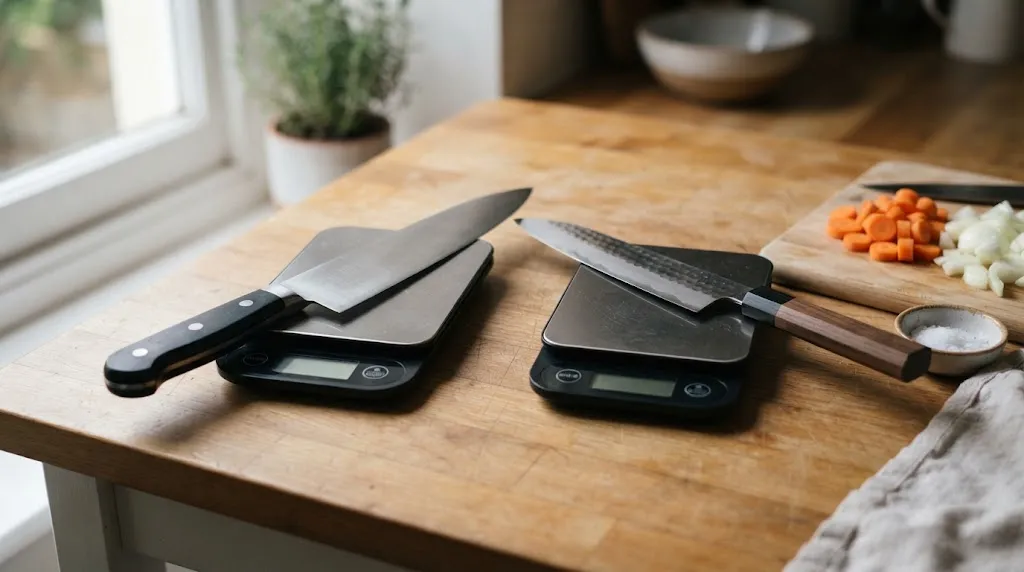
SaveDifferent culinary traditions approach knife balancing and heft differently. Western chef knives tend to be heavier and more robust, while Japanese gyutos emphasize lightness and nimble maneuverability.
- Western Chef Knives (German/French style): Typically weigh between 8 and 11 ounces. They feature thicker spines, heavier bolsters, and full stainless or high-carbon steel construction designed for durability and heavy-duty rocking cuts.
- Japanese Gyutos: Usually weigh between 5 and 8 ounces. Their thinner blades and tapered profiles reduce total mass, making them exceptionally fast and agile for precision push-cuts and slicing.
- Stamped vs. Forged Models: Stamped blades cut from rolled steel sheets are significantly lighter, whereas hot-drop forged knives carry more metal mass around the heel and bolster area.
How Construction Elements Determine Weight
A knife’s total weight is the sum of its component parts. Each manufacturing choice alters the distribution of mass from the handle to the tip.
The Tang and Handle Materials
Full-tang knives—where the steel extends completely through the handle—contain more metal and weight in the grip. Handle scales made from dense hardwoods, Micarta, or stainless steel bolsters add significant heft. Conversely, lightweight synthetic handles shift the balance point forward toward the blade.
Blade Thickness and Profile Tapers
A thick spine adds structural strength for heavy butchery tasks but increases overall weight. Knives featuring a distal taper—where the steel thins progressively from the heel to the tip—achieve a lighter overall feel without sacrificing structural integrity at the base.
Key Insight
Balance matters more than absolute weight. A slightly heavier knife with a neutral balance point directly above the pinch grip will feel lighter and more agile in the hand than a lighter knife that is heavily handle-heavy or blade-heavy.
Comparing Heavy vs. Lightweight Chef Knives
Choosing between a heavier and lighter knife depends heavily on cutting technique, hand strength, and the types of ingredients processed regularly.
| Feature | Heavier Knives (8–11 oz) | Lighter Knives (5–7 oz) |
|---|---|---|
| Best Cutting Style | Rock chopping, heavy winter squash, dense root vegetables | Push cuts, slicing, fine brunoise, rapid herb chopping |
| Hand Fatigue | Can tire smaller hands during long prep sessions | Reduces wrist fatigue during high-volume repetitive tasks |
| Momentum | Leverages gravity to assist cuts through dense foods | Requires more active downward muscle force |
Reviewing these operational differences ensures that kitchen workflows match the physical characteristics of the tool.
Common Misconceptions About Knife Weight
A prevalent myth is that heavier knives are automatically sharper or sturdier. In modern metallurgy, high-performance stainless and carbon steels allow thin, lightweight blades to maintain exceptional edge retention and structural rigidity without requiring bulky metal thickness.
Another misunderstanding is that expensive knives are always heavy. Many premium Japanese artisan blades are remarkably lightweight due to specialized hammering techniques and high-alloy steel cores clad in softer iron or stainless layers.
Tip
Test a knife’s balance by placing your index finger and thumb directly on the bolster or pinch grip area just ahead of the handle. A properly balanced knife will rest steadily on your fingers without tipping forward or backward.
How to Determine Your Ideal Knife Weight
 Save
SaveFinding the correct weight involves evaluating personal physical comfort and primary cooking habits. Cooks who prepare large quantities of vegetables daily often prefer lighter blades to minimize repetitive strain. Conversely, home cooks who frequently process dense meats, squash, and hard tubers often appreciate the added momentum and stability of a slightly heavier forged knife.
Related Product
Kitchen Knife Sharpening Stones
Maintain optimal cutting performance and edge geometry across blades of any weight or thickness.
As an Amazon Associate, we earn from qualifying purchases.
Frequently Asked Questions
Is a heavier chef knife better for cutting hard vegetables?
A heavier knife can use its mass and gravity to assist when cutting dense items like squashes or sweet potatoes. However, sharpness and thin blade geometry matter far more than total weight when slicing tough ingredients cleanly.
Why do Japanese knives weigh less than German knives?
Traditional Japanese culinary philosophy values agility, precision, and thin blade profiles for delicate cutting techniques. German knife design traditionally prioritizes rugged durability, heavier bolsters, and robust spines capable of handling heavy-duty kitchen tasks.
Does a full tang add too much weight to a knife?
A full tang adds noticeable heft to the handle, which helps balance the forward weight of the blade. While it increases total weight slightly, it provides superior structural strength and prevents handle snap under heavy pressure.
How does blade length affect total weight?
Blade length scales directly with mass. A standard 8-inch chef knife usually weighs between 7 and 10 ounces, whereas a shorter 6-inch utility or prep knife typically drops down to 4 to 6 ounces.
Can knife weight cause hand fatigue?
Yes. Knives that are excessively heavy can strain hand and wrist muscles over long prep sessions. However, knives that are too light can also cause fatigue if the user has to apply excessive downward pressure to compensate for lack of blade momentum.
Should beginners choose heavy or light chef knives?
Beginners often benefit from a medium-weight knife (around 7 to 8 ounces) with neutral balance. This weight range provides enough tactile feedback to feel secure in the hand without fatiguing the wrist.
Conclusion
Chef knife weight is a fundamental specification determined by blade length, construction style, tang design, and material selection. Standard 8-inch knives typically range from 7 to 10 ounces, balancing durability with maneuverability. By understanding how heft interacts with your preferred cutting style and hand comfort, you can select or handle knives that reduce fatigue and improve precision during everyday food preparation.

