Chef Knife Sharpening Angle Guide: 15 vs 20 Degrees
Quick Answer
Most Western chef knives are sharpened at a 20-degree angle per side, while Japanese and high-performance chef knives are typically sharpened at a steeper 15-degree angle. Choosing the right angle depends on your knife’s steel hardness, blade geometry, and how you use it in the kitchen.
Understanding Knife Sharpening Angles
The sharpening angle determines the geometry of your knife’s cutting edge. It dictates how easily the blade slices through food, how long the edge stays sharp, and how durable the steel remains under stress.
When discussing knife angles, it is essential to look at the angle per side, not the total included angle. For example, a 20-degree angle per side results in a total included angle of 40 degrees.
Selecting the correct angle ensures your knife performs at its absolute best. Too steep of an angle can cause the edge to chip easily, while too wide of an angle makes the knife feel dull and forces you to use extra pressure during food prep.
The 15-Degree Angle: Precision and Performance
 Save
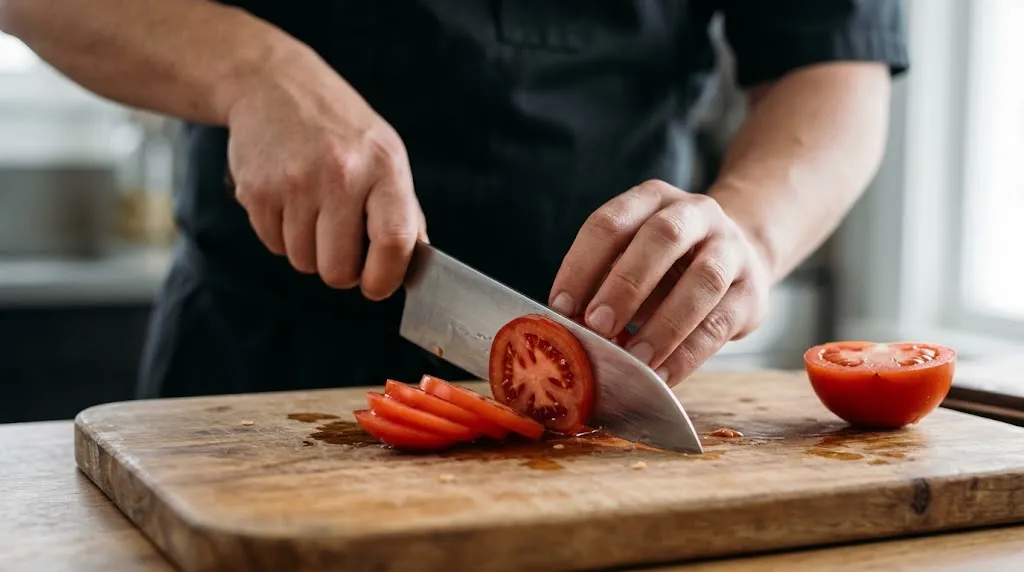
A 15-degree angle per side creates a very thin, razor-sharp edge. This angle is standard for traditional Japanese kitchen knives, such as santoku and gyuto blades, as well as many premium modern Western chef knives.
The primary advantage of a 15-degree angle is effortless cutting performance. The thin profile reduces drag, allowing the blade to glide smoothly through delicate vegetables, boneless meats, and intricate cuts without crushing cellular walls.
However, this high level of sharpness comes with a trade-off in durability. The thinner metal behind the edge is more susceptible to chipping if it strikes hard objects like bones, frozen food, or improper cutting surfaces like glass and stone.
When to Choose a 15-Degree Angle
Opt for a 15-degree angle if you prioritize precision slicing, clean vegetable work, and minimal cutting resistance. It is best suited for experienced home cooks and professional chefs who practice proper knife technique and use wooden or plastic cutting boards.
Knives crafted from high-carbon stainless steels or powdered metallurgy steels hold up exceptionally well at this steep angle because their internal crystalline structure provides superior edge retention.
Potential Risks of a 15-Degree Edge
Because the steel at the apex is thin, misuse can quickly ruin the edge. Twisting the blade inside dense ingredients or cutting through hard items will often result in micro-chipping.
If you share your kitchen with family members who are rough on cookware, a 15-degree edge may require frequent touch-ups and maintenance to stay damage-free.
The 20-Degree Angle: Durability and Versatility
A 20-degree angle per side is the industry standard for traditional German and American chef knives, including legacy brands like Wüsthof and Zwilling Henckels.
This angle creates a slightly wider, more robust wedge profile. While it requires marginally more downward force to push through dense produce compared to a 15-degree edge, it offers significantly higher resistance to rolling and chipping.
The extra steel supporting the cutting edge makes 20-degree knives remarkably forgiving. They handle heavy-duty kitchen tasks, repetitive meal prep, and occasional contact with stubborn ingredients with ease.
Who Benefits Most From a 20-Degree Angle?
A 20-degree angle is ideal for busy kitchens, multi-cook households, and anyone looking for a reliable, low-maintenance workhorse knife. It tolerates general utility tasks without requiring specialized sharpening care.
If your cooking style involves breaking down whole chickens, chopping through tough root vegetables, or working quickly during rushed weeknight dinners, the durability of a 20-degree edge provides valuable peace of mind.
Limitations of the 20-Degree Profile
The primary drawback is a minor reduction in ultimate slicing finesse. When slicing delicate ingredients like ripe tomatoes or paper-thin garlic cloves, you may notice slightly more resistance than you would with a steeper 15-degree blade.
Additionally, users transitioning from Japanese cutlery may feel that a 20-degree knife lacks that initial ultra-aggressive bite.
How to Determine Your Knife’s Factory Angle
Before sharpening a chef knife, you must identify its existing angle to avoid removing excess metal or creating an unstable secondary bevel.
The easiest method is checking the manufacturer’s specifications online or in the product manual. Most brands explicitly state whether their knives leave the factory at 15 or 20 degrees.
If documentation is unavailable, you can use the marker trick. Color the very edge of the bevel with a permanent marker, then make a single light pass across your sharpening stone at your guessed angle. Check where the marker ink was abraded to see if your angle matches the factory bevel.
Key Insight
Matching your knife’s existing factory angle during routine sharpening drastically reduces the amount of time and physical effort required to restore a sharp apex.
The Role of Steel Hardness and Blade Geometry
An angle cannot be chosen in isolation; it must complement the steel alloy and blade thickness.
Softer stainless steels commonly found in budget Western knives (around 54–56 HRC on the Rockwell hardness scale) lack structural rigidity. If sharpened to a steep 15 degrees, the apex will quickly bend and fold over during use. These softer steels require the structural support of a 20-degree angle.
Conversely, high-end Japanese steels hardened to 60–64 HRC maintain their rigidity even when ground to thin, acute 15-degree angles.
Blade thickness also plays a crucial role. A thick spine paired with a steep angle creates poor geometry that wedges into food rather than slicing cleanly.
Step-by-Step Overview: Maintaining Your Chosen Angle
 Save
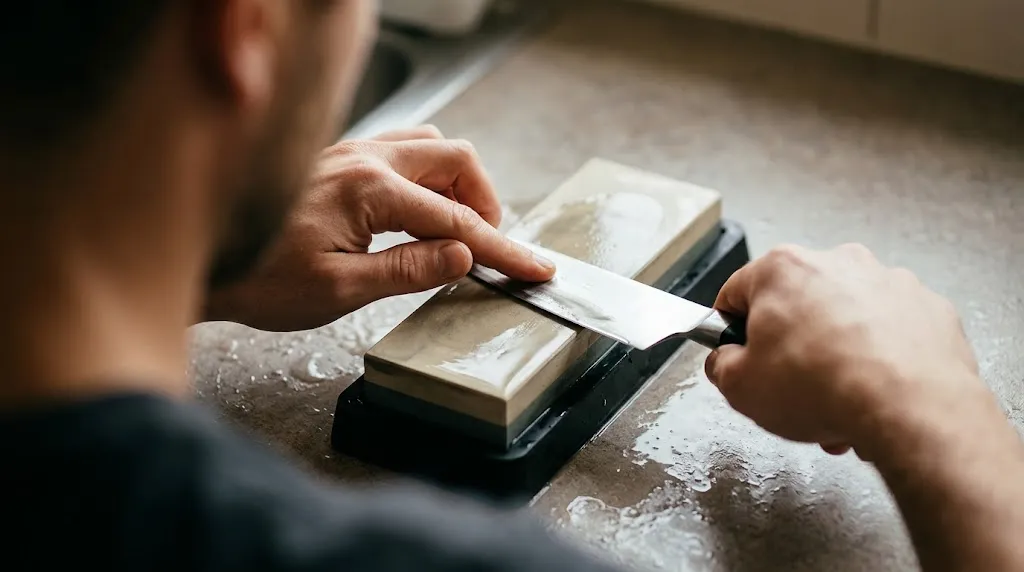
Maintaining a consistent sharpening angle requires muscle memory, proper body positioning, and steady hand control.
Whether you use whetstones, a guided rod system, or an electric sharpener with preset slots, consistency is more important than the exact numerical degree.
- Secure your sharpening medium: Ensure your whetstone or sharpening device is completely stable on your countertop to prevent slipping.
- Establish the angle: Place the heel of the blade on the stone at your target angle (15 or 20 degrees), using coins or angle guides if you need a visual reference.
- Maintain consistent pressure: Apply light, even downward pressure toward the edge while moving the blade smoothly across the stone from heel to tip.
- Form a burr: Repeat consistent passes until a small, tactile ridge of metal (the burr) forms along the opposite side of the edge.
- Flip and repeat: Switch sides and duplicate the exact number of passes to create a symmetrical apex.
- Strop to finish: Remove residual burrs by passing the blade lightly over a leather strop or fine ceramic hone.
Warning
Never guess your sharpening angle by eye if you are inexperienced; fluctuating angles during the sharpening process result in a rounded, dull edge that fails to cut efficiently.
Common Mistakes When Choosing or Holding Angles
Many home cooks struggle with knife sharpening because of avoidable mechanical errors.
One frequent mistake is attempting to force a soft, budget Western knife down to a 15-degree angle. Without the proper steel hardness, the edge will fail almost immediately upon contact with a cutting board.
Another common issue is lifting the spine of the knife too high as you reach the tip of the blade during the sharpening stroke. This rounds off the tip and creates an uneven bevel.
Finally, failing to check for the formation of a burr before moving to a finer grit stone leaves you with a dull edge, regardless of how many passes you performed.
Related Product
Whetstone Knife Sharpening Stone Kit
A dual-grit whetstone with an angle guide helps you maintain precise 15 or 20-degree bevels during manual sharpening.
As an Amazon Associate, we earn from qualifying purchases.
Frequently Asked Questions
Can I change my chef knife from a 20-degree angle to a 15-degree angle?
Yes, you can reprofile a knife from 20 degrees to 15 degrees, but it requires removing a substantial amount of steel behind the edge. Using coarse whetstones or a guided grinding system is necessary to establish the new geometry.
Is a sharper angle always better for cooking?
Not necessarily. While a 15-degree angle slices with less resistance, it lacks the durability required for heavy kitchen use. The best angle balances cutting performance with the physical demands of your cooking style.
How does steel hardness affect the sharpening angle?
Harder steel alloys maintain stability at acute 15-degree angles without chipping. Softer steels require the structural reinforcement of a wider 20-degree angle to prevent the cutting edge from rolling over.
Should I use an angle guide when sharpening?
Angle guides are highly recommended for beginners. They clip onto the spine of the knife to help maintain a consistent 15 or 20-degree tilt against your sharpening stone, eliminating guesswork.
How often should I check my knife angle?
You only need to establish or verify the angle during initial sharpening or major reprofiling. During routine weekly honing or quick touch-ups, maintaining muscle memory is sufficient.
Does a honing rod change the knife sharpening angle?
A traditional steel honing rod does not sharpen or grind away metal; it simply straightens a curled edge. However, holding the rod at an incorrect angle during honing can gradually distort your primary bevel over time.
Conclusion
Choosing the correct chef knife sharpening angle is essential for maximizing both cutting performance and blade longevity. Whether you rely on the precision of a 15-degree Japanese profile or the rugged durability of a 20-degree Western edge, matching your angle to your knife’s steel and intended use ensures reliable kitchen results. By maintaining consistent technique and avoiding common sharpening errors, you can keep your kitchen blades performing at their peak.

