How to Fix a Loose Chef Knife Handle
Quick Answer
To fix a loose chef knife handle, first stop using the knife and identify whether the handle scales, rivets, or the tang are moving. A small, accessible fastener may be repairable, but a cracked handle, loose full tang, or shifting blade requires professional repair or replacement. Never continue cutting with a handle that moves unexpectedly.
What to check first
- Handle movement: Check whether the scales move against the metal tang or the entire handle shifts.
- Loose rivets: Look for raised, missing, or visibly shifting fasteners.
- Cracks or gaps: Inspect the handle for splits, swelling, and separation near the blade.
- Rust or corrosion: Check exposed metal for damage around the handle joints.
- Repair choice: Tighten only an appropriate accessible fastener; seek professional help for structural looseness.
Safety tip
- Keep the knife out of use until the handle is secure, and do not test it by cutting food.
A chef knife should feel stable in your hand, with no unexpected movement between the handle and blade. If yours has started wobbling, even slightly, it’s worth identifying the cause before attempting a repair.
In this guide, I’ll explain how to inspect a loose chef knife handle, which problems you may be able to address at home, and when professional repair or replacement makes more sense.
What Does a Loose Chef Knife Handle Mean?
 Save
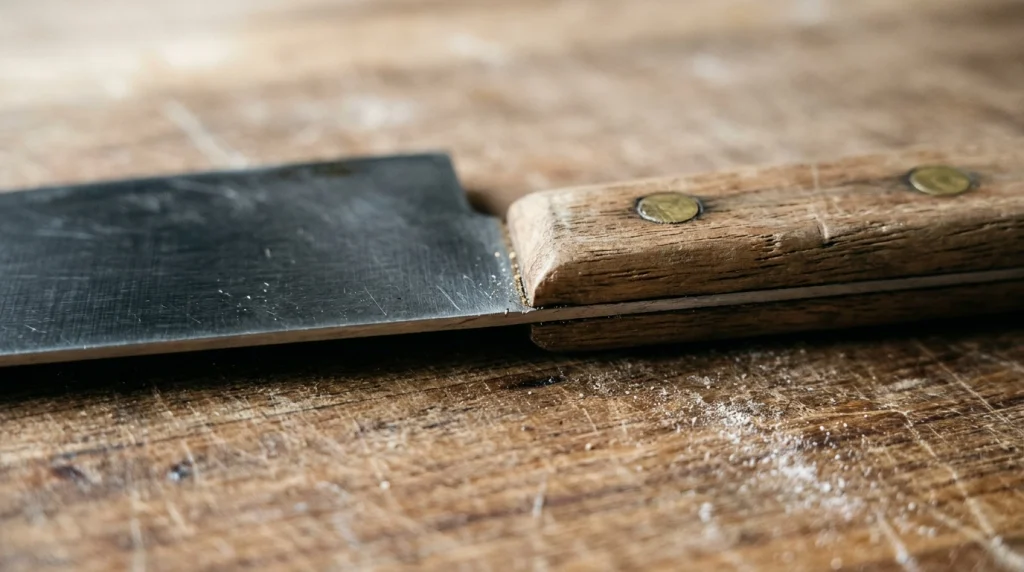
A loose chef knife handle is a handle assembly that moves, separates, or shifts instead of remaining firmly attached to the blade’s tang. The problem may involve the handle scales, rivets, adhesive, or the tang itself.
The tang is the portion of the blade’s metal that extends into the handle. In a full-tang knife, it generally runs through the handle from the blade toward the butt, while the handle scales sit on either side.
Different construction methods require different repairs. A screw-fastened handle may allow an accessible fastener adjustment, while a traditional riveted handle or an internally bonded handle can require specialized tools and skills.
- Loose scales: One or both handle sides move against the tang.
- Loose rivets: The pins holding the handle scales together appear raised or unstable.
- Failed adhesive: A gap develops between the handle material and metal.
- Damaged tang: Corrosion, cracking, or structural damage affects the metal inside the handle.
- Cracked handle material: Wood, plastic, or composite material splits or breaks around a fastener.
Don’t assume every loose handle needs glue. The correct repair depends on the knife’s design and the part that’s failing.
Why Does a Chef Knife Handle Become Loose?
Chef knife handles usually loosen because of wear, repeated moisture exposure, impact, damaged fasteners, or a failing bond between materials. Identifying the likely cause helps prevent a temporary repair from hiding a more serious problem.
Repeated washing and moisture exposure
Water can enter small gaps around handle scales and fasteners, especially when a knife stays wet for long periods. Wooden handles may swell and shrink as their moisture content changes, while trapped moisture can contribute to corrosion around the tang.
Dishwashers can make the problem worse through high heat, prolonged moisture, and harsh detergents. Hand-wash the knife and dry it promptly instead.
Loose or worn rivets
Traditional chef knives often use rivets to secure their handle scales to the tang. If a rivet becomes damaged or loses its secure fit, the handle may begin to shift under pressure.
A rivet that looks slightly raised does not automatically mean it can safely be hammered back into place. Excessive force can damage the scales, distort the fastener, or create additional gaps.
Cracked or worn handle material
Wood can split around rivets, while some plastic and composite handles can crack after drops or repeated stress. Once the material surrounding a fastener breaks, tightening the fastener alone may not restore a reliable connection.
Failed adhesive or internal damage
Some handles rely partly or entirely on bonding compounds to secure their components. Heat, age, moisture, or impact may weaken that bond and allow movement.
If the entire handle shifts relative to the blade, the problem may involve more than a surface gap. Treat that movement as a structural fault until a qualified repairer confirms otherwise.
A knife with a moving handle can slip unexpectedly during cutting. Don’t use it for food preparation, and don’t attempt to compensate by gripping it harder.
How Can You Check What Is Making the Handle Loose?
Inspect the knife while it’s resting on a stable, dry work surface. Keep your hands away from the cutting edge, and don’t apply force to the blade or handle.
Start with a visual inspection, then check the following areas without trying to twist or bend the assembly.
- Examine the handle scales: Look for cracks, lifted edges, and visible gaps where the handle meets the tang.
- Inspect the rivets: Check for missing pins, damaged heads, and obvious separation around the fasteners.
- Look near the bolster: The bolster is the thick junction between the blade and handle on knives that have one. Check for separation or corrosion.
- Inspect the handle butt: Look for splits, missing material, or a gap at the back of the handle.
- Check for corrosion: Look for rust around exposed metal joints, especially if the knife has been stored wet.
If you can see movement without touching the knife, the defect is already clear enough to justify stopping use. You don’t need to recreate the movement to diagnose it.
For a better understanding of the parts you’re inspecting, see this guide to chef knife anatomy and construction.
How Do You Fix a Loose Chef Knife Handle at Home?
You can sometimes correct a loose handle screw or an accessible fastener, but the repair must match the knife’s construction. Structural problems involving rivets, cracked scales, or a shifting tang are better handled by a qualified knife repairer.
Before choosing a method, identify the fastener type and check the manufacturer’s maintenance instructions. If you can’t identify the construction confidently, don’t dismantle the knife.
Method 1: Tighten an Accessible Handle Screw
Some modern chef knives use screws rather than traditional rivets. If the manufacturer permits user adjustment, tightening a loose screw may restore the fit without replacing the handle.
- Confirm that the knife has an adjustable screw rather than a rivet.
- Find the manufacturer’s recommended screwdriver or bit size.
- Follow the specified adjustment procedure without applying excessive force.
- Stop if the screw spins freely, the threads appear damaged, or the handle remains loose.
Do not force a screw that resists turning. Stripped threads or damaged handle material can make a simple repair more difficult.
Method 2: Repair Loose Rivets
Traditional riveted handles generally require more care than screw-fastened designs. A loose rivet may need replacement, proper peening, or a repair that addresses damaged material around the fastener.
Peening is the process of carefully deforming a suitable metal fastener to secure it. The technique requires the correct tools and support, and it isn’t appropriate for every rivet or handle construction.
Avoid striking the rivets with a household hammer in an attempt to tighten them. You could split wooden scales, damage the rivet heads, or create an uneven joint that still moves.
If a rivet has loosened because the handle material has cracked, simply tightening it won’t solve the underlying problem. Have the knife assessed for a proper repair or replacement.
Method 3: Address a Separated Handle Scale
A handle scale that separates from the tang may have a failed adhesive bond, damaged fasteners, or a combination of both. The right repair depends on how the handle was assembled.
Don’t fill the gap with ordinary household glue and assume the knife is safe. Heat, moisture, repeated pressure, and cleaning chemicals can affect a repair, while unsuitable adhesives may not be appropriate for food-contact equipment.
A qualified repairer can determine whether the scale can be rebonded or whether the handle needs replacement. If the separation extends toward the blade or affects the tang, avoid DIY repair.
Method 4: Replace a Cracked Handle
A cracked handle often needs replacement when the damage affects the areas that hold the scales, screws, or rivets together. Small surface marks aren’t always structural, but a crack that opens around a fastener deserves attention.
Handle replacement may involve removing the old scales, cleaning and inspecting the tang, fitting new handle material, and securing it with appropriate fasteners or bonding compounds.
This work can require specialized tools and accurate fitting. For an expensive knife, professional restoration may be worthwhile; for an inexpensive knife with a damaged tang, replacement may be more practical.
Do not attempt a home repair if the blade shifts inside the handle, the tang appears cracked, corrosion has weakened the assembly, or the handle is breaking apart. Keep the knife out of service until it has been repaired properly or replaced.
Which Loose Handle Repair Method Is Best?
The best approach depends on the type of handle, the location of the damage, and whether the underlying structure remains sound. The following comparison helps distinguish simple adjustments from repairs that need specialist attention.
| Problem | Approach | DIY suitability |
|---|---|---|
| Accessible loose screw | Manufacturer-approved adjustment | Often suitable if instructions permit |
| Loose traditional rivet | Rivet repair or replacement | Usually best left to a repairer |
| Separated handle scale | Assess fasteners, bonding, and handle condition | Depends on construction; professional repair is safer |
| Cracked wooden handle | Replace or professionally restore the damaged handle | Not advisable if the crack affects fasteners |
| Shifting blade or damaged tang | Professional assessment or knife replacement | Not suitable for a routine home fix |
A repair that looks successful isn’t necessarily structurally sound. If you can’t verify that the handle is secure, don’t return the knife to service.
Should You Use Epoxy or Glue on a Loose Chef Knife Handle?
Epoxy can be part of certain knife-handle repairs, but it isn’t a universal solution for loose handles. The suitability of an adhesive depends on the handle materials, the joint design, manufacturer guidance, and the product’s intended use.
Before using any adhesive, consider these points:
- Material compatibility: The adhesive must be suitable for the specific handle and metal surfaces.
- Food-contact suitability: Don’t assume a cured household adhesive is suitable for kitchen equipment simply because it feels hard.
- Heat and moisture: The repair must tolerate the knife’s intended cleaning and use conditions.
- Structural condition: Glue cannot reliably compensate for a cracked tang, broken fastener, or badly damaged handle.
- Manufacturer instructions: Check whether the maker recommends a particular repair method or warranty service.
Never apply glue around the blade joint without understanding the construction. Adhesive can conceal corrosion or prevent a repairer from inspecting the damaged area.
For a knife that sees daily use, a correctly fitted replacement handle or professional repair is generally a better choice than an improvised adhesive fix.
When Should You Replace a Loose Chef Knife Instead?
Replacement makes sense when the handle or tang has suffered significant structural damage, the repair costs approach the price of a suitable replacement, or a reliable repair isn’t possible.
Consider replacement if any of these conditions apply:
- The blade moves independently of the handle.
- The tang is cracked, deeply corroded, or otherwise structurally compromised.
- The handle is badly split around multiple fasteners.
- Previous repairs have failed and the handle continues to loosen.
- A qualified repairer cannot confirm that the knife can be restored safely.
Don’t judge the decision on the purchase price alone. A quality knife with a replaceable handle may deserve professional restoration, while a badly damaged low-cost knife may not justify the expense.
If you’re comparing replacement options, consider handle comfort, secure construction, maintenance requirements, and whether the manufacturer offers repair support. Our guide to chef knife sizes and fit can help you choose a practical blade length.
How Can You Prevent a Chef Knife Handle From Loosening Again?
 Save
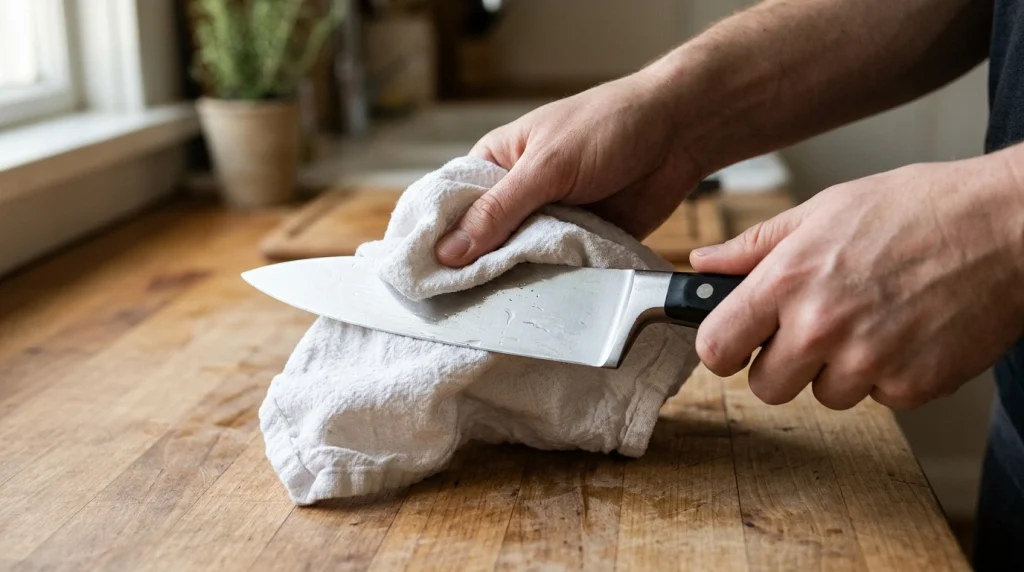
Good maintenance reduces unnecessary stress on handle materials and fasteners. It won’t prevent every failure, but it can help you spot developing problems before they become serious.
- Hand-wash the knife: Use mild dish soap and warm water instead of relying on a dishwasher.
- Dry it promptly: Wipe the blade, handle, and exposed joints thoroughly after washing.
- Avoid soaking: Don’t leave a knife submerged in a sink or resting in standing water.
- Store it carefully: Use a suitable knife block, sheath, or other protective storage that prevents impacts.
- Use the right cutting surface: Wood or suitable plastic boards are preferable to glass, stone, or metal surfaces.
- Avoid misuse: Don’t pry, twist, or force the blade through frozen food or hard bones.
- Inspect periodically: Look for cracks, gaps, corrosion, and changes in handle fit during routine cleaning.
Wooden handles may also need care recommended by the manufacturer. Use only products appropriate for the particular finish and handle material.
For more maintenance guidance, read our guide on how to clean a chef knife properly.
Recommended Chef Knives if Your Handle Cannot Be Repaired
If the existing handle or tang is damaged beyond a reliable repair, replacing the knife may be the more sensible option. These established models offer different handle styles and price-positioning choices, but check current specifications and warranty terms before purchasing.
Everyday Pick
Victorinox Fibrox Pro 8-Inch Chef’s Knife
★★★★☆
A practical everyday option with a textured synthetic handle. Consider it if you want a straightforward replacement for routine home cooking, and inspect the handle fit before first use.
Traditional Style
WÜSTHOF Classic 8-Inch Chef’s Knife
★★★★☆
A traditional Western-style chef’s knife with a synthetic handle and riveted construction. It may suit cooks who prefer a familiar handle profile, provided they maintain and inspect the knife properly.
Alternative Option
Mercer Culinary Renaissance 8-Inch Chef’s Knife
★★★★☆
A Western-style chef’s knife with a synthetic handle and a bolster design. Compare its grip, balance, maintenance requirements, and current warranty information with the other options before deciding.
These are replacement suggestions, not a claim that any particular model is immune to handle damage. I would prioritize a secure handle, comfortable grip, suitable construction, and accessible manufacturer support over appearance alone.
Frequently Asked Questions
Can I keep using a chef knife if the handle is only slightly loose?
No. Even slight movement can worsen under pressure and make the knife unpredictable. Stop using it until you identify the cause and confirm that the handle is secure. If the blade shifts inside the handle or the tang appears damaged, seek professional repair or replace the knife.
Can I hammer a loose chef knife rivet back into place?
It’s not a good idea unless you have the correct tools, understand the rivet construction, and can support the handle properly. A household hammer can damage the rivet or split the handle scales. A knife repairer can determine whether the fastener needs adjustment, replacement, or a more extensive repair.
Is super glue suitable for fixing a loose knife handle?
Super glue is not a universal fix for a loose chef knife handle. It may not suit the handle materials, joint design, moisture exposure, or mechanical stresses involved. It also won’t repair a cracked tang or failed fastener. Choose a repair method based on the manufacturer’s guidance and the actual damage.
Why does my wooden chef knife handle keep loosening?
Repeated moisture exposure, changes in wood moisture content, cracked scales, and worn fasteners can contribute to a loose wooden handle. Hand-wash and dry the knife promptly, avoid soaking it, and follow the manufacturer’s wood-care instructions. If the handle continues to move, have the joint inspected.
Is it worth repairing an expensive chef knife with a loose handle?
Often, yes, if the blade and tang remain structurally sound and a qualified repairer can restore the handle reliably. Compare the repair cost with replacement cost, the knife’s condition, and any manufacturer warranty or service options. A damaged tang may make replacement the more sensible choice.
Final Takeaway: Fix the Cause, Not Just the Movement
A loose chef knife handle is a warning that something in the handle assembly may have failed. The right response is to stop using the knife, inspect it without forcing the joint, and identify whether the problem involves an adjustable fastener, damaged scales, loose rivets, or the tang.
Make only manufacturer-approved adjustments that you can perform safely. For cracked handles, failing rivets, or structural damage, use a qualified repairer or replace the knife rather than relying on glue or improvised tightening.
Once the knife is repaired or replaced, hand-wash it, dry it thoroughly, store it safely, and check the handle periodically. A secure handle is essential for controlled, predictable cutting.

