What Should Every Chef Have in Their Knife Roll?
Quick Answer
Every chef should build a practical knife roll around a chef’s knife, a paring knife, and a serrated bread knife. Add a honing steel, vegetable peeler, kitchen shears, blade guards, and a few compact prep tools to handle everyday kitchen tasks safely and efficiently. Specialty knives belong in the roll when your cooking style or workplace requires them.
Essential Knife Roll Checklist
- Chef’s knife: The main tool for chopping, slicing, mincing, and general preparation.
- Paring knife: Handles peeling, trimming, and precise cutting.
- Serrated knife: Cuts bread, delicate tomatoes, and other foods with soft interiors or firm skins.
- Honing steel: Helps realign an appropriate knife edge between sharpenings.
- Peeler and shears: Speed up vegetable preparation and small cutting jobs.
- Blade guards and roll: Protect cutting edges and keep knives secure during transport.
Before You Pack
- Check your employer’s or culinary school’s required equipment list before buying specialty tools.
- Choose a roll with individual blade compartments, secure closures, and enough room for your actual equipment.
A well-packed knife roll makes kitchen preparation more organized, whether you’re starting culinary school or working a busy service. The trick is choosing tools that solve real problems instead of carrying every knife you can find.
In this guide, I’ll break down the essential knives, supporting tools, optional upgrades, and storage features worth considering. You’ll also find a practical packing list and a comparison table to help you build a kit that suits your work.
What Is a Chef’s Knife Roll?
A chef’s knife roll is a portable case designed to store and transport kitchen knives and selected cooking tools. It typically has individual pockets or compartments that help separate blades and keep equipment organized.
Unlike a general kitchen drawer organizer, a knife roll is made for carrying equipment between locations. Chefs use them to transport their tools to restaurants, catering jobs, culinary classes, and other professional cooking environments.
A useful knife roll usually includes space for:
- Knives of different sizes and shapes.
- Compact sharpening or honing equipment.
- Small preparation tools and accessories.
- Protective sheaths or blade guards, when needed.
The right setup depends on your responsibilities. A pastry chef, a fish cook, and a restaurant line cook may need different equipment, even if they all own the same basic chef’s knife.
Which Knives Should Every Chef Carry?
Most chefs can build a useful starting kit with three knives: a chef’s knife, a paring knife, and a serrated knife. These cover many everyday preparation tasks without making the roll unnecessarily heavy.
1. Chef’s Knife: Your Main Workhorse
A chef’s knife is a versatile kitchen knife with a broad blade and pointed tip. It handles tasks such as chopping vegetables, mincing herbs, slicing boneless meat, and cutting many everyday ingredients.
An 8-inch chef’s knife is a practical starting point for many cooks. A shorter blade may feel easier to control for smaller hands or compact workspaces, while a longer blade can help with larger ingredients.
Choose one that feels balanced and comfortable in your hand. A familiar, well-maintained knife is often more useful than an expensive model that doesn’t suit your grip or cutting style.
2. Paring Knife: For Detailed Preparation
A paring knife has a short blade, often around 3–4 inches long. It gives you greater control when peeling fruit, trimming vegetables, removing blemishes, and performing other small cutting tasks.
It’s especially useful when a large chef’s knife feels awkward. Keep it in a dedicated pocket or use a blade guard to protect its edge.
3. Serrated Bread Knife: For Clean Slices
A serrated knife has a toothed cutting edge that grips food as you slice. A longer bread knife works well for crusty loaves, soft bread, and foods such as ripe tomatoes that can be crushed by excessive downward pressure.
For many general-purpose kits, a blade around 8–10 inches offers useful reach. However, you don’t need a long serrated knife if your regular duties rarely involve bread or delicate slicing.
4. Boning Knife: For Meat Preparation
A boning knife has a relatively narrow blade designed to work around bones, joints, and connective tissue. Its shape helps with trimming and separating meat where a broad chef’s knife may feel cumbersome.
Choose a stiff or flexible version based on the ingredients and cuts you handle. A butcher or meat-preparation cook may use one regularly, while a vegetable-focused cook may leave it at home.
5. Fillet Knife: For Fish and Seafood
A fillet knife typically has a narrow, flexible blade that follows the contours of fish. It can help separate flesh from bones and skin when preparing whole fish.
This is a specialized tool, not a universal requirement. If seafood preparation is part of your daily work, it may deserve a dedicated place in your roll.
6. Slicing Knife: For Long, Even Cuts
A slicing knife has a long, relatively narrow blade designed for cutting even slices of cooked meat, roasts, and other large foods. Its length can help you make smooth cuts without repeatedly sawing through the same section.
Carving-focused chefs may find it useful, but many cooks can skip it until their regular duties justify the extra space.
What Other Tools Belong in a Chef’s Knife Roll?
Knives do most of the cutting, but a few compact accessories make a kit more useful. Prioritize tools that solve recurring preparation problems and fit safely in your roll.
Essential Supporting Tools
- Honing steel: Helps realign the edge of compatible knives between sharpenings. It does not replace proper sharpening.
- Vegetable peeler: Removes thin skins from potatoes, carrots, apples, and other produce.
- Kitchen shears: Handle tasks such as trimming herbs, cutting packaging, and snipping selected ingredients. Keep food-use shears clean and separate from tools used for non-food tasks.
- Bench scraper: Moves chopped ingredients and clears a work surface. It can also help portion or handle dough.
- Fine-tip tweezers: Useful for removing small bones from fish and positioning delicate garnishes.
- Small offset spatula: Helps spread, lift, and position delicate foods or work with pastry and plating.
- Permanent marker: Useful for labeling containers and identifying prepared ingredients where workplace procedures allow.
You don’t need every item from the beginning. Start with the tools that match your assigned tasks, then add accessories when you notice a genuine gap in your workflow.
Which Tools Are Essential, Optional, or Specialized?
 Save
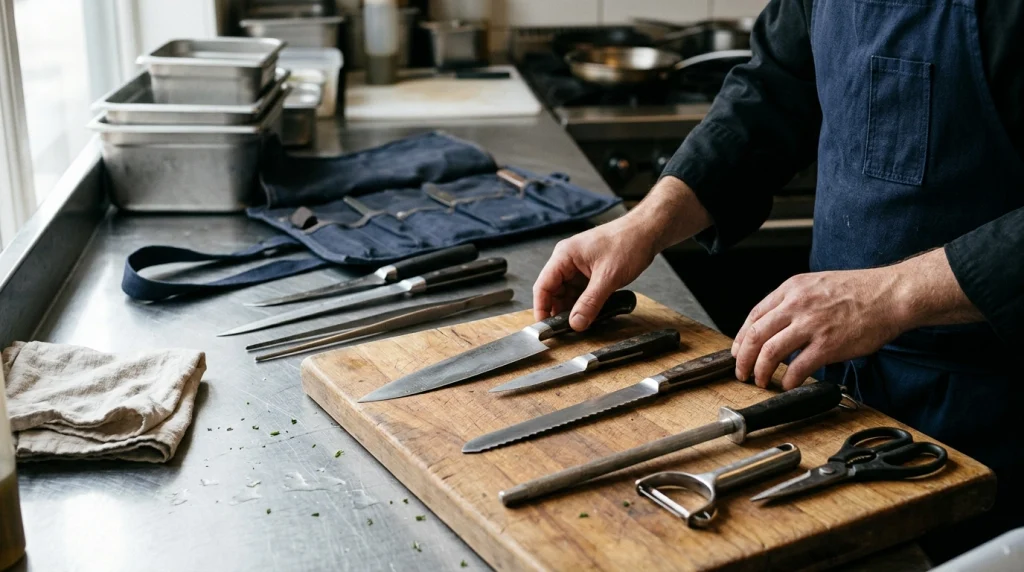
The best kit balances usefulness, portability, and cost. The table below separates the core equipment from tools that make sense only for particular jobs.
| Tool | Priority | Main use |
|---|---|---|
| Chef’s knife | Essential | Everyday cutting and chopping |
| Paring knife | Essential | Peeling, trimming, and detail work |
| Serrated knife | Core for many cooks | Bread and delicate slicing |
| Honing steel | Strongly recommended | Routine edge maintenance |
| Peeler and shears | Strongly recommended | Everyday preparation tasks |
| Boning knife | Role-dependent | Meat trimming and deboning |
| Fillet knife | Role-dependent | Fish preparation |
| Slicing knife | Optional | Carving roasts and cooked meats |
| Plating tweezers | Specialized | Precise garnish placement |
This is a general-purpose guide, not a universal equipment standard. Culinary schools and employers may specify different blade lengths, knife types, or additional tools.
How Should You Choose a Knife Roll?
A good knife roll protects your equipment, keeps sharp edges separated, and makes your kit easy to carry. Capacity matters, but a large bag isn’t automatically better.
Look for these features before choosing one:
- Individual slots: Separate compartments prevent blades from rubbing against each other.
- Secure closure: Straps, buckles, or zippers should keep the roll closed during transport.
- Suitable blade protection: Use a design that covers the cutting edges and prevents exposed tips from piercing the material.
- Accessory storage: Separate pockets keep smaller tools from mixing with knife blades.
- Durable construction: Choose stitching, fabric, and fasteners that suit frequent carrying and cleaning.
- Comfortable carrying options: A handle or shoulder strap can help when you travel between work and school.
Knife Roll Materials Compared
| Material | Advantages | Things to consider |
|---|---|---|
| Nylon | Often lightweight and easy to carry | Quality and puncture resistance vary |
| Waxed canvas | Durable fabric with some moisture resistance | Requires appropriate care and cleaning |
| Leather | Sturdy construction and a traditional appearance | Can be heavier and needs material-specific care |
Whatever the material, don’t assume the bag alone will protect every blade. Use individual sheaths or blade guards where appropriate, and make sure no knife tip can reach the outside of the closed roll.
How Do You Pack a Knife Roll Safely?
Pack knives only after cleaning and drying them thoroughly. Moisture trapped against a blade can encourage corrosion, while food residue creates a hygiene problem.
Use this packing routine:
- Inspect each knife: Check the blade, handle, and tip for damage or looseness.
- Clean and dry everything: Follow the manufacturer’s care instructions, especially for knives that aren’t dishwasher-safe.
- Protect each blade: Fit a suitable guard or use a dedicated, secure knife pocket.
- Arrange by size: Place each knife in a compartment that fully accommodates its blade without exposing the tip.
- Store accessories separately: Keep metal tools away from exposed cutting edges and prevent small items from falling out.
- Close and check the roll: Secure all straps or fasteners before carrying it.
Never carry loose knives in a bag or leave sharp blades hidden beneath towels. When removing a knife at work, grip its handle carefully and keep the blade pointed away from yourself and other people.
For more professional equipment guidance, compare your planned kit with the Escoffier School of Culinary Arts’ overview of essential chef tools. Your own workplace rules should always take priority.
How Should You Maintain the Knives in Your Roll?
Regular maintenance helps your knives perform consistently and makes them easier to use safely. A dull or damaged edge should not be ignored simply because the knife is expensive.
Honing Versus Sharpening
Honing helps realign an edge that has shifted during normal use. Sharpening removes material to create a new cutting edge when the blade has become dull.
A honing steel is useful for many compatible knives, but it isn’t the right maintenance tool for every blade. Some knives benefit more from a suitable whetstone or professional sharpening service.
Follow these basic maintenance habits:
- Use an appropriate cutting board rather than a glass or stone surface.
- Clean and dry knives promptly after use.
- Follow the manufacturer’s guidance for honing and sharpening.
- Inspect handles, rivets, and blades for damage before each shift.
- Keep knives protected during storage and transport.
Never test sharpness by running a finger along the edge. Use a suitable cutting test and keep your hands away from the blade.
What Should Culinary Students Pack First?
Students should start with the equipment their program actually requires. A school may specify particular blade lengths, knife types, or tools that aren’t necessary for every restaurant cook.
If your program hasn’t provided a complete list, ask an instructor before buying an expensive kit. You can use this general starter checklist to prepare for that conversation.
- One comfortable chef’s knife.
- One paring knife.
- One serrated knife if required or useful for the course.
- A suitable honing tool and any required sharpening equipment.
- A vegetable peeler and kitchen shears.
- Blade guards and a secure knife roll.
- A permanent marker and any required small accessories.
Additional equipment, such as boning knives, fillet knives, thermometers, scales, and pastry tools, may be supplied by the school or required for specific modules. Confirm those details rather than buying everything at once.
The SkillsUSA Culinary Arts equipment list is one example of how formal culinary activities can specify a wider set of knives and supporting tools.
Which Chef’s Knives Are Worth Considering?
 Save
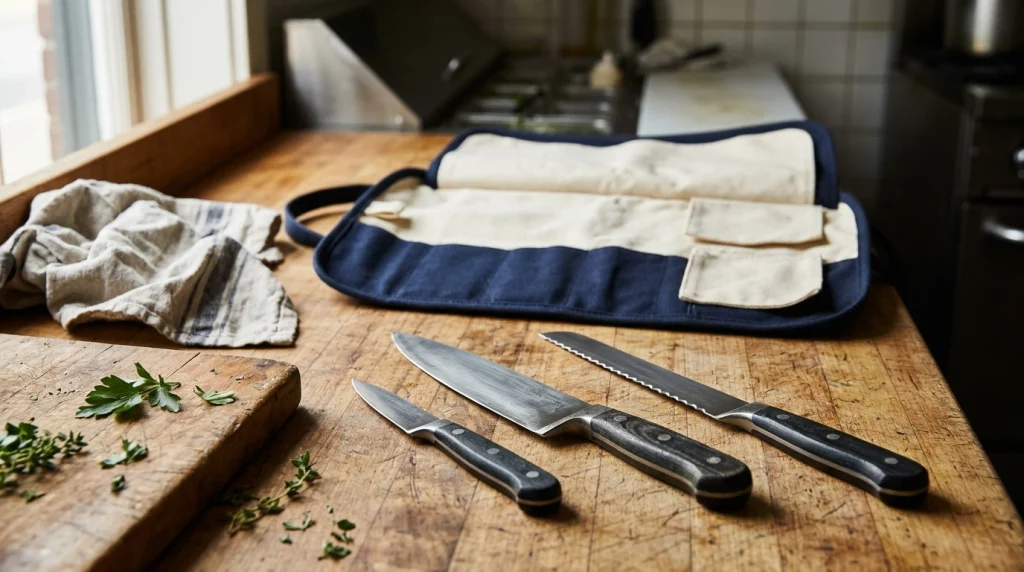
If you’re building a knife roll from scratch, focus on comfort, dependable construction, and the tasks you perform most often. These three established options offer different starting points for a general-purpose kit.
The recommendations below are examples to research, not claims of hands-on testing or current customer ratings. Compare the available versions and confirm their dimensions before purchasing.
🏆 General-purpose pick
Victorinox Fibrox Pro 8-Inch Chef’s Knife
A versatile chef’s knife for everyday chopping, slicing, and preparation. Consider it if you want a straightforward workhorse rather than a large collection of specialized blades.
🎯 Detail-work pick
Mercer Culinary Millennia Paring Knife
A compact knife suited to peeling, trimming, and precise preparation. Check the blade length and handle feel against your preferred cutting style.
🍞 Bread and slicing pick
Mercer Culinary Millennia Wavy-Edge Bread Knife
A serrated option for bread and foods that benefit from a toothed edge. Confirm the blade length and ensure your knife roll can accommodate it safely.
Before buying, compare the exact model, blade length, handle dimensions, care instructions, and return policy. Product names can cover multiple versions, so check the listing carefully.
Frequently Asked Questions
How many knives should a chef carry in a knife roll?
Three knives—a chef’s knife, a paring knife, and a serrated knife—make a practical starting point for many cooks. Add boning, fillet, or slicing knives when your regular duties require them. Culinary students should follow their school’s equipment list before deciding how many knives to purchase.
Does every chef need a boning knife?
No. A boning knife is especially useful for trimming meat and working around bones, but it isn’t essential for every cooking role. A chef who mainly prepares vegetables, sauces, or baked goods may rarely need one. Buy it when the work calls for its narrow blade and specialized control.
Should a honing steel be in every knife roll?
A honing steel is useful for maintaining compatible knives between sharpenings, but it isn’t suitable for every blade. Some knives require a different maintenance method. Follow the knife manufacturer’s instructions and remember that honing does not replace sharpening when an edge has become dull.
Can I carry kitchen tools in the same roll as my knives?
Yes, provided the roll has suitable separate compartments. Keep exposed blades protected, prevent metal accessories from contacting cutting edges, and secure small tools so they cannot fall out. Never pack loose knives together in a single pocket or carry them without adequate protection.
What is the best knife roll for a beginner?
The best beginner knife roll has secure individual slots, adequate blade protection, reliable closures, and enough room for the tools you actually need. A simple, lightweight model may be sufficient for culinary school or occasional travel. Check your required equipment list before choosing a larger or more expensive design.
Final Takeaway: Build a Knife Roll Around Your Work
A useful chef’s knife roll starts with a dependable chef’s knife, a paring knife, and a serrated knife. Add basic accessories such as a peeler, kitchen shears, a suitable honing tool, and blade guards to support daily preparation.
After that, build around your role rather than chasing a complete collection. A meat cook may need a boning knife, a seafood specialist may need a fillet knife, and a pastry chef may prioritize different tools.
Choose a secure roll, maintain your blades, and check your workplace or school requirements before buying specialty equipment. A compact, well-organized kit that meets your actual needs is a better starting point than a heavy roll full of tools you rarely use.

